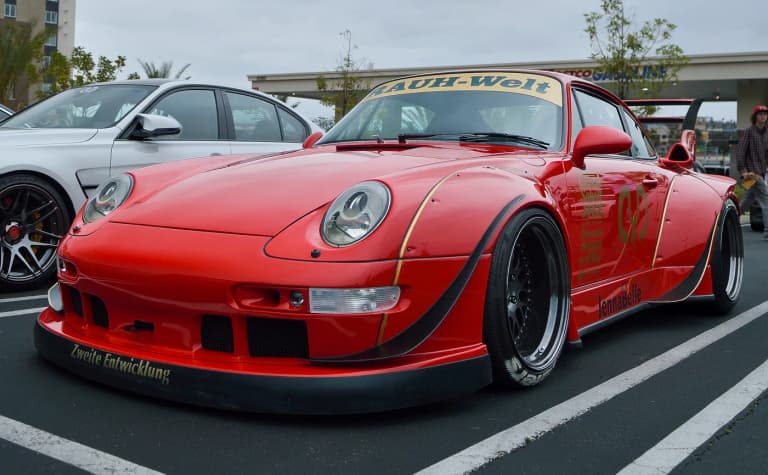
An RWB Porsche is an air-cooled Porsche 911 fitted with a hand-built widebody kit by Rauh-Welt Begriff, the Japanese house founded by Akira Nakai. RWB stands for “Rough World Concept.” Nakai-san builds every signature car himself, riveting the wide arches on by hand over a few days, and each RWB is named and one-of-a-kind.
In this article, we’ll tell the story of RWB Porsche and its founder, Akira Nakai. We’ll cover the build process, donor cars, cost, and street legality.
Contents
- 1 Quick Summary
- 2 RWB Porsche: Widebody 911s by Rauh-Welt Begriff
- 3 Akira Nakai: The Man Behind RWB
- 4 The RWB Build Process
- 5 Stance, Wheels, and Suspension
- 6 Stella Artois: The First RWB
- 7 Which Porsches Get the RWB Treatment
- 8 RWB Around the World
- 9 Owning and Driving an RWB
- 10 RWB Porsche Pricing
- 11 Frequently Asked Questions
Quick Summary
- What it is: an air-cooled Porsche 911 fitted with a hand-riveted widebody kit by Rauh-Welt Begriff
- Founder: Akira Nakai, known as Nakai-san, builds every signature car himself
- Name: RWB stands for Rauh-Welt Begriff, German for “Rough World Concept”
- First car: Stella Artois, Nakai’s own 911 (930) and the build that launched RWB
- Donor cars: mostly the 964 and 993 generations, with some 930s
- Cost: kit and build run $25,000 to $50,000-plus, on top of a $60,000 to $150,000-plus donor car
- Street legality: usually road legal since the kit changes bodywork and suspension, not the engine
RWB Porsche: Widebody 911s by Rauh-Welt Begriff
An RWB Porsche is a classic, air-cooled Porsche 911 wearing a dramatic widebody kit: huge riveted fenders, a deep front lip, and almost always a towering rear wing. The look is aggressive, lived-in, and unmistakable. You can pick one out of a crowded car park from across the lot.
What sets RWB apart from any other body kit is that the whole thing is the work of one man. Rauh-Welt Begriff is not a factory churning out parts. It is Akira Nakai building cars by hand, one at a time, and that is why RWB Porsches command the attention and the prices they do.
Rauh-Welt Begriff: The Rough World Concept
RWB stands for Rauh-Welt Begriff, German for “Rough World Concept.” Nakai-san chose that phrase because it sounded right to him. The brand has no German roots beyond the Porsche underneath. The “rough world” idea is the whole point: these are cars meant to be driven hard and shown off with their scrapes and patina intact.
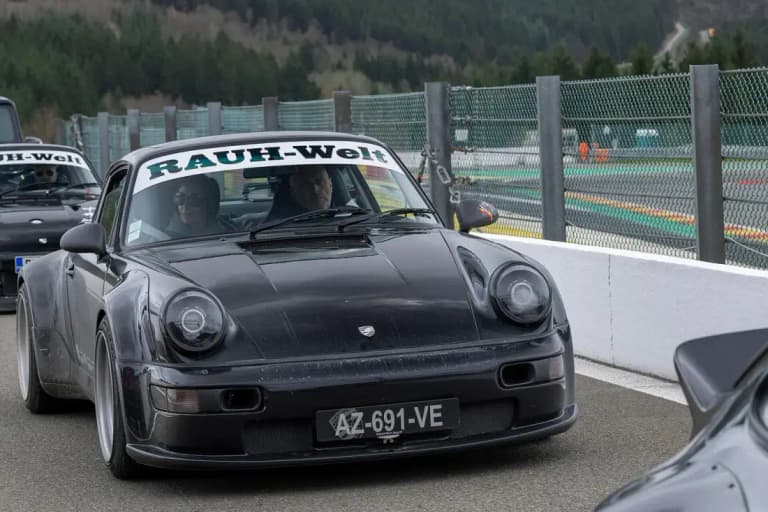
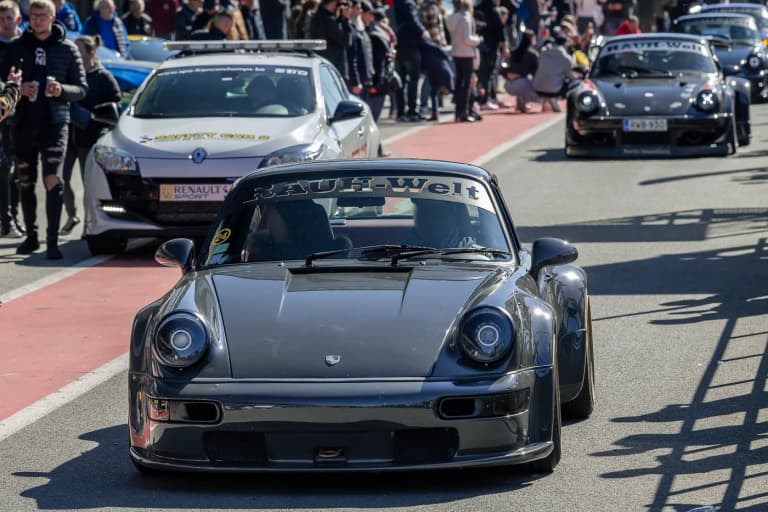
People shorten the name to RWB, “Rauh-Welt,” or just “rough world,” and all three mean the same thing. The full phrase appears on the windshield banner that nearly every build wears, which has become as much a signature as the wide arches themselves.
Why RWB Is So Famous
Plenty of shops sell widebody kits for the 911. None of them carries the cult status of RWB. The fame comes from the combination of a single charismatic builder, a strict hands-on process, and a look that photographs better than almost any other modified car. An RWB build is part car, part story, and part performance art.
Akira Nakai: The Man Behind RWB
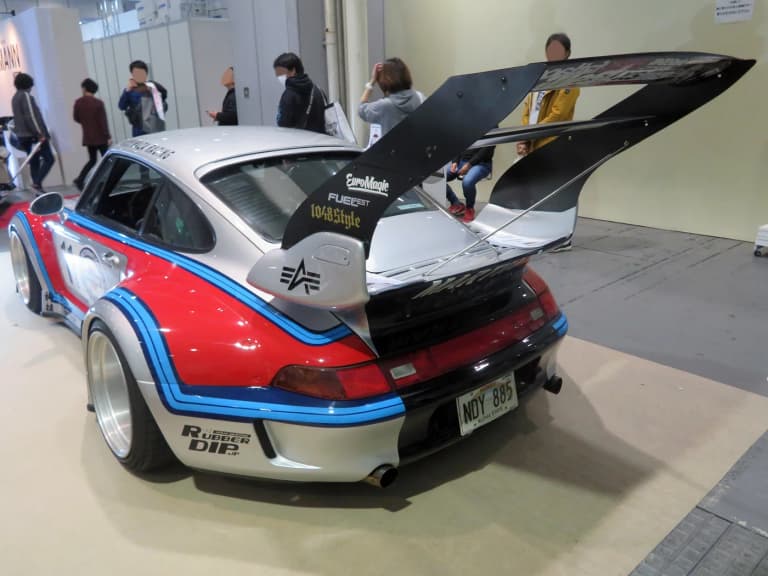
You cannot separate the cars from the man. Every signature RWB Porsche is built by Akira Nakai personally, and his story is the reason the brand means what it does.
From Street Racing to Porsche
Akira Nakai, known to everyone as Nakai-san, started out in the Japanese street and racing scene before turning his focus to Porsche. He cut his teeth in the bosozoku and touge tuning world of the 1980s and 1990s, working on Japanese cars long before he ever touched a 911. When he found the air-cooled Porsche, the obsession stuck.
He founded Rauh-Welt Begriff in Chiba, Japan, and built a cult following one car at a time. There was no marketing plan and no investor. The reputation grew through word of mouth, car meets, and eventually the internet, until customers were flying him around the world.
The Rough World Philosophy
The “rough world” name captures Nakai’s philosophy: cars meant to be driven hard and worn proudly, not garage queens. He has little patience for owners who trailer their cars or treat them as investments to be sealed away. An RWB is supposed to collect stone chips and track miles.
Nakai-san has become a genuine icon. Documentaries, magazine features, and a constant stream of social media have made him one of the most recognizable figures in modern car culture. He still personally builds every signature car that carries the RWB name. That hands-on approach is the entire point of the brand.
The RWB Build Process
Commissioning an RWB is not like ordering parts from a catalog. You buy the kit, and Nakai-san comes to you. The build itself is part performance, part craft, and it is what turns a donor 911 into a real Rauh-Welt Begriff car.
The Riveted Widebody Kit
The heart of every build is the RWB widebody kit. The wide arches are not bolt-on plastic. Nakai cuts the original fenders and rivets new fiberglass arches directly to the body, shaping and trimming each one to fit that specific car. Combined with a front lip, side skirts, and a big rear wing, the body kit gives every RWB its planted, motorsport stance.
The riveted edges are deliberate. Nakai could hide the fasteners, but the exposed rivets are part of the rough-world look and a visible mark that the work was done by hand. No two cars get the same cut, because no two donor bodies are exactly the same.
Nakai Builds Every Car Himself
For a signature build, Nakai-san flies to the customer, often with little more than hand tools, and works on the car on-site over two or three days. He measures by eye, cuts with confidence, and famously works late into the night with a beer and a cigarette close by. There is no template and no CAD file.
Because every car is fitted by hand, no two RWB Porsches are exactly alike. The owner usually watches the whole thing happen in their own garage, which is a large part of what they are paying for. You are buying the experience as much as the bodywork.
Why Every RWB Gets a Name
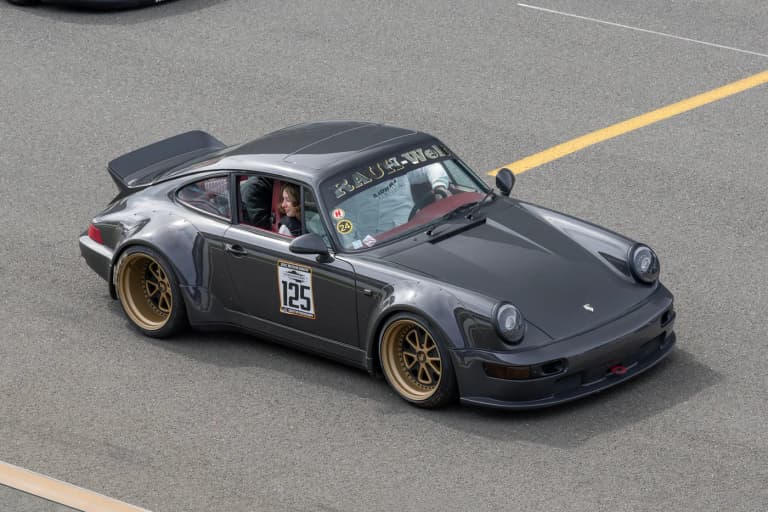
Nakai names each finished build, and the name becomes part of the car’s identity. Stella Artois, Pandora One, Rotana, and Bourgogne are all known by enthusiasts the way race cars are known by their liveries. That ritual is why owners talk about getting “a Nakai car” rather than just a widebody kit.
The name usually nods to something personal, a place, a drink, or a feeling, and it is hand-applied to the car along with the windshield banner. A genuine, Nakai-named car carries far more weight in the community than a copy built from reproduction parts.
Stance, Wheels, and Suspension
The widebody arches grab the eye first, but the stance is what makes an RWB look planted rather than cartoonish. Getting the wheels and ride height right is as much a part of the build as the fenders.
Wheels and Tire Fitment
RWB cars run wide, deep-dish wheels tucked hard under those arches, very often staggered with serious rubber at the rear. Brands like Work and SSR are common, frequently in polished or bronze finishes that play off the paint. The whole point of cutting the fenders is to clear a tire far wider than any factory 911 ever wore.
The aggressive fitment means a lot of negative camber and very little tire-to-arch gap. It looks dramatic parked and purposeful in motion, but it also drives many of the practical compromises that come with owning one of these cars.
Ride Height and Suspension
Coilover suspension finishes the look, dropping the car low and tucking the aggressive tires deep under the famous arches. Most builds use adjustable coilovers so the owner can set the ride height to taste, though “low” is the default RWB language. The result is a car that sits dramatically closer to the ground than a stock air-cooled 911.
RWB sells matched suspension and brake packages alongside the body kit, so the stance is engineered rather than guessed. Even so, the very low ride height is the first thing owners tend to compromise on once they live with the car day to day.
Stella Artois: The First RWB
The car that started it all is Nakai’s own Porsche, a 911 (930) he named Stella Artois after the beer. Built as his personal project, it set the template for everything RWB would become: the riveted arches, the bold graphics, and the idea that a hard-used Porsche could be the coolest car at any meet.
Stella Artois remains the most famous Rauh-Welt Begriff build, and the reason “RWB” and “rough world” became shorthand for an entire style. Owners and fans still treat the original as the reference point that every later car is measured against.
Which Porsches Get the RWB Treatment
RWB builds are almost always air-cooled 911s, but Nakai has worked on water-cooled cars too. The donor choice shapes how purists rate the finished build.
The Air-Cooled Favorites
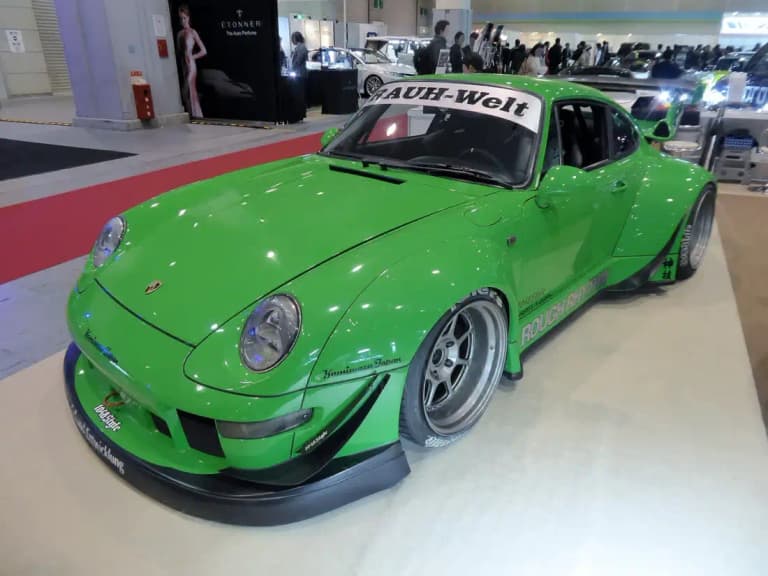
The 964 and 993 generations are the most common canvases, with some work on the earlier 930. The classic narrow body suits Nakai’s exaggerated arches, and these cars were plentiful and affordable enough to modify when RWB was rising, though that has changed as air-cooled values climbed.
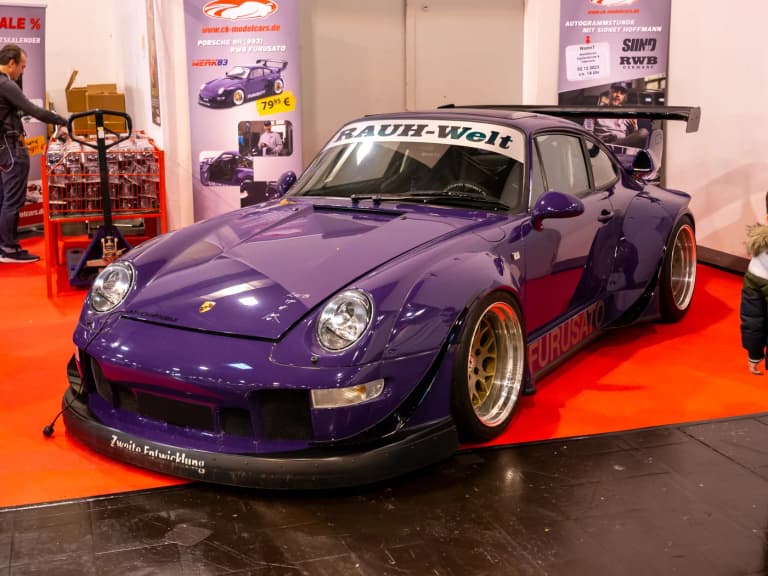
The 993 is the last air-cooled 911 and a particular favorite for RWB builds. Its slightly wider factory body and modern lights make for a clean canvas, and a riveted 993 has become one of the signature RWB silhouettes.
Water-Cooled RWB Builds
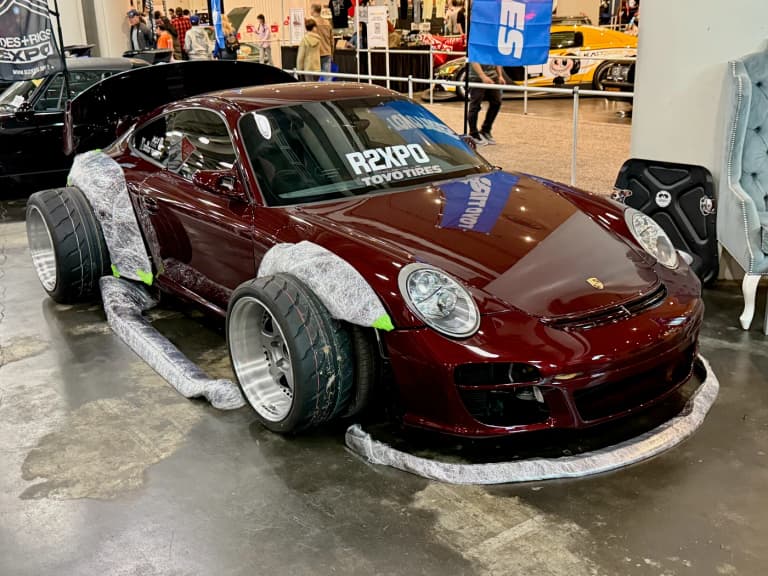
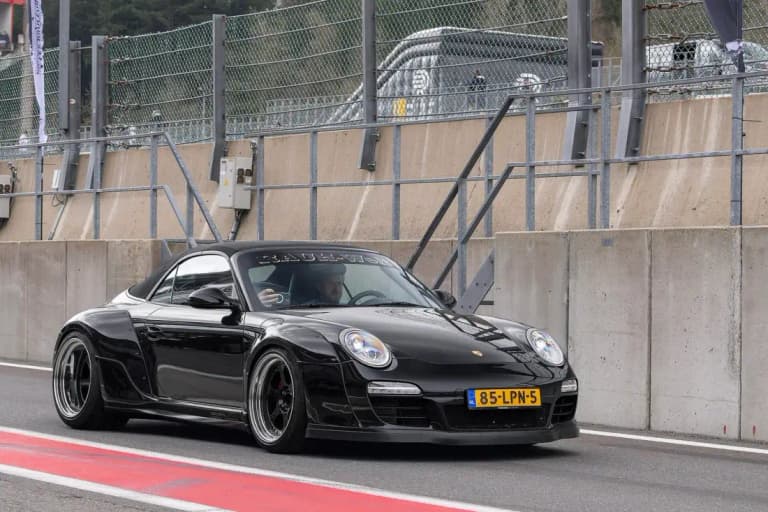
Nakai has fitted kits to water-cooled cars too, including 996 and 997 911s, but the air-cooled cars remain the spiritual home of RWB. A water-cooled build still gets the full riveted treatment and a name, and it opens the door to owners who cannot stretch to an air-cooled donor.
Purists tend to see a 964 or 993 RWB as the real thing, with the water-cooled cars a step down in the pecking order. For a completely different take on reimagining the air-cooled 911, our Singer guide shows the restomod end of the spectrum.
RWB Around the World
What began in Japan has gone global. There are RWB cars on every continent, and the brand now reaches far beyond what one man could build alone.
Authorized Builders and RWB USA
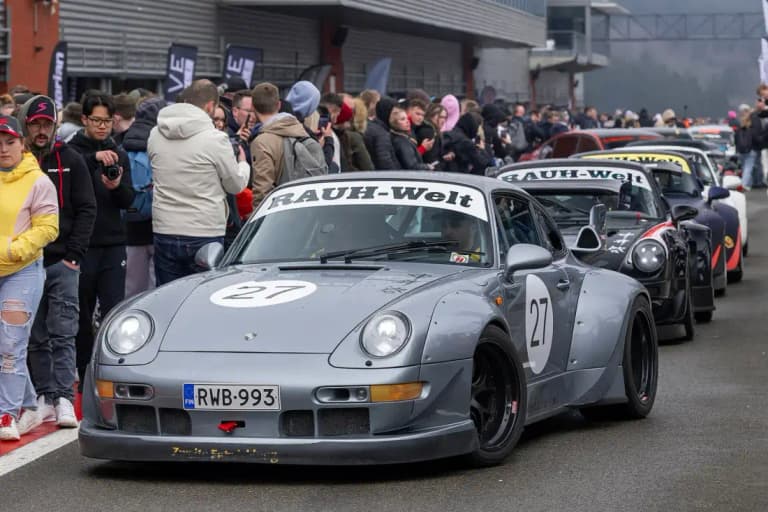
Demand grew large enough that authorized builders now handle work in regions Nakai cannot reach alone, with RWB USA among the best known. These shops are trained on the RWB process and use genuine parts, which keeps quality consistent even when Nakai-san is not the one holding the rivet gun.
Even so, the most sought-after RWB Porsches are still the ones Nakai built with his own hands, and collectors travel to have him do the work in person. A car fitted personally by Nakai commands a clear premium over an otherwise identical authorized build.
Games, Social Media, and Asia
The reach goes beyond real cars. RWB Porsches are fixtures in video games like Gran Turismo, Forza, and Need for Speed, and Nakai-san has built an enormous social media following that pulls new fans into air-cooled 911 culture every year. Southeast Asia has its own thriving RWB scene, and built cars turn up at shows across Japan, Thailand, and Indonesia.
That exposure feeds the demand: signature builds book out well in advance, and Nakai spends much of the year on the road, moving from one customer’s garage to the next with his tools in hand. For a brand with no factory and no production line, RWB has a global footprint that most tuners can only envy.
Owning and Driving an RWB
Buying or building an RWB is one thing. Living with it is another. The same choices that make the car look incredible also make it a committed ownership experience.
Daily Driving an RWB
An RWB is mechanically still a 911 underneath, so it drives like the donor car with a wider track and stiffer setup. The kit is bodywork, wheels, and suspension rather than engine changes, so reliability comes down to the base car. A well-sorted air-cooled flat six is durable, but the very low ride height and wide tires make most RWB cars a fair-weather toy rather than a true everyday driver.
Speed bumps, steep driveways, and bad weather are the real enemies. Many owners keep the car for weekend drives, track days, and shows, and use something more practical the rest of the week.
Street Legality
Most RWB Porsches are road legal. Because the changes are cosmetic and chassis rather than engine, the car usually keeps its original drivetrain and emissions setup. The hurdles vary by country, and the aggressive ride height and tire fitment are what tend to draw attention rather than the bodywork itself.
In markets with strict modification rules, owners may need to document the changes for inspection. The base 911 mechanicals stay stock, so the legal questions are about fitment and ride height, not power, which keeps most builds on the right side of the line.
RWB Porsche Pricing
There are two costs to an RWB. The kit and Nakai’s hands-on build run roughly $25,000 to $50,000 or more depending on the spec, wheels, and wing. On top of that sits the donor car: an air-cooled 964 or 993 that can run anywhere from $60,000 to well past $150,000 today, according to classic 911 market values tracked by Hagerty.
Add it up and a finished RWB Porsche usually lands well over $100,000, and the famous named cars trade much higher. The premium for a genuine Nakai-built example over a copy or an authorized-builder car is significant, because buyers are paying for the story as much as the parts.
Is it worth it? For fans, the value is not just the look. It is owning a car the man himself shaped, with a name and a story attached. That is closer to buying art than buying a body kit. It is why RWB Porsches hold their place among the most talked-about modified cars in the world, alongside the rarest factory builds in our most expensive Porsche guide.
Frequently Asked Questions
What does RWB stand for?
RWB stands for Rauh-Welt Begriff, German for “Rough World Concept.” It is the name Akira Nakai gave his Japanese tuning house that builds widebody Porsche 911s by hand.
Who is Akira Nakai?
Akira Nakai, often called Nakai-san, is the founder of Rauh-Welt Begriff. He hand-builds every signature RWB Porsche himself, traveling worldwide to fit his riveted widebody kits on the customer’s car, usually over a few days.
What was the first RWB Porsche?
Nakai’s own car, a Porsche 911 (930) named Stella Artois after the beer, was the build that launched RWB. It remains the most famous Rauh-Welt Begriff car.
Which Porsche does RWB use?
RWB builds are almost always air-cooled 911s, most often the 964 and 993 generations, with some on the earlier 930. The classic shape suits Nakai’s wide arches.
How much does an RWB Porsche cost?
The RWB body kit and Nakai’s hands-on build run roughly $25,000 to $50,000-plus, on top of a donor 964 or 993 that can itself cost $60,000 to $150,000 or more. A finished RWB car often lands well over $100,000.
Are RWB Porsches street legal?
Most are. The kit is bodywork, wheels, and suspension rather than engine changes, so an RWB Porsche is usually road legal, though the aggressive ride height and tire fitment make it a fair-weather car for many owners.
Images: Red RWB 993 by Farrell Small, CC BY 2.0; RWB993 Martini by Tokumeigakarinoaoshima, CC BY-SA 4.0; RWB 997 maroon by Oleg Yunakov, CC BY-SA 4.0; RWB 964 on track by Alexandre Prevot, CC BY-SA 4.0; RWB 964 at Spa by Alexandre Prevot, CC BY-SA 2.0; RWB993 Rough Rhythm by Tokumeigakarinoaoshima, CC BY-SA 4.0; RWB 997 Cabriolet by Alexandre Prevot, CC BY-SA 4.0; RWB 993 at Spa by Alexandre Prevot, CC BY-SA 2.0; RWB Furusato by MB-one, CC BY-SA 4.0; RWB Bourgogne by Alexandre Prevot, CC BY-SA 2.0. Via Wikimedia Commons.