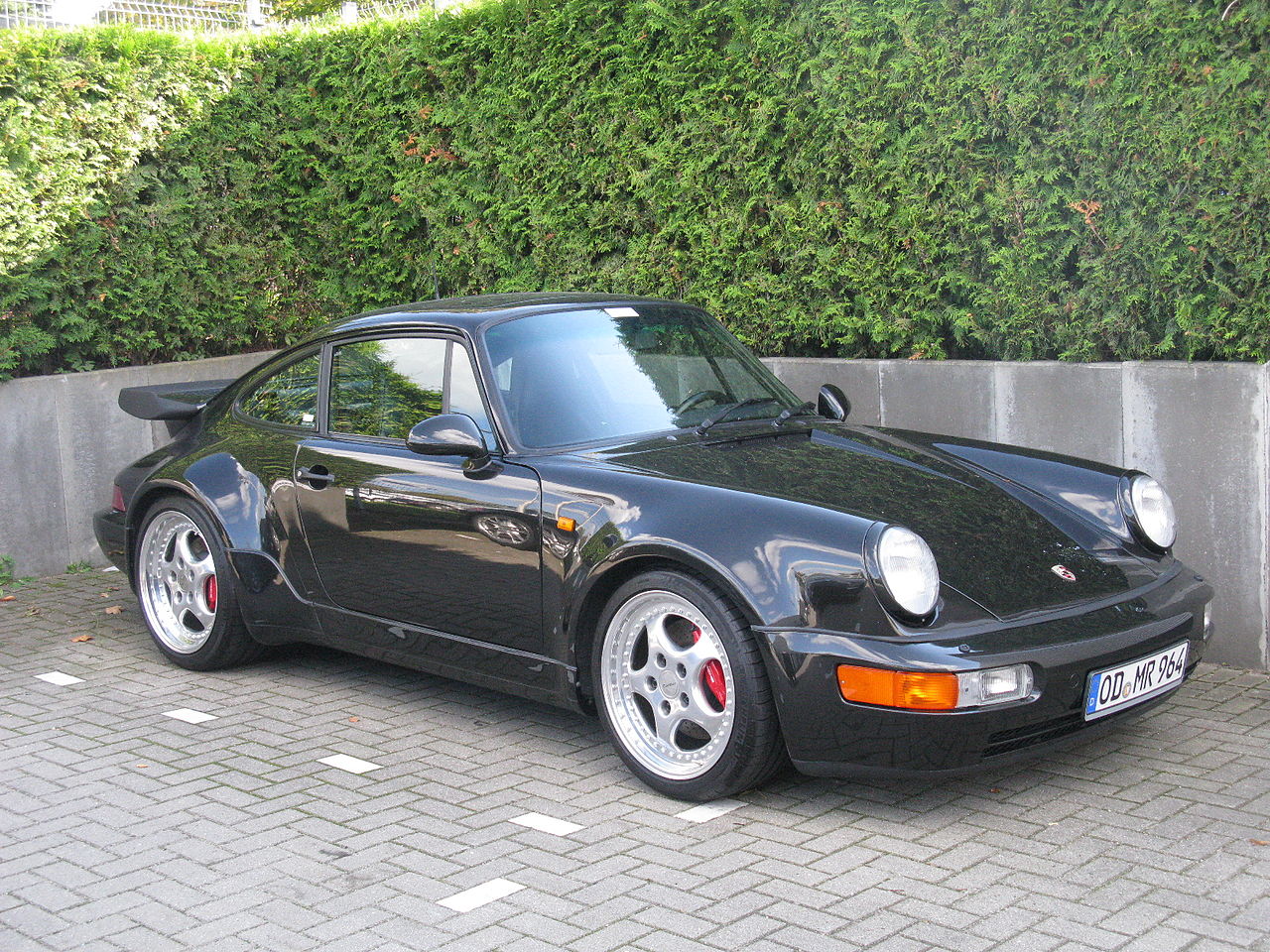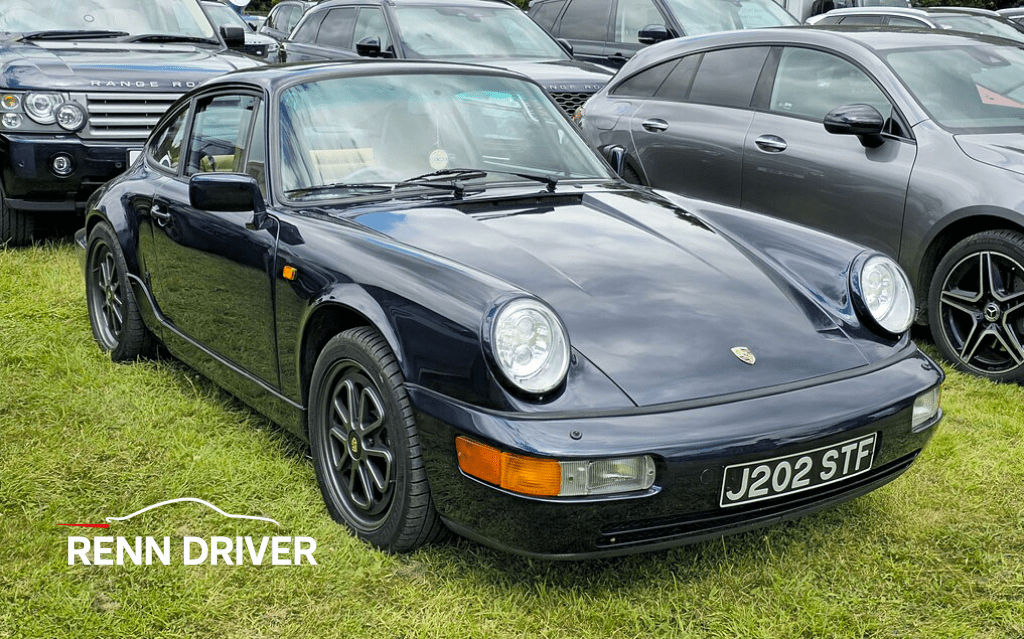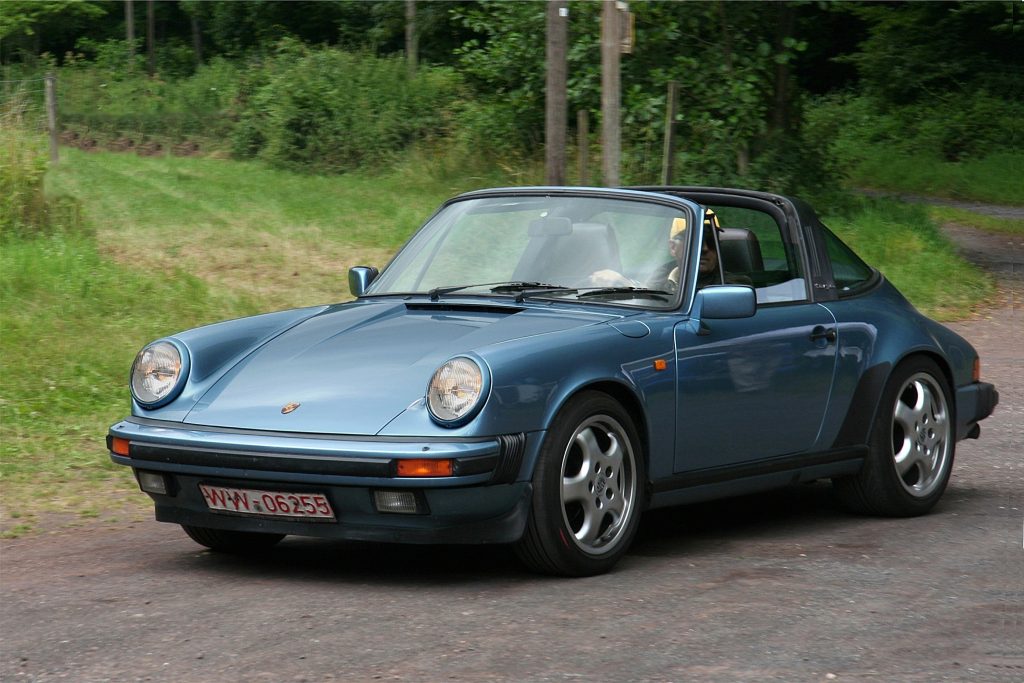
Air-cooled Porsche 911s were produced from 1964 through 1998, ending with the 993 generation. Water-cooled 911s began with the 996 generation in 1999 and continue through today. Air-cooled cars are louder, mechanically simpler, and command significant collector premiums. Water-cooled cars are more powerful, more reliable in daily use, and better suited to modern driving. The IMS bearing issue affects only certain early water-cooled engines (M96/M97). Both are genuine 911s, and both are worth owning.
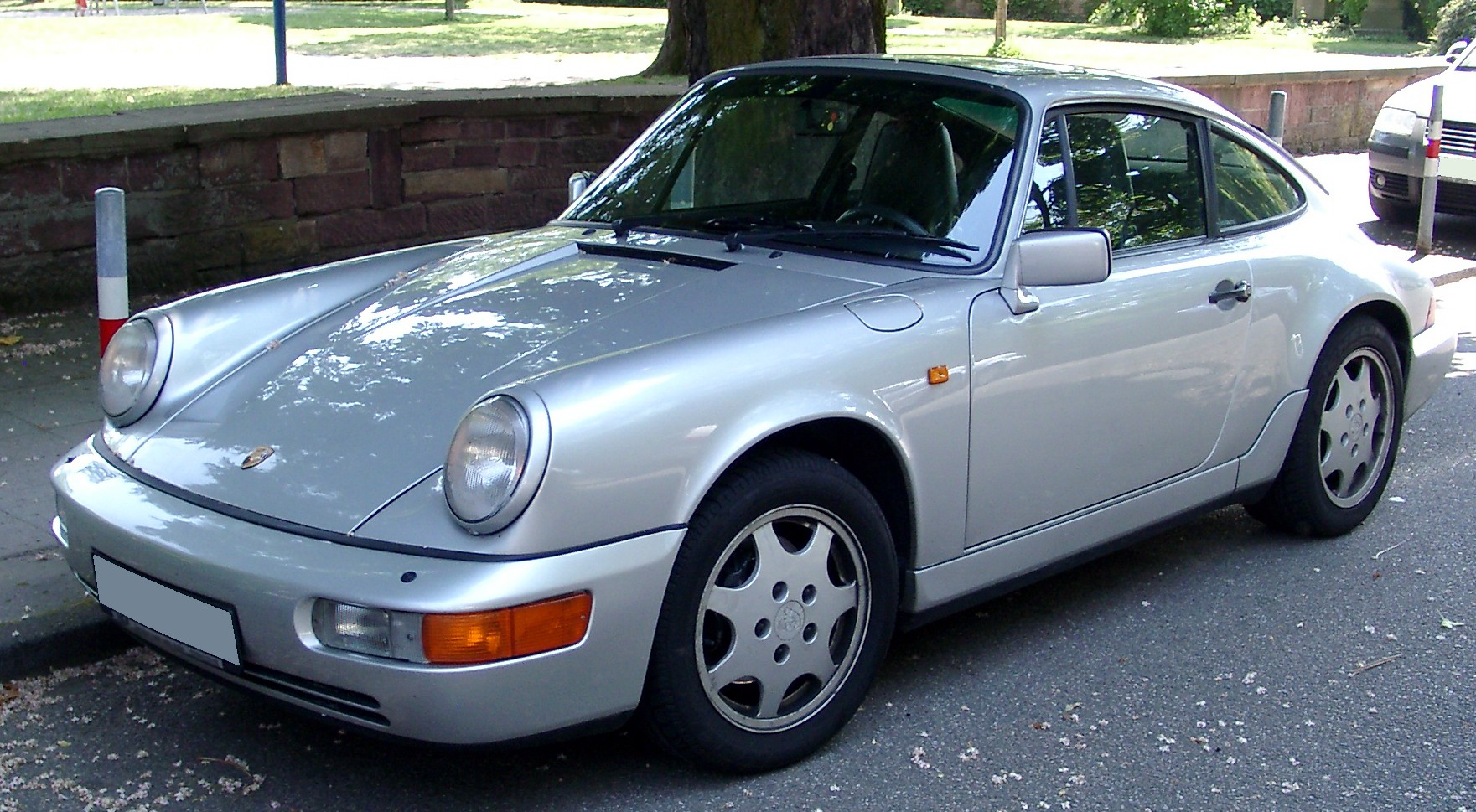
This guide covers the differences between air-cooled and water-cooled 911s, from sound and driving feel to reliability, the IMS bearing issue, and what each type is worth today.
Contents
The 993 to 996 Transition
The switch from air cooling to water cooling happened between the 993 (1994 to 1998) and the 996 (1998 to 2005). It was not a sudden decision. Porsche's engineers had been testing water-cooled flat-six prototypes since the late 1980s.
The reasons for the change were practical. Tightening emission regulations, particularly in the United States, made it increasingly difficult to achieve compliance with air-cooled engines. Air-cooled engines run at higher temperatures and produce more thermal variation across cylinders, which creates emission challenges. Water cooling provides more consistent cylinder temperatures, enabling more precise combustion control and cleaner exhaust output.
Noise regulations also played a role. Air-cooled engines are inherently louder because the cooling fan and the direct exposure of the engine to outside air generate significant mechanical noise. Water-cooled engines are insulated by their water jackets, reducing both mechanical and exhaust noise.
For many Porsche enthusiasts, the transition felt like the end of an era. The 993 was the last air-cooled 911, and it has become one of the most sought-after generations as a result. The 996 was Porsche's most controversial model when it launched, though time has been kinder to its reputation.
How Air Cooling Works
An air-cooled Porsche 911 engine uses a large fan mounted at the top of the engine to force air over the cylinder heads and cylinders. The cylinders have deep cooling fins cast into their outer surfaces, which increase the surface area exposed to the airflow. Heat transfers from the cylinder walls through the fins and into the passing air.
The cooling fan is belt-driven from the crankshaft. A thermostat controls flaps that regulate how much air reaches the engine. When the engine is cold, the flaps close to help it reach operating temperature quickly. When warm, the flaps open fully to maximize cooling.
An oil cooler provides supplemental cooling. Engine oil carries heat away from internal components that the air system cannot reach directly, particularly the crankshaft bearings and pistons. The oil cooler sits in the front of the car, where it receives direct airflow.
The system is effective but has limitations. In hot climates or extended periods of slow traffic, air-cooled engines can overheat because the cooling fan does not receive sufficient airflow through the engine bay. Track driving in warm conditions can also push temperatures beyond optimal levels.
The design's simplicity is also its strength. There are no water pumps, no radiator hoses, no coolant reservoirs, and no risk of coolant leaks. The engine bay is remarkably clean compared to a water-cooled car. Fewer components means fewer points of failure.
How Water Cooling Works
Water-cooled Porsche 911 engines use a conventional liquid cooling system. Coolant (a mixture of water and antifreeze) circulates through passages cast into the cylinder heads and engine block. A water pump, driven by the engine, pushes coolant through the system. Radiators mounted at the front of the car dissipate heat from the coolant into the outside air.
The system maintains more consistent cylinder temperatures than air cooling. Each cylinder operates at essentially the same temperature, which allows tighter manufacturing tolerances, higher compression ratios, and more aggressive ignition timing. The result is more power per liter and lower emissions.
Water cooling also enables the engine to warm up faster and maintain a stable operating temperature regardless of ambient conditions. Whether the car is sitting in Bangkok traffic or running flat out on a German autobahn, the coolant system keeps temperatures within a narrow, optimal range.
The trade-off is complexity. Water-cooled engines have more components that can fail: water pump, thermostat, radiator, hoses, expansion tank, and the coolant itself, which must be changed at regular intervals. A coolant leak in a water-cooled engine can cause rapid overheating and catastrophic damage if not addressed immediately.
Sound Differences
This is where the debate gets emotional. Air-cooled and water-cooled 911s sound fundamentally different, and enthusiasts have strong opinions about which is better.
An air-cooled 911 produces a distinctive, textured exhaust note characterized by mechanical clatter, a prominent cooling fan whir, and a rawness that comes from the direct exposure of the engine to the outside air. The sound is complex and layered. At idle, you hear individual valve train clicks and the rhythmic pulse of the flat-six. Under acceleration, the note sharpens into a raspy bark that builds in intensity with rpm.
A water-cooled 911 sounds smoother and more refined. The water jackets insulate the engine, muting the mechanical noise that defines the air-cooled character. The exhaust note is cleaner and more focused. Modern water-cooled 911s, particularly the naturally aspirated GT3 models, produce a high-pitched wail at high rpm that is impressive in its own right but fundamentally different from an air-cooled engine.
Turbocharged water-cooled 911s sound different again. The turbo spooling adds a whooshing character that replaces the air-cooled rawness with a more muted, pressurized tone.
Neither is objectively better. The air-cooled sound is more characterful and evocative. The water-cooled sound is more polished and capable of higher frequencies. Enthusiasts who grew up with air-cooled Porsches tend to prefer that sound. Those who came to the brand through modern GT3s often prefer the screaming flat-six at 9,000 rpm.
Reliability Comparison
Air-cooled 911 engines are mechanically simple and extremely durable when maintained properly. The Mezger-designed flat-six that powered every air-cooled 911 is one of the most reliable performance engines ever built. With regular oil changes, valve adjustments, and attention to the cooling system, these engines routinely exceed 200,000 miles.
The main reliability concerns with air-cooled engines are related to thermal stress. Repeated heat cycles can cause cylinder head stud corrosion, particularly in earlier cars. Oil leaks are common, especially around the pushrod tubes and valve covers. These are manageable maintenance items rather than fundamental design flaws.
Water-cooled 911 engines offer better daily reliability in the sense that they maintain more consistent operating temperatures and are less sensitive to driving conditions. The 997 and later engines are extremely durable and can handle high mileage without major issues.
The exception is the M96 and M97 engine family used in the 996 and early 997 models. These engines have specific failure modes that require attention, most notably the IMS bearing.
The IMS Bearing Issue
The IMS (Intermediate Shaft) bearing is the most discussed reliability issue in modern Porsche history. It affects the M96 and M97 flat-six engines found in the 996 (all models except GT2 and GT3) and the 997.1 (Carrera and Carrera S, not Turbo or GT3).
The intermediate shaft drives the camshafts in these engines. It uses a sealed ball bearing that cannot be serviced or lubricated externally. Over time, the bearing can fail, shedding metal debris into the oil system. If the bearing fails completely, the camshaft timing is lost, and the resulting piston-to-valve contact destroys the engine.
The failure rate is debated. Estimates range from 2% to 10% of affected engines, depending on the source. The risk is higher on earlier 996 models (1999 to 2001) that used a dual-row bearing, which was later replaced with a single-row bearing that is considered less reliable. The most common failure window is between 40,000 and 100,000 miles.
The solution is an IMS bearing retrofit. Aftermarket companies like LN Engineering produce upgraded bearings that can be installed during a clutch replacement (since the transmission must come off to access the bearing). The cost of the retrofit is $2,000 to $4,000 including labor. Many enthusiasts consider it a mandatory upgrade on any M96 or M97 car.
The GT3, GT3 RS, Turbo, and GT2 models from the 996 and 997 generations use the Mezger engine, which has a gear-driven intermediate shaft and does not suffer from the IMS bearing issue.
Driving Character
Beyond the mechanical differences, air-cooled and water-cooled 911s deliver fundamentally different driving experiences.
An air-cooled 911, particularly the 964 and 993, communicates everything through the steering, pedals, and seat. The hydraulic power steering has real weight and genuine feedback. The throttle response is immediate and linear. The chassis is more responsive to weight transfer because the cars are lighter and the suspension geometry is simpler.
The experience is analog in every sense. There are no electronic stability programs (on most air-cooled cars), no traction control, and no driver aids beyond the mechanical grip of the tires. The car does exactly what the driver asks, for better or worse.
Water-cooled 911s are more competent and more forgiving. The electric power steering on the 991 and 992 generations is accurate but filtered compared to the hydraulic systems. PSM (Porsche Stability Management) provides a safety net that makes the cars accessible to a wider range of drivers. The chassis is stiffer, the suspension is more sophisticated, and the overall dynamic package is more refined.
Modern water-cooled GT3 models bridge the gap. They use mechanical limited-slip differentials, offer manual transmissions, and provide levels of driver engagement that rival many air-cooled cars. The 992 GT3 with its double-wishbone front suspension and naturally aspirated 4.0L flat-six is arguably the most engaging new 911 available.
Collectibility and Values
Air-cooled Porsche 911s command a significant premium over their water-cooled equivalents. This has been the case since roughly 2013, when the air-cooled market began its dramatic appreciation.
Current approximate values for comparable models:
| Model | Type | Approximate Value |
|---|---|---|
| 964 Carrera 2 | Air-cooled | $80,000 to $130,000 |
| 993 Carrera | Air-cooled (last) | $80,000 to $140,000 |
| 996 Carrera | Water-cooled (first) | $25,000 to $50,000 |
| 997 Carrera S | Water-cooled | $45,000 to $80,000 |
| 993 Turbo | Air-cooled | $180,000 to $280,000 |
| 996 Turbo | Water-cooled (Mezger) | $70,000 to $120,000 |
The 993 commands the highest air-cooled premium because it is the last of its kind. The 996 sits at the bottom of the value scale because it was the first water-cooled car and carried the IMS bearing stigma. The 997 and later generations have stabilized at higher values as the market recognizes their improved reliability and driving dynamics.
The air-cooled premium is driven by scarcity (no more will be made), nostalgia, and the analog driving experience that modern cars cannot fully replicate. Whether this premium is sustainable long-term is an open question. As the generation of enthusiasts who grew up with air-cooled Porsches ages, the buyer pool may shift toward water-cooled cars.
Which One Should You Buy?
The right choice depends entirely on what you want from a 911.
Buy an air-cooled 911 if you want:
- A pure analog driving experience with no electronic intervention
- The iconic air-cooled sound and mechanical character
- A car that appreciates in value (particularly the 993)
- Weekend and special occasion use rather than daily driving
- Connection to Porsche's original engineering philosophy
Buy a water-cooled 911 if you want:
- A car you can drive daily in any conditions
- More power, better braking, and superior safety systems
- Lower purchase price for equivalent performance (especially 996 and 997)
- Access to modern GT3 performance with naturally aspirated flat-six character
- A car that is easier and less expensive to maintain for regular use
The 996 remains the best value in the 911 market. A clean 996 Carrera with the IMS bearing addressed is a reliable, engaging 911 for under $50,000. The 993 is the collector's choice for air-cooled, offering the most refined version of the original 911 formula.
For enthusiasts who want both worlds, the early 911 experience and modern performance, the answer might be to own one of each. Many serious collectors keep an air-cooled car for weekend drives and a modern GT3 for track days.
Renn Driver's Take
I will do some more research on this and give my updated thoughts soon.
Frequently Asked Questions
When did Porsche stop making air-cooled 911s?
Porsche stopped making air-cooled 911s with the 993 generation, which ended production in 1998. The 996 generation, launched in 1999, was the first water-cooled 911.
Why are air-cooled Porsches so expensive?
Air-cooled Porsches are expensive because no more will be produced, they offer a unique analog driving experience, and collector demand has increased significantly since 2013. The 993, as the last air-cooled 911, commands the highest premiums.
What is the IMS bearing issue on Porsche 911s?
The IMS (Intermediate Shaft) bearing issue affects the M96 and M97 engines in the Porsche 996 and early 997 Carrera models. The sealed bearing can fail over time, potentially causing catastrophic engine damage. It does not affect GT3, Turbo, or GT2 models, which use the Mezger engine.
Do all water-cooled Porsches have the IMS bearing problem?
No, the IMS bearing issue only affects the M96 and M97 engine family found in 996 and 997.1 Carrera and Carrera S models. The 997.2 (2009 onward), all 991 and 992 models, and all GT3, Turbo, and GT2 variants use different engines that do not have this issue.
Which is more reliable, air-cooled or water-cooled Porsche?
Water-cooled Porsche 911s (excluding early M96 IMS concerns) are generally more reliable for daily use because they maintain more consistent operating temperatures. Air-cooled 911s are extremely durable when properly maintained but are more sensitive to driving conditions and require more attentive ownership.
What is the last air-cooled Porsche 911?
The last air-cooled Porsche 911 is the 993, produced from 1994 to 1998. The final variants included the 993 Turbo S, 993 Carrera S, and limited-run specials.
What is the cheapest air-cooled Porsche 911?
The most affordable air-cooled Porsche 911 is typically a 964 Carrera 2 or Carrera 4, which can be found starting around $60,000 to $80,000 for higher-mileage, driver-quality examples.
Final Thoughts
The air-cooled versus water-cooled debate is one of the longest-running conversations in the Porsche community. It is also one of the least productive because both sides are right.
Air-cooled 911s offer an experience that cannot be replicated. The sound, the simplicity, and the directness of the driving experience are unique. They are also increasingly expensive and increasingly impractical as daily transportation.
Water-cooled 911s are better cars by almost every objective measure. They are faster, safer, more efficient, and more reliable. The best of them, particularly the GT3 models, deliver levels of driver engagement that rival the air-cooled cars while offering modern levels of performance.
The real question is not which is better. It is what you value most. If you want to experience a Porsche 911 as it was originally conceived, drive a 964 or the last air-cooled model. If you want the best 911 driving experience available today, drive a current-generation GT3. And if you can only have one 911 across all generations, buy the one that makes you want to take the long way home.
Photo credit: Renn Driver