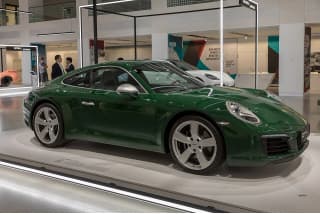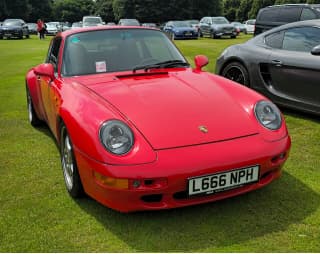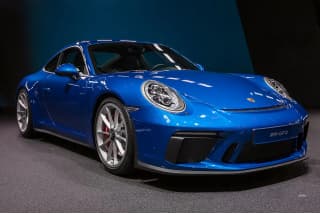
The best Porsche daily driver is the 911 Carrera for buyers who want one sports car that does everything, the Macan for buyers who need genuine SUV practicality, the Cayman for buyers who want pure driving engagement, and the Taycan for buyers focused on tech and zero-emission commuting. The 911 Carrera coupe with PDK is the most consensus pick — rear seats, front trunk, reasonable fuel economy, all-weather usability with AWD options, and decades of community support. The 992.2 starts at $116,000 new; a clean 997.2 starts around $55,000 used.
In this article, we’ll compare every Porsche model to find the best daily driver. We’ll cover criteria, model picks, ownership costs, and climate considerations.
Contents
- 1 What Makes a Good Daily Porsche
- 2 The Best Daily Porsches, Model by Model
- 2.1 Porsche 718 Cayman — Mid-Engine Engagement
- 2.2 Porsche Macan — The Practical Choice
- 2.3 Porsche Panamera — The Sports Sedan
- 2.4 Porsche Taycan — Electric Performance
- 2.5 Porsche Cayenne — Full-Size SUV
- 3 Which 911 Generation Is Best for Daily Use
- 4 Porsche Models to Avoid for Daily Use
- 5 Ownership Cost Reality Check
- 6 Climate Considerations
- 7 Renn Driver’s Take
- 8 Frequently Asked Questions
What Makes a Good Daily Porsche
Before ranking the models, the criteria that matter for daily driving:
- Comfort and refinement: seats, suspension compliance, cabin noise at highway speeds, climate control
- Practicality: cargo space, passenger capacity, rear seats vs trunk-only
- Visibility: outward sight lines, parking sensor coverage, blind spots
- Fuel economy and range: real-world figures, not just EPA estimates
- Maintenance schedule: service intervals, dealer dependency, parts availability
- Reliability: track record, known failure modes, warranty coverage
- All-weather capability: AWD availability, winter tire fitment, ground clearance for poor roads
- Insurance and depreciation: running costs that compound over years of ownership
Different buyers weight these criteria differently. A retiree in San Diego cares less about all-weather capability than a homeowner in Boston. A buyer with kids prioritizes rear seats and cargo space over outright pace. The “best” daily Porsche depends on which trade-offs you can accept.
The Best Daily Porsches, Model by Model
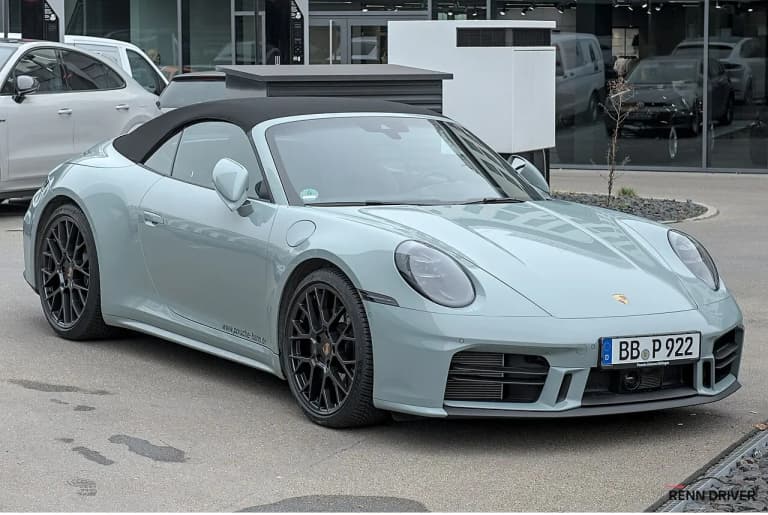
The Porsche 911 Carrera is consistently rated as one of the most usable sports cars ever built, and that reputation is genuine. The current 992 Carrera coupe has:
- Two real (small) rear seats — good for groceries, occasional kids, or extra cargo
- A front trunk (frunk) with roughly 132 liters of capacity
- PDK transmission that handles stop-and-go traffic without complaint
- Adaptive dampers (PASM) that soften considerably in comfort mode
- Optional all-wheel drive (Carrera 4, 4S, 4 GTS) for poor weather
- 20-22 mpg combined in real-world driving
- Modern infotainment with Apple CarPlay and Android Auto
The 911 Carrera handles a daily commute, a Costco run, and a weekend canyon drive without compromise. It is loud at startup, attracts attention, and the ride is firmer than a luxury sedan — but those are character traits, not deal-breakers.
Best 911 for daily use: Carrera coupe with PDK and Sport Chrono package. Adds adaptive engine mounts and launch control but does not compromise daily comfort. All-wheel-drive Carrera 4 or 4S if you live somewhere with snow.
What to avoid for daily use: GT3 and GT3 RS (too stiff, too loud), Turbo S in Sport mode (too aggressive for traffic), Targa (heaviest body style with the most complex roof mechanism).
Porsche 718 Cayman — Mid-Engine Engagement
The Porsche 718 Cayman is a two-seat mid-engine coupe that rivals the 911 for driver engagement at a lower price point. Comparison details in our Cayman vs 911 guide.
Why it works as a daily:
- Stiffer chassis with sharper handling response than the 911
- Lower price — 2026 718 Cayman starts around $70,000
- Excellent visibility for a sports car
- Front trunk + rear trunk combined (about 425 liters total)
- 22-25 mpg combined depending on engine
What you trade vs the 911:
- No rear seats — strict two-passenger limit
- Cannot use it to carry passengers ever, including a child seat
- Less prestige (matters for some, not for others)
- Smaller used-market supply than 911
For drivers who do not need rear seats and prioritize handling over straight-line speed, the Cayman is the most engaging Porsche you can daily drive. The Cayman GTS 4.0 with its naturally aspirated flat-six is one of the best driver’s cars Porsche currently sells.
Porsche Macan — The Practical Choice
The Porsche Macan is a compact luxury SUV that has been Porsche’s best-selling model since launch in 2014. For buyers who need genuine SUV practicality — child seats, dogs, large cargo, all-weather road conditions — the Macan delivers without giving up Porsche driving character.
Highlights:
- 5 seats with usable rear bench and child seat compatibility
- 488 liters cargo space (1,503 liters with rear seats folded)
- Standard all-wheel drive on every variant
- Higher ground clearance than the 911 — better for speed bumps and poor roads
- Adaptive air suspension optional
- 20-23 mpg combined for the gasoline Macan
- Electric Macan available (2024+, all-electric drivetrain, 300+ mile range)
The Macan drives more like a tall hatchback than a traditional SUV. The steering is sharp, the chassis is communicative, and the standard turbocharged engines provide strong acceleration. For families who want one Porsche that does everything, the Macan is usually the answer.
The 2026 Macan lineup includes the gasoline Macan (base, S, GTS), the Macan EV (2024+), and the high-performance Macan Turbo EV. Pricing ranges from about $65,000 base to $130,000+ for a loaded Macan Turbo EV.
Porsche Panamera — The Sports Sedan
The Porsche Panamera is a four-door grand touring sedan, now in its third generation. For buyers who need four full-size seats and high cargo capacity but want sports-car-grade driving dynamics, the Panamera is the right answer.
Strengths:
- Four real adult seats — back row genuinely usable for tall passengers
- Hatchback-style rear opening with 495 liters cargo space
- Available as gasoline, hybrid, or plug-in hybrid
- Air suspension optional with multiple ride modes
- Lower beltline and sportier seating position than typical luxury sedans
- 22-26 mpg combined for the base engines
Trade-offs:
- Largest and heaviest Porsche besides the Cayenne
- Expensive — base Panamera starts around $105,000; loaded models exceed $200,000
- Less iconic shape than the 911 or 718
- Higher running costs than smaller Porsches
For executives who commute alone but occasionally carry clients or family, the Panamera is often the right tool. The 4S E-Hybrid combines plug-in commuting capability with V8 performance reserve. The Panamera Turbo S E-Hybrid is one of the fastest accelerating sedans you can buy.
Porsche Taycan — Electric Performance
The Porsche Taycan launched in 2019 as Porsche’s first all-electric vehicle and has matured into one of the most refined electric daily drivers on the market. The current Taycan lineup spans from the base rear-drive sedan to the Turbo GT with track-focused performance.
What works for daily use:
- 0-60 mph in 2.4-3.5 seconds depending on trim
- Single-pedal driving via regenerative braking
- EPA range of 240-340 miles depending on configuration (real-world typically 200-280)
- 270-320 kW DC fast charging — 18 minutes to 80% on a 350 kW charger
- Quiet cabin even at highway speeds
- Standard adaptive air suspension
- Cross Turismo and Sport Turismo wagon body styles for cargo flexibility
What requires adaptation:
- Range anxiety on long road trips — public charging coverage is uneven by region
- Higher purchase price than equivalent gas Porsche — Taycan base starts around $100,000
- Heavier than gasoline Porsches by 600-800 pounds — handling response is different
- Battery degradation over time (Porsche warranties 8 years / 100,000 miles)
For drivers who can charge at home and rarely take long trips beyond a single charge, the Taycan is the most refined daily Porsche made. It is faster than most 911s in everyday driving, costs less to fuel, and requires less maintenance.
Porsche Cayenne — Full-Size SUV
The Cayenne is Porsche’s full-size SUV — larger, more powerful, and more expensive than the Macan. For families with more than two children, regular towing needs, or significantly larger cargo requirements, the Cayenne is the right fit.
Highlights:
- 5 seats (7 unavailable — Porsche has no third-row option)
- 772 liters cargo space (1,710 liters with seats folded)
- 3,500-7,700 lbs towing capacity depending on engine
- Available in gasoline, hybrid, and plug-in hybrid drivetrains
- Standard all-wheel drive
- Air suspension standard on higher trims
The Cayenne S, Cayenne GTS, Cayenne Turbo, and Cayenne Turbo GT cover an extremely wide performance and price range. The Turbo GT is one of the fastest SUVs on the market with sub-3-second 0-60 times. The Cayenne E-Hybrid provides 17 miles of electric-only range for commuting.
For most family buyers, the Macan is more car-like and more efficient. The Cayenne is the right choice when you specifically need the larger size or towing capability.
Which 911 Generation Is Best for Daily Use
Any 911 since 2009 makes a competent daily driver. Older generations have more compromises.
| Generation | Years | Daily-Driver Rating | Why |
|---|---|---|---|
| 992 Carrera | 2019-Present | ★★★★★ | Modern reliability, full safety/tech, AWD option, refined cabin |
| 991.2 Carrera | 2017-2019 | ★★★★★ | Twin-turbo engines, modern infotainment, excellent reliability |
| 991.1 Carrera | 2012-2015 | ★★★★ | Slightly older tech but excellent platform; some PCM 3.1 lockups |
| 997.2 Carrera | 2009-2012 | ★★★★ | Sweet spot for used value; DFI engine eliminates IMS concerns |
| 997.1 Carrera | 2005-2008 | ★★★ | IMS bearing + bore scoring concerns require careful inspection |
| 996 Carrera | 1999-2004 | ★★★ | Most affordable entry; needs IMS retrofit for peace of mind |
| 993 Carrera | 1995-1998 | ★★ | Air-cooled — drivable daily but maintenance-intensive |
| 964 Carrera | 1989-1994 | ★★ | Older still; valve cover leaks and other age-related issues |
For most buyers asking “which 911 should I daily drive,” the answer is a 997.2, 991, or 992 Carrera. The 996 is workable with an IMS retrofit. Air-cooled cars (993, 964, earlier) can be daily-driven if the owner is committed to weekly maintenance and tolerant of older car quirks.
Body style preferences for daily use: coupe over cabriolet over Targa. Coupes have the simplest mechanism, the best chassis stiffness, and the highest resale.
Porsche Models to Avoid for Daily Use
Some Porsches are wonderful cars that simply do not work as daily drivers.
Porsche 911 GT3 / GT3 RS: too stiff, too loud, too focused. The naturally aspirated 4.0-liter engine sounds incredible but the rev band requires constant 4,000+ rpm to feel alive. Cabin noise at highway speeds is fatiguing. The chassis is brilliant on a track but punishing over expansion joints. Best used as a weekend / track car.
Porsche 911 GT2 RS: 700 hp in a rear-wheel-drive 911 is overkill for daily traffic. The aggressive throttle response and lack of traction grip make stop-and-go driving uncomfortable. The intercooled turbocharged engine generates significant heat in slow conditions.
Porsche 718 Spyder RS / Cayman GT4 RS: stripped interiors, very loud cabins, unforgiving suspension. These are essentially track cars with license plates.
Porsche Boxster Spyder (981, 718): requires manual roof operation, has minimal sound insulation. Excellent weekend cars; less ideal for commuting in heavy traffic or bad weather.
Air-cooled 911 (993 and earlier): can be daily-driven by enthusiasts who know the cars well and accept the maintenance cadence. For most buyers, modern reliability outweighs the air-cooled experience for daily use. Reserve air-cooled cars for weekend driving.
Ownership Cost Reality Check
Porsche ownership costs vary significantly by model and care approach. Approximate annual ranges for a daily-driven car under normal use.
| Model | Annual Maintenance | Insurance (annual) | Fuel/Energy (10K mi) |
|---|---|---|---|
| 911 Carrera (used) | $2,000 - $4,000 | $1,800 - $3,000 | $2,200 - $2,800 |
| 911 Carrera (new, under warranty) | $500 - $1,500 | $2,200 - $3,500 | $2,200 - $2,800 |
| 718 Cayman | $1,500 - $3,000 | $1,500 - $2,500 | $1,900 - $2,400 |
| Macan | $1,200 - $2,500 | $1,600 - $2,500 | $2,200 - $2,800 |
| Panamera | $2,000 - $4,000 | $2,000 - $3,200 | $2,200 - $3,000 |
| Taycan | $800 - $1,800 (less maintenance) | $2,200 - $3,500 | $900 - $1,400 (electric) |
| Cayenne | $1,500 - $3,500 | $1,700 - $2,800 | $2,500 - $3,300 |
Indirect costs to consider: tires (Porsche-grade summer tires often $1,400-$2,200 per set, replaced every 15,000-25,000 miles), brakes (especially PCCB-equipped cars), and depreciation. Standard alloy brakes cost $1,500-$3,000 per axle to replace; PCCB ceramic brakes cost $5,000-$8,000 per axle and are typically lifetime parts.
An independent Porsche specialist charges 30-50% less than a Porsche dealer for routine maintenance on out-of-warranty cars. For owners outside the warranty period, finding a good independent shop is the single biggest cost-saving move.
Climate Considerations
Snow / heavy winter: All-wheel-drive Macan, Cayenne, or 911 Carrera 4 / 4S / 4 GTS. Snow tires are essential. Avoid summer-tire-only setups in winter conditions — the OEM Pirelli P-Zero or Michelin Pilot Sport tires lose grip below 45°F.
Hot climate (Thailand, southern US, desert): Most Porsches handle heat well, but parking in direct sun consistently can damage leather interiors and accelerate paint aging. Consider ceramic window tint, parking covers, and a garage. The Taycan and other EVs can manage thermal load with pre-conditioning while connected to home charging.
Rain / monsoon climates: All-wheel drive is helpful. The 911’s natural rear weight distribution actually makes it surprisingly good in heavy rain. Watch for hydroplaning on summer tires.
Coastal / salt air: Regular underbody washing prevents corrosion. The Macan and Cayenne hold up well to coastal conditions; the 911’s aluminum body is generally rust-resistant but suspension components can corrode in salt environments.
Renn Driver’s Take
The honest version: most buyers asking “what is the best Porsche daily driver” already know they want a 911. The question is permission to choose one.
If you can afford a 911 Carrera (new or used 991.2+/997.2+), it is the right answer for the majority of buyers. It is reliable enough for daily duty, practical enough for the typical household, fun enough that you will want to drive it on weekends, and iconic enough that ownership feels meaningful. The PDK transmission removes nearly every daily-driving objection that previous generations had.
The exceptions where another Porsche is genuinely better:
- You need rear seats for adults or multiple kids. Get a Macan, Panamera, or Cayenne.
- You prioritize all-electric driving. Get a Taycan (sedan, Cross Turismo, or Sport Turismo).
- You drive in winter conditions weekly. Get a Macan, Cayenne, or 911 Carrera 4 with proper snow tires.
- You want maximum handling engagement and do not need rear seats. Get a 718 Cayman or Boxster.
- You need to tow. Get a Cayenne.
The 911 Carrera is the answer not because it is uncompromised — every car is a compromise — but because the compromises it asks of you are smaller and more enjoyable than the compromises any other Porsche asks. A Macan is more practical but less engaging. A Taycan is faster but less iconic. A Cayman is sharper but less versatile. The 911 split the difference better than anything else.
Frequently Asked Questions
Can you daily drive a Porsche 911?
Yes, the Porsche 911 is one of the most successful daily-drivable sports cars ever made. The current 992 Carrera coupe has two rear seats, a front trunk, PDK transmission for traffic, adjustable suspension that softens in comfort mode, modern infotainment, and optional all-wheel drive. Many owners report driving their 911 as their only car for years without issue. The 911 Turbo S is similarly daily-capable; the GT3 and GT3 RS are less ideal due to firmness and noise.
What is the most reliable daily-driver Porsche?
The most reliable Porsche models for daily use are the current 992 911 Carrera, 991.2 911 Carrera, 997.2 911 Carrera (used), and the Macan. The 718 Cayman and Boxster are also extremely reliable. The Taycan electric models have shown strong early reliability. Older 996 and 997.1 Carreras require IMS bearing inspection before purchase; see our IMS bearing guide for details.
Is a Porsche expensive to maintain as a daily driver?
Yes, but reasonable in context. Plan for $2,000-$4,000 per year in maintenance on a used 911 driven daily. Newer cars under warranty have minimal out-of-pocket costs. Independent Porsche specialists charge significantly less than Porsche dealers — typically 30-50% lower labor rates. Tires are the biggest variable cost — a set of OEM Porsche-grade summer tires runs $1,400-$2,200 and lasts 15,000-25,000 miles depending on driving style.
Is the Macan a real Porsche for daily driving?
Yes. The Macan delivers genuine Porsche driving character in an SUV body. The steering feel, chassis tuning, and acceleration are all clearly Porsche-engineered. The Macan has been Porsche’s best-selling model since 2014 because it works as the only car for families who want Porsche character without giving up SUV practicality. The new electric Macan launched in 2024 is widely considered one of the best electric SUVs on the market.
Should I buy a used 911 or a new Macan with the same budget?
It depends on what you actually need. If you can fit your life into a 911’s space constraints (no third row, limited rear seats, smaller cargo), a used 997.2 or 991.1 Carrera in the $55,000-$80,000 range delivers a more engaging driving experience than a new Macan. If you need real SUV practicality — child seats, dogs, large cargo, family road trips — a new Macan is the better daily tool. Many Porsche households end up owning one of each over time.
Is a manual transmission Porsche good for daily driving?
A manual Porsche works as a daily driver if you do not commute in heavy traffic and you enjoy the engagement. In stop-and-go traffic, the constant clutch operation becomes tedious. PDK is significantly more usable for daily use. See our PDK vs manual guide for the full comparison. For weekend cars or light traffic commuters, manual is rewarding. For 60-minute traffic crawls, PDK wins.
Can a Porsche 911 GT3 be a daily driver?
Technically yes, practically not for most buyers. The GT3 has a firm ride, loud cabin, aggressive throttle response, and requires high revs (typically 5,000+ rpm) to feel alive. Long highway drives produce significant cabin noise. Speed bumps require careful navigation due to the front splitter. Owners who daily a GT3 typically have a high tolerance for noise and a strong preference for engagement over comfort. The GT3 Touring (no rear wing) is slightly more daily-friendly than the standard GT3.
What is the cheapest Porsche daily driver?
The cheapest path into Porsche ownership for daily use is a 986 Boxster or 996 Carrera, both available from $20,000-$35,000 in clean condition. Both share the M96 engine architecture with known IMS bearing concerns — see the IMS bearing guide for inspection guidance. A documented IMS retrofit transforms either of these into a legitimate value proposition. For more reliability at slightly higher cost, the 987 Cayman ($30,000-$50,000) or 997.2 Carrera ($55,000+) are stronger long-term picks.
Pricing and performance estimates reflect 2026 US market and may vary by region. Maintenance cost ranges based on independent shop quotes; dealer service runs higher. This guide is informational; not financial or purchase advice.