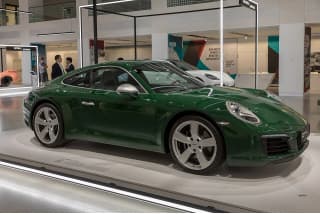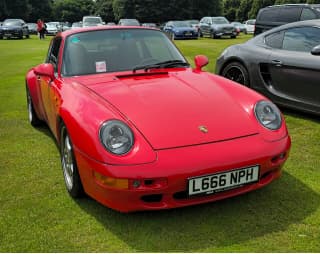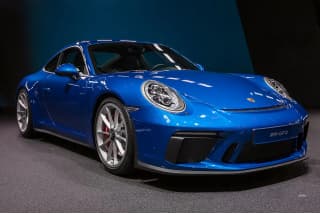
The Porsche 911 is among the most reliable sports cars ever built, but each generation has known weak points. The 996 and early 997 are most commonly flagged for IMS bearing failure, rear main seal leaks, and bore scoring on certain engines. The 991 and 992 are largely free of catastrophic failures but have minor electronic and trim issues. Air-cooled cars (964, 993, and earlier) have age-related issues like leaky valve covers and chain tensioners. Most problems are predictable, well-documented, and inspectable before purchase.
In this article, we’ll break down the most common Porsche 911 problems by generation. We’ll cover IMS bearing failure, bore scoring, PDK reliability, and inspection tips.
Contents
- 1 Quick Summary by Generation
- 2 The 996 and Early 997 (M96/M97): Common Problems
- 2.1 IMS Bearing Failure
- 2.2 Rear Main Seal Leaks
- 2.3 Bore Scoring
- 2.4 Coolant Pipe and AOS Issues
- 3 The 991 Generation
- 4 The 992 Generation
- 5 Air-Cooled 911s (964 and Earlier)
- 6 PDK Transmission Reliability
- 7 Pre-Purchase Inspection Checklist
- 8 Repair Cost Summary
- 9 Renn Driver’s Take
- 10 Frequently Asked Questions
Quick Summary by Generation
| Generation | Years | Most Common Issue | Severity |
|---|---|---|---|
| 964 | 1989-1994 | Dual mass flywheel, valve cover leaks | Moderate |
| 993 | 1994-1998 | Cylinder head studs, secondary air system | Moderate |
| 996 (early, dual-row IMS) | 1999 | RMS leaks (IMS rarely fails) | Moderate |
| 996 (single-row IMS) | 2000-2005 | IMS bearing, RMS leaks, AOS | High |
| 997.1 Carrera S (3.8L M97) | 2005-2008 | Bore scoring (large non-serviceable IMS rare but catastrophic) | High |
| 997.2 | 2009-2012 | None significant (DFI engine fixes most issues) | Low |
| 991.1 | 2012-2015 | PDK seal leaks, electronic gremlins | Low |
| 991.2 | 2016-2019 | None significant | Very Low |
| 992 | 2019-Present | Infotainment glitches, trim rattles | Very Low |
The pattern is clear: the water-cooled era from 1999 to 2008 has the most documented failure modes. The 997.2 onwards is generally considered modern Porsche reliability — solid, predictable, and rarely catastrophic when serviced on schedule.
The 996 and Early 997 (M96/M97): Common Problems
The biggest concern for any used 996 or pre-2009 997 shopper is the engine. Porsche moved from the air-cooled M64 in 1998 to the water-cooled M96 (later M97) for the 996, then carried the design forward into the early 997. These engines were a complete redesign and introduced several new failure modes that have shaped the used 911 market ever since.
To be clear, most M96 and M97 engines run reliably for decades. The internet amplifies the failure cases. But the failures are real, expensive, and worth understanding before you buy.
IMS Bearing Failure
The intermediate shaft (IMS) is a small shaft inside the M96 and M97 engines that drives the timing chains. It is supported by a sealed bearing at the back of the engine. When that bearing fails, debris contaminates the oil and the timing chains can jump or break. The result is typically catastrophic engine failure that requires either a full rebuild or a replacement engine.
Failure rates vary by year and engine. Independent studies, including the well-known class-action analysis, suggest:
- 1997-1999 996 (dual-row IMS): roughly 1-2% failure rate. The dual-row bearing is the lowest-risk IMS in the M96 family.
- 2000-2005 996 (single-row IMS): roughly 8-10% failure rate. The most-discussed IMS years and the cars most commonly retrofitted today.
- 2005-2008 997.1 / late 996 (larger non-serviceable bearing): low single-digit failure rate, but the bearing is sealed into the engine case and can not be replaced without splitting the engine — making any failure catastrophic.
- 2009+ 997.2 (DFI engines): no IMS, no risk.
For single-row 2000-2005 996 cars, retrofit kits from LN Engineering and others replace the original sealed bearing with a serviceable ceramic ball bearing. The retrofit costs $2,000 to $3,500 with installation and is considered preventive maintenance for any high-mileage car in this range. The earlier 1997-1999 dual-row cars can also be retrofitted but are lower priority because the original bearing rarely fails.
The 2005-2008 large non-serviceable bearing can not be retrofitted without splitting the engine case — a $10,000+ job. For these cars, owners typically run them, monitor the oil filter for metal debris at every change, and accept the risk.
The 997.2 in 2009 introduced direct fuel injection (DFI) and a redesigned engine that eliminated the IMS entirely. From 2009 onward, IMS is not a concern.
Rear Main Seal Leaks
The rear main seal (RMS) sits between the engine and the transmission. On M96 and M97 engines, the RMS frequently weeps oil — sometimes a few drops, sometimes enough to require a clutch-out repair to address. Porsche issued multiple revised seal designs over the production run, and most modern installations use the latest version, which is significantly improved.
An RMS leak by itself does not damage the engine. It is a maintenance issue that becomes a labor cost (around $1,500 to $2,500) because the transmission has to come out to access the seal. Many owners address it during clutch replacement to bundle the labor.
If a 996 or 997 you are inspecting has a clean engine bay around the bell housing, the RMS has either been recently replaced or has not started leaking yet. Either is fine — just know it is a likely future expense.
Bore Scoring
Bore scoring is vertical scratching on the cylinder walls, typically appearing in the 6-o’clock position of the bore. It is caused by piston skirt wear and is most commonly associated with the 3.8-liter M97 engine in the 997.1 Carrera S and 4S, as well as some late 996 GT3 engines. Bore scoring is rare on the 3.4L and 3.6L M96 engines.
The diagnostic is borescope inspection through the spark plug holes. A pre-purchase inspection by a Porsche specialist should always include this on a 997.1 Carrera S. Mild scoring may run for years with no functional issue. Heavy scoring requires a full top-end rebuild — typically $8,000 to $15,000 — or in extreme cases a replacement short block.
The exact cause is debated. Common theories include the use of low-tension piston rings for emissions, oil starvation under hard cornering, and the Lokasil cylinder coating wearing prematurely. The 997.2 DFI engine eliminated this issue.
If you are shopping a 997.1 Carrera S, factor borescope inspection into your purchase budget. A clean bore is a significant value premium on the used market for these cars.
Coolant Pipe and AOS Issues
Two more common items on M96/M97 cars:
Plastic coolant pipes: The original 996 and early 997 use plastic coolant pipes that run between the engine block and the heater core. These can crack with age. Replacement pipes from Porsche or aftermarket suppliers are aluminum, and the upgrade is typically performed during another engine-out service. Cost: around $800 to $1,500 in parts plus labor.
Air-Oil Separator (AOS): The AOS regulates crankcase pressure and separates oil from blow-by gases. A failed AOS causes oil consumption, blue smoke at startup, and rough idle. Replacement is straightforward — about $400 to $700. Failure is so common that it is essentially a maintenance item on cars over 100,000 miles.
The 991 Generation
The 991 generation launched in 2012 and ran through 2019. It uses an entirely different engine (the 9A1) that does not share any of the M96/M97 problems. The 991 is widely regarded as the most reliable 911 generation up to that point.
That said, a few 991-specific issues exist:
- PDK transmission seal leaks: some 991.1 cars develop minor leaks around the PDK output seals. Not catastrophic, but worth checking. Repair runs $800 to $1,500.
- Electronic glitches: the early PCM 3.1 infotainment can lock up or display bizarre messages. Software updates from the dealer usually resolve it. The 991.2 facelift moved to PCM 4.0 and is rock solid.
- Coil pack failures: ignition coil packs can fail intermittently, causing misfires. Replacement is a few hundred dollars in parts.
- Plastic intake flap actuators: the variable intake system on the 991.1 has plastic flap actuators that can fail. Causes a check-engine light but no driveability issue. Around $400 to repair.
The 991.2, introduced for the 2017 model year, switched the Carrera and Carrera S to twin-turbocharged engines. Reliability of the 991.2 is excellent. There are no widespread known issues.
The 992 Generation
The 992 generation began production in 2019 and remains in production. Most 992s on the road are still under factory warranty, so failure data is limited, but early reliability indicators are strong.
Reported minor issues:
- Infotainment lockups: the PCM 6.0 system occasionally requires a reboot. Fixed by software updates over the air or at the dealer.
- Trim rattles: some early 992s have rattles in the door cards or center console. Dealer fixes are common warranty items.
- Wet weather electronics: a small number of 992s have reported parking sensor false triggers in heavy rain. Software updates resolve most cases.
No engine, transmission, or major mechanical issues are widespread on the 992 as of 2026. The platform appears to continue the 991.2’s strong reliability record.
Air-Cooled 911s (964 and Earlier)
The 964 and 993 have very different problem profiles than the water-cooled cars. The engines are simpler, more rebuildable, and have decades of mechanical knowledge behind them — but they are also 30+ years old, and age matters.
964 specific issues:
- Dual mass flywheel failure — replacement runs $2,000 to $3,500
- Valve cover gasket leaks — $400 to $800 to address all six covers
- Power steering rack leaks — $1,500 to $2,500
- Wiring harness brittleness — eventually requires harness replacement on high-mileage cars
993 specific issues:
- Cylinder head studs — early 993s have studs that can pull out of the heads. Updated studs fix the issue. Repair on a failed engine is $5,000 to $10,000.
- Secondary air injection valve failures — common, around $500 to repair
- Distributor cap and rotor wear — routine maintenance
For 1989-and-earlier 911s (3.2 Carrera, SC, and earlier long-hood cars), the most common issues are oil leaks from chain box covers, timing chain tensioner failure (especially on pre-1984 cars without the updated tensioners), and worn crankcase studs.
Air-cooled 911 ownership is more about scheduled maintenance and proactive engine care than about waiting for catastrophic failure. A well-maintained air-cooled 911 with documented service history is one of the most reliable classic sports cars you can buy.
PDK Transmission Reliability
Porsche’s PDK dual-clutch transmission was introduced on the 997.2 and has carried through every 911 generation since. Long-term reliability has been excellent across the board.
Maintenance requirements:
- PDK fluid and filter change every 4 years or 60,000 miles. Costs $400 to $700.
- The dual-clutch packs themselves typically last 100,000+ miles in normal use. Aggressive launch control use shortens life significantly.
- A clutch pack rebuild on a high-mileage PDK runs $4,000 to $6,000.
Common PDK issues (rare but worth knowing):
- Output seal leaks on early 991.1 PDKs (mentioned above)
- Mechatronics unit failure — extremely rare, around $5,000 if it happens
- Software updates occasionally needed for shift quality complaints
The PDK is consistently rated as one of the best dual-clutch transmissions ever produced. Reliability is significantly better than the dry-clutch DSG units in some other German performance cars.
Pre-Purchase Inspection Checklist
If you are shopping a used 911, a pre-purchase inspection (PPI) by a Porsche-specialist independent shop is essential. A comprehensive PPI runs $300 to $600 and should cover the following.
Mandatory for any 996 or 997.1:
- Borescope inspection of all six cylinders for bore scoring
- Oil filter cut-open inspection for ferrous debris (IMS bearing red flag)
- Compression and leak-down test on all six cylinders
- Visual inspection for RMS oil weep at the bell housing
- Coolant pipe condition (still plastic or upgraded to aluminum)
- AOS function check (oil consumption, smoke at startup)
Mandatory for any 991 or 992:
- Full diagnostic scan with Porsche-specific PIWIS tool
- PDK fluid quality check
- Battery health (these cars are sensitive to weak batteries triggering false electronic warnings)
- Service history confirmation
Mandatory for air-cooled cars:
- Compression and leak-down on all six cylinders
- Inspection of crankcase, chain box, and chain tensioner condition
- Heat exchanger and exhaust condition
- Suspension component wear, especially front struts
- Documentation review going back as far as possible
A clean PPI report on a used 911 is more valuable than the marketing copy attached to any listing.
Repair Cost Summary
| Issue | Affected Models | Typical Cost (USD) |
|---|---|---|
| IMS bearing retrofit | 2000-2005 996 (single-row) | $2,000 - $3,500 |
| IMS bearing repair after failure | Any M96/M97 | $15,000 - $25,000+ |
| RMS replacement | 996, 997 (mostly) | $1,500 - $2,500 |
| Bore scoring repair (top-end) | 997.1 3.8L | $8,000 - $15,000 |
| Coolant pipe upgrade | 996, early 997 | $1,500 - $3,000 |
| AOS replacement | 996, 997 | $400 - $700 |
| PDK fluid service | 997.2, 991, 992 | $400 - $700 |
| Cylinder head stud repair | 993 | $5,000 - $10,000 |
| Dual mass flywheel | 964, manual 993 | $2,000 - $3,500 |
| Valve cover gasket set | Air-cooled, 996, 997 | $400 - $1,200 |
Renn Driver’s Take
The Porsche 911 is more reliable than its reputation suggests. The internet remembers the 996 IMS bearing horror stories because a tiny number of failures cost owners catastrophic money. The reality is most 996s and early 997s run for decades without engine trouble, and even when issues arise, the diagnostic and repair paths are well-documented.
If you want minimum-stress ownership, buy a 997.2 or newer. The DFI engine eliminated the M96/M97 failure modes entirely, and the platform has aged into one of the most reliable sports cars on the road.
If you want the air-cooled experience, the 993 is the most refined and durable, but every air-cooled 911 needs proactive maintenance and an experienced specialist. Buy on history, not on color.
And if you are looking at a 996 or early 997 because the prices are low — go in with your eyes open, get a thorough PPI, and budget for known maintenance items. These cars can deliver an incredible ownership experience for the money. They just have a known service profile that you should understand before you sign.
Frequently Asked Questions
Are Porsche 911s reliable?
Yes, the Porsche 911 is one of the most reliable sports cars ever built. Consumer surveys consistently rate it above other premium European performance cars in long-term reliability. The 997.2, 991, and 992 generations are particularly strong. The 996 and early 997.1 have well-known engine issues that are predictable, inspectable, and addressable.
What is the most reliable Porsche 911?
The 991.2 (2017-2019) and 992 (2019-present) are the most reliable 911 generations ever produced. They have no known catastrophic failure modes, and the engines, transmissions, and electronics have proven dependable in the field. The 997.2 (2009-2012) is the most reliable used 911 you can buy at a reasonable price.
Should I be afraid of buying a 996?
No, but you should buy carefully. A 996 with documented service history, a recent IMS retrofit (or a confirmed-low-failure-risk dual-row engine), and a clean PPI is an exceptional value sports car. The model has the best dollar-per-driving-experience ratio in the entire 911 lineup. The IMS issue is real but well-understood. Most 996s on the road today have either had a retrofit or have run their entire life without issue.
Is the 997.1 Carrera S a bad buy?
It depends on the specific car. The 3.8L M97 in the 997.1 Carrera S is the engine most associated with bore scoring. A borescope inspection during a PPI is essential. A clean 997.1 Carrera S with documented oil analysis and no scoring is a great car. A scored example will need top-end work that often exceeds what the car is worth on the used market. Buy only with a thorough inspection.
How long do Porsche PDK transmissions last?
PDK transmissions in normal driving regularly last 150,000 miles or more without issues. Aggressive use, especially repeated launch control activations, can wear the dual clutch packs faster — sometimes requiring rebuild at 80,000 to 100,000 miles. Routine fluid and filter service every 4 years or 60,000 miles extends transmission life significantly.
Do new Porsche 911s have any common problems?
The current 992 generation has no widespread mechanical issues as of 2026. Reported minor problems include occasional infotainment lockups and trim rattles — both typically resolved under warranty. Reliability is very strong on the 992. The platform appears to continue the 991.2’s excellent track record.
What does a Porsche 911 pre-purchase inspection cost?
A comprehensive Porsche-specialist PPI typically costs $300 to $600 in the United States. For 996, 997.1, and air-cooled cars, the borescope and leak-down test components are essential and worth paying for. A good PPI report can identify $5,000 to $20,000 in deferred maintenance issues before you buy. It is the single most valuable investment in any used 911 purchase.
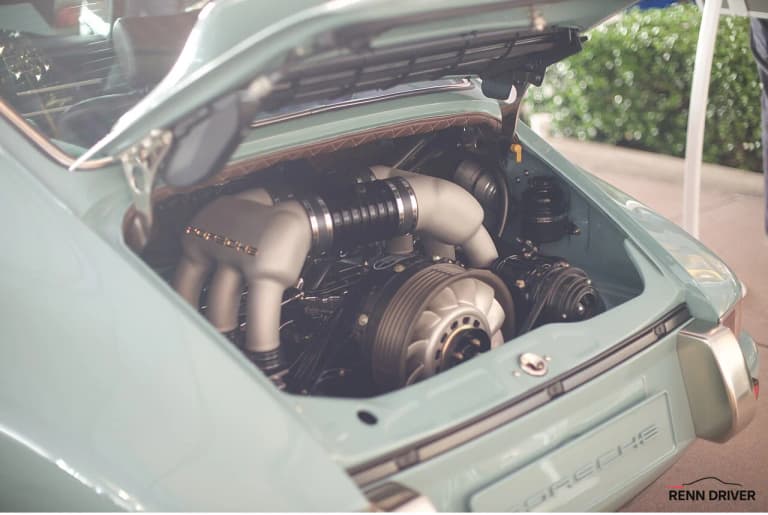
Engine image: Singer Vehicle Design, via Wikimedia Commons. Repair cost figures are typical US-market 2026 ranges and will vary by region, shop, and vehicle condition.