Over six decades, different Porsche 911 generations have evolved while maintaining its enduring legacy. This makes it one of the most iconic sports cars in automotive history.
This guide walks through all eight generations of the 911 and how to understand the numbering system. Each one built on what came before it, adding something new while keeping the car’s identity intact. Whether it is air-cooled or turbocharged, classic or modern, every 911 is still a 911.
Contents
- 1 Quick Overview: The 8 Generations of the 911
- 2 How the Porsche 911 Naming Convention Works
- 3 Performance and Technology: Evolution Through the Generations
- 4 1st Generation: Porsche 911 (1964–1973)
- 5 2nd Generation: G-Series (1974–1989)
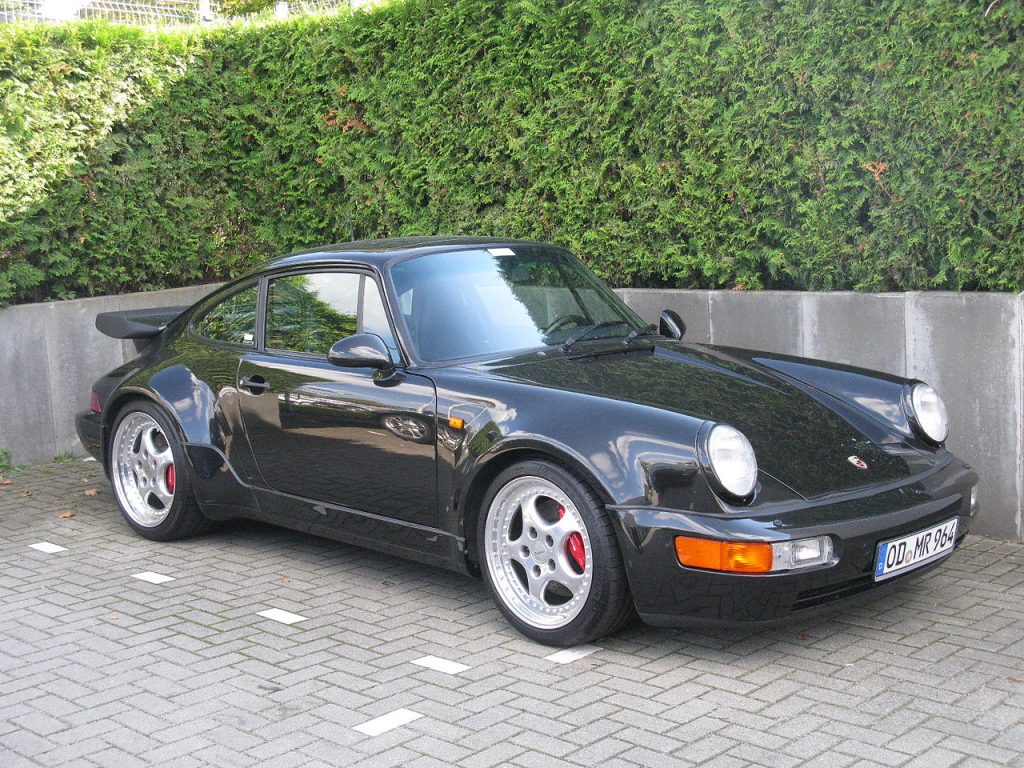
- 6 3rd Generation: Porsche 964 (1989–1994)
- 7 4th Generation: Porsche 993 (1994–1998)
- 8 5th Generation: Porsche 996 (1997–2005)
- 9 6th Generation: Porsche 997 (2004–2012)
- 10 7th Generation: Porsche 991 (2011–2019)
- 11 8th Generation: Porsche 992 (2018–Present)
- 12 Pop Culture and Legacy
- 13 Frequently Asked Questions
- 13.1 1. What are the different generations of the Porsche 911?
- 13.2 2. Why do people refer to Porsche 911s by numbers like 993 or 997?
- 13.3 3. Which Porsche 911 generation is the best?
- 13.4 4. When did Porsche switch from air-cooled to water-cooled engines?
- 13.5 5. What do 911 model names like Carrera, Turbo, and GT3 mean?
- 13.6 6. What’s the difference between a 997.1 and 997.2?
- 13.7 7. Which Porsche 911 models are air-cooled?
- 13.8 8. What is the most reliable 911 generation?
- 13.9 9. Which Porsche 911 generation is best for daily driving?
- 13.10 10. How do I tell Porsche 911 generations apart?
- 14 Renn Driver’s Take
- 15 Final Thoughts
Quick Overview: The 8 Generations of the 911
The Porsche 911 has evolved through many generations, each defined by distinct model years that introduced new features, technologies, and design updates. These model years mark important milestones in the 911’s history and highlight the continuous innovation that keeps the car desirable among enthusiasts.
| Generation | Years | Key Features |
|---|---|---|
| 901 / Original | 1964–1973 | Air-cooled start, classic shape, 2.0L engine |
| G-Series | 1974–1989 | Longest run, safety bumpers, Turbo introduced |
| 964 | 1989–1994 | ABS, power steering, AWD, modern tech begins |
| 993 | 1994–1998 | Last air-cooled 911, smoother styling, cult favorite |
| 996 | 1997–2005 | First water-cooled, new headlights, faster, and roomier |
| 997 | 2004–2012 | Return to classic looks, big tech upgrades |
| 991 | 2011–2019 | Larger body, dual-clutch PDK, more luxury inside |
| 992 | 2018–Present | Fully digital interior, wide body, turbocharged lineup |
How the Porsche 911 Naming Convention Works
Every Porsche 911 is called a “911,” but that’s just the starting point. Behind the scenes, Porsche uses internal codes and trim names to track each generation and variant.
Enthusiasts often refer to both the generation code and the model year to specify a particular Porsche 911, since the model year highlights updates, design changes, and features introduced in each version. If you’re getting into 911s, knowing these names will help you follow conversations, listings, and articles more easily.
1. Generational Codes
The internal codes are what Porsche uses to label each full platform update. These usually appear in factory documentation, parts systems, and enthusiast circles. The codes change with each generation.
| Generation | Internal Code | Years | Notes |
|---|---|---|---|
| 1st | 901 / 911 | 1964–1973 | Originally called 901, renamed 911 due to the Peugeot trademark |
| 2nd | G-Series | 1974–1989 | Porsche revised the 911 in 1973 with updates to its design, body, and engine technology, improving performance, comfort, and safety. |
| 930 | 1975–1989 | First 911 Turbo model, often used to refer to this generation as a whole | |
| 3rd | 964 | 1989–1994 | Major refresh with ABS, AWD, airbags |
| 4th | 993 | 1994–1998 | Last air-cooled 911 |
| 5th | 996 | 1997–2005 | First water-cooled engine, new styling |
| 6th | 997 | 2004–2012 | Return to round headlights, modern classic feel |
| 7th | 991 | 2011–2019 | Longer, wider, and more refined |
| 8th | 992 | 2018–Present | Current generation with advanced tech and wide-body standard |
Key Insight: Most enthusiasts refer to 911s by these codes. Instead of saying “a 2004 Porsche 911,” they’ll say “a 996 Carrera” or “a 996.2 Turbo.” It’s quicker and gives more detail.
2. Trim Levels and Variants
After the generation code, the next detail is the trim. This tells you what kind of engine, drivetrain, or setup the car has. Porsche has used a consistent set of badges over the years, though meanings can shift slightly by generation.
| Variant | Meaning |
|---|---|
| Carrera | Base model 911 (entry-level version; modern versions are turbocharged) |
| Carrera S | More power and upgraded suspension or brakes |
| Carrera 4 | All-wheel drive version |
| Targa | Open-top with a distinctive roll bar; modern versions feature a complex retractable roof system with a glass rear section |
| Turbo | Twin-turbocharged with a wider body and more power |
| GT3 | Track-focused, naturally aspirated |
| GT2 | Track-focused, turbocharged, rear-wheel drive |
| GTS | Mid-range performance trim with added features |
| RS | “Rennsport” – ultra-focused track version |
| .1 vs .2 | Indicates facelift or update during the generation (example: 997.1 vs 997.2) |
Example
A “991.2 GT3 RS” means it’s the facelifted version of the seventh-generation GT3 RS, made between 2017 and 2019.
3. How Enthusiasts Talk
Once you know the system, reading Porsche forums, listings, or conversations becomes much easier. Here are some common formats and terms you’ll see.
Examples:
- “992 Turbo S” – the current top-tier Turbo model
- “997.2 Carrera 4S cab” – a facelifted 997 Carrera 4S convertible
- “Looking for a clean 993 C2S” – C2 means Carrera 2 (rear-wheel drive), S adds more power
Common shorthand:
- “C2” = Carrera 2, rear-wheel drive
- “C4” = Carrera 4, all-wheel drive
- “NA” = Naturally aspirated
- “.1” and “.2” = Pre-facelift and post-facelift versions
Once you understand the format, it becomes second nature. It also helps explain why 911 discussions can sound like code at first. It’s just a mix of model, trim, and generation.
Performance and Technology: Evolution Through the Generations
The Porsche 911 has been in production since 1964. It has changed a lot over the years, with more power, more tech, and more speed, but the core idea has always stayed the same. Rear engine. Flat-six. A shape you can spot from a mile away.
The Porsche 911’s journey through eight generations is a masterclass in how a sports car can evolve without losing its soul. From the very first model, Porsche set the standard for performance, engineering, and innovation. These are qualities that have only grown stronger with each new version.
In the early days, the 911’s air-cooled engine and rear wheel drive layout defined its character. The original 2.0L flat-six was a marvel of its time, delivering lively power and a unique sound that became a hallmark of the brand.
As the G Series arrived, Porsche introduced mechanical fuel injection and steadily increased engine displacement, pushing power output higher and making the 911 a true high-performance icon. The addition of the first turbocharged engine in the 1970s brought a new level of excitement, with the legendary “whale tail” rear spoilers and unmistakable turbo lag that made every drive an event.
The fourth generation marked a turning point, as Porsche began to blend classic sports car dynamics with modern technology. All wheel drive became available, inspired by Porsche’s rally success, and the 911’s engines continued to grow in both size and sophistication. The introduction of larger brake discs and improved materials meant the car could stop as confidently as it could accelerate.
With the arrival of water-cooled engines in the late 1990s, the 911 entered a new era. Water cooling allowed for greater power outputs, improved reliability, and better emissions—crucial for keeping the 911 at the forefront of the automotive world.
Porsche continued to refine the formula, adding features like Porsche Traction Management (PTM) for enhanced grip, and using lightweight materials such as aluminum and carbon fiber to sharpen handling and boost performance.
Aerodynamics have also played a huge role in the 911’s evolution. Early models relied on simple rear spoilers, but modern versions feature active aerodynamics and adaptive rear spoilers that adjust to speed and driving conditions, maximizing stability and efficiency.
The eighth generation takes this even further, with advanced active aerodynamics and a wide body as standard, ensuring the 911 remains as planted as ever at high speed.
Inside, the 911 has kept pace with technology. The latest models offer a fully digital cockpit, advanced infotainment systems, and a suite of driver assistance features—without sacrificing the driver-focused feel that makes the 911 special. Transmission options have expanded, from classic manual transmissions to lightning-fast dual-clutch automatic transmissions, giving drivers the best of both worlds.
Throughout its history, the Porsche 911 has balanced tradition and innovation. Whether it’s the unmistakable feel of a rear wheel drive Carrera, the relentless grip of an all wheel drive Turbo S, or the razor-sharp response of a GT3, every 911 is a testament to Porsche’s commitment to building the ultimate sports car. With each new generation, the 911 proves that you can honor the past while pushing the boundaries of what’s possible on the road and track.
1st Generation: Porsche 911 (1964–1973)
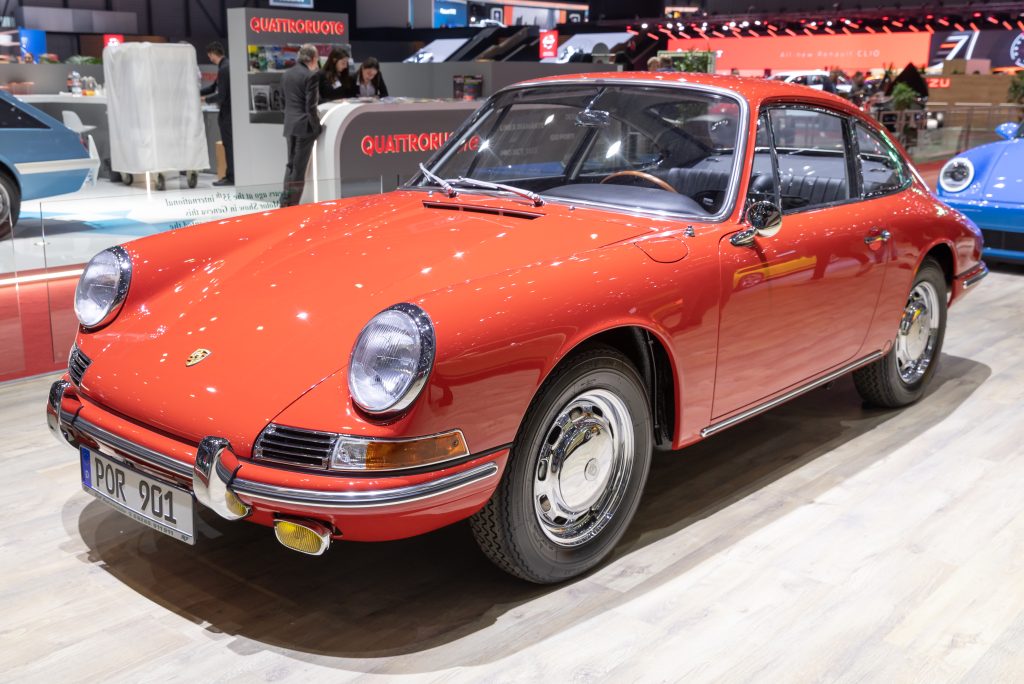
The first-generation 911 started life as the Porsche 901. Just before production began, Peugeot claimed rights to any car names with a zero in the middle. Porsche changed it to 911, and that name stuck. The first Porsche 911, launched in 1963, established the brand’s signature rear-engine layout and air-cooled flat-six engine, setting the foundation for future models.
The original 911 was powered by a 2.0-liter flat-six engine. It had rear-wheel drive, a five-speed manual, and simple mechanicals. Early models made around 130 horsepower, but they were light and fun to drive.
It kept the spirit of the 356 but was more refined and better balanced. Porsche improved it each year, adding stronger engines and better handling.
Key Specs:
- 2.0L air-cooled flat-six
- Around 2,400 pounds
- Rear-engine, rear-wheel drive
- Manual transmission only
Motorsport Legacy: The early 911s were quick, dependable, and easy to modify, making them a great choice for privateers in rally and endurance racing. Even in its first years, the 911 earned class wins and podiums. The foundation for later high-performance evolutions, including the first Turbo, was set by the 911’s inherent sporting capabilities.
Fun Fact: The 911 Targa was introduced in 1967. It had a removable roof panel and a fixed roll bar for safety, which was a new idea at the time.
2nd Generation: G-Series (1974–1989)
The G-Series is the longest-running 911 generation. It lasted for 16 model years and saw many changes, both inside and out.
One of the biggest visual updates came in 1974. New safety rules led Porsche to redesign the bumpers. They added black rubber bellows between the bumper and body, which became a defining look for years.
Performance kept improving. The engine grew in size and power. In 1975, Porsche released the first Porsche 911 Turbo, known as the 930. It had wide fenders, a large rear spoiler, and serious power. It also had big turbo lag, which made it exciting and a little unpredictable.
Other models in this generation include the 911 SC and the 3.2 Carrera. The 911 SC, or ‘Super Carrera’, was designed for improved reliability and accessibility, featuring a 3.0L engine with better performance and corrosion resistance. Its production run lasted from 1978 to 1983, and a cabriolet version was introduced in 1983. These cars added reliability, comfort, and better drivability without losing the feel of the original.

Highlights:
- Bumpers redesigned to meet US crash laws
- Engine range: 2.0L to 3.3L turbocharged
- First use of turbocharging in a production Porsche
- Available in coupe, Targa, and convertible
Motorsport Legacy: The G-Series was the foundation for some of Porsche’s greatest race cars. Models like the Carrera RSR and the 935 were based on the 911 shell but heavily modified. These cars won major events, including Daytona and Le Mans.
Fun Fact: Porsche nearly replaced the 911 with the front-engine 928. But the 911’s popularity never faded, so Porsche kept it going.
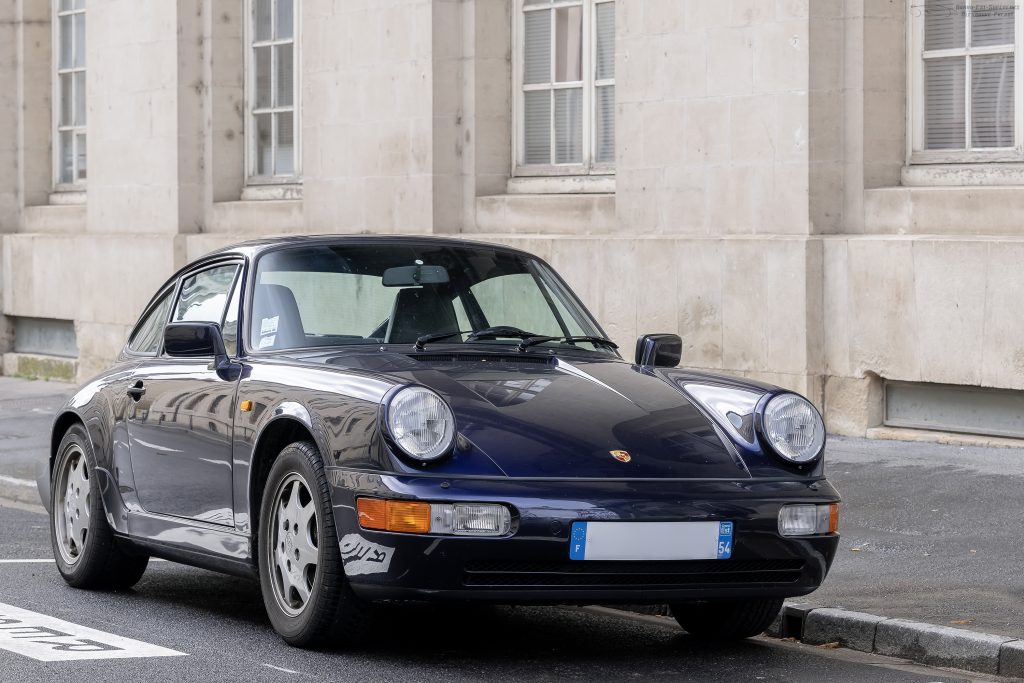
3rd Generation: Porsche 964 (1989–1994)
The 964 marked the start of major updates to the 911. It still looked like the older models at first glance, but underneath it was almost completely new.
Porsche added ABS, power steering, and, for the first time, all-wheel drive. The new suspension replaced torsion bars with coil springs, improving ride quality and handling.
The base Carrera 2 had rear-wheel drive, while also being the first 911 base model to offer an automatic transmission option—the Tiptronic system. The Carrera 4 came with Porsche’s new all-wheel drive system, developed from their rally racing efforts. Later, the 964 Turbo brought even more power to the lineup.
Key Specs:
- 3.6L flat-six engine
- 250 to 360 horsepower, depending on model
- Available AWD or RWD
- First use of a retractable rear spoiler
- First 911 with automatic transmission (Tiptronic) option
Motorsport Legacy: The 964 led to the creation of the Carrera Cup and was the base for many race cars in the early 1990s. These included the RSR and specialized track versions.
Fun Fact: The 964 was the first 911 to offer a factory automatic transmission, using a four-speed Tiptronic.
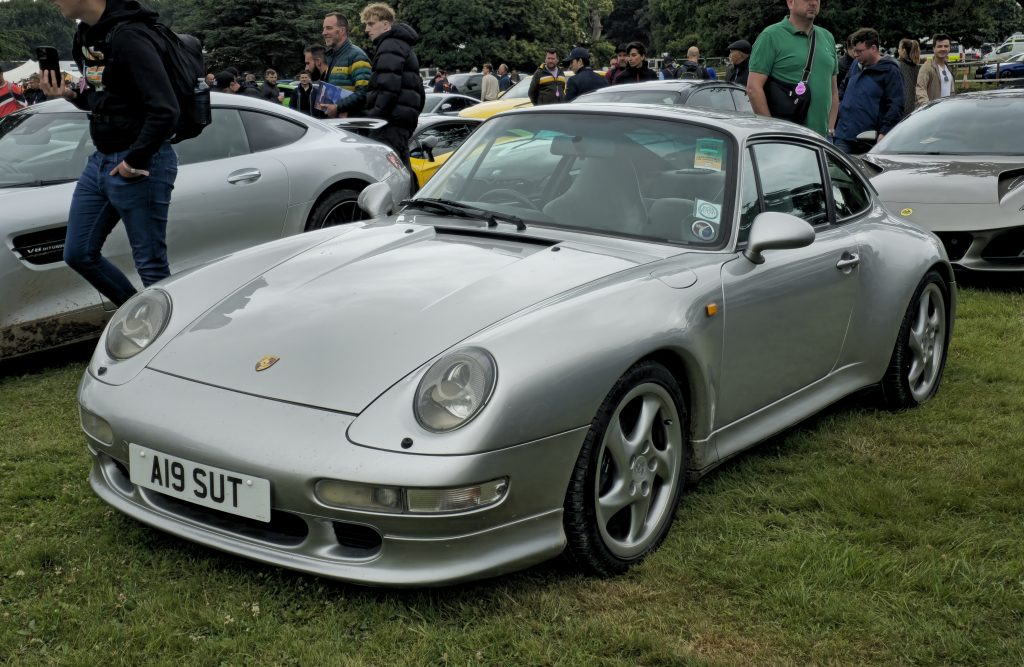
4th Generation: Porsche 993 (1994–1998)
The 993 was the last air-cooled 911. That alone makes it important, but it is also widely regarded as one of the best-driving versions ever made.
Porsche introduced the 993 as a new model with a smoother design, more integrated bumpers, and a wider rear. The engine was refined, and the new multi-link rear suspension made the car more stable, especially in corners. It felt more modern than the cars before it, but it still kept the raw driving feel that people loved.
The Turbo version added all-wheel drive and twin turbos for the first time in a 911. Other standout models included the Carrera S, Carrera 4S, which shared the Turbo’s wide body but stayed naturally aspirated, and the Porsche 911 Carrera RS, a lightweight, high-performance variant with strong motorsport heritage.
Key Specs:
- 3.6L air-cooled flat-six
- 272 to 450 horsepower
- First twin-turbocharged 911 Turbo
- Multi-link rear suspension
Motorsport Legacy: The 993 GT2 was built for racing and homologation. It had rear-wheel drive, huge fenders, and very little in the way of driver aids. It was fast, focused, and became a favorite for collectors and racers alike.
Fun fact: The 993 was the first 911 to use a six-speed manual transmission as a standard. Earlier models had five speeds or fewer.
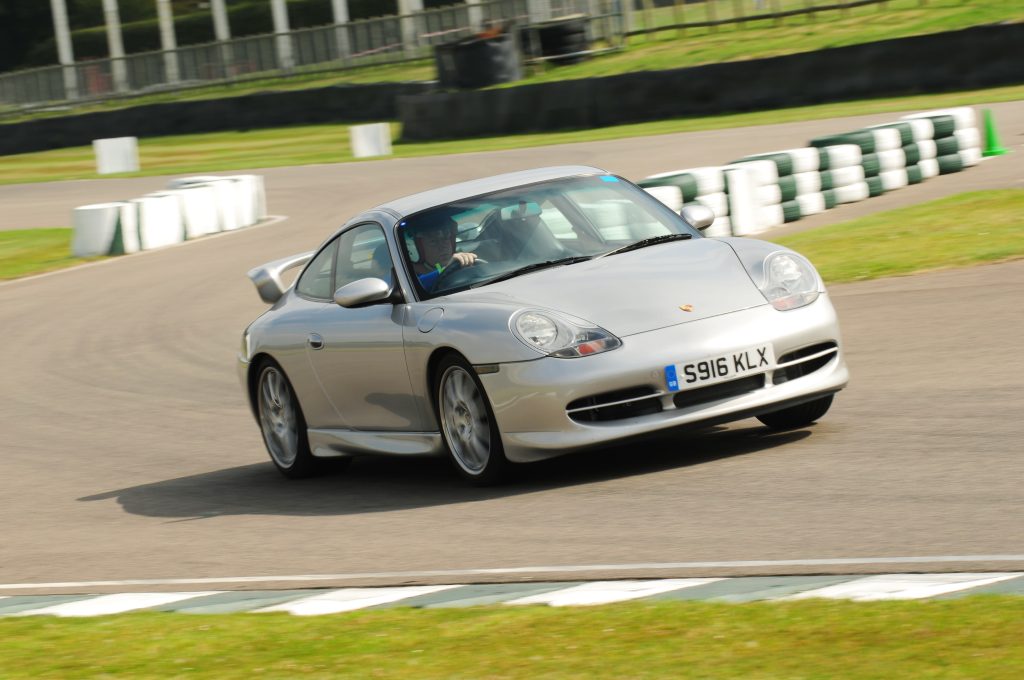
5th Generation: Porsche 996 (1997–2005)
The 996 marked the beginning of a new era. Porsche switched from air cooling to water cooling for the first time. This allowed for better performance and emissions, but it also changed the sound and feel of the engine.
The design was a big shift. The headlights were larger and shared with the Boxster, which gave the front end a softer look. Some fans pushed back on the changes, but the 996 offered major performance gains and better comfort.
The Porsche 911 Carrera was a core model in the 996 lineup, known for its balance of everyday usability and sports car performance. The 996 Turbo was a standout, with 415 horsepower and all-wheel drive. It could keep up with supercars of the time while being reliable enough to drive every day.
Key Specs:
- 3.4L and later 3.6L water-cooled flat-six
- 296 to 483 horsepower
- First 911 with stability control
- First GT3 and GT2 models introduced
Motorsport Legacy: The 996 GT3 brought Porsche back into high-performance racing with a road-legal version of its track cars. Lightweight construction played a key role in the GT3’s agility and speed, helping it become a favorite in club racing and laying the foundation for the modern GT3.
Fun Fact: The 996 shares many parts with the original Boxster, including its headlights and interior switches. This helped Porsche reduce costs during a tough financial period.
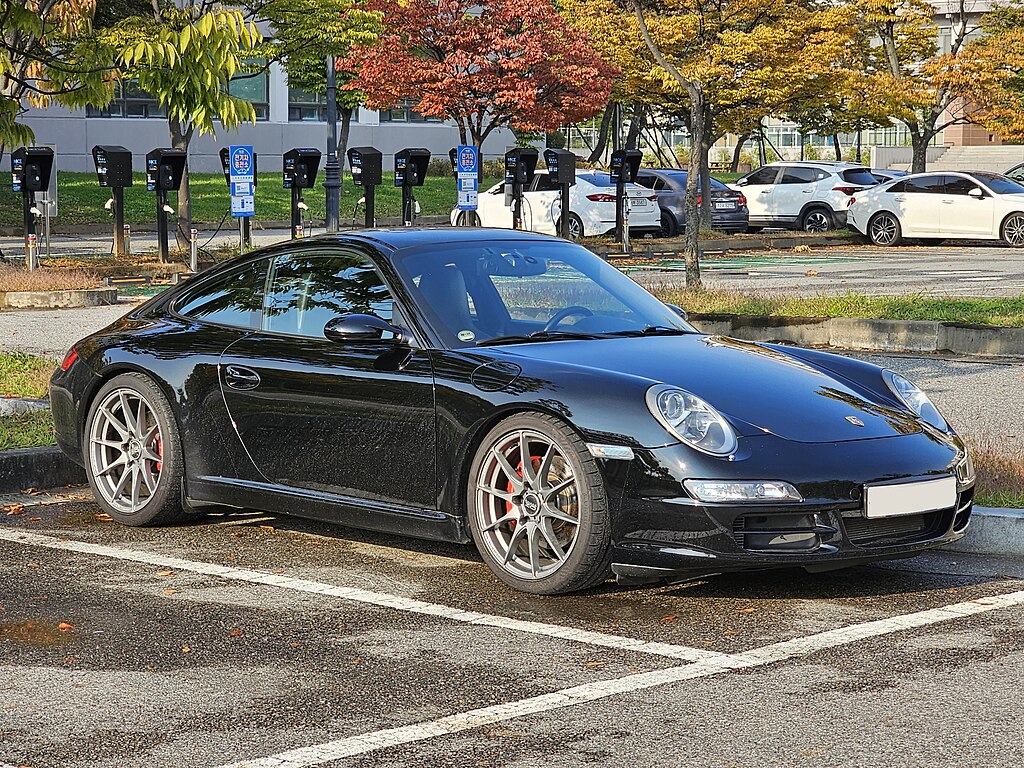
6th Generation: Porsche 997 (2004–2012)
With the 997, Porsche brought back the traditional round headlights and a more classic look. The styling was sharper, the cabin was more refined, and the car as a whole felt more polished.
Performance improved across the board. Engines got stronger, and Porsche added new features like active suspension. Porsche Active Suspension Management (PASM) debuted, giving drivers more control over ride and handling.
Higher-performance variants also offered larger brakes, enhancing stopping power and overall driving performance. The lineup grew quickly, with over 20 different variants by the end of production.
The second phase of the 997, starting in 2009, introduced direct fuel injection and the new PDK dual-clutch transmission. It made the 911 faster and more efficient, with quicker shifts and better fuel economy.
Key Specs:
- 3.6L and 3.8L flat-six engines
- Up to 530 horsepower in the Turbo S
- Available with PDK or six-speed manual
- First 911 with launch control
Motorsport Legacy: The 997 GT3 RSR and Cup cars were used in racing series around the world. They became the go-to cars for private teams and brought Porsche many wins in GT racing.
Fun Fact: Porsche offered a special 911 Sport Classic in very limited numbers. It had a ducktail spoiler and retro styling inspired by the legendary Carrera RS 2.7 of the 1970s, known for its lightweight design, groundbreaking aerodynamics, and motorsport homologation.
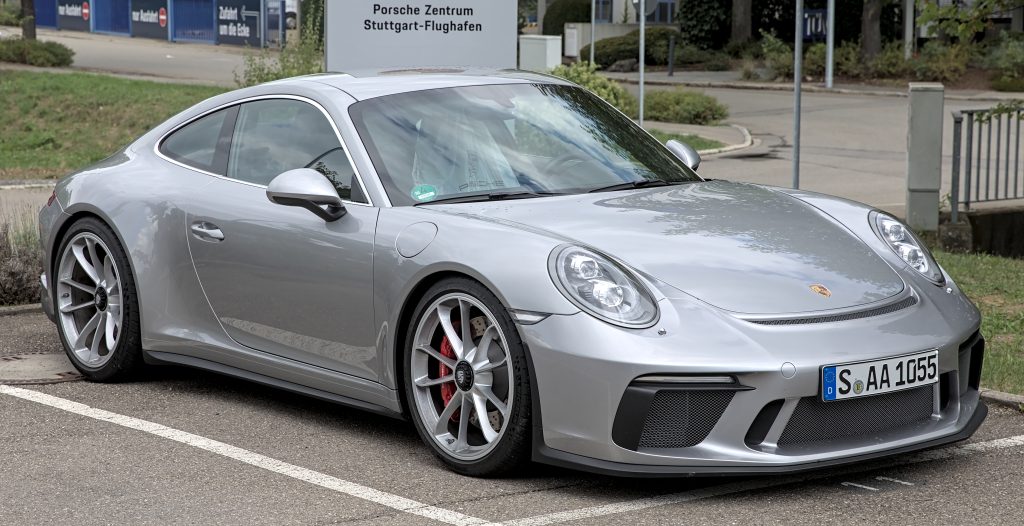
7th Generation: Porsche 991 (2011–2019)
The 991 was an evolution of the iconic sports car, becoming bigger, wider, and more advanced. The chassis used aluminum to reduce weight while adding strength, and featured a wider track that enhanced stability, handling, and overall performance.
Inside, the layout took inspiration from the Panamera, with a center console rising toward the dash. The ergonomic steering wheel offered available paddle shifters, giving drivers precise, manual-like control during high-performance driving.
This generation marked the shift to turbocharged engines for all Carrera models. Twin turbochargers increased engine power despite a smaller displacement. While the sound and feel changed, the performance gains were clear. The 911 became faster, more fuel-efficient, and more refined.
The 991 also introduced rear-axle steering, improved aerodynamics, and even more driving modes. It was the most flexible 911 yet, able to switch from comfortable cruiser to track car at the push of a button.
Key Specs:
- Twin-turbo flat-six in Carrera models
- 350 to 700 horsepower across the range
- Dual-clutch PDK standard in most models
- Available rear-axle steering and adaptive dampers
Motorsport Legacy: The 991 RSR and Cup cars continued Porsche’s success in endurance racing. Porsche took class wins at Le Mans and other major events using this platform.
Fun Fact: Porsche built a limited-run model called the 911 R with no wing, manual transmission, and a naturally aspirated engine. It became an instant collector car.
8th Generation: Porsche 992 (2018–Present)
The 992 brings the 911 into the digital era. It has a wide body as standard across all models, a digital instrument cluster, and more tech than ever before. The interior features a redesigned steering wheel with modern ergonomics, paddle shifters, and integrated controls, enhancing the driver’s connection to the car.
All engines are turbocharged flat-sixes. Even the base Carrera has over 385 horsepower, and the Turbo S is faster than some supercars. Porsche has added more driving modes, touchscreen controls, and assistance systems while still keeping the car driver-focused. The Sport Chrono Package is available as an option, further improving handling and track performance.
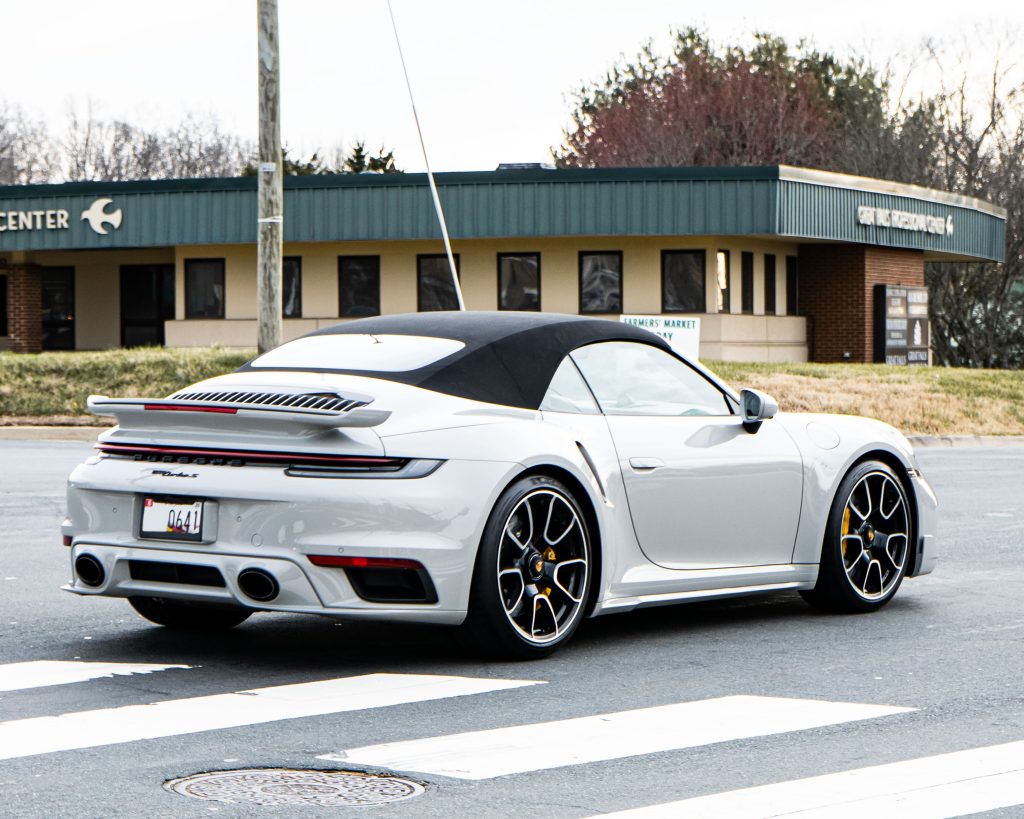
Special models like the 911 Dakar, Sport Classic, and GT3 offer different flavors. Some are off-road inspired. Others go back to old-school driving with manual transmissions and naturally aspirated engines.
Key Specs:
- Twin-turbo 3.0L or 3.8L flat-six
- 379 to 640 horsepower
- Full-width light bar and adaptive aerodynamics for improved stability and efficiency
- Hybrid option confirmed for future models, featuring integration of an electric motor with the flat-six engine
Motorsport Legacy: The 992 GT3 R and Cup cars are already racing in major series. The platform continues Porsche’s run of building reliable, fast, and balanced race cars.
Fun Fact: The 911 now has a “Wet Mode” that can detect water on the road and adjust the car’s settings to reduce the chance of losing grip.
Pop Culture and Legacy
The 911 is one of the most famous sports cars in the world. For decades, it has appeared in movies, magazines, and video games. From Steve McQueen’s personal 911 to modern-day track videos on YouTube, the car’s image is everywhere.
Celebrities, collectors, and everyday drivers all seem to agree. The 911 is more than just a car. It is a symbol of balance, performance, and design that never tries to be anything else.
Frequently Asked Questions
1. What are the different generations of the Porsche 911?
There are eight main generations of the Porsche 911, each marked by a major platform update and an internal code. These include:
- 901 / 911 (1964–1973)
- G-Series (1974–1989)
- 964 (1989–1994)
- 993 (1994–1998)
- 996 (1997–2005)
- 997 (2004–2012)
- 991 (2011–2019)
- 992 (2018–Present)
Each generation introduced new technology, performance upgrades, and design changes while keeping the 911’s rear-engine layout and signature look.
2. Why do people refer to Porsche 911s by numbers like 993 or 997?
These are internal Porsche model codes that identify each generation. Porsche doesn’t always market them publicly, but enthusiasts use them to talk about specific versions. Saying “996” or “993” is a quick way to reference major updates like the switch to water cooling or the last air-cooled model.
3. Which Porsche 911 generation is the best?
It depends on what you value.
- 993 is loved for being the last air-cooled and having great build quality.
- 997 blends modern performance with classic looks.
- 992 is the most advanced and fastest yet.
There’s no one “best” — it comes down to driving style, budget, and how connected you want to feel to the road.
4. When did Porsche switch from air-cooled to water-cooled engines?
Porsche made the switch with the 996 generation, introduced in 1997/1998. This allowed for better emissions control, more power, and improved reliability. The 993, built until 1998, was the last air-cooled 911.
5. What do 911 model names like Carrera, Turbo, and GT3 mean?
They refer to the trim level or performance variant:
- Carrera: Base model
- S: More power and upgrades
- 4: All-wheel drive
- Turbo: Twin-turbocharged with wider body
- GT3: Track-focused, naturally aspirated
- GTS: Sporty upgrade above the Carrera S
- RS: Rennsport — ultra-focused for racing
Each adds a layer of performance, comfort, or specialization to the platform.
6. What’s the difference between a 997.1 and 997.2?
“.1” and “.2” refer to pre-facelift and post-facelift versions of a generation.
- 997.1 ran from 2005 to 2008.
- 997.2 ran from 2009 to 2012 and introduced direct fuel injection, the PDK transmission, and updated styling.
It’s a helpful way to spot subtle upgrades without needing to look up the model year.
7. Which Porsche 911 models are air-cooled?
Only the first four generations:
- 901 / 911 (1964–1973)
- G-Series (1974–1989)
- 964 (1989–1994)
- 993 (1994–1998)
After that, starting with the 996 in 1999, all 911s use water-cooled engines.
8. What is the most reliable 911 generation?
The 997.2 (2009–2012) is often praised for reliability. It fixed issues found in the earlier 996 and 997.1, added better electronics, and introduced the PDK dual-clutch transmission. The 991 is also very solid, especially in non-Turbo trims.
9. Which Porsche 911 generation is best for daily driving?
The 997.2 and 991 strike the best balance between comfort and performance. They offer modern tech, quieter cabins, and better ride quality without giving up the 911 feel. If you want the most features, the 992 is hard to beat.
10. How do I tell Porsche 911 generations apart?
Look at the headlights, body shape, and interior layout.
- 964 and 993 have classic round lights with air-cooled styling
- 996 has “fried egg” headlights
- 997 brings back round lights
- 991 and 992 are larger, more refined, and have wide rear light bars
Learning the internal codes helps too. Once you know them, the differences become clear.
Renn Driver’s Take
So far, I’ve only driven the 991.2. I rented one in Bangkok and took it on a trip down to Hua Hin. Awesome experience. The only real challenge was the traffic. Bangkok and Thai roads can get pretty congested. Still, the car was fantastic, an absolute pleasure to drive.
The most powerful car I’ve had before this was a 1985 BMW 535i with a 5 speed manual transmission. I really enjoyed the Porsche because you can get on the accelerator at any speed and the car would take off.
Next up, I want to try the 992. After that, I’m planning to get behind the wheel of one of the air-cooled models. It’ll be interesting to compare them all. I’ll update once I’ve driven more.
Visually, I’m really drawn to the 993. Probably my favorite looking one right now. But that might change once I’ve spent more time with the others.
If you’re trying to memorize the generations, it helps to just get familiar with the numbers. Having a one-page reference sheet can make it a lot easier. If that sounds useful, let us know and we’ll put one together.
Final Thoughts
The Porsche 911 has changed a lot since 1964, but it has always stayed true to itself. The engine has moved from air-cooled to water-cooled. The design has become sharper, and the tech more advanced. But the shape, layout, and feeling remain familiar.
Each generation brings something new without letting go of the past. That is why the 911 is still here, still relevant, and still one of the best sports cars you can drive.
Photo credit: nakhon100, CC BY 2.0, via Wikimedia Commons, OWS Photography, CC BY 4.0, via Wikimedia Commons, Matti Blume (CC BY-SA or GFDL), via Wikimedia Commons, Alexander Migl, CC BY-SA 4.0, via Wikimedia Commons, Alexandre Prevot from Nancy, France, CC BY-SA 2.0, via Wikimedia Commons, Calreyn88, CC BY-SA 4.0, via Wikimedia Commons, Ultegra, all licensed under CC BY-SA 4.0, via Wikimedia Commons, Damian B Oh, CC BY-SA 4.0, via Wikimedia Commons, Alexander Migl, CC BY-SA 4.0, via Wikimedia Commons