
The Porsche 934 was the 1976 Group 4 racing version of the 911 Turbo. Porsche sold it to customer teams as a production-based alternative to the more extreme Group 5 935. Treat any survivor as a race car first: verify its chassis, period history, later changes, and current safety preparation with a specialist.
In this article, we’ll explain where the Porsche 934 fits in the early turbo racing story. We’ll cover Group 4 rules, the 935 difference, and provenance checks.
Contents
Quick Summary
- Identity: Porsche built the 934 as a 1976 Group 4 customer racer.
- Foundation: It used the standard 911 Turbo as its base.
- Position: The 934 stayed closer to production rules than the Group 5 935.
- Race record: A Vasek Polak Racing 934 won the 1976 Trans Am Championship.
- Buyer check: Verify chassis identity, period history, later changes, and current race preparation.
What the Porsche 934 was built to do
Porsche’s 934 history confirms its Group 4 role. The rules kept it closer to a production model than a Group 5 car, so the standard 911 Turbo supplied the starting point.
Porsche’s turbo program included both cars. Porsche puts the 935 in Group 5.
934 and 935: do not treat them as the same car
Their names are close, but their jobs differed. The 934 was the Group 4 option for customer racing. The 935 was Porsche’s Group 5 car, developed much further for the looser rules of the period.
That difference affects how a car should be described, valued, and checked. A 934 with later modifications may be historically interesting, but it is not automatically the same specification as the customer car that left Porsche. Ask for period photographs, race entries, and a clear account of every major change.
The 935 changed as Porsche developed it for Group 5. Keep that later development separate from the standard 934 story. Do not borrow 935 details.
The turbocharged flat six and the race package
The 934 used a turbo flat six. Power figures vary across historic summaries because boost, rules, and later upgrades changed. A good guide or sale file should name its source before treating one number as universal.
For private teams, the point was clear. Porsche sold a complete turbo race car as turbo power became central to its competition program. Its value was a factory-built package designed for customer racing.
If you compare it with a road-going 930, start with the racing chassis and safety equipment. The engine family is only part of the story. A 934 was built to compete. A specialist should review its service history.
Where the 934 raced
The 934 also raced in North America. Vasek Polak Racing’s car won the 1976 Trans Am Championship. Porsche confirms that result. It is a clear example of the model’s American race history.
That racing life also explains why provenance is central. A car can carry a familiar livery or period looking parts without being a preserved period specification. Race results, chassis records, old photographs, and correspondence are more useful than a paint scheme alone.
For the wider endurance story, see Renn Driver’s guide to Porsche at Le Mans. The 934 belongs to the customer side of the same turbo era. That does not mean every 934 raced at Le Mans.
What to check on a surviving 934
Start with identity. Confirm the chassis number against Porsche documentation and the car’s own race records. Then separate original components, period race changes, and later safety or usability work in writing.
Next, inspect the race preparation with a shop that understands historic race cars. Fuel system condition, turbo hardware, brakes, suspension pickup points, wiring, and fire safety equipment all deserve more attention than cosmetic presentation. A current safety standard is good news for use, but it should not be presented as original equipment.
Finally, ask what you want the car to be. A documented historic racer may suit demonstrations, events, or careful racing. A heavily altered example may still be thrilling. Its changes still need honest descriptions and pricing.
Why the 934 still stands out
The 934 makes sense because it was direct. Porsche took the emerging 911 Turbo idea and turned it into a customer race car with a clear place in Group 4. It is not a substitute for the 935, and it does not need to be.
The 934 shows how Porsche brought turbo racing to private teams. For a buyer or entrant, the lesson is simple. Judge the documentation and preparation as carefully as the car itself.
Frequently asked questions
What was the Porsche 934?
The Porsche 934 was Porsche’s Group 4 customer racing version of the 911 Turbo, introduced for the 1976 season.
How is the Porsche 934 different from the 935?
The 934 was built for Group 4 rules, while the 935 was the more heavily modified Group 5 racing car.
Was the Porsche 934 a road car?
No. It began with the 911 Turbo platform but was sold as a race car for customer teams.
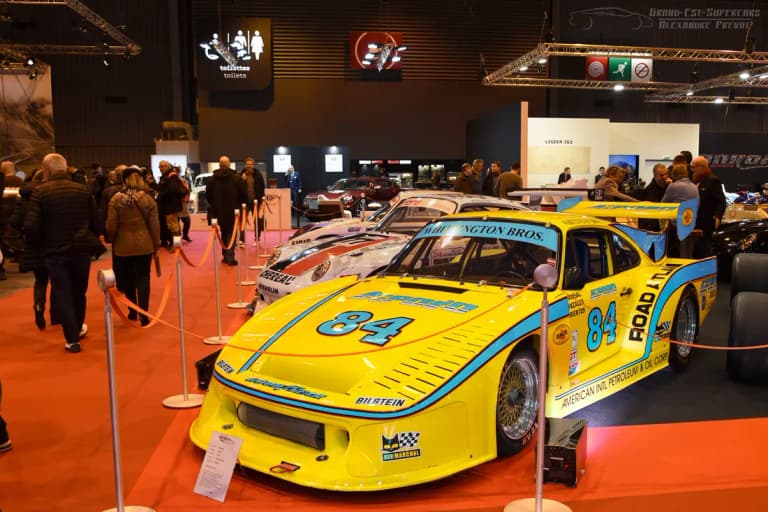
Images: Porsche 934 by Alexandre Prévot from Nancy, France, CC BY-SA 2.0. Via Wikimedia Commons.