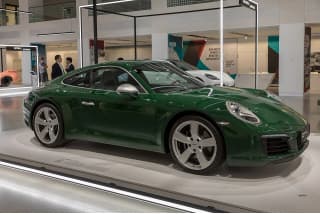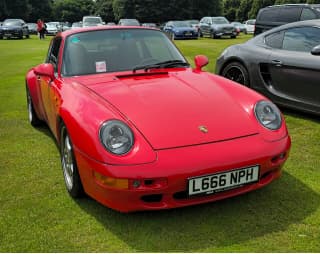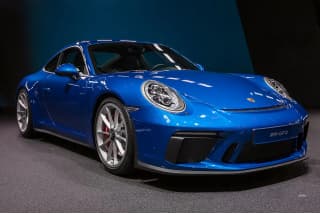
Buying a Porsche 911 is a decision in three layers: which generation, which body style and transmission, and where to source the car. New 992 Carreras start around $116,000 from a Porsche dealer. Used 996 Carreras start around $30,000. The 997.2 (2009-2012) is the sweet spot for value because it offers modern reliability without the depreciation curve of new. Always get a pre-purchase inspection from a Porsche specialist; it costs $300-$600 and routinely identifies $5,000+ in negotiation leverage or deal-killing issues.
In this article, we’ll walk through how to buy a Porsche 911 the right way. We’ll cover generations, body styles, pricing, and inspections.
Contents
Quick Decision Framework
Before diving into model-by-model details, three questions narrow the field fast.
| Question | If yes | If no |
|---|---|---|
| Is this your only car? | Get the modern PDK Carrera coupe | You can consider any generation, including air-cooled |
| Do you want maximum driving engagement? | Manual GT3 or air-cooled 993 | Carrera Cabriolet with PDK suits most buyers |
| Is resale value a priority? | GT3, GT3 RS, special editions, or any 991+ in popular spec | 996 Carrera offers exceptional value but flatter resale |
The honest version: most buyers are best served by a 997.2 Carrera S or a 991 Carrera. They drive beautifully, hold their value well, and avoid the major reliability headaches of earlier water-cooled cars. The rest of this guide unpacks why and helps you find your specific match.
Choosing New or Used
The new vs used calculus on a 911 is different than on most cars, because 911s depreciate slowly and used examples have decades of community knowledge documenting them.
Buy new from a Porsche dealer if:
- You want full factory warranty coverage and dealer financing
- You can custom-order to spec (the 992 configurator is extensive)
- You want the latest tech (PCM 6.0, adaptive cruise, hybrid powertrains coming)
- You plan to keep the car long enough that depreciation matters less than features
Buy used if:
- You want better dollar-per-driving-experience ratio
- You are open to a specific generation that fits your aesthetic (air-cooled, 996, 997)
- You want a manual transmission (manual take rates have dropped on new cars)
- You want a special model that is no longer in production (911 R, GT3 RS, Sport Classic)
One option to consider in the middle: Porsche Approved Pre-Owned (CPO). A CPO 911 from a Porsche dealer comes with a 2-year unlimited-mileage warranty, has passed a 111-point Porsche inspection, and typically prices about 5-10% above private-party for the same vehicle. The CPO program covers cars up to 13 model years old, which means even some 997.1 cars qualify. Worth the premium for first-time Porsche owners.
Coupe, Cabriolet, or Targa
Every Porsche 911 generation since the 1960s has been available in three body styles. Each has trade-offs.
Coupe
- Stiffest chassis, sharpest handling response
- Lightest of the three (about 100 lbs less than the cabriolet)
- Best resale value
- Best for track use
Cabriolet
- Powered fabric roof opens and closes in about 12 seconds
- Adds approximately 100 lbs and a small loss of chassis stiffness
- Open-air driving is genuinely transformative on the right road
- Slightly less practical for daily use in heavy weather
- Resale typically lags coupe by 5-10%
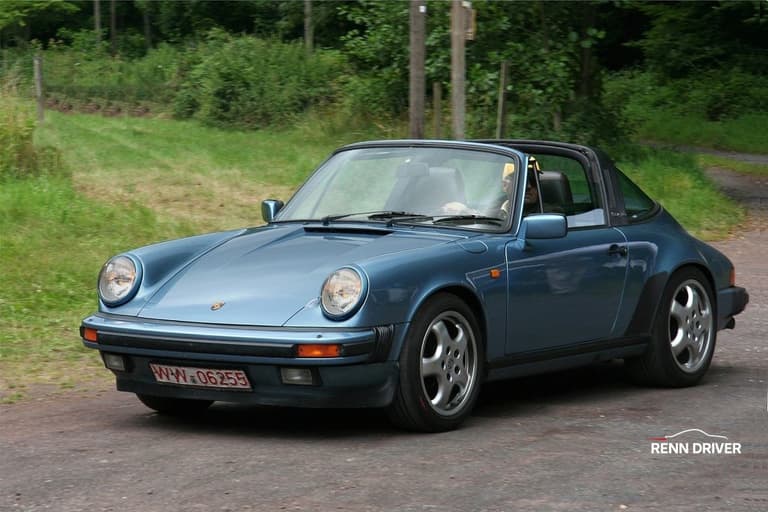
Targa
- Removable glass roof panel with a fixed wraparound rear glass
- Iconic silhouette with the prominent roll bar
- The 991 and 992 Targa add a complex roof mechanism that retracts the glass automatically
- Heavier than both coupe and cabriolet
- Lower production volume typically helps values, especially in Targa-specific colors
For most buyers, the coupe is the safe choice. Cabriolets are often discounted on the used market and can be exceptional value if you appreciate open-air driving. Targas are the rarest and the most polarizing; buyers who love them love them deeply.
Manual or PDK
Porsche’s PDK dual-clutch transmission has been the standard option since the 997.2 in 2009. Manual transmissions are still available on the Carrera T, GT3, GT3 Touring, and select limited editions in the 992 generation, but take rates are low and the manual option is increasingly rare.
Choose PDK if:
- You want maximum performance because PDK shifts are faster than any human
- You drive in heavy traffic regularly
- You want the broadest model selection on the used market
- You prioritize 0-60 times and quarter-mile elapsed times
Choose manual if:
- You want full mechanical engagement
- You are buying as a collectible because manuals retain value better long-term, especially in late-production cars
- You enjoy heel-and-toe technique on backroads
- You appreciate the 997.2 GT3 or 991 GT3 manual experience
One important nuance: the 991.1 GT3 was available only with PDK. The manual returned for the 991.2 GT3, and remains optional on the 992 GT3. If you specifically want a manual GT3, your options are 996 GT3, 997.1 GT3, 997.2 GT3, 991.2 GT3 (or GT3 Touring), and 992 GT3.
For non-GT cars, manual was a Carrera/Carrera S option through the 991 generation. The 992 base Carrera launched as PDK-only; the manual option arrived later on the Carrera T.
Which Generation Fits Your Goals
Each 911 generation has a different price point, character, and reliability profile. Here is how to decide.
If you want air-cooled character
Choose the 993 (1995-1998). It is the final air-cooled 911 and widely considered the most refined air-cooled car Porsche ever made. Multi-link rear suspension, refined cabin, and a flat-six engine that sounds unmistakably mechanical. Prices for clean 993 Carreras start around $80,000 and rise to $200,000+ for the Turbo. Earlier 964 cars offer similar character at lower prices but with more frequent maintenance.
If value is your top priority
Choose the 996 (1999-2004). The 996 Carrera is the most affordable way into Porsche 911 ownership, with clean examples from $30,000. The water-cooled engine has known issues (see our common problems guide), but a properly inspected 996 with documented service history delivers an extraordinary driving experience for the money. The 996 is also the only generation where you can buy a Turbo for under $50,000.
If you want modern reliability without new-car prices
Choose the 997.2 (2009-2012). The 997.2 introduced Direct Fuel Injection (DFI) and PDK transmission, eliminating the M96/M97 engine concerns of earlier cars. It looks essentially identical to the 997.1 but is much more reliable. Used prices typically start around $55,000 for a Carrera. This is the sweet spot for value-conscious enthusiast buyers.
If you want the best modern driving experience
Choose the 991 (2012-2019). The 991 has a longer wheelbase, electric power steering, and refined ride quality. The 991.2 added twin-turbo engines across the Carrera range. Used 991.1 Carreras start around $65,000; 991.2 starts around $85,000. The 991 GT3 (manual on 991.2) is one of the most lauded driver’s cars of the modern era.
If you want the latest and the longest warranty
Choose the 992 (2019-present). The 992 is the current generation. Buy new from a dealer for full warranty and current spec, or buy lightly used to skip the first depreciation step. The 992 GT3 RS is the most extreme road-going 911 ever produced. The Carrera T offers manual transmission in a focused-driver-spec package.
If you want a track-focused road car
Choose a GT3. The GT3 has been the track-special of the 911 lineup since the 996 generation. Naturally aspirated, high-revving, race-derived chassis. Prices start around $90,000 for a clean 996 GT3 and rise to $200,000+ for a 992 GT3. The 991.2 GT3 with the manual transmission is the most desirable spec on the used market.
If you want the most rare
Special editions and limited models are their own category. The 911 R, 911 S/T, 911 Sport Classic, GT3 RS, and certain Heritage Design Edition models trade well above their original MSRP and are typically allocation-only from Porsche. Buying one used means paying a market premium that reflects rarity.
Where to Buy
Sourcing matters. The same year and model can vary 20-30% in price between channels.
Porsche dealers (new or CPO): highest prices, best protections. Full factory warranty on new cars. CPO comes with 2 years unlimited-mileage. Financing typically available. Trade-ins accepted. Best for first-time buyers and anyone who wants minimum complexity.
Independent specialty dealers: often have curated inventory of used 911s, including air-cooled and rare models. Prices typically 5-10% lower than Porsche dealers. Some offer their own warranty programs. Examples in the US: P9 Auto, Porsche of your-major-city, and various boutiques in California, Florida, and the Northeast.
Bring a Trailer (BaT) auctions: the dominant online marketplace for enthusiast Porsche sales. Strong vetting, transparent provenance documentation, and auction format. Prices have firmed up over the past several years; expect to pay full market rate for desirable cars but generally fair-market for less desirable ones. Buyer’s premium of 5% (capped at $7,500). Excellent for finding specific colors or rare specs.
Cars and Bids, PCarMarket, Hemmings: alternative auction venues with smaller buyer pools. Sometimes deals are available here that would be bid up on BaT.
Private party (Porsche forums, marketplaces, classifieds): lowest prices, highest risk. Direct from the owner means no dealer markup but no warranty and no quality control. Best when the seller has a documented service history and is willing to support a thorough PPI. Watch for export buyers driving up prices on rare specs.
Auctions (RM Sotheby’s, Gooding, Mecca): for high-value collectible cars (911 R, 1973 RS, Carrera GT). Premium pricing reflects the curated provenance and the auction venue’s reputation. Not the right channel for a daily-driver Carrera.
Pricing Snapshot (2026 US Market)
Approximate market ranges for clean, well-documented examples. Prices vary by mileage, color, options, and region.
| Model | Years | Typical Range |
|---|---|---|
| 996 Carrera (Coupe) | 1999-2004 | $30,000 - $45,000 |
| 996 Turbo | 2001-2005 | $45,000 - $65,000 |
| 996 GT3 | 2004 | $90,000 - $130,000 |
| 997.1 Carrera S | 2005-2008 | $40,000 - $55,000 (clean borescope) |
| 997.2 Carrera S | 2009-2012 | $55,000 - $80,000 |
| 997.2 GT3 | 2010-2011 | $160,000 - $210,000 |
| 991.1 Carrera | 2012-2015 | $65,000 - $85,000 |
| 991.2 Carrera S | 2017-2019 | $95,000 - $125,000 |
| 991.2 GT3 (manual) | 2018-2019 | $160,000 - $220,000 |
| 992 Carrera (new MSRP) | 2024-2026 | $116,000 base |
| 992 GT3 (new MSRP) | 2024-2026 | $195,000 base |
| 964 Carrera 2 | 1990-1994 | $60,000 - $90,000 |
| 993 Carrera | 1995-1998 | $80,000 - $130,000 |
| 993 Turbo | 1996-1998 | $200,000 - $400,000+ |
Special editions (911 R, GT3 RS, Sport Classic, S/T) regularly trade above MSRP and have their own market dynamics. Heritage Design Edition cars are similar.
The Pre-Purchase Inspection
A pre-purchase inspection by a Porsche-specialist independent shop is mandatory on any used 911. A comprehensive PPI runs $300-$600 and typically returns 5-20x its cost in negotiation leverage or avoided disasters.
Key items to confirm with the inspecting shop:
- Borescope all six cylinders for bore scoring (essential for 997.1 Carrera S)
- Cut open the oil filter, inspect for ferrous debris (IMS bearing red flag on 996 and 997.1)
- Compression and leak-down test all six cylinders
- Visual inspection for RMS oil weep at the bell housing
- Suspension component wear, alignment, and tire condition
- Diagnostic scan with a Porsche-specific diagnostic tool to check for stored fault codes
- Service history review going back as far as records exist
- Confirm the VIN matches across the windshield, door jamb, and title (our Porsche VIN decoder shows how to read it and spot a mismatch)
For deeper detail on what to look for by generation, see our Porsche 911 common problems guide.
If the seller refuses to allow a PPI, walk away. Period. Any legitimate seller of a $30,000+ sports car will accommodate a buyer paying for an independent inspection.
Negotiation Tips
Used 911 negotiation looks different than negotiating a Honda Accord. The community is informed, the market is well-priced, and most desirable cars sell quickly. That said, several principles consistently work.
Time the market. Used 911 demand softens in late November through January. Sellers with cars sitting since fall are often willing to negotiate harder than they would in March or April when buying activity picks up.
Use the PPI report. Specific dollar-quantifiable findings ($800 AOS replacement, $1,500 RMS leak, etc.) give you leverage to negotiate that exact amount off the asking price. A seller who refuses fair adjustment for documented issues is often hiding worse issues elsewhere.
Get pre-approved financing. Walking in with a pre-approved auto loan from a credit union or a Porsche-specialist lender gives you negotiating posture and avoids dealer financing markups.
Be willing to walk. The 911 market is large enough that another well-spec’d example will appear within weeks. Walking from a marginal deal often results in a better deal a few weeks later.
Pay attention to options. A $130,000 991.2 Carrera S with PDK, Sport Chrono, sport exhaust, and Burmester is worth more than a $130,000 base car in identical condition. Options can add 10-20% to a car’s market value if they are desirable specs.
Mistakes Buyers Make
Skipping the PPI. Even if the seller seems honest. Even if the car is being sold by a friend. Even if “the dealer already inspected it.” The independent PPI is the single most valuable step in the process.
Buying the cheapest example of any generation. The cheapest 996 has the worst service history, the most deferred maintenance, and the most hidden issues. Pay 15-20% more for a documented car and save thousands in repairs.
Falling for cosmetic over mechanical. A pristine paint job on a 996 with bore scoring is a $20,000 mistake waiting to happen. Mechanical condition first, cosmetic second.
Underestimating maintenance budget. Plan for $2,000-$4,000 per year in maintenance and minor repairs on any used 911. Some years will be cheaper, others (clutch replacement, major service interval) will be expensive. The annual average works out to roughly 3% of the car’s value for a well-cared-for example.
Overpaying for color. Paint to Sample colors and unusual finishes can add real value, but only if the broader market values that specific spec. A guards red 911 is easier to sell than a Mexico Blue 911 Targa, but the Mexico Blue can sit on the market for months when you go to sell.
Buying remotely without seeing the car. Photos hide a lot. If the car is more than a few hours away, hire a third-party inspector to do a comprehensive PPI in person. Or fly out yourself.
Renn Driver’s Take
The Porsche 911 buying process rewards patience. A first-time 911 buyer is often surprised by how aggressive the asking prices are and how quickly desirable cars move. The instinct is to compromise on spec or generation just to get into a 911 sooner. Resist that.
The right approach is to define your target spec, including generation, body style, transmission, color preferences, and a few must-have options. Then wait for that specific car. It might take three months. It might take six. The right car is worth the wait, and a misspec’d 911 is harder to enjoy and harder to sell down the road.
For most enthusiast buyers, the 997.2 Carrera S manual is the platonic ideal: classic shape, modern reliability, naturally aspirated flat-six, and increasingly rare manual transmission. If your budget stretches to a 991.2 Carrera S manual, that is also exceptional. If you want air-cooled character, the 993 is unmatched.
Do not skip the PPI. Do not buy from a seller who refuses one. Do not stretch to the absolute top of your budget because the running costs add up. And do not buy a 911 expecting it to be like other cars. It is the kind of car that gets better with every drive, even when it has its quirks.
Frequently Asked Questions
What is the cheapest Porsche 911?
The cheapest path into 911 ownership is a 996 Carrera, with clean examples available from $30,000 in the US used market. The 996 has known engine concerns documented in our common problems guide, but a well-inspected 996 with documented service history is an exceptional value sports car.
Is buying a used Porsche 911 a good idea?
Yes, with the caveat that you must invest in a thorough pre-purchase inspection by a Porsche specialist. The 911 holds its value better than most sports cars, has decades of community knowledge supporting maintenance and repair, and most generations are reliable when serviced on schedule. The biggest risks are buying without inspection, buying a car with deferred maintenance, or buying the wrong generation for your goals.
Which Porsche 911 generation is most reliable?
The 991.2 (2017-2019) and 992 (2019-present) are the most reliable 911 generations ever produced. For used buying on a budget, the 997.2 (2009-2012) is widely regarded as the best balance of modern reliability and reasonable pricing. The 996 and 997.1 have known engine concerns that require careful inspection.
How much does a Porsche 911 cost to maintain?
Plan for $2,000-$4,000 per year in maintenance and minor repairs on a used 911. Major service intervals and clutch replacement will be more expensive. New-car warranty coverage on a 992 takes care of most issues for 4 years or 50,000 miles. Independent Porsche specialists charge significantly less than Porsche dealers for routine work.
How do I find a Porsche specialist for a PPI?
Search for “Porsche specialist independent shop near [your city]” and verify the shop’s reputation on Porsche owner forums (RennList, Pelican Parts, 6speed, regional PCA chapters). Look for shops with at least one Porsche-trained technician, dedicated PIWIS diagnostic equipment, and visible experience with the specific generation you are buying. PCA-recognized shops are typically excellent.
Should I buy a Porsche 911 from a dealer or private party?
Porsche dealers (especially Certified Pre-Owned) offer warranty protection and standardized inspection but charge a 5-15% premium over private party. Independent specialty dealers often have curated inventory at slightly lower prices than Porsche dealers. Private party offers the lowest prices but the highest risk, so it suits buyers comfortable with PPIs and willing to verify everything themselves. For first-time Porsche buyers, CPO from a Porsche dealer is the lowest-stress option.
What options matter most on a Porsche 911?
The Sport Chrono package is widely considered the most valuable option for resale, adding launch control, dynamic engine mounts, and the Sport Plus drive mode. The Sport exhaust system is the second most desirable. PDK transmission, Bose or Burmester audio, adaptive sport seats, and Porsche Ceramic Composite Brakes (PCCB) are all desirable. Painted interior trim and Paint to Sample colors can add significant value if the spec is broadly appealing.
How long should a Porsche 911 last?
A well-maintained Porsche 911 can easily exceed 200,000 miles. The 997.2 and later DFI engines are particularly long-lived. Air-cooled engines (1964-1998) have been documented running for 300,000+ miles when serviced properly, often with multiple top-end rebuilds. Maintenance discipline matters more than mileage for long-term reliability.
Lead image: Lothar Spurzem, CC BY-SA 2.0 DE, via Wikimedia Commons. Pricing data reflects 2026 US market and will drift over time. This guide is informational; not financial or legal advice.