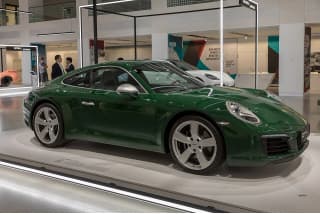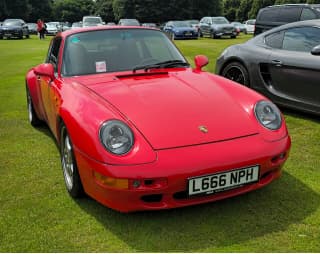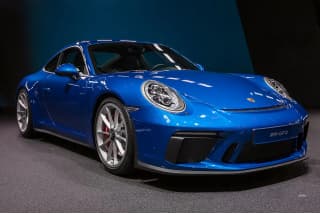
The Porsche 911 GT3 R is Porsche’s customer race car built for FIA GT3 class competition. It is not street legal. The current 992 generation produces up to 565 hp from a 4.2 liter naturally aspirated flat six engine, weighs around 1,265 kg depending on Balance of Performance regulations, and costs €459,000 before taxes.
In this article, we'll explain the Porsche 911 GT3 R race car. We'll cover its generations, chassis design, and GT3 competition.
Contents
Quick Summary
- Type: FIA GT3 class customer race car (not street legal)
- Production: 1999 (996 GT3 R) to present (992 GT3 R)
- Generations: 996, 997, 991, 992
- Engine: 4.2L naturally aspirated flat six (992), 4.0L in earlier generations
- Power: Up to 565 hp (992), regulated by Balance of Performance
- Weight: ~1,265 kg (992, subject to BoP)
- Transmission: Six speed sequential gearbox with paddle shift
- Drive: Rear wheel drive
- Price: €459,000 excluding taxes (992)
- Key races: 24 Hours of Daytona, 24 Hours of Nürburgring, 24 Hours of Spa, Bathurst 12 Hour, FIA WEC (LMGT3)
The full guide below covers all the details.
The Porsche 911 GT3 R Explained
The Porsche 911 GT3 R is a purpose built race car sold directly to customer racing teams. It competes in the FIA GT3 class, which is the most popular category of GT racing worldwide. The car is based on the road going 911 GT3 RS but stripped down, caged, and modified for endurance racing.
Porsche first built a GT3 R in 1999 on the 996 platform as part of its broader 911 motorsport program. The original goal was to meet homologation requirements for GT racing series. Since then, the GT3 R has become one of the most successful GT3 class race cars ever produced. Customer teams around the world run it in series ranging from the FIA World Endurance Championship to the Nürburgring Endurance Series.
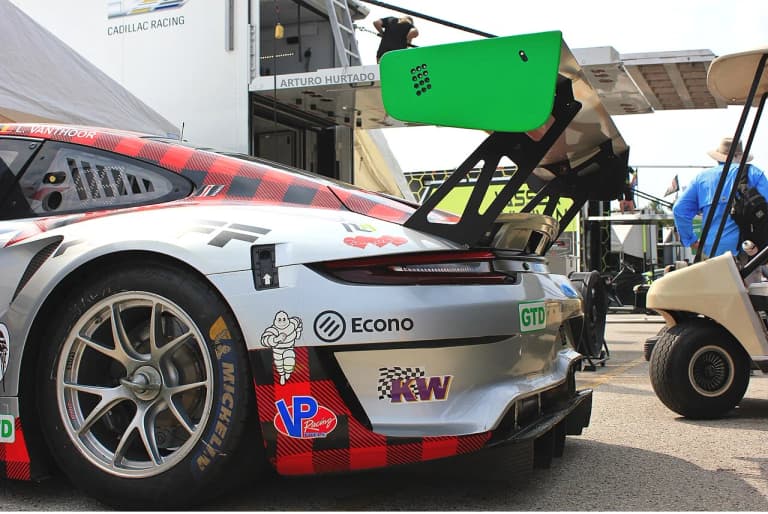
The GT3 R sits between the 911 GT3 Cup (a single make series car) and the now retired 911 RSR (a GTE class factory race car) in Porsche’s motorsport hierarchy. It is the car that Porsche sells to independent teams for multiclass endurance racing.
Every 911 GT3 R Generation
996 GT3 R (1999 to 2001)
The first 911 GT3 R used a 3.6 liter flat six engine producing 405 hp at 8,200 rpm through a restrictor plate. It came with a six speed sequential manual transmission, a welded steel roll cage, and carbon fiber body panels. Porsche built around 682 units of the closely related 996 GT3 RS road car, but the GT3 R itself was a dedicated race car with no road legal equivalent.
The 996 GT3 R scored class victories at the 1999 and 2000 24 Hours of Le Mans. It used titanium connecting rods and valves, dry sump lubrication, and polycarbonate side and rear windows for weight reduction. This was a raw, mechanical race car with minimal electronics.
997 GT3 R (2010 to 2013)
The 997 generation GT3 R brought a 4.0 liter flat six engine producing 500 hp. The six speed sequential gearbox gained a throttle blip function, and the car added ABS and traction control for the first time. Porsche widened the body and increased the track width and wheelbase compared to the 996.
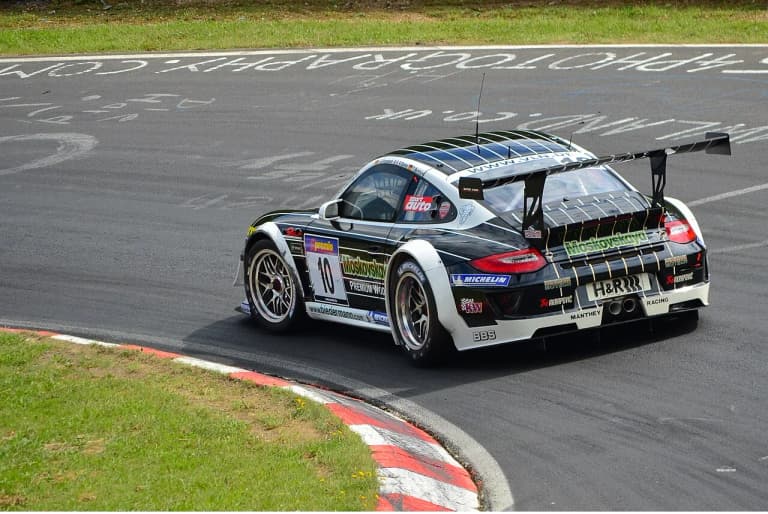
For 2013, Porsche released a significant aerodynamic update with revised bodywork and an Evo conversion kit priced at €45,500. The 997 GT3 R was the car that established Manthey Racing as the dominant force in Nürburgring endurance racing.
991 GT3 R (2016 to 2023)
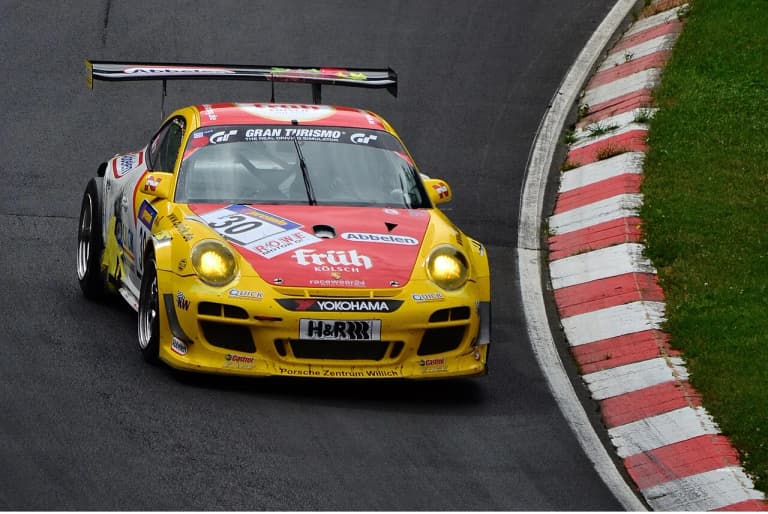
The 991 platform brought two versions of the GT3 R. The first (2016 to 2018) was homologated on the 991.1 GT3 RS and produced around 500 hp from a 4.0 liter flat six. The second (2019 to 2023) was based on the 991.2 GT3 RS and pushed output to approximately 543 hp.
The 991 GT3 R introduced several innovations. The wheelbase grew by 8.3 cm. A central radiator replaced the traditional side mounted units, freeing up the front end for better aerodynamics. All windows, including the windscreen for the first time, were made from polycarbonate. The car weighed just 1,220 kg.
The 2019 update added double wishbone front suspension borrowed from the 911 RSR, an electro hydraulically actuated clutch that eliminated the clutch pedal, and a rear view camera with collision avoidance. These were race car firsts for the GT3 class.
992 GT3 R (2023 to present)
The current 992 generation GT3 R debuted at the 2023 24 Hours of Daytona. It uses a larger 4,194 cc (4.2 liter) engine producing up to 565 hp, an increase in both displacement and power over the 991. The six speed sequential gearbox carries over with refined shift logic.
The early 2023 debut was rocky. The car suffered ABS and traction control calibration issues at Daytona that Porsche worked to resolve through the season. By 2024, the 992 GT3 R had found its form, winning the FIA World Endurance Championship (LMGT3 class), the IMSA WeatherTech SportsCar Championship (GTD Pro), and the overall victory at the Bathurst 12 Hour.
In August 2025, Porsche released further upgrades including new front fender louvers, modified rear wing Gurney flap geometry, and revised rear axle kinematics. These updates continued to improve the car’s competitiveness across all GT3 series.
Engine and Drivetrain
Every 911 GT3 R uses a naturally aspirated flat six engine derived from Porsche’s road car and Cup car powerplants. The engines share core architecture with the street legal 911 GT3 and GT3 RS but are tuned for endurance racing durability rather than peak road car refinement.
| Generation | Engine | Power | Gearbox |
|---|---|---|---|
| 996 GT3 R | 3.6L flat six | 405 hp | 6 speed sequential |
| 997 GT3 R | 4.0L flat six | 500 hp | 6 speed sequential |
| 991 GT3 R (2016) | 4.0L flat six | ~500 hp | 6 speed sequential |
| 991 GT3 R (2019) | 4.0L flat six | ~543 hp | 6 speed sequential |
| 992 GT3 R | 4.2L flat six | ~565 hp | 6 speed sequential |
All GT3 R engines use individual throttle bodies, dry sump lubrication, and forged internals designed to survive 24 hour races at sustained high RPM. The 992 GT3 R engine has a bore of 104.5 mm and a stroke of 81.5 mm, making it the largest displacement naturally aspirated flat six Porsche has fitted to a 911 based race car.
The six speed sequential gearbox uses paddle shifters mounted behind the steering wheel. Shift times are measured in tens of milliseconds. Since the 2019 991 update, the clutch is electro hydraulically actuated, meaning there is no clutch pedal in the car. The driver only uses the clutch function for race starts and pit stops.
Aerodynamics and Chassis
The GT3 R uses a large rear wing, front splitter, and rear diffuser that together generate significant downforce. FIA GT3 regulations limit how much aerodynamic freedom manufacturers have, so the GT3 R works within those constraints to maximize grip without exceeding the class limits.
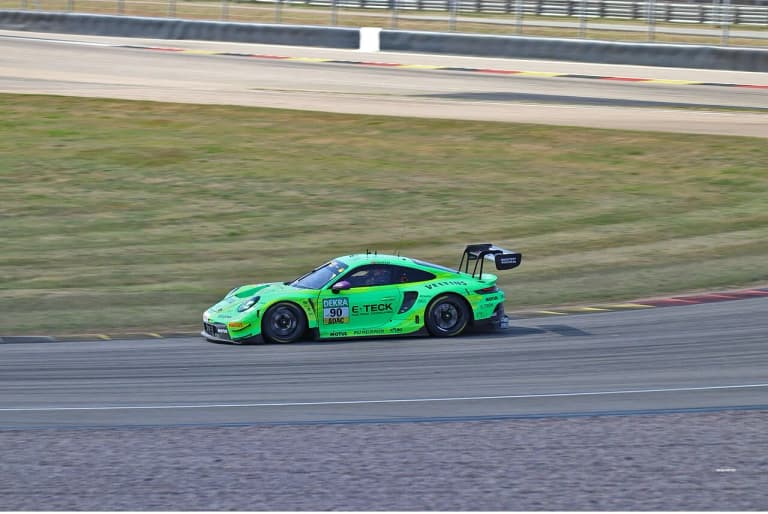
The 992 GT3 R uses double wishbone front suspension, a technology that first appeared on the 911 RSR endurance race car before filtering down to both the GT3 R and the road going 992 GT3. The rear uses a multi link setup with adjustable anti roll bars, ride height, camber, and toe settings.
The suspension uses a shim based alignment system introduced on the 2019 991 GT3 R. This eliminates the need for traditional alignment adjustment at each corner, saving time during race weekends. Spring rates, damper settings, and ride height are all adjustable to suit different circuits and conditions.
The body is a mix of steel (the base tub and welded roll cage) and carbon fiber (doors, fenders, front and rear lids, and aerodynamic elements). The windscreen and all side windows are polycarbonate. The integrated roll cage meets FIA Appendix J safety specifications and adds significant torsional stiffness to the chassis.
GT3 R vs GT3 Cup vs GT3 RS
These three cars share the GT3 name but serve very different purposes.
| GT3 Cup | GT3 R | GT3 RS | |
|---|---|---|---|
| Purpose | One make series | Multiclass GT racing | Street legal track car |
| Street legal | No | No | Yes |
| Engine | 4.0L flat six | 4.2L flat six | 4.0L flat six |
| Power | ~510 hp | ~565 hp | 518 hp |
| Weight | ~1,260 kg | ~1,265 kg | 1,480 kg |
| Gearbox | 7 speed PDK | 6 speed sequential | 7 speed PDK |
| Roll cage | Welded | Welded (FIA spec) | Optional bolt in |
| Price | ~€260,000 | €459,000 | $223,800 |
The GT3 Cup is the entry point to Porsche customer motorsport. Every car in a Carrera Cup grid is identical, so the racing comes down to driver skill. The GT3 R is the next step up. It races against other manufacturers (Ferrari, BMW, Mercedes AMG, Aston Martin, Lamborghini) in multiclass endurance events where teams can develop setups and strategies.
The GT3 RS is a road car. It has a license plate, an interior, air conditioning, and a front trunk. The GT3 R has none of those things. It has a fire suppression system, a fuel cell, and a window net instead.
Where the GT3 R Races
The 911 GT3 R competes in GT3 class racing series around the world. These are the major ones.
- FIA World Endurance Championship (LMGT3): The GT3 class replaced GTE in the WEC starting in 2024. The 911 GT3 R won the manufacturers’ title in the inaugural LMGT3 season.
- IMSA WeatherTech SportsCar Championship (GTD/GTD Pro): North America’s premier sportscar series. AO Racing won the 2024 GTD Pro championship with the 992 GT3 R.
- GT World Challenge (SRO): Runs in Europe, America, Asia, and Australia. Includes sprint and endurance formats.
- DTM: Germany’s touring car championship switched to GT3 regulations in 2021. Thomas Preining won the 2023 DTM title in a Manthey run GT3 R.
- Nürburgring Endurance Series (NLS): The old VLN series. Manthey and Falken Motorsport are the dominant Porsche teams here.
- Intercontinental GT Challenge: A global series linking major endurance races including the Bathurst 12 Hour, 24 Hours of Spa, and Indianapolis 8 Hour.
- Asian Le Mans Series: GT3 class racing across circuits in Asia and the Middle East.
Notable Race Results
The 911 GT3 R has one of the longest and most successful records in GT racing. Manthey Racing, Porsche’s semi works team based at the Nürburgring, has been the most prominent operator since the 997 generation.
24 Hours of Nürburgring
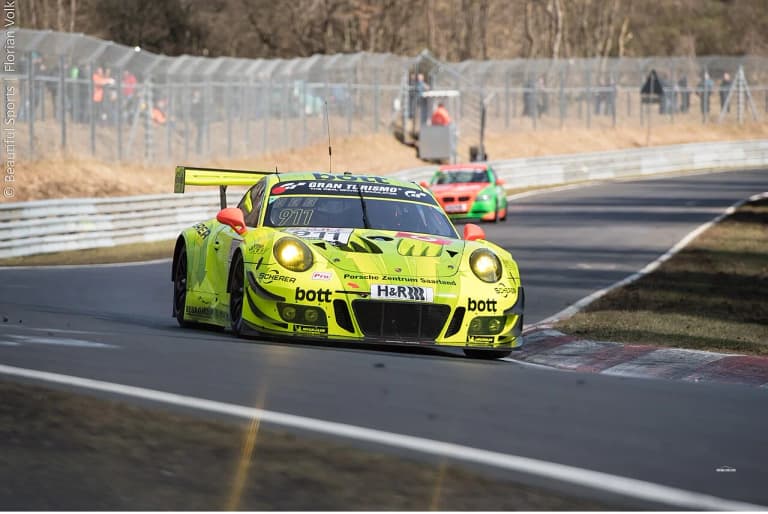
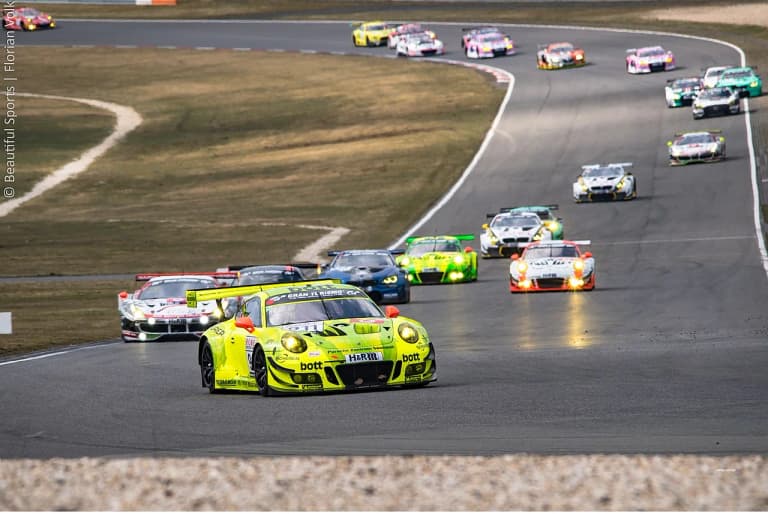
The 911 GT3 (across GT3 R and earlier GT3 RSR variants) has won the Nürburgring 24 Hours overall in 2000, 2006, 2007, 2008, 2009, 2011, 2018, and 2021. Manthey Racing’s famous green and yellow "Grello" livery is one of the most recognizable cars in endurance racing. In 2024, the Grello finished just 0.603 seconds behind the winner. In 2025, it crossed the line first but received a time penalty that dropped it to second.
24 Hours of Daytona
The 992 GT3 R made its global debut at the 2023 Daytona 24 Hours. The first outing was difficult, with ABS and traction control issues affecting competitiveness. By 2025, Porsche had secured its 20th overall victory at Daytona, though the GTD Pro class remained fiercely contested between multiple manufacturers.
2024 Season Highlights
The 2024 season was the most successful in the GT3 R’s history. Across approximately 350 GT3 races and championships, Porsche customer teams recorded over 20 overall victories, roughly 60 class wins, and more than 150 podium finishes. The car won championships in the FIA WEC, IMSA, Intercontinental GT Challenge, GT World Challenge (America, Asia, and Europe), Asian Le Mans Series, and the Nürburgring Endurance Series.
24 Hours of Le Mans
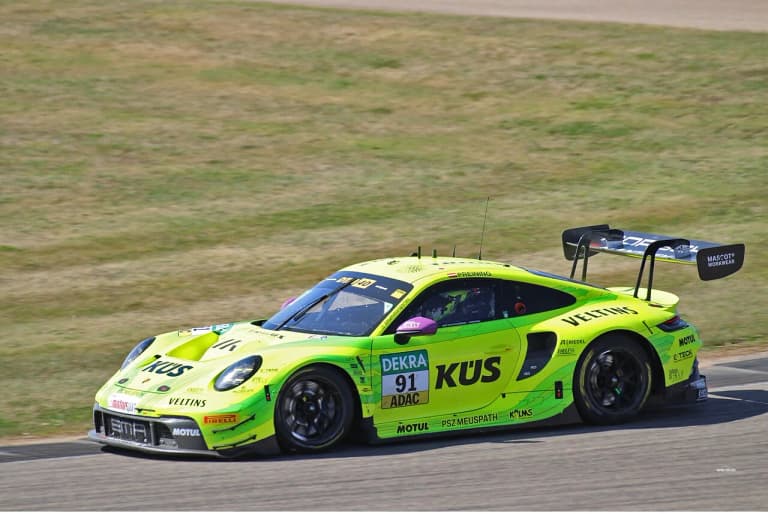
The LMGT3 class debuted at Le Mans in 2024. Manthey EMA won the class with their number 91 car driven by Richard Lietz, Morris Schuring, and Yasser Shahin. This was a landmark result, as it was the first Le Mans class victory for the GT3 R specifically (earlier Porsche Le Mans wins came from GT2 and GTE class cars like the 911 RSR and 911 GT1).
The GT3 R Hybrid
In 2010, Porsche built the 997 GT3 R Hybrid as a technology demonstrator. It used a flywheel based kinetic energy recovery system developed with Williams F1. Two electric motors producing around 219 hp drove the front wheels, supplementing the 500 hp 4.0 liter flat six at the rear.
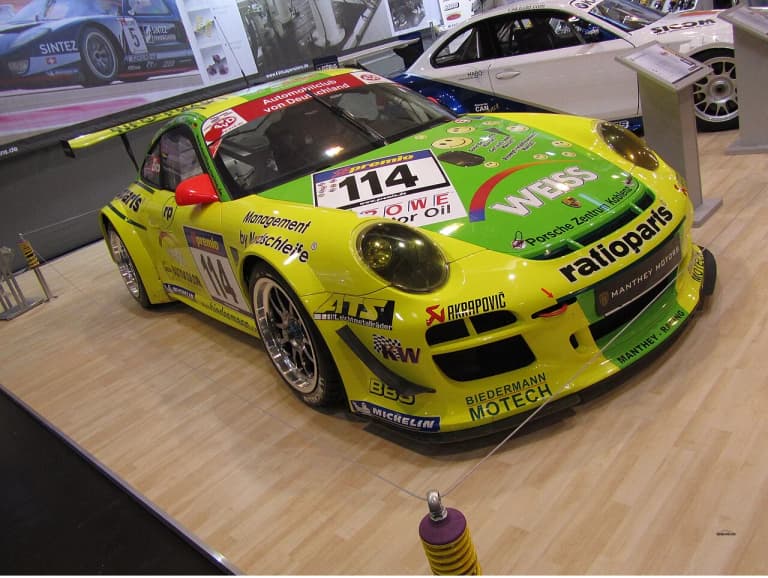
The hybrid system stored energy under braking in a mechanical flywheel spinning at up to 40,000 rpm, then released it as a temporary power boost. The car debuted at the VLN series in March 2010, raced at the 2010 Nürburgring 24 Hours, and won its first VLN race in May 2011. The technology it pioneered eventually influenced the hybrid systems in the 919 Hybrid LMP1 car that won Le Mans three consecutive times from 2015 to 2017.
Pricing and Customer Programs
The 992 GT3 R costs €459,000 excluding taxes. That price includes the base car, roll cage, fire suppression system, and all safety equipment required by the FIA. It does not include spare parts, transport, or running costs.
Porsche sells the GT3 R through its Porsche Motorsport division directly to customer teams. Buyers must be approved and typically need to demonstrate they have the infrastructure (a team, mechanics, engineers, and a racing license) to campaign the car properly. Porsche provides factory support through its customer motorsport programs, including dedicated engineers at major events.
Running costs for a season of GT3 racing vary widely depending on the series and number of races. A full season in a professional series like the GT World Challenge or IMSA can cost between €1 million and €3 million, covering the car, crew, travel, tires, consumables, and entry fees. The Nürburgring Endurance Series and regional championships are less expensive but still require significant budgets.
Retired GT3 R cars from the 991 generation trade on the secondhand market for €150,000 to €300,000 depending on mileage, specification, and race history. Some teams buy used cars to compete in amateur or club level GT3 events.
Frequently Asked Questions
Is the Porsche 911 GT3 R street legal?
No. The Porsche 911 GT3 R is a dedicated race car with no license plate, no road legal headlights, no airbags, and no emissions equipment. It is built exclusively for circuit use. The street legal equivalent is the Porsche 911 GT3 RS.
How much does a Porsche 911 GT3 R cost?
The current 992 GT3 R costs €459,000 excluding taxes. A full season of racing adds another €1 million to €3 million depending on the series, covering crew, travel, tires, and consumables.
What engine does the 992 GT3 R use?
The 992 GT3 R uses a 4,194 cc (4.2 liter) naturally aspirated flat six engine producing up to 565 hp. It shares core architecture with the road going 911 GT3 and GT3 RS but uses a larger displacement and race specific calibration.
What is the difference between the GT3 R and the GT3 Cup?
The GT3 Cup is built for Porsche’s one make Carrera Cup series, where every car is identical. The GT3 R is built for multiclass GT3 racing against other manufacturers. The GT3 R has more power, a different gearbox, more aerodynamic freedom, and costs nearly twice as much.
Has the GT3 R won Le Mans?
The GT3 R won the LMGT3 class at the 2024 24 Hours of Le Mans, the first year GT3 cars were eligible at Le Mans. Manthey EMA took the class victory. Earlier Porsche Le Mans class wins came from GTE and GT2 class cars like the 911 RSR.
What racing series use the Porsche 911 GT3 R?
The GT3 R competes in the FIA World Endurance Championship (LMGT3), IMSA WeatherTech SportsCar Championship (GTD/GTD Pro), GT World Challenge, DTM, Intercontinental GT Challenge, Nürburgring Endurance Series, and Asian Le Mans Series, among others.
Images: Tique, TaurusEmerald, NVer, Pehah, CC BY-SA 4.0 / CC BY 2.0, via Wikimedia Commons