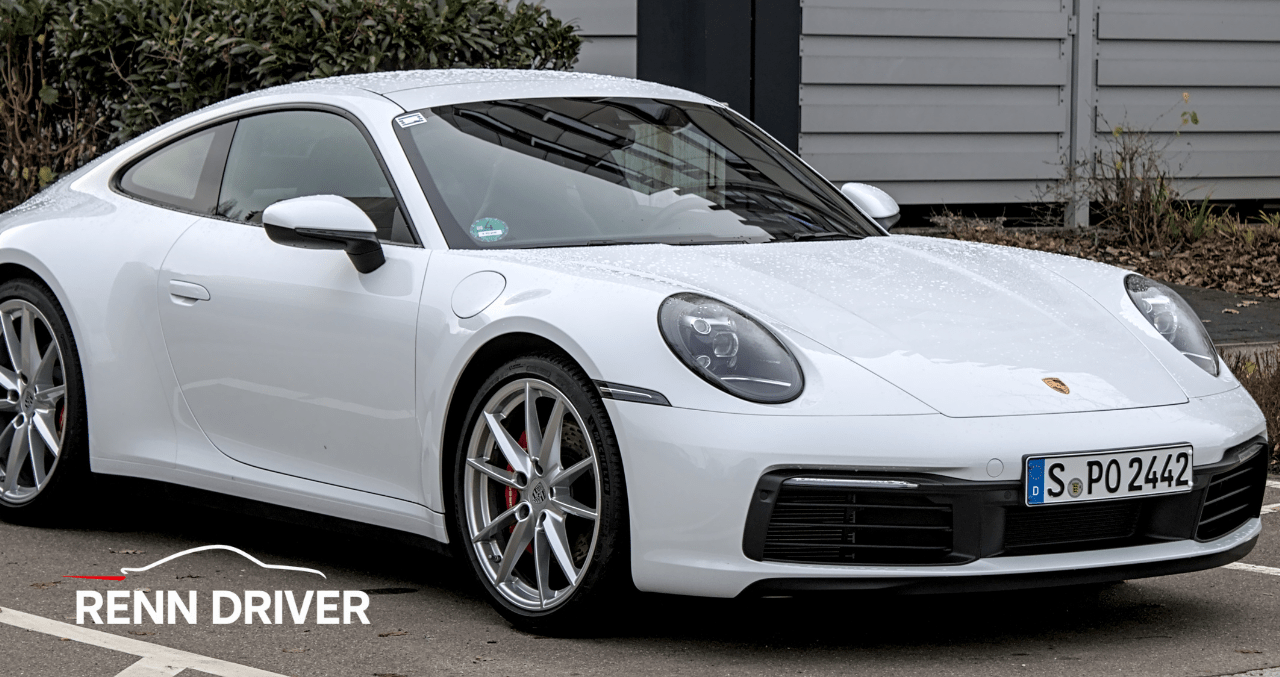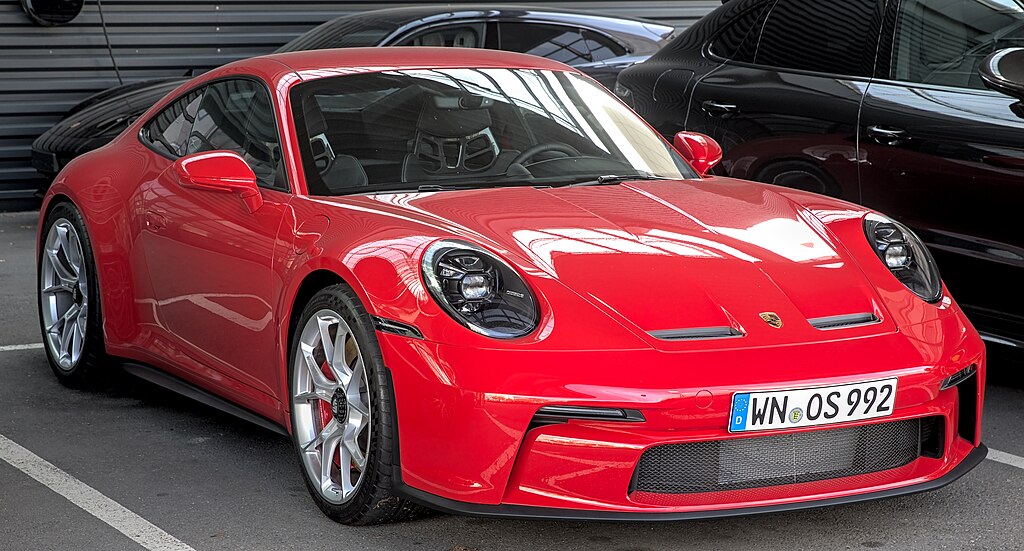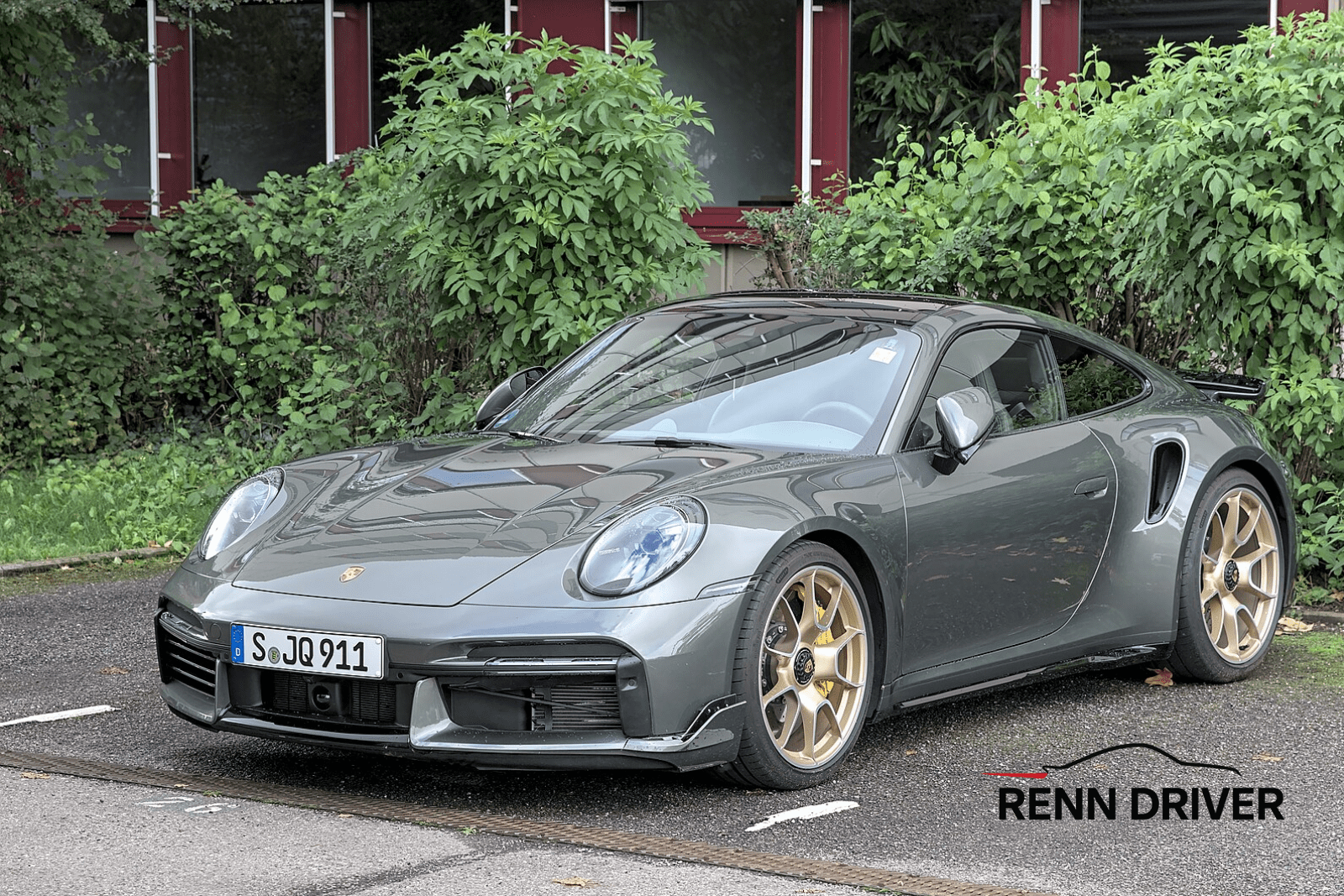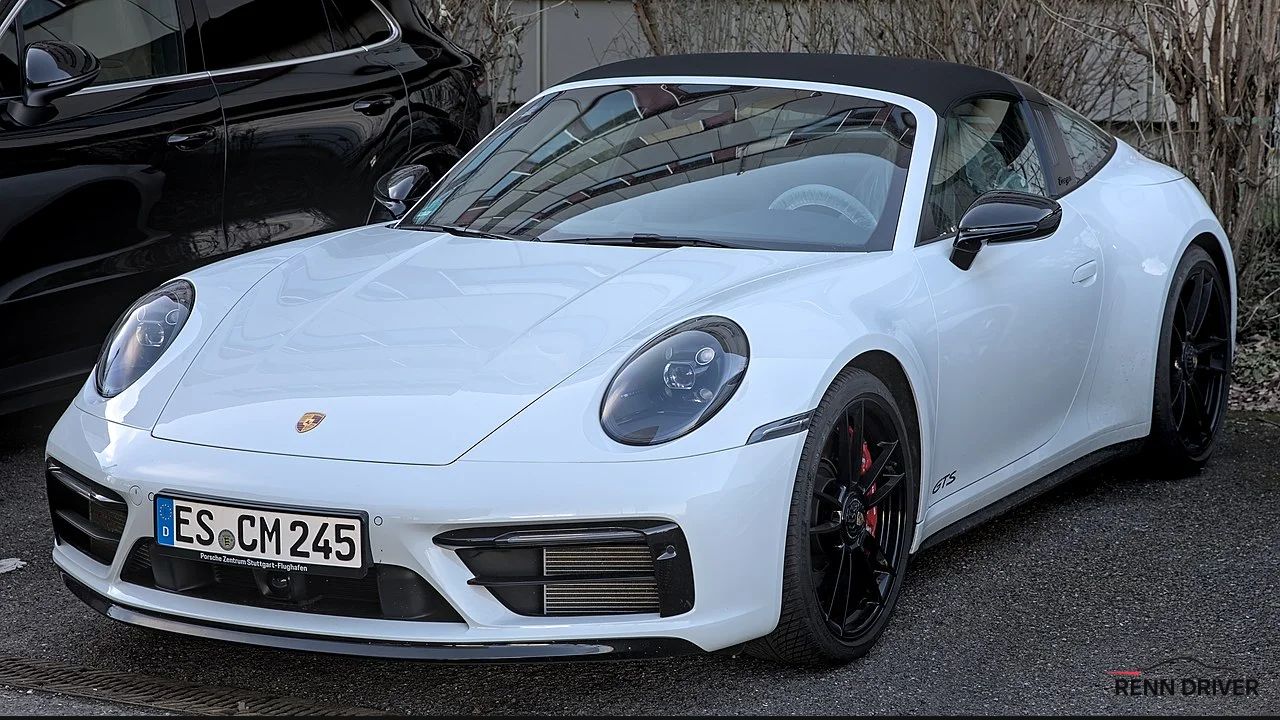
The Porsche 992 is the eighth generation 911, produced from 2019 to present. Power ranges from 379 hp in the base Carrera to 640 hp in the Turbo S, with naturally aspirated GT3 variants sitting between them. The 992.2 facelift introduced the first hybrid 911, the Carrera GTS T-Hybrid.
This guide covers every Porsche 992 model from the base Carrera through the GT3 RS. It includes specs, pricing, 992.1 versus 992.2 differences, and ownership details.
Contents
- 1 Quick Summary
- 2 What Is the Porsche 992?
- 3 Engine and Powertrain
- 4 992 Model Lineup
- 5 992.1 vs 992.2: What Changed?
- 6 Body Styles: Coupe, Cabriolet, and Targa
- 7 Performance and Specs by Trim
- 8 Chassis, Handling, and Brakes
- 9 Interior and Technology
- 10 Design
- 11 How Much Does a Porsche 992 Cost?
- 12 Real-World Ownership and Maintenance
- 13 Special Editions and Limited Runs
- 14 Why the 992 Might Be the Last of Its Kind
- 15 Renn Driver's Take
- 16 Frequently Asked Questions
Quick Summary
- Production years: 2019 to present (eighth generation Porsche 911)
- Sub-generations: 992.1 (2019 to 2023), 992.2 (2024 onward)
- Engine: 3.0-liter twin-turbo flat-six (Carrera models), 3.7-liter twin-turbo flat-six (Turbo and Turbo S), 4.0-liter naturally aspirated flat-six (911 GT3 and GT3 RS)
- Power range: 379 hp (base 911 Carrera) to 640 hp (Porsche 911 Turbo S)
- Transmission: Eight-speed PDK or seven-speed manual gearbox (select models)
- Drivetrain: Rear-wheel drive or all-wheel drive depending on trim
- Body styles: Coupe, Cabriolet, Targa
- 0 to 60 mph: 4.0 seconds (base 911 Carrera) to 2.6 seconds (Turbo S with Sport Chrono Package)
- Key models: 911 Carrera, Carrera T, Carrera S, Carrera 4S, Carrera GTS, GTS Cabriolet, Targa 4S, 911 Turbo, Turbo S, Turbo Cabriolet, 911 GT3, GT3 RS, GT3 Touring, Dakar, Sport Classic, S/T
- New MSRP: Approximately $115,000 (base 911 Carrera) to over $300,000 (limited editions)
- Used price range: $95,000 to $500,000+ depending on trim and rarity
What Is the Porsche 992?
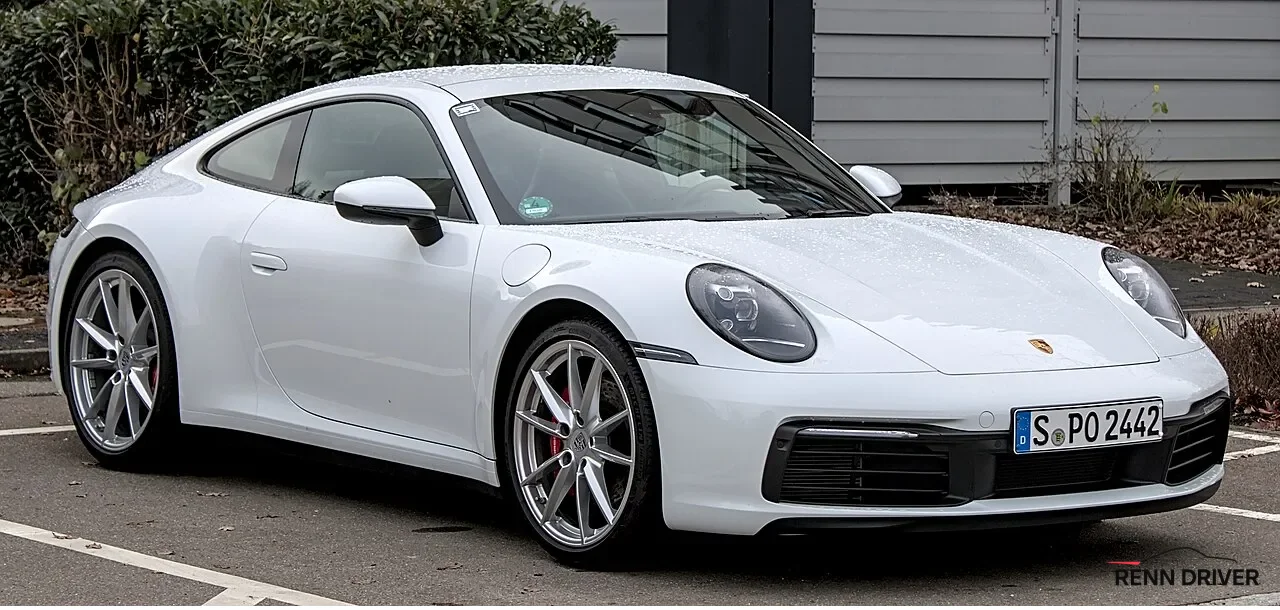
The Porsche 992 is the internal designation for the eighth generation Porsche 911, produced from 2019 to present. Porsche unveiled the 992 at the 2018 Los Angeles Auto Show and started deliveries in 2019.
The 992 replaced the 991 generation and brought a wider body, an entirely new digital cockpit, and hybrid-ready architecture.
Porsche called it the most significant evolution of the 911 since the shift from air cooling to water cooling in 1998.
The 992 had a hard job. The 991 was hugely successful, so Porsche needed to push the Porsche 911 forward without losing the character that makes it special. They widened the front and rear track, overhauled the chassis geometry, and redesigned the suspension.
Porsche also added technology that the 991 never had.
The result is a car that feels sharper and more capable at every speed. It still delivers the unmistakable rear-engine feel that defines the Porsche 911 experience. The wider stance gives the 992 more mechanical grip than any previous generation.
Porsche offers the 992 in more variants than any previous Porsche 911 generation. The range runs from the base 911 Carrera through the Carrera T, Carrera S, Carrera 4S, Carrera GTS, GTS Cabriolet, Targa 4S, 911 Turbo, Turbo S, 911 GT3, GT3 RS, GT3 Touring, Dakar, Sport Classic, and S/T.
Each trim targets a different buyer.
Options range from comfortable daily driver to exclusive special edition.
Engine and Powertrain
Every Porsche 992 is powered by a flat-six engine mounted behind the rear axle. The specific engine depends on the model, but the 992 uses three distinct powertrains across its lineup.
Twin-Turbo Flat-Six (Carrera Models)
The 911 Carrera, Carrera T, Carrera S, Carrera 4S, and Carrera Cabriolet all use a 3.0-liter twin-turbo flat-six. In the base 911 Carrera and Carrera T, this engine produces 379 hp and 331 lb-ft of torque.
The Carrera S and Carrera 4S receive a tuned version producing 443 hp and 390 lb-ft.
Both turbochargers spool quickly, eliminating nearly all turbo lag.
The 3.0-liter twin-turbo flat-six uses a slightly shorter stroke than the outgoing 991 engine. This allows it to rev more freely while producing more power across the entire powerband.
The Porsche 911 Carrera GTS in 992.1 form uses a higher-output version of the same 3.0-liter twin-turbo flat-six, producing 473 hp. In the 992.2 facelift, the Carrera GTS switches to the T-Hybrid powertrain with 532 hp, which is covered in the 992.2 section below.
Twin-Turbo Flat-Six (Turbo Models)
The Porsche 911 Turbo and Porsche 911 Turbo S use a larger 3.7-liter twin-turbo flat-six with more power and torque than any Carrera model. The 911 Turbo produces 572 hp and 553 lb-ft of torque. The Turbo S pushes that to 640 hp and 590 lb-ft.
Both engines use variable-geometry turbochargers that virtually eliminate turbo lag.
The result is relentless acceleration that pins you into the seat from any speed. The 911 Turbo and Turbo S are all-wheel drive only. They send power to all four wheels through the eight-speed PDK.
Naturally Aspirated Flat-Six (911 GT3 and GT3 RS)
The Porsche 911 GT3 and GT3 RS break from the twin-turbo formula entirely. They use a 4.0-liter naturally aspirated flat-six that revs to 9,000 rpm.
The 911 GT3 produces 502 hp. The GT3 RS produces 518 hp.
This engine is derived from the Porsche 911 Cup racing car and has no turbo lag at all.
The sound at full throttle is one of the greatest noises any production car makes. It builds to a screaming crescendo near redline. The 911 GT3 and GT3 RS are rear-wheel drive only.
Across all Carrera models, Turbo models, and GT cars, the 992 offers two transmission options. The standard gearbox is an eight-speed PDK dual-clutch that shifts in milliseconds. Select models also offer a seven-speed manual with an auto-rev-match function.
These include the Carrera S, Carrera 4S, Carrera T, Carrera GTS, 911 GT3, and GT3 Touring.
The manual gearbox is a proper stick shift with a mechanical feel that enthusiasts love. Porsche deserves credit for continuing to offer a manual when most rivals have dropped it.
992 Model Lineup
911 Carrera and Carrera T
The base 911 Carrera is a rear-wheel drive sports car with 379 hp from the 3.0-liter twin-turbo flat-six. It reaches 0 to 60 mph in 4.0 seconds and has a top speed of 182 mph. The 911 Carrera is the entry point to the 992 range.
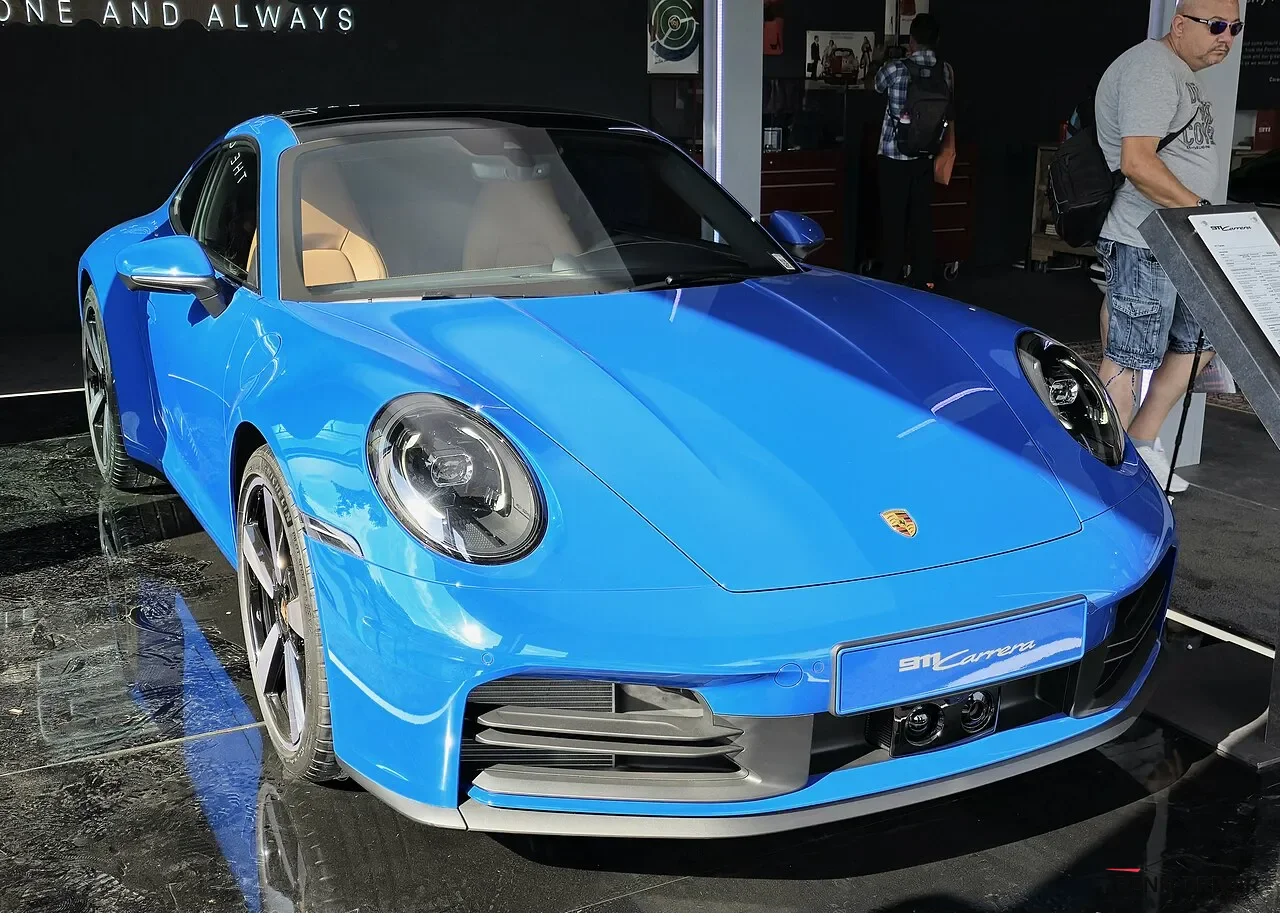
It offers adaptive dampers via Porsche Active Suspension Management, a digital cockpit, and Apple CarPlay.
The Porsche 911 Carrera delivers more power than most other models in its price class and accelerates quicker than sports cars that cost significantly more.
The Carrera T is a stripped-back version of the base 911 Carrera. The Carrera T gets a standard seven-speed manual gearbox, thinner glass, reduced sound insulation, and lightweight sport bucket seats. Power remains at 379 hp but the Carrera T weighs less and feels more direct.
The Carrera T is rear-wheel drive only. It is aimed at the Porsche 911 purist who values driving engagement over comfort.
The Carrera T reaches 0 to 60 mph in 4.3 seconds with the manual. Top speed is 181 mph. The Carrera T is one of the most rewarding 992 models for back road driving.
911 Carrera S and Carrera 4S
The Porsche 911 Carrera S raises output to 443 hp. It drops the 0 to 60 mph time to 3.5 seconds with PDK and Sport Chrono. Top speed is 191 mph.
The Carrera S is rear-wheel drive.
The Carrera 4S adds Porsche Traction Management all-wheel drive, which sends power to the front axle when the rear wheels lose traction. The Carrera 4S reaches 0 to 60 mph in 3.4 seconds. It is a better choice for cold climates or wet roads.
Both the Carrera S and Carrera 4S are available with the seven-speed manual.
The Carrera S and Carrera 4S sit in the sweet spot of the Porsche 911 lineup for daily driving. They have enough power to be genuinely fast and enough refinement for comfortable daily use. Options let you customize the car exactly to your preferences.
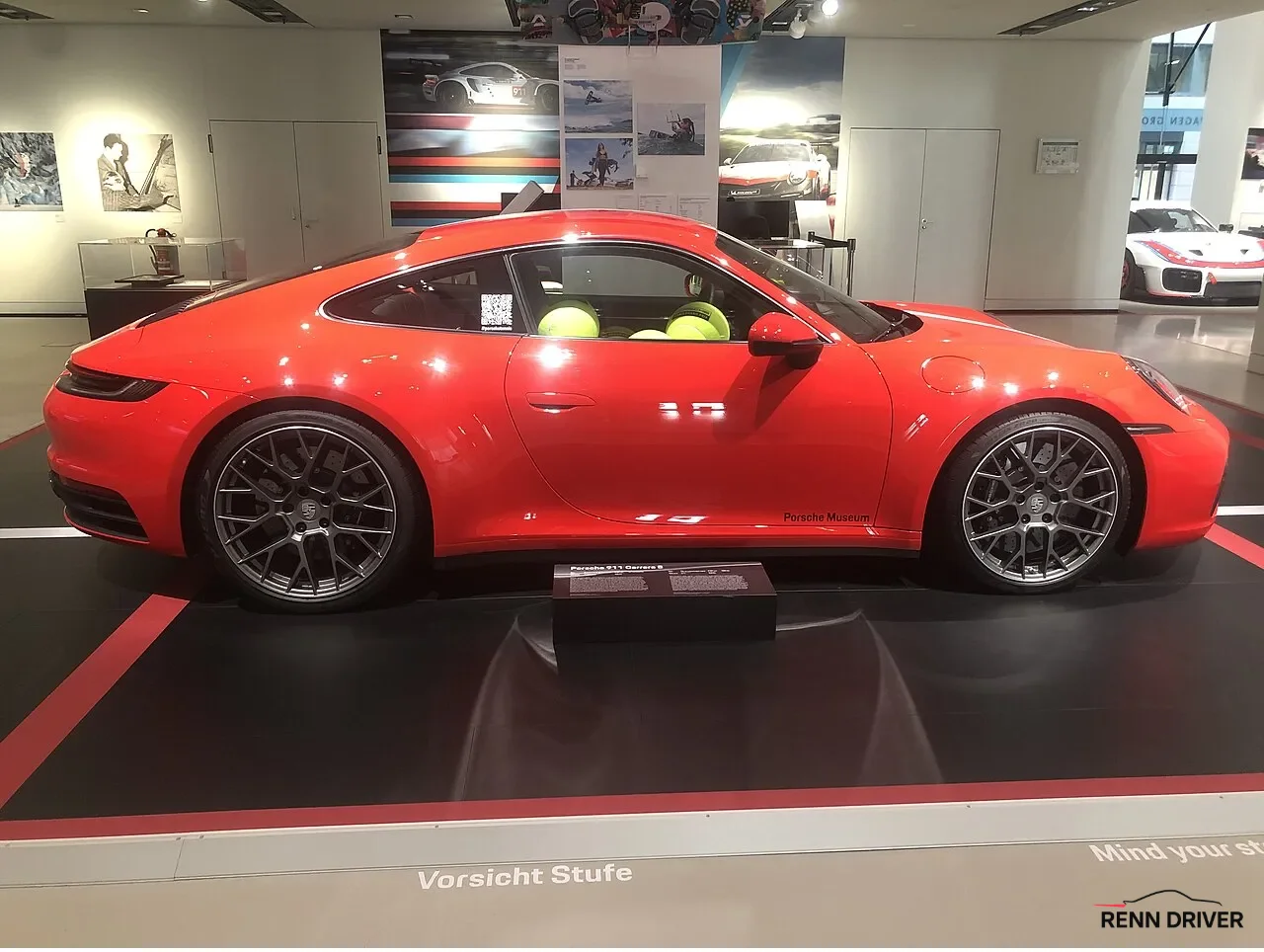
The Carrera 4S is popular with buyers who want all-wheel drive confidence. It avoids the weight and price of the Porsche 911 Turbo. Both the Carrera S and Carrera 4S are available as a coupe, Carrera Cabriolet, and Targa (Carrera 4S only for the Targa).
911 Carrera GTS
The Porsche 911 Carrera GTS has always been the sweet spot of the Porsche 911 range. In the 992.1, the Carrera GTS produces 473 hp from the 3.0-liter twin-turbo flat-six. The Carrera GTS reaches 0 to 60 mph in 3.1 seconds and has a top speed of 193 mph.
The Carrera GTS gets lowered PASM sport suspension and a sport exhaust with larger tips. It also features blacked-out exterior trim and lightweight center-lock wheels.
The Carrera GTS is available as a coupe, GTS Cabriolet, and Targa. Both rear-wheel drive and all-wheel drive are offered.
The GTS Cabriolet offers the same 473 hp with an electrically operated soft top that opens in about 12 seconds. The GTS Cabriolet is available in rear-wheel drive and all-wheel drive configurations.
The GTS Cabriolet weighs about 130 lbs more than the coupe but delivers a nearly identical driving experience with the added benefit of open-air motoring.
In the 992.2 generation, the Porsche 911 Carrera GTS becomes the first ever hybrid Porsche 911. The T-Hybrid powertrain combines the twin-turbo flat-six with an electric motor integrated into the gearbox, producing a combined 532 hp and 449 lb-ft of torque.
The T-Hybrid system adds torque at low revs and during gear changes.
The car feels faster and more responsive than the 992.1 Carrera GTS despite added weight.
The T-Hybrid represents a significant evolution for the Carrera GTS. It points toward where all future Porsche 911 models are heading.
911 Turbo and Turbo S
The Porsche 911 Turbo is the flagship of the standard Porsche 911 lineup. The 3.7-liter twin-turbo flat-six produces 572 hp and launches the car from 0 to 60 mph in 2.7 seconds. Top speed is 199 mph.
The Porsche 911 Turbo S raises power to 640 hp. It reaches 0 to 60 mph in 2.6 seconds with a top speed of 205 mph.
Both the 911 Turbo and Turbo S are all-wheel drive with the eight-speed PDK. The Turbo S gets PCCB ceramic brakes, Sport Chrono Package, and rear-axle steering as standard. The 911 Turbo and Turbo S are available as a coupe and Turbo Cabriolet.
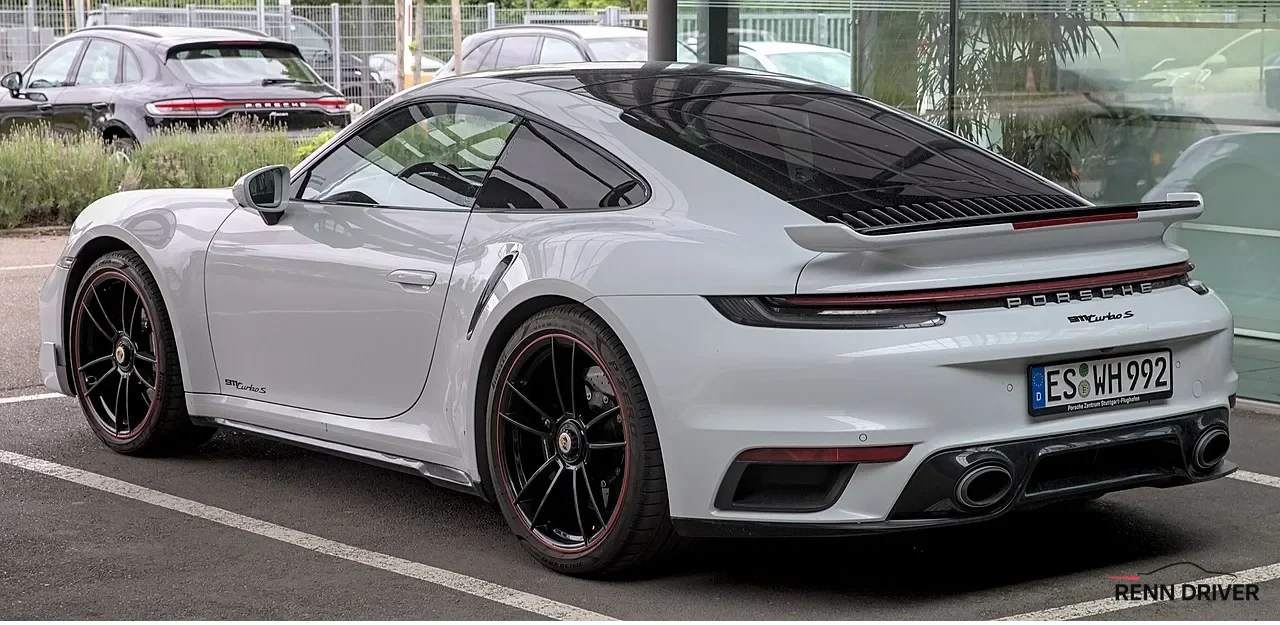
The Turbo Cabriolet and Turbo S Cabriolet share identical powertrains with their coupe counterparts. The Turbo S Cabriolet reaches 0 to 60 mph in 2.7 seconds with the roof down. These are among the quickest open-top cars sold anywhere in the world.
You can cruise at highway speed with the top down and still carry on a conversation.
The Porsche 911 Turbo S remains the benchmark for all-weather, any-speed grand touring performance.
911 GT3 and GT3 RS
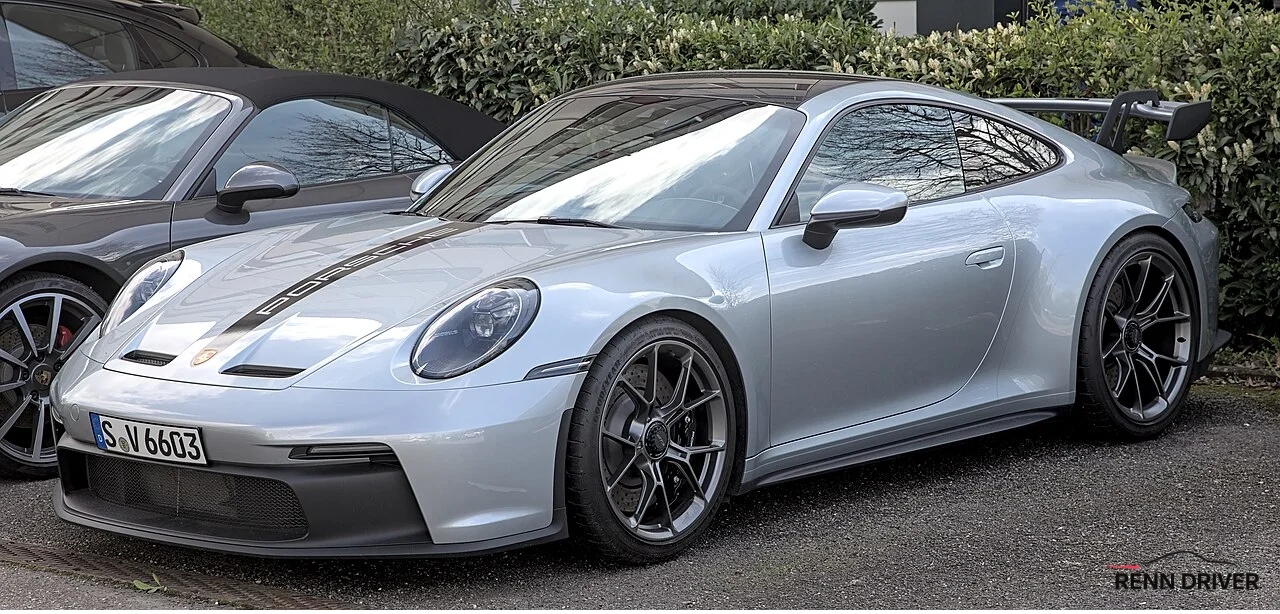
The Porsche 911 GT3 is a track-focused car that uses the 4.0-liter naturally aspirated flat-six producing 502 hp. The 911 GT3 reaches 0 to 60 mph in 3.2 seconds and has a top speed of 198 mph.
The 911 GT3 is rear-wheel drive only and is available with the seven-speed manual or PDK.
The GT3 Touring package deletes the large rear spoiler for a more subtle retractable unit. This makes the GT3 Touring a car you can drive daily without drawing excessive attention.
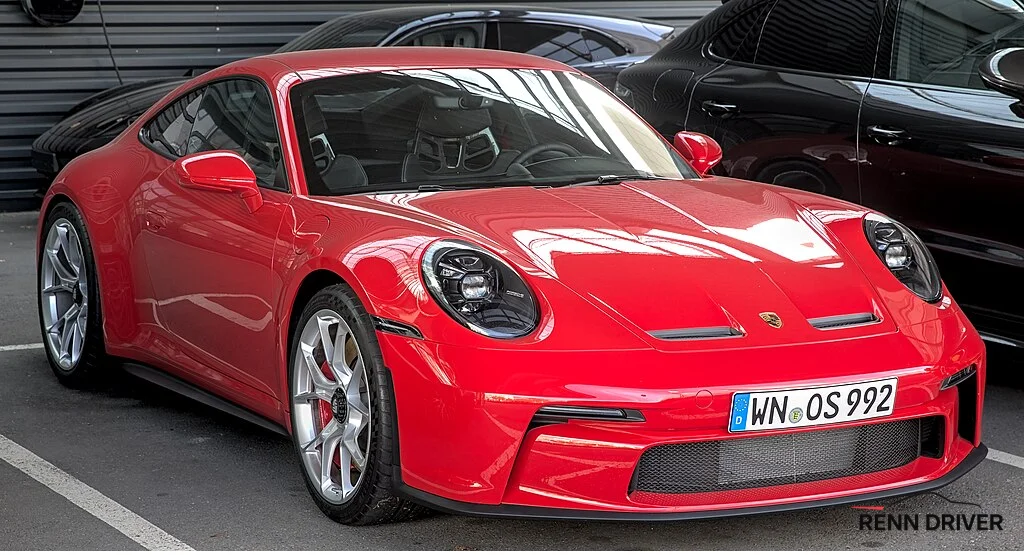
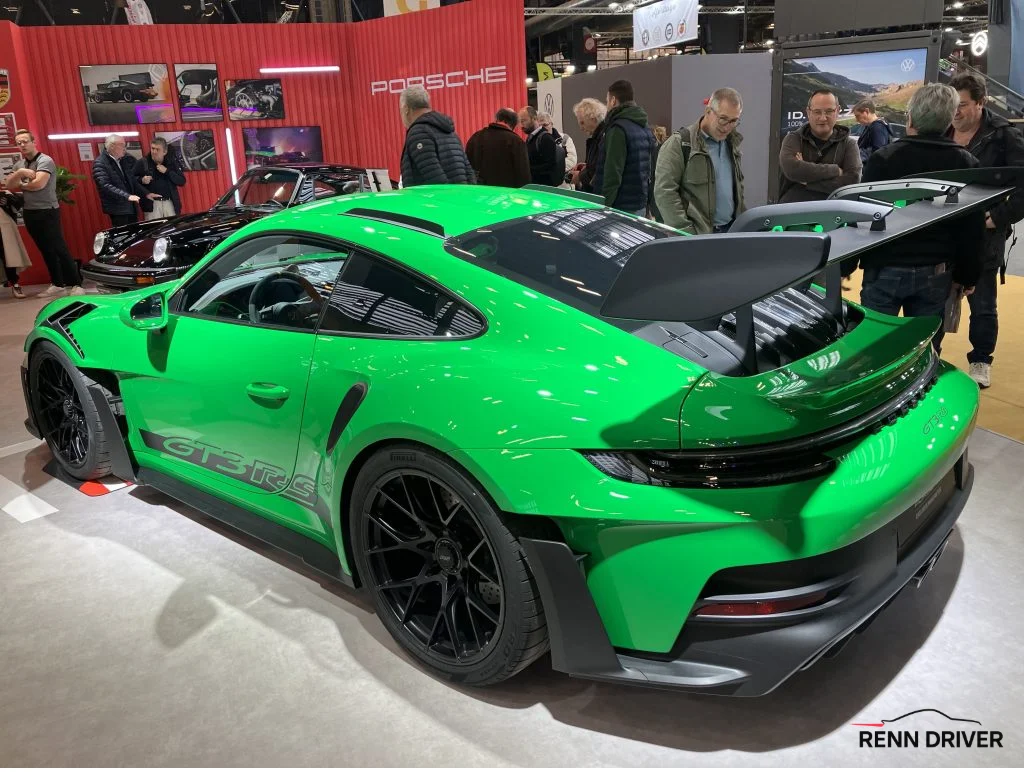
The Porsche 911 GT3 RS takes everything further. The GT3 RS produces 518 hp from the same 4.0-liter engine, but the real story is the aerodynamics.
The GT3 RS generates over 900 lbs of downforce at 177 mph. This comes from an enormous rear wing with DRS, aggressive front dive planes, and a redesigned underbody.
The GT3 RS set a lap time of 6:49.328 at the Nurburgring Nordschleife. That makes it one of the quickest production cars to ever circle that track. The GT3 RS is PDK only and rear-wheel drive only.
The GT3 RS runs on summer tires from the factory and is not intended for wet weather. For the ultimate track-focused Porsche 911 experience, the GT3 RS delivers it.
911 Dakar
The Porsche 911 Dakar is an off-road variant of the 992 Carrera GTS. The Dakar uses the same 473 hp twin-turbo flat-six but adds raised suspension with 50 mm more ground clearance. It also gets all-terrain tires, underbody protection, and a rally-inspired body kit.
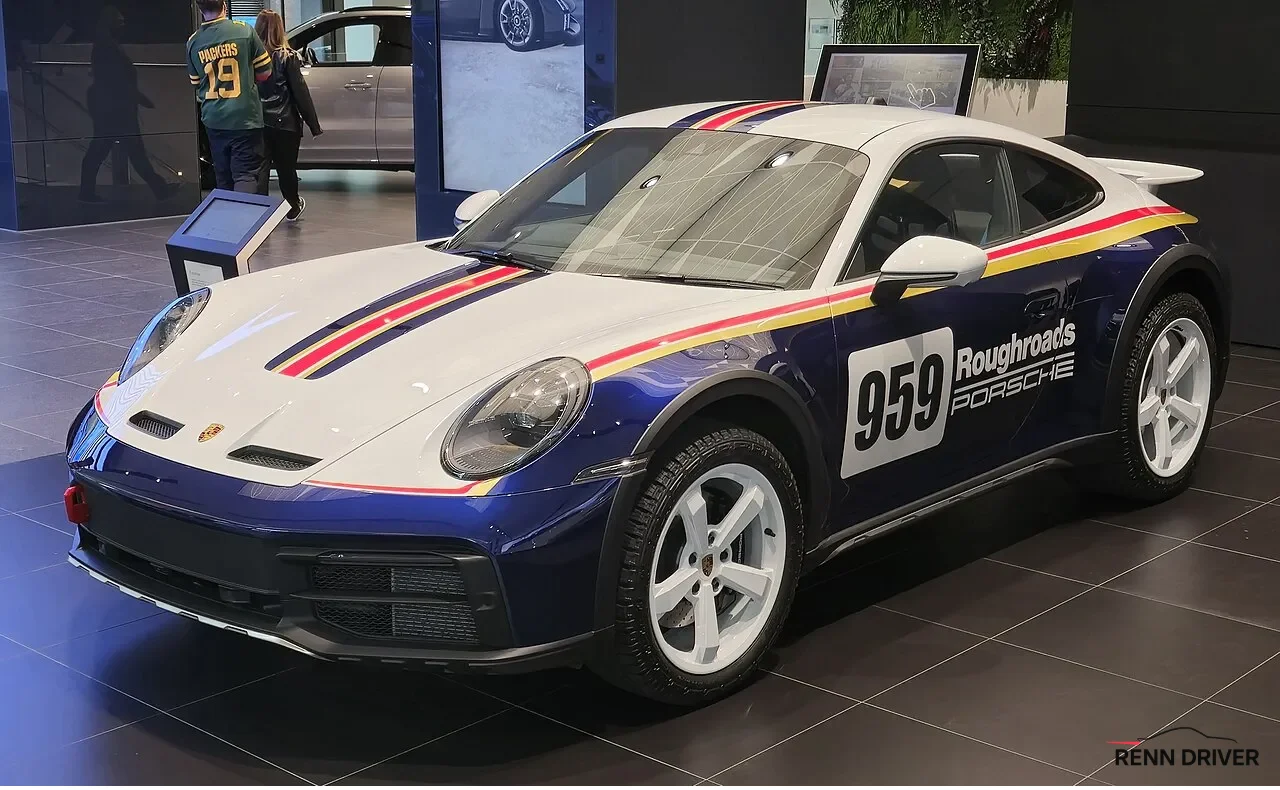
The Dakar reaches 0 to 60 mph in 3.4 seconds. Top speed is electronically limited to 149 mph. Porsche produced 2,500 units worldwide, making the Dakar one of the most unusual 911 models ever.
911 Sport Classic and S/T
The Porsche 911 Sport Classic is a limited-production special edition with retro styling inspired by the original Porsche 911 from the 1960s and 1970s. The Sport Classic uses the 3.7-liter twin-turbo flat-six from the Turbo S, detuned to 543 hp. It comes exclusively with the seven-speed manual and rear-wheel drive.
The Sport Classic features a ducktail spoiler, Fuchs-style center-lock wheels, and a double-bubble roof. Porsche produced 1,250 units of the Sport Classic.
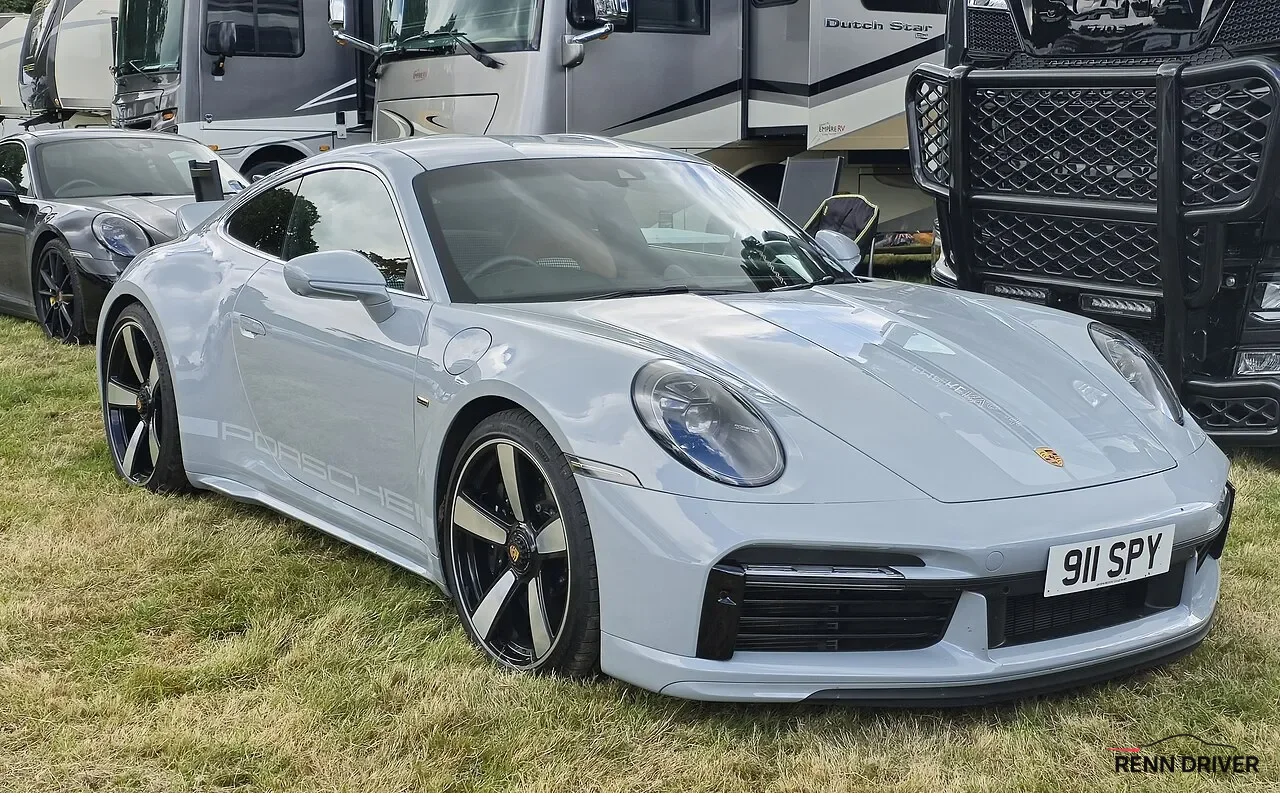
The Porsche 911 S/T is the lightest and most exclusive 992. The S/T uses the 4.0-liter naturally aspirated engine from the 911 GT3, tuned to 518 hp. It pairs with the seven-speed manual gearbox and rear-wheel drive.
The S/T weighs just 3,056 lbs thanks to aluminium body panels, carbon fiber components, and lightweight glass. It is a special edition celebrating 60 years of the Porsche 911. The S/T has become one of the most collectible 992 models and commands significant premiums used.
992.1 vs 992.2: What Changed?
The 992.1 (2019 to 2023) introduced the core architecture: wider body, digital cockpit, new suspension geometry, and the eight-speed PDK. The first models arrived at dealers in mid-2019. The 992.2 facelift, announced in 2024, refined the car in several important areas.
Porsche launched the 992.2 as the most significant mid-cycle update in Porsche 911 history. The T-Hybrid powertrain drove that distinction.
992.2 Updates
- T-Hybrid powertrain on the Carrera GTS, making it the first hybrid Porsche 911 in history
- Revised front bumper with a redesigned air intake system for better cooling and increased airflow to the intercoolers
- Updated rear bumper with reshaped exhaust tips and two large exhaust outlets on the Turbo models
- New HD Matrix LED headlights across the range with improved visibility at night
- Improved Porsche Communication Management (PCM) infotainment system with a faster processor and ChatGPT integration
- Standard Apple CarPlay and Android Auto across all trims
- Revised suspension tuning with adaptive dampers retuned for a better balance between ride comfort and handling
- Updated Sport Chrono Package with a refined drive mode selector on the steering wheel
- Standard Wet Mode with acoustic sensors in the front wheel arches that detect standing water and prepare the stability control systems
- Larger air vents in the rear fenders for improved engine cooling on Turbo models
If you want the cleanest analog driving feel with no electrification, the 992.1 is the one to buy. If you want the latest technology and the most refined chassis tuning, the 992.2 is the better choice. Both are excellent Porsche 911 cars.
Body Styles: Coupe, Cabriolet, and Targa
Porsche offers the 992 in three body styles, continuing a tradition that goes back decades. Every Carrera model, every Turbo model, and most other models in the range are offered in at least two of these configurations.
Coupe
The coupe is the most rigid body style and the default choice for handling and speed. It is the lightest configuration and produces the most direct steering feel.
The Carrera coupe, Carrera S coupe, Carrera 4S coupe, and Carrera GTS coupe are the best options for outright performance. The 911 GT3 and GT3 RS are coupe only.
Cabriolet
The Porsche 911 Cabriolet uses an electrically operated fabric soft top that opens and closes in about 12 seconds at speeds up to 30 mph. The Carrera Cabriolet, Carrera S Cabriolet, Carrera 4S Cabriolet, GTS Cabriolet, Turbo Cabriolet, and Turbo S Cabriolet are all available as convertible models.
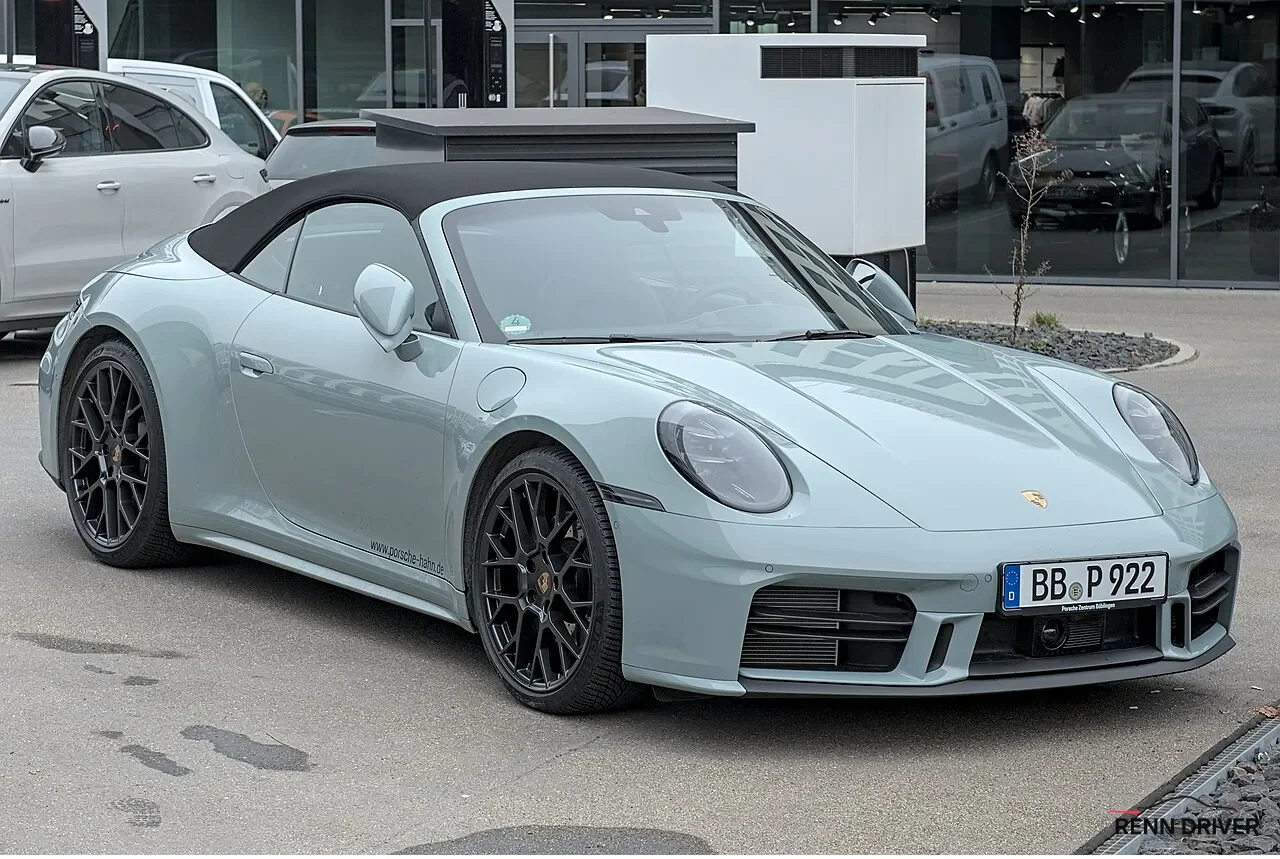
The cabriolet adds roughly 130 to 155 lbs compared to the coupe depending on the model.
The 992 Cabriolet is a genuine surprise because the chassis feels almost as sharp as the coupe. Porsche reinforced the floor pan and added bracing around the windshield to compensate for the missing roof.
In past generations the cabriolet felt noticeably softer. The 992 Carrera Cabriolet and GTS Cabriolet are serious performance cars that happen to have a folding roof.
The Carrera Cabriolet is available with rear-wheel drive and all-wheel drive. Buyers can match the car to their climate and driving style.
Targa
The Porsche 911 Targa is the signature body style of the Porsche 911 lineup. The 992 Targa uses a power-operated roof panel that slides behind the rear seats. It combines a fixed rear window with the iconic Targa bar in polished aluminum.
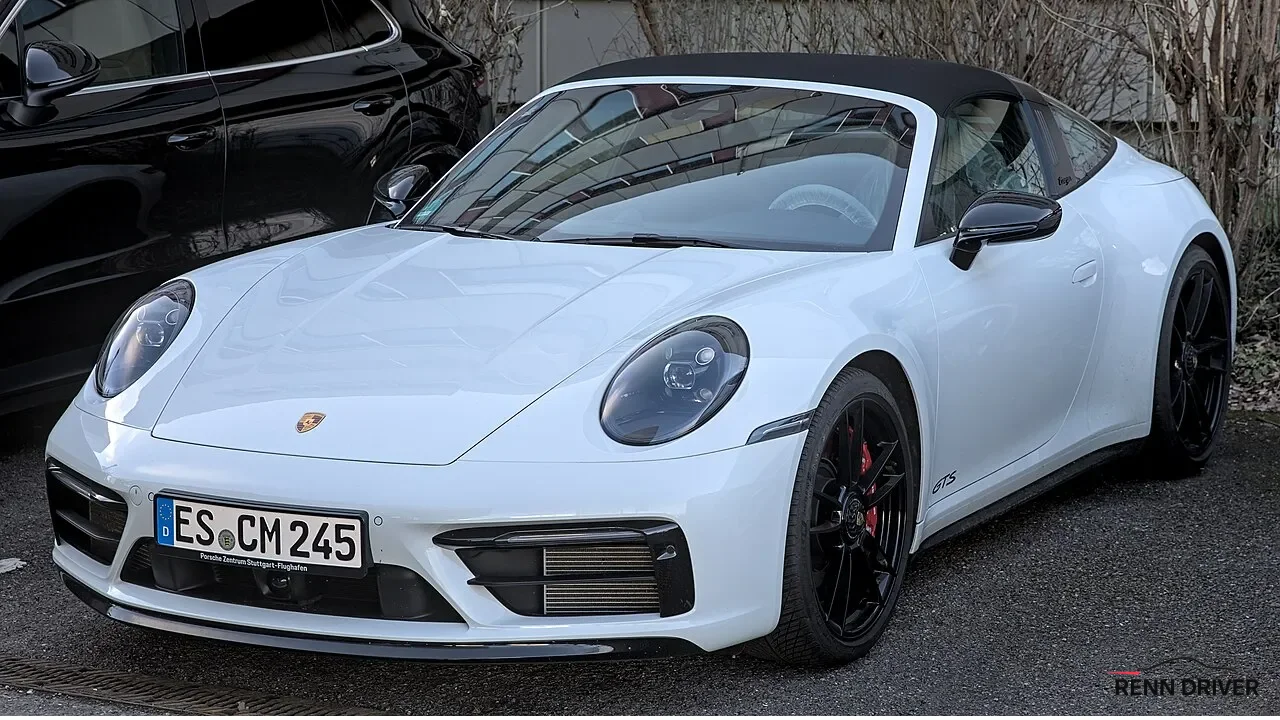
The operation takes about 19 seconds.
The Targa is available as the Targa 4S and the Targa 4 GTS, both with all-wheel drive as standard. The Targa 4S uses the 443 hp twin-turbo flat-six from the Carrera S and reaches 0 to 60 mph in 3.4 seconds.
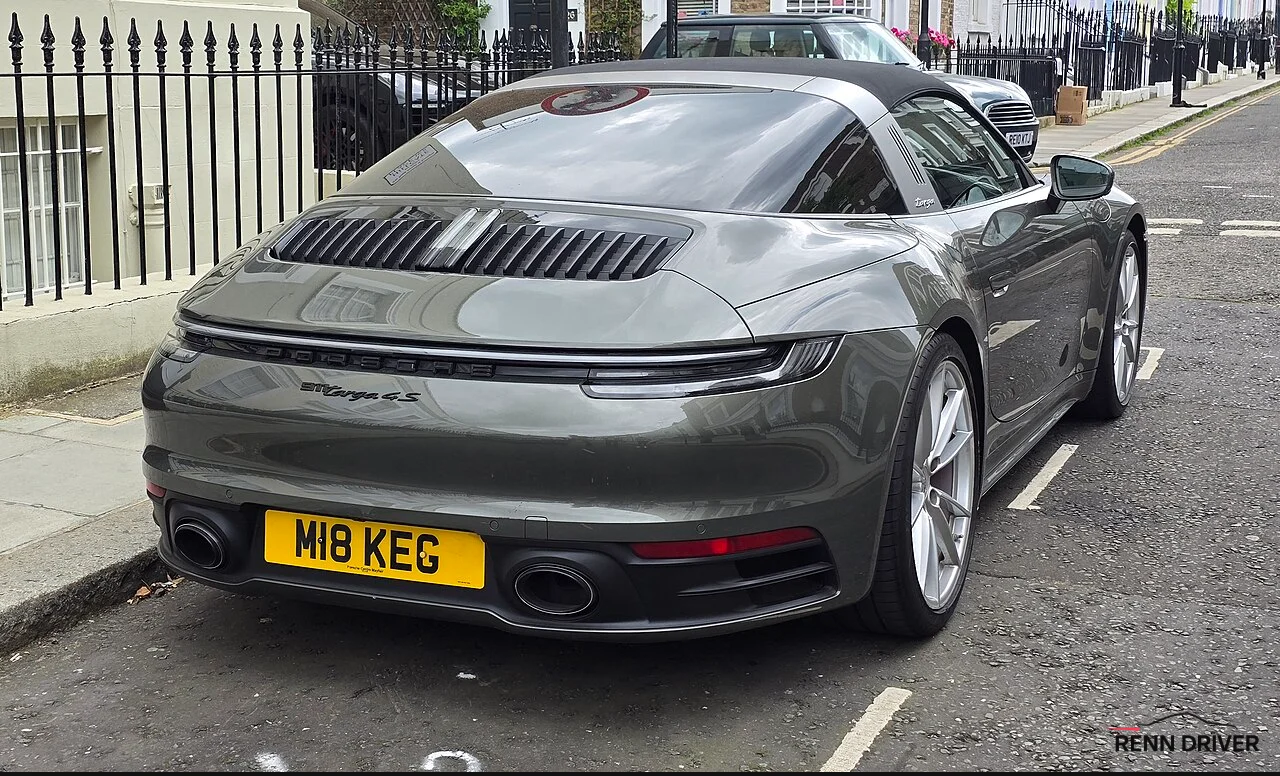
The Targa 4 GTS uses the 473 hp engine (or the T-Hybrid in the 992.2) and adds GTS sport suspension and exhaust upgrades.
Targa models are heavier than both the coupe and the cabriolet because of the complex roof mechanism. The Targa remains one of the most visually striking Porsche 911 models you can buy.
Performance and Specs by Trim
| Model | HP | 0 to 60 mph | Top Speed | Drivetrain | Weight |
|---|---|---|---|---|---|
| 911 Carrera | 379 | 4.0 s | 182 mph | Rear-wheel drive | ~3,300 lbs |
| Carrera T | 379 | 4.3 s (manual) | 181 mph | Rear-wheel drive | ~3,254 lbs |
| Carrera S | 443 | 3.5 s | 191 mph | Rear-wheel drive | ~3,382 lbs |
| Carrera 4S | 443 | 3.4 s | 190 mph | All-wheel drive | ~3,452 lbs |
| Carrera GTS (992.1) | 473 | 3.1 s | 193 mph | RWD or AWD | ~3,450 lbs |
| Carrera GTS T-Hybrid (992.2) | 532 | 3.0 s | 194 mph | All-wheel drive | ~3,594 lbs |
| Targa 4S | 443 | 3.4 s | 189 mph | All-wheel drive | ~3,516 lbs |
| 911 Turbo | 572 | 2.7 s | 199 mph | All-wheel drive | ~3,636 lbs |
| Turbo S | 640 | 2.6 s | 205 mph | All-wheel drive | ~3,660 lbs |
| 911 GT3 | 502 | 3.2 s | 198 mph | Rear-wheel drive | ~3,164 lbs |
| GT3 RS | 518 | 3.0 s | 184 mph | Rear-wheel drive | ~3,268 lbs |
| GT3 Touring | 502 | 3.2 s | 198 mph | Rear-wheel drive | ~3,164 lbs |
| Dakar | 473 | 3.4 s | 149 mph | All-wheel drive | ~3,595 lbs |
| Sport Classic | 543 | 4.1 s (manual) | 196 mph | Rear-wheel drive | ~3,462 lbs |
| S/T | 518 | 3.7 s (manual) | 186 mph | Rear-wheel drive | ~3,056 lbs |
All 0 to 60 mph times are with PDK and Sport Chrono Package unless noted. Manual cars are typically 0.3 to 0.8 seconds slower. Weights vary by configuration.
Chassis, Handling, and Brakes
The 992 chassis is wider and stiffer than the 991 it replaced. Porsche widened the front track by 46 mm across every model. This gives the car a more planted feel in high-speed corners.
The rear track grew as well, and the body sits lower to the ground.
The suspension is MacPherson strut front and multi-link rear. Porsche Active Suspension Management (PASM) adaptive dampers are standard on every 992 model.
Rear-axle steering is one of the most transformative options on the Porsche 992. At low speed, the rear wheels turn opposite to the fronts. This tightens the turning circle and makes the car feel smaller in parking lots.
At high speed, the rear wheels steer with the fronts for increased stability.
Rear-axle steering is standard on the Turbo S, 911 GT3, and GT3 RS. It is optional on most other Porsche 911 trims.
The Sport Chrono Package adds a drive-mode switch on the steering wheel and a stopwatch on the dashboard. The Sport Chrono Package includes launch control and a Sport Response button for 20 seconds of maximum responsiveness. It also provides calibrated maps for Normal, Sport, Sport Plus, and Individual drive modes.
The Sport Chrono Package is essential for anyone who plans to push the car hard. It shaves measurable time off every 0 to 60 mph run. The Sport Chrono Package is standard on the Carrera GTS and Turbo S.
Brakes
The base 911 Carrera and Carrera S use steel brake discs that are more than adequate for street driving. The Porsche 911 Turbo S, 911 GT3, and GT3 RS come standard with Porsche Ceramic Composite Brakes (PCCB). These ceramic rotors are lighter and more fade-resistant than steel.
They reduce unsprung weight by several pounds per corner.
PCCB delivers consistent stopping power even after repeated hard stops on track. PCCB is optional on the Carrera S, Carrera 4S, Carrera GTS, and the standard 911 Turbo.
The GT3 RS also uses larger front ceramic composite brake rotors (410 mm) for maximum stopping power during track use. The difference between steel and ceramic brakes is most noticeable during aggressive driving and on track days. Ceramics maintain their bite longer and do not overheat as quickly.
Tires
The 992 runs staggered wheel and tire setups across the range with bigger wheels than the 991 on every trim. The base 911 Carrera uses 235/40 R19 front and 295/35 R20 rear tires. The Turbo S and 911 GT3 run wider rubber.
The GT3 RS uses 275/35 R20 front and 335/30 R21 rear summer tires developed by Michelin specifically for that car.
The 911 GT3 and GT3 RS come on summer tires from the factory. These provide maximum grip in dry conditions but are not suitable for snow or freezing temperatures. The 911 Carrera and Turbo models can be optioned with all-season tires.
Interior and Technology
The 992 was the first Porsche 911 to go nearly full digital inside the cabin. The instrument cluster uses a 10.9-inch central touchscreen flanked by thin digital displays. Porsche kept the center tachometer as a physical analog gauge surrounded by digital screens.
The result is a cockpit that feels modern without abandoning the traditional Porsche 911 layout.
The Porsche Communication Management (PCM) infotainment system runs on a 10.9-inch touchscreen and includes navigation, media, phone integration, and vehicle settings. Every Porsche 992 comes standard with Apple CarPlay. Android Auto was added with the 992.2 facelift.
The 992.2 PCM system also added voice control powered by ChatGPT. It can answer general questions and control vehicle functions using natural language.
Physical buttons remain for key functions including climate control, drive-mode selection, and hazard lights. The driving position is excellent. The steering wheel, pedals, and seat all line up naturally.
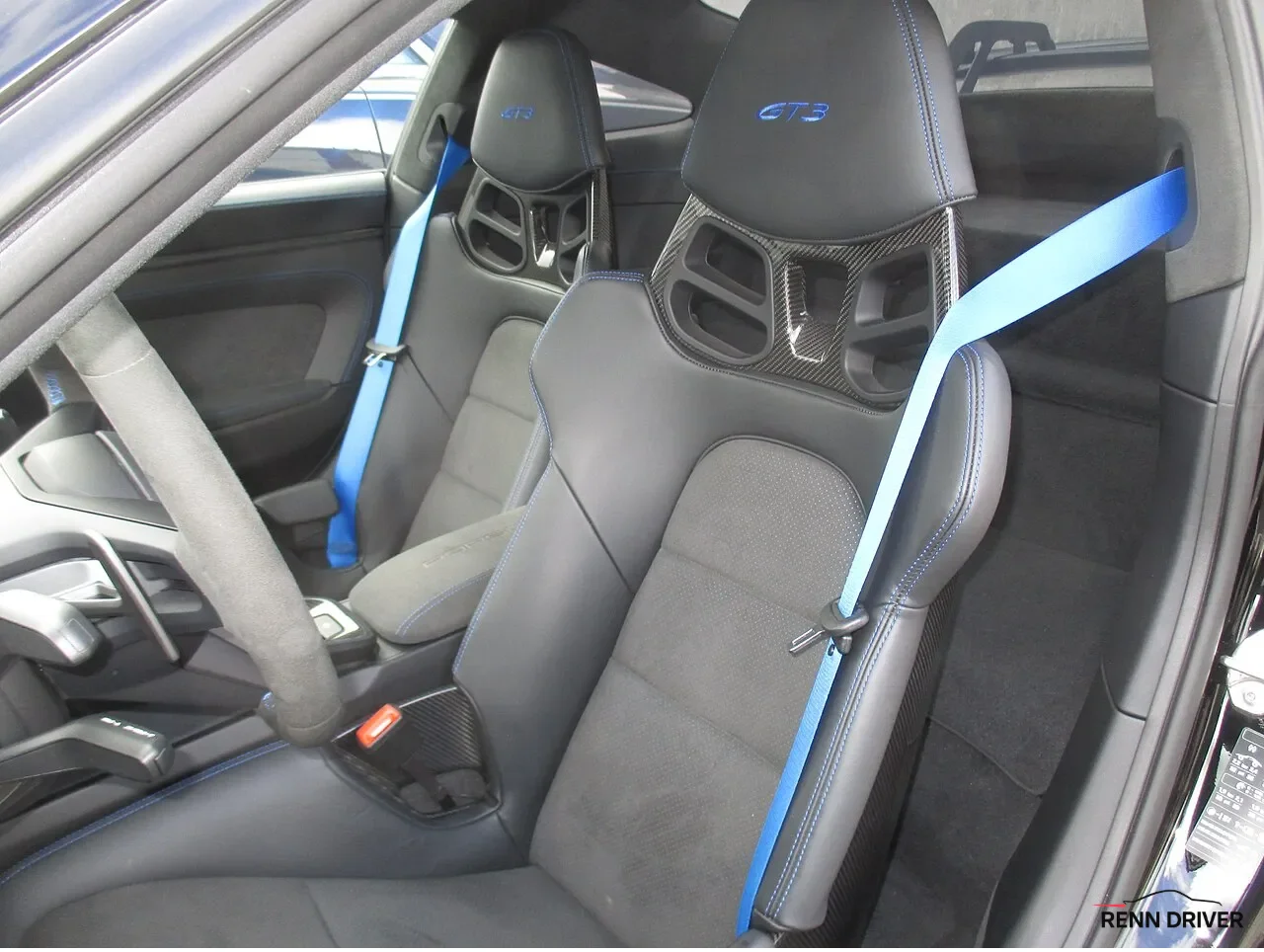
Seats range from 14-way power-adjustable sport seats in the base 911 Carrera to fixed-back carbon fiber buckets in the GT3 RS. An optional roll cage is available for the 911 GT3 and GT3 RS.
The Porsche 992 has small rear seats in all variants except the GT3 RS, which deletes them to save weight. The rear seats are suitable for children or very short trips for adults. Most owners use the rear seats as extra storage space for bags, jackets, and helmets.
Design
The 992 is the widest Porsche 911 ever produced across every trim. Even the base 911 Carrera matches the width of the old 991 Turbo. This gives the current generation a wider stance than any previous Carrera.
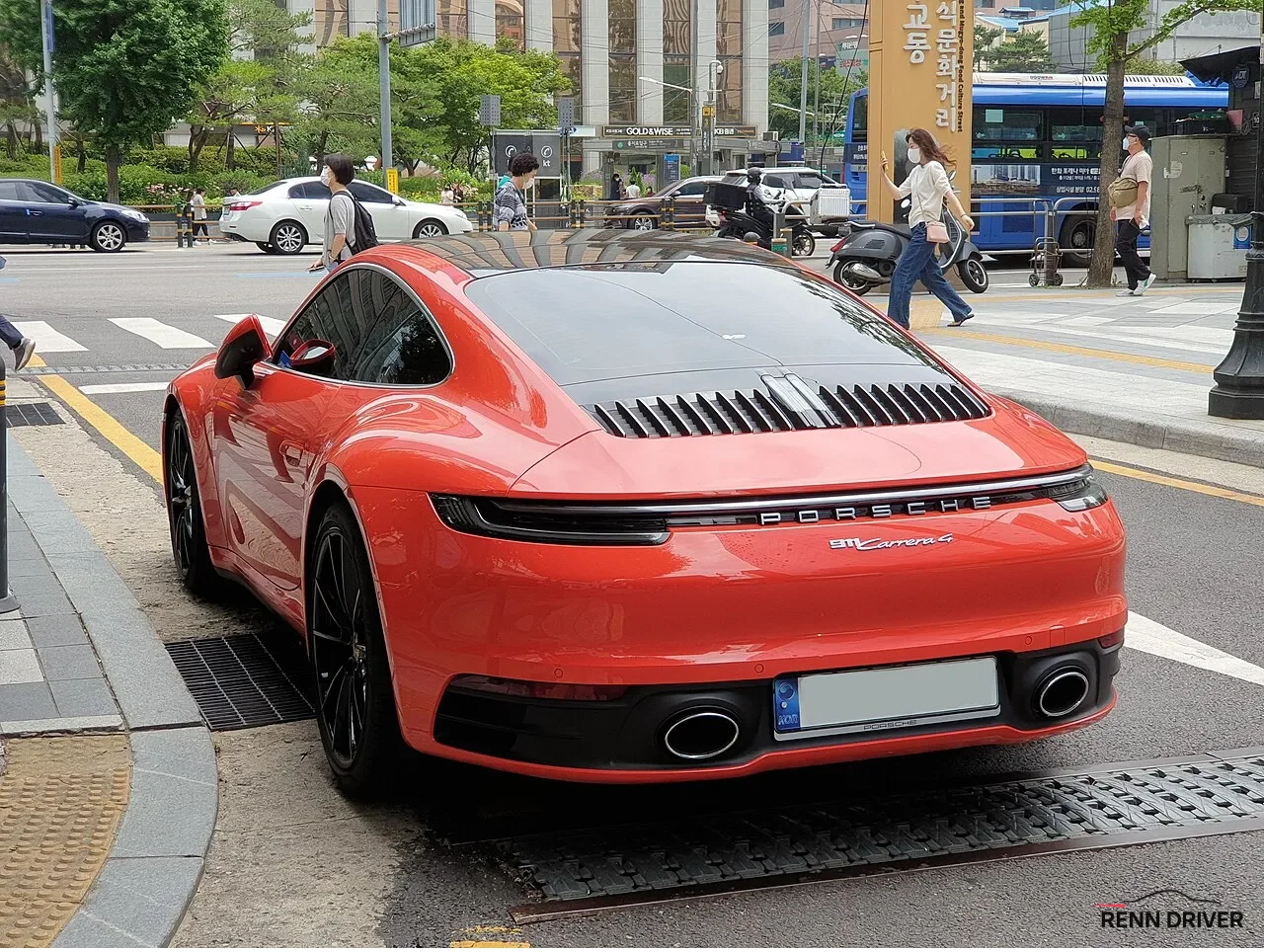
The front end has sculpted fenders that rise above the headlights and flush door handles that sit flat until pulled. The rear features a full-width LED light bar that has become a signature of the 992 design.
The Porsche 911 Turbo and Turbo S get an even wider rear body with larger air vents and air intakes feeding the intercoolers. The 911 GT3 stands out with its large rear spoiler and center-exit exhaust.
The GT3 RS is visually unmistakable with its massive swan-neck rear wing and DRS flap. It also features aggressive front dive planes and a vented hood with exposed carbon fiber.
The Targa 4S and Targa 4 GTS feature the signature Targa bar in polished aluminum with a glass rear window. This look has defined the Porsche 911 Targa since the 1960s.
The Dakar wears additional body cladding, a roof rack, and rally-inspired decals and accessories that make it unlike anything else in the Porsche 911 lineup.
Compared to the 991, its predecessor, the 992 looks more muscular and modern while staying true to the basic silhouette that Porsche 911 buyers expect. The proportions are right, and the design works whether you are looking at a simple Carrera Cabriolet or a fully aero-equipped GT3 RS.
Porsche offers Paint to Sample and special Lava Orange, Python Green, and other exclusive colors through the Porsche Exclusive Manufaktur program.
How Much Does a Porsche 992 Cost?
New Pricing (2025 Model Year, US Market)
- 911 Carrera: Approximately $115,400
- Carrera T: Approximately $118,600
- Carrera S: Approximately $133,400
- Carrera 4S: Approximately $141,100
- Carrera GTS: Approximately $154,100 (992.1) to $176,000 (992.2 T-Hybrid)
- GTS Cabriolet: Approximately $167,000 (992.1) to $189,000 (992.2)
- Targa 4S: Approximately $150,900
- 911 Turbo: Approximately $197,200
- Porsche 911 Turbo S: Approximately $238,700
- 911 GT3: Approximately $175,600
- GT3 RS: Approximately $229,600
- GT3 Touring: Approximately $175,600
- Dakar: Approximately $223,500 (limited production, sold out new)
Options can add $30,000 to $80,000 or more to any Porsche 992. Popular choices include Sport Chrono, ceramic brakes, sport exhaust, rear-axle steering, and carbon fiber trim. Lightweight sport bucket seats, the GT3 Touring Package, and special paint colors are also common.
A well-configured Carrera S can easily reach $170,000 before delivery.
Used Pricing
- Base 911 Carrera (2020 to 2022): $95,000 to $120,000
- Carrera S and Carrera 4S (2020 to 2022): $110,000 to $145,000
- Carrera GTS: $130,000 to $165,000
- Porsche 911 Turbo: $180,000 to $220,000
- Porsche 911 Turbo S: $210,000 to $270,000
- 911 GT3 and GT3 Touring: $200,000 to $300,000
- GT3 RS: $280,000 to $400,000+
- Sport Classic and S/T: $350,000 to $500,000+
The 992 holds its value well, especially in 911 GT3, GT3 RS, Turbo S, and limited-edition trims. The Sport Classic and S/T have already appreciated significantly above their original sticker prices. For information on the most affordable entry points, see our cheapest Porsche guide.
Real-World Ownership and Maintenance
The biggest surprise about the Porsche 992 is how normal it feels when you are not pushing it hard. The ride quality in the base 911 Carrera and Carrera S is genuinely comfortable on rough roads. The cabin stays quiet at highway speed.
Visibility is good by sports car standards. The front trunk holds a weekend bag and a laptop bag.
Heated seats, climate control, and adaptive cruise control make long drives easy.
Fuel economy ranges from about 18 to 24 mpg depending on the model and driving style. The base 911 Carrera and Carrera T are the most efficient Carrera models. The GT3 RS is the thirstiest because of the high-revving naturally aspirated engine.
The 911 Turbo and Turbo S sit in between. They deliver surprisingly decent highway economy when driven gently.
Maintenance Costs
Porsche 992 maintenance is more expensive than a regular car but less than most exotic rivals. An oil change runs between $300 and $500 at a Porsche dealer. Major service intervals occur every 20,000 miles or two years.
Brake pads and rotors are the biggest recurring expense. Cars with ceramic composite brakes face replacement rotors costing several thousand dollars per axle.
Common issues reported by 992 owners are minimal. Some early 992.1 cars experienced occasional software glitches with the PCM infotainment system. Porsche addressed these through over-the-air updates.
The engines and transmissions have proven reliable across all variants. The Porsche 911 has consistently ranked as one of the most reliable sports cars in owner surveys. The 992 continues that reputation.
Summer tires on the 911 GT3 and GT3 RS wear faster than all-season rubber on Carrera and Turbo models. This is especially true if you track the car. A set of replacement summer tires for the GT3 RS costs about $2,000 to $2,800 depending on the brand.
Owners who do regular track days should budget for two to three sets per year.
Special Editions and Limited Runs
The 992 generation has produced some of the most desirable special edition Porsche 911 models ever made.
- Porsche 911 Dakar: 2,500 units produced. Inspired by the 1984 Paris-Dakar winning 953. Raised suspension, all-terrain tires, rally body kit. The Dakar is already commanding significant premiums on the used market.
- 911 Sport Classic: 1,250 units produced. Ducktail spoiler, double-bubble roof, manual gearbox only, rear-wheel drive with 543 hp. The Sport Classic pays homage to the early long-hood 911 and is one of the most beautiful Porsche 911 models in recent memory.
- 911 S/T: Limited production celebrating 60 years of the Porsche 911. The lightest 992, with the naturally aspirated 911 GT3 engine, manual gearbox, and a stripped interior with aluminium body panels on the doors. Values have climbed well above sticker price.
- GT3 RS: Not a numbered limited run, but production numbers are small relative to demand. The Nurburgring lap time of 6:49.328 made the GT3 RS an instant legend.
- Touring Package (911 GT3): The Touring Package deletes the fixed rear wing and replaces it with a retractable spoiler, giving the Porsche 911 GT3 a cleaner look while keeping the same engine and chassis. The GT3 Touring is popular with buyers who want 911 GT3 performance in a more understated package.
Why the 992 Might Be the Last of Its Kind
Porsche has confirmed that the Porsche 911 will never be fully electric. But hybridization is already here with the 992.2 Carrera GTS T-Hybrid. The next generation is expected to expand hybrid power across the entire lineup.
That makes the 992.1 Carrera models the last purely internal combustion Porsche 911 Carreras. No electric motor, no battery, just the twin-turbo flat-six and the road.
The 911 GT3 and GT3 RS are likely the last naturally aspirated Porsche 911 models ever produced. Emissions regulations are making it increasingly difficult to sell high-revving engines without electrification.
If you care about a naturally aspirated flat-six revving to 9,000 rpm, the 992 GT3 and GT3 RS may be the last.
The manual gearbox may also be living on borrowed time. Porsche still offers the seven-speed manual on select models including the Carrera S, Carrera T, 911 GT3, and GT3 Touring. The shift toward hybrid powertrains could make manual transmissions incompatible with future 911 models.
The Sport Classic and S/T, both manual-only, were created as celebration cars for exactly this reason.
All of this makes the 992 generation special beyond its driving merits. The 992 is likely the last generation where you can buy a pure combustion 911 with a manual gearbox and a naturally aspirated engine. Future generations will be great cars, but they will be different.
Renn Driver's Take
I have not driven this car yet, but I will update this section once I do.
Frequently Asked Questions
Is the Porsche 992 a good daily driver?
The Porsche 992 is one of the best daily drivers in the sports car world. The 911 Carrera and Carrera S have a comfortable ride, a quiet cabin, and good visibility. Practical features include heated seats, Apple CarPlay, and adaptive cruise control.
Even the 911 GT3 can be daily driven with front-axle lift and comfort seats. Its stiffer suspension and summer tires make the GT3 less ideal in cold or wet weather.
What is the fastest Porsche 992?
The fastest 992 in a straight line is the Turbo S, reaching 0 to 60 mph in 2.6 seconds with a 205 mph top speed. On track, the GT3 RS is quicker thanks to its aerodynamics, lower weight, and track-focused suspension. It set a 6:49.328 lap at the Nurburgring Nordschleife.
Does the Porsche 992 come with a manual gearbox?
Yes, the Porsche 992 comes with a seven-speed manual gearbox on select models. The manual gearbox is available on the 911 Carrera S, Carrera 4S, Carrera T, Carrera GTS (992.1), 911 GT3, GT3 Touring, Sport Classic, and S/T. The 911 Turbo, Turbo S, GT3 RS, and Dakar are PDK only.
What is the difference between the 992 and the 991?
The Porsche 992 is wider, more powerful, and more technologically advanced than the 991. The 992 uses a new platform with a wider front and rear track and a fully digital instrument cluster. It gets an eight-speed PDK replacing the 991's seven-speed unit.
Every model matches the width of the old 991 Turbo.
The 992.2 also introduced T-Hybrid capability, which the 991 never offered.
How much does a used Porsche 992 cost?
A used Porsche 992 starts around $95,000 for an early base 911 Carrera. Carrera S models range from $110,000 to $145,000. The Porsche 911 Turbo S commands $210,000 to $270,000 used.
911 GT3 and GT3 RS models range from $200,000 to $400,000 or more depending on spec and mileage.
Special editions like the Sport Classic and S/T start around $350,000 used. These models have been appreciating.
Is the Porsche 992 Carrera GTS worth it over the Carrera S?
The Porsche 911 Carrera GTS adds 30 hp over the Carrera S, along with sport suspension, a sport exhaust, and center-lock wheels. If you plan to push the car on back roads or track days, the Carrera GTS is worth the step up.
If you primarily want a comfortable daily driver, the Carrera S gives 90 percent of the GTS experience for less money.
What is the Porsche 992 Carrera T?
The Porsche 992 Carrera T is a lightweight, driver-focused version of the base 911 Carrera. The Carrera T comes standard with a seven-speed manual gearbox, thinner glass, reduced sound insulation, and a sport suspension. The Carrera T produces 379 hp and is rear-wheel drive only.
The Carrera T is aimed at enthusiasts who want the purest driving experience from the 992. It avoids the commitment level of the 911 GT3.
Does the Porsche 992 have rear seats?
The Porsche 992 has small rear seats in all variants except the GT3 RS, which deletes the rear seats to save weight. The rear seats are suitable for children or very short trips for adults.
Most 992 owners use the rear seats as extra storage space for bags, jackets, and helmets.
What is the Porsche 992 T-Hybrid?
The Porsche 992 T-Hybrid is the powertrain used in the 992.2 Carrera GTS. The T-Hybrid combines the twin-turbo flat-six with an electric motor integrated into the eight-speed PDK, producing a combined 532 hp. The electric motor is powered by a small lithium-ion battery charged by regenerative braking.
The T-Hybrid adds torque at low revs and fills gaps during gear changes. This makes the Carrera GTS faster and more responsive than the outgoing 992.1 version. The T-Hybrid does not have plug-in charging or meaningful electric-only range.
Will the Porsche 992 hold its value?
The Porsche 992 holds its value well, especially in limited-production and high-performance trims. The 911 GT3, GT3 RS, GT3 Touring, Turbo S, Sport Classic, and S/T are all expected to hold or increase in value.
The base 911 Carrera and Carrera S follow normal luxury car depreciation. They hold up better than most competitors thanks to strong demand for used Porsche 911 models worldwide.
Image credits: Alexander Migl, CC BY-SA 4.0, via Wikimedia Commons. Calreyn88, CC BY-SA 4.0, via Wikimedia Commons. OWS Photography, CC BY 4.0, via Wikimedia Commons. Matti Blume, CC BY-SA 4.0, via Wikimedia Commons.