
Quick Answer: Check a Porsche service history with invoices first. A stamped book is useful, but dated invoices tied to the VIN and mileage tell you what the car actually received. Match those records to the car, then use Porsche documentation and a pre-purchase inspection to close the gaps.
In this article, we’ll explain how to check a Porsche service history before you buy. We’ll cover the paperwork worth asking for, how to spot missing years, and when Porsche Classic records can help.
Contents
Quick Summary
- Start here: ask for invoices, not just a stamped maintenance book.
- Match the identity: make sure the VIN and mileage agree with the car.
- Read the timeline: gaps can be normal, but the seller should explain them.
- Check the source: call the named dealer or specialist when a record looks vague.
- Use Porsche records: a Production Specification can confirm original equipment on eligible cars.
- Do not skip inspection: paperwork cannot show every leak, fault code, or tired component.
Start With the VIN and Invoices
Get the VIN before you spend time decoding a stack of paperwork. It ties the history to one car, not just a model or a plate that may have changed. Compare it with the windshield VIN, the door sticker, and the registration where applicable.
Then ask the seller for every dated invoice. A useful invoice names the shop, shows the mileage, identifies the work, and lists the parts or fluids used. A dealer stamp in a maintenance booklet is a good supporting record. It is not the same thing as an invoice.
Look for records before the seller chooses which pages to show you. Ask for a chronological stack, including the routine jobs. Oil services, brake fluid changes, tires, battery replacements, and inspections help you see whether the mileage pattern makes sense.
What Good Porsche Records Look Like
Invoices beat stamps
A strong file is boring in the best way. It shows regular dates and mileages, clear shop names, and specific work. The older the Porsche, the more valuable that paper trail becomes.

Start by sorting invoices from oldest to newest. Put major work beside normal maintenance. A clutch, suspension rebuild, coolant-system repair, or transmission service should have a matching invoice. If a seller says an expensive job was done, ask who did it and when.
Pay attention to detail. A line that says only “service” tells you very little. An invoice that lists the mileage, labor, part numbers, and technician notes gives you something you can verify.
How to Check Gaps and Mileage
Read the timeline, not one page
A gap does not automatically kill a deal. Cars sit in collections, change countries, and sometimes lose old paperwork. The problem is a gap paired with a story that does not line up with the car.
Read the dates and mileage as a timeline. A car that gains a small, believable amount of mileage each year may be fine. A big jump backward, a missing stretch around major work, or several invoices with no identifying details deserves a closer look.
Call the dealer or specialist named on a recent invoice. Ask the seller first, then confirm the basic facts the shop is able to share. You are not asking for private customer information. You are checking whether the invoice came from that business and relates to the car.
For a US car, run the VIN through the NHTSA recall lookup. It will show open safety recalls. It does not replace service records, but it gives you one more check before the inspection.
Porsche Documentation and Classic Records
Porsche has useful documentation for owners who need to verify how a car left the factory. Porsche’s Production Specification can list original options, colors, engine and transmission type, completion date, and MSRP when the information is available.

That document is not a replacement for maintenance invoices. It tells you what Porsche recorded when the car was built. Use it to check whether the car’s basic identity, drivetrain, and equipment fit the seller’s story.
For eligible classic cars, Porsche also offers a Classic Technical Certificate. Porsche says that process includes an inspection and can compare the current engine and transmission numbers with original records. It is a sensible extra step when originality affects the purchase.
Missing manuals do not tell you much by themselves. Porsche Classic has reprinted selected original manuals and maintenance booklets. Use a replacement booklet as a reference. Use dated invoices to track completed work.
Pair the History With an Inspection
Paperwork is only half the job. A pre-purchase inspection shows what the records cannot. Use a Porsche specialist who knows the exact generation you are considering.
Give the inspector the invoice stack before the appointment. Ask them to compare the history with the car’s condition and diagnostic scan. If the records claim major suspension work, for example, the inspector can look for the parts and check how the car drives.
A thin history does not force you to walk away. It does mean you should pay for more certainty before you buy. A clean inspection, a realistic price, and an honest seller can make a car with imperfect records workable. A polished book of stamps cannot rescue a bad inspection.
For the broader buying process, see our used Porsche buying guide, our Porsche VIN decoder guide, and our Porsche maintenance cost guide.
Frequently Asked Questions
How do I check a Porsche service history?
Check a Porsche service history by asking for dated invoices and matching the VIN to the car. Call the servicing dealer or specialist when the paperwork is unclear. Porsche Classic documentation can also help eligible older cars.
Can Porsche tell me a car’s service history?
No, Porsche does not provide a full service timeline through its Production Specification. Ask the seller for invoices and use Porsche documentation to verify the car’s original specification.
What should a Porsche service history include?
A Porsche service history should include dated invoices, mileage, the VIN or registration number, and work completed. It should name the parts used and the dealer or specialist. Include recall and inspection records when available.
Is a stamped Porsche service book enough?
No, a stamped Porsche service book is not enough on its own. Invoices show what work was actually completed, when it happened, and at what mileage.
Can I get a Porsche owner’s manual or maintenance booklet?
Yes, Porsche Classic does offer reprints of original manuals and maintenance booklets for selected older models. Check the booklet against the VIN and the car’s specification, then use invoices to confirm completed servicing.
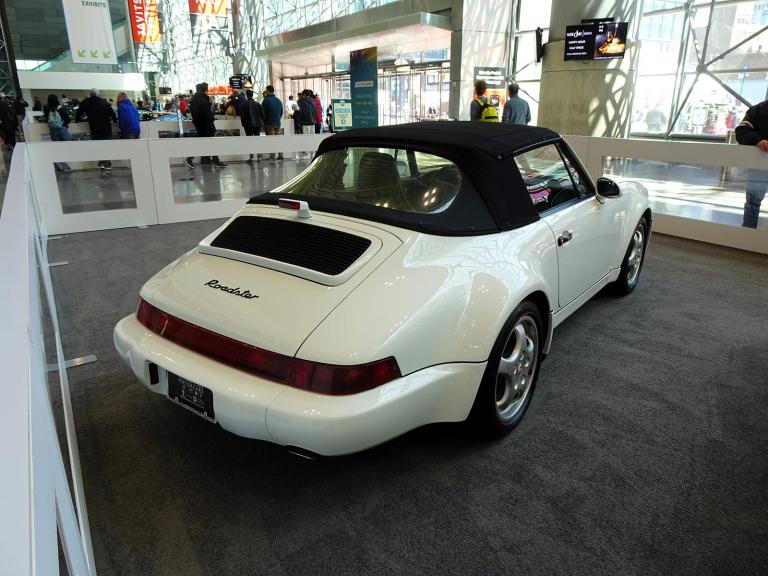
Images: Porsche 911 America Roadster by Charles from Port Chester, New York, CC BY 2.0. Porsche 911 Carrera 2 by Charles from Port Chester, New York, CC BY 2.0. Porsche 911 Carrera RS by Charles from Port Chester, New York, CC BY 2.0. Via Wikimedia Commons.