
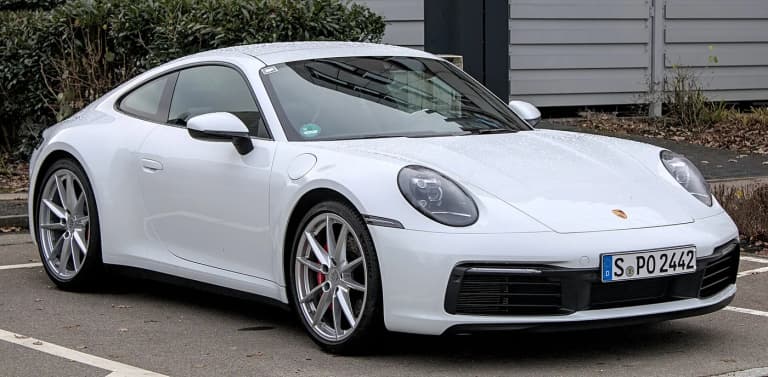
A Porsche VIN is the 17-character code that identifies one specific car. Read left to right, it tells you the maker, the model line, the engine and body, the model year, the factory, and the exact build number. The standard started with the 1981 model year, so cars built before then use shorter chassis numbers instead.
In this article, we’ll show you how to decode a Porsche VIN yourself. We’ll cover the manufacturer code, model year, factory, and build number.
Contents
Quick Summary
- VIN length: 17 characters, unique to one car, used from the 1981 model year onward
- Manufacturer code: positions 1 to 3 read WP0 for sports and passenger cars, or WP1 for SUVs
- Model year: position 10 is a letter or number, for example K is 2019 and S is 2025, repeating every 30 years
- Factory code: position 11 names the plant, S for Zuffenhausen, L for Leipzig, D for Bratislava
- Check digit: position 9 is a math check that flags a tampered or fake VIN
- Build number: positions 12 to 17 are the car’s sequential production number
- Pre-1981 cars: classic Porsches use shorter chassis numbers instead of the 17-character VIN
- Where to find it: the windshield base plate on the driver’s side, plus the door jamb sticker and front trunk
What Is a Porsche VIN
VIN stands for Vehicle Identification Number. It is a unique 17-character code stamped into every car built for the 1981 model year or later. No two cars share the same VIN, so it acts like a fingerprint for a single vehicle.
The format follows an international standard known as ISO 3779. That standard splits the code into three blocks. The first block names the manufacturer, the middle block describes the car, and the last block pins down the model year, the factory, and the build sequence.
Every character matters. A VIN never uses the letters I, O, or Q, because they look too much like the numbers 1 and 0. Once you learn which block does what, you can read most of a Porsche VIN by eye and check the rest against the tables below.
Free Porsche VIN Decoder Tool
Decode a modern 17-character Porsche VIN or a classic chassis number.
Copy a sample to test the decoder
WP0AB2A90KS400123 9114100001 Need factory options or recalls? Porsche Production Specifications can show original options, colors, and engine or transmission type. This decode does not prove mileage, accidents, ownership, or matching numbers.
Open the standalone Porsche VIN Decoder or continue below for the complete position-by-position guide. Found a mistake or bug? Report an issue.
The 17 Characters, Position by Position
Here is the full map. The three blocks are the World Manufacturer Identifier, the Vehicle Descriptor Section, and the Vehicle Identifier Section.
| Position | Block | What It Tells You |
|---|---|---|
| 1 to 3 | WMI | Country and manufacturer (WP0 or WP1) |
| 4 to 8 | VDS | Model line, body style, engine, restraints |
| 9 | VDS | Check digit (math test of the VIN) |
| 10 | VIS | Model year |
| 11 | VIS | Assembly plant |
| 12 to 17 | VIS | Sequential build number |
The next sections take each block in turn and show you how to read it on a real Porsche.
Positions 1 to 3: The Manufacturer
The first three characters are the World Manufacturer Identifier, usually shortened to WMI. They name who built the car and where. For Porsche the two codes you will actually see are WP0 and WP1.
The breakdown is simple once you split it apart. The W means the car was built in Germany. The P means Porsche. The third character splits the lineup in two. A 0 marks a sports or passenger car, and a 1 marks an SUV.
So WP0 covers the rear-engine and mid-engine cars: the 911 across its generations, the 718 Boxster and Cayman, the electric Taycan, and the four-door Panamera. WP1 covers the high-riding family: the Cayenne and the Macan. If the third character is a 1, you are looking at an SUV before you read another digit.
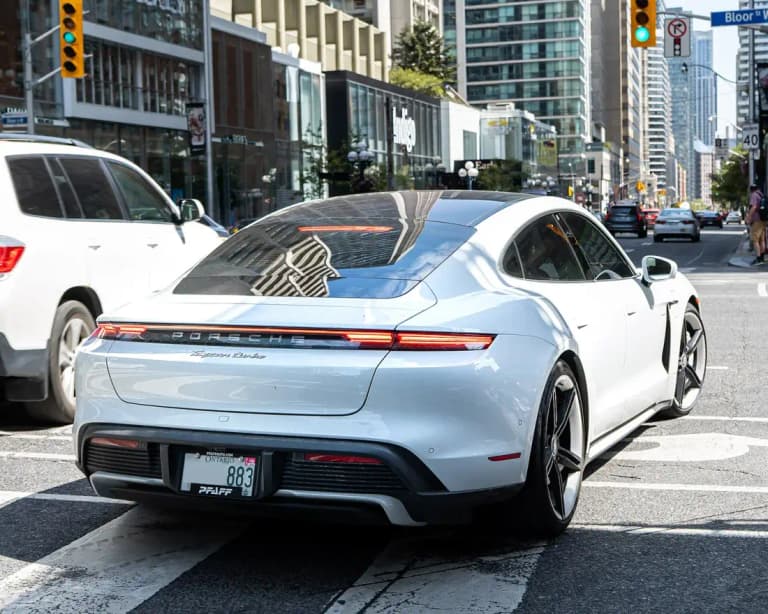
The Taycan is the odd one out in the WP0 group. It is electric and has no engine in the traditional sense, yet it sits in the sports car family alongside the 911 because Porsche files it as a passenger car rather than an SUV.
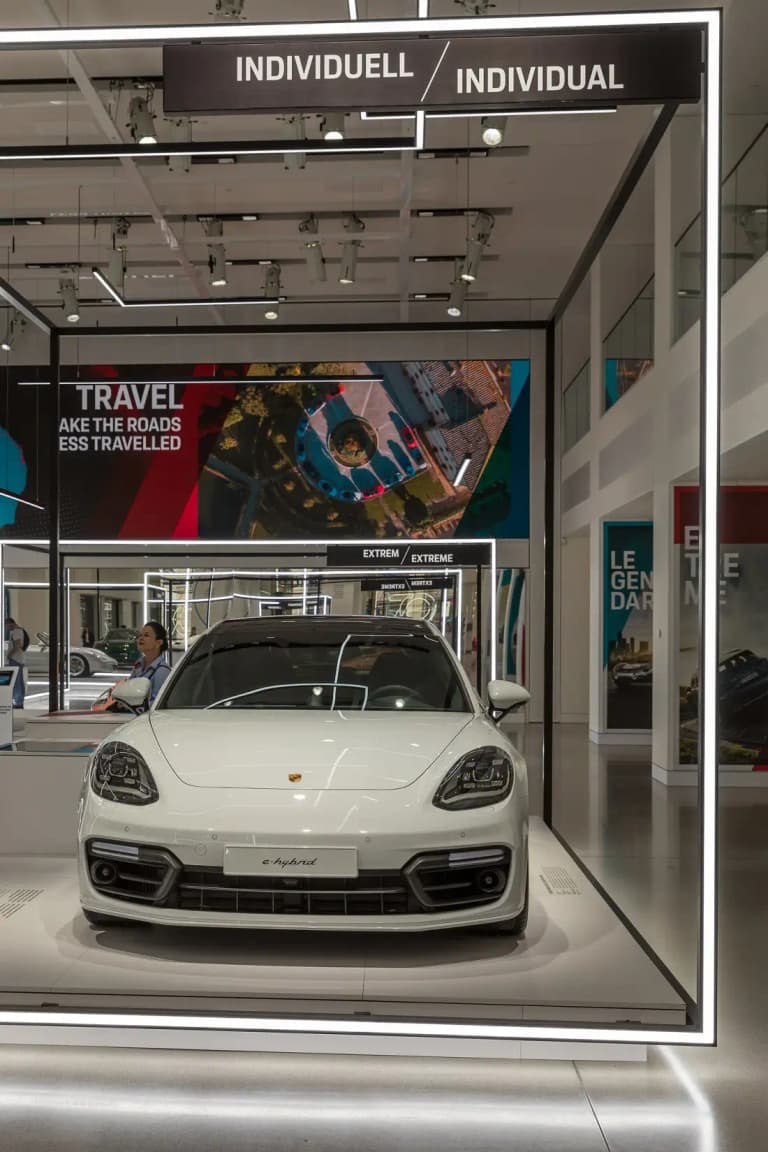
The four-door Panamera also rides under WP0. It shares the sedan and grand-tourer half of the lineup with the Taycan, while the SUVs carry their own WP1 prefix.
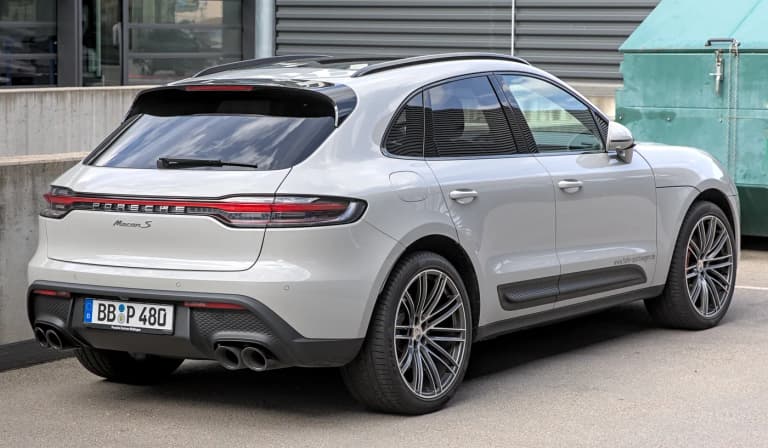
The Macan is the entry into the WP1 group. Read the third character first and you have already split the lineup in half before touching the rest of the code.
Porsche has used other manufacturer codes over the years for specific markets and plants, but WP0 and WP1 account for the vast majority of cars on the road. If a Porsche VIN does not start with WP, treat it with suspicion and verify the car carefully.
Positions 4 to 8: Model, Body, and Engine
This middle block is called the Vehicle Descriptor Section. It carries the detail about what the car actually is. How much detail depends on where the car was sold.
On North American cars these positions are packed with information. They encode the model line, the body style, the engine, and the restraint system such as airbags. United States law requires this, so a 911 sold in California carries a richer descriptor than the same car sold in Germany.
On cars built for Germany and the rest of the world, several of these positions are often filled with a placeholder character, usually a Z. The descriptor is thinner because the law there does not demand the same coded detail. This is why two identical cars can show different middle digits depending on their market.
Porsche also reads some of these positions together with later digits to form an internal model code. Enthusiasts know these codes well, such as 996 or 997 for 911 generations. The mid-engine cars like the 718 Cayman fall under the WP0 sports car family even though the engine sits ahead of the rear axle rather than behind it.
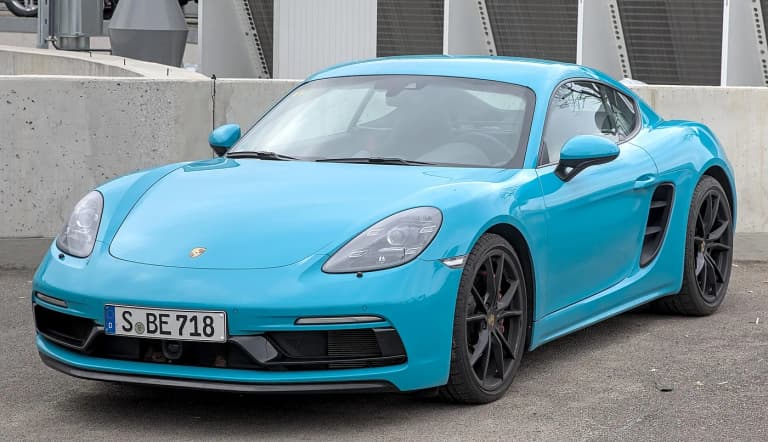
Because the meaning of positions 4 to 8 shifts by market and model, this is the one block you should confirm against a Porsche dealer record or an official build sheet rather than guess at. The year and plant, by contrast, you can read with confidence.
Position 9: The Check Digit
The ninth character is a check digit. It is not random. It is the answer to a math problem that uses every other character in the VIN.
The system converts each letter to a number, multiplies each position by a set weight, adds the results, and divides by 11. The remainder is the check digit. If the remainder comes out as 10, the check digit is written as the letter X.
The point is fraud protection. If someone changes a single character to disguise a car’s identity, the math no longer adds up and the check digit fails. North American and Chinese market cars are required to carry a valid check digit, which makes it a quick first test of whether a VIN is genuine.
Position 10: Model Year
The tenth character is the model year. This is the single most useful digit for a buyer, because it tells you how old the car is at a glance. The catch is that a model year is not the same as the calendar year the car was built. Porsche, like most makers, starts selling a new model year months before the calendar flips.
The code uses letters first, then numbers, skipping I, O, Q, U, Z, and 0. Here is the full run from the start of the 17-character era to today.
| Code | Year | Code | Year |
|---|---|---|---|
| B | 1981 | 4 | 2004 |
| C | 1982 | 5 | 2005 |
| D | 1983 | 6 | 2006 |
| E | 1984 | 7 | 2007 |
| F | 1985 | 8 | 2008 |
| G | 1986 | 9 | 2009 |
| H | 1987 | A | 2010 |
| J | 1988 | B | 2011 |
| K | 1989 | C | 2012 |
| L | 1990 | D | 2013 |
| M | 1991 | E | 2014 |
| N | 1992 | F | 2015 |
| P | 1993 | G | 2016 |
| R | 1994 | H | 2017 |
| S | 1995 | J | 2018 |
| T | 1996 | K | 2019 |
| V | 1997 | L | 2020 |
| W | 1998 | M | 2021 |
| X | 1999 | N | 2022 |
| Y | 2000 | P | 2023 |
| 1 | 2001 | R | 2024 |
| 2 | 2002 | S | 2025 |
| 3 | 2003 | T | 2026 |
The codes repeat on a 30-year cycle. The letter B means 1981 and also 2011, and S means 1995 and also 2025. This rarely causes confusion in practice. The plant code, the body style, and the overall condition of the car make it obvious which era you are in. When the model year matters for value or paperwork, confirm it against the title and the build sheet rather than the VIN alone.
Position 11: The Factory
The eleventh character names the plant that assembled the car. Porsche builds across several sites, and the letter tells you which one. This is useful for spotting where a particular model was made and for confirming a car matches its expected origin.
| Code | Plant | Typical Models |
|---|---|---|
| S | Stuttgart-Zuffenhausen, Germany | 911, 718, Taycan |
| N | Neckarsulm, Germany | Select sports car runs |
| U | Uusikaupunki, Finland (Valmet) | Early Boxster, some 911 |
| K | Osnabrück, Germany | Some Boxster and Cayman |
| L | Leipzig, Germany | Panamera, Macan, Taycan |
| D | Bratislava, Slovakia | Cayenne |
The home of the brand is Zuffenhausen, marked with an S. Every 911 starts there, which is why so many Porsche VINs carry that letter. The home factory even shows up on German plates near the works, where cars wear the S city code.
This white 997-generation Carrera S is a typical case. Built in the late 2000s, it carries the S plant code at position 11 just like every other 911 before and since.

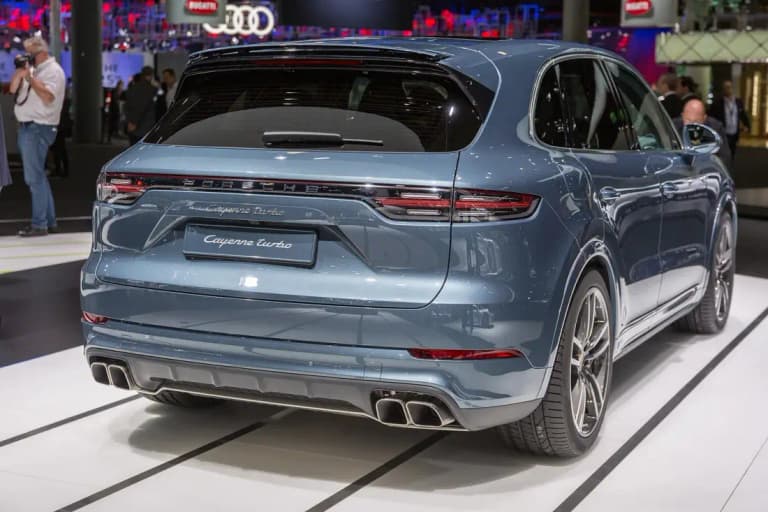
Leipzig grew into a major site for the SUVs and the four-door cars. The Cayenne body and assembly have long been tied to plants shared with Volkswagen, which is why the Bratislava code appears on it. A Finnish-built early Boxster carries the U code, a piece of trivia that surprises owners who assume every Porsche is German-built.
This is the practical payoff of position 11. A Cayenne with a Slovak plant code is normal and expected. A Cayenne that somehow shows the Zuffenhausen S would be a red flag worth questioning.
Positions 12 to 17: Build Number
The last six characters are the sequential production number. This is the car’s place in the build order, counting up as cars roll off the line. It is the part of the VIN that makes each car unique even among identical trims.
For most owners this number is just an identifier. For collectors it can matter. A very low build number on a limited edition, or a number tied to a known first or last car of a run, can add provenance and value. Otherwise it simply separates your car from the next one built.
A Worked Example
Take a sample VIN of WP0AB2A99KS400123. Read it block by block and most of the car appears.
The first three characters, WP0, mark a German-built Porsche sports car. The middle block describes the model line, body, and engine for its market, which is the part to confirm against an official record. The ninth character, 9, is the check digit. The tenth character, K, gives a model year of 2019. The eleventh character, S, places the build at Zuffenhausen. The final block, 400123, is the production sequence.
So without any paid lookup you already know this is a 2019 Porsche sports car built at the home factory in Stuttgart. That is the everyday value of reading a VIN by hand: the year, the origin, and the basic identity fall out in seconds.
Pre-1981 Classic Chassis Numbers
The 17-character VIN only goes back to the 1981 model year. Older Porsches use chassis numbers instead, and they are shorter and far less standardized. If you are looking at a 356 or an early 911, the rules above do not apply.
The length grew over time as Porsche built more cars. Early 356 numbers ran to five digits in the 1950s, then stretched to six, eight, nine, and finally ten digits by 1980. Decoding these depends on model-specific factory tables, not a single universal format. Specialist registries and marque experts are the right resource for a classic.
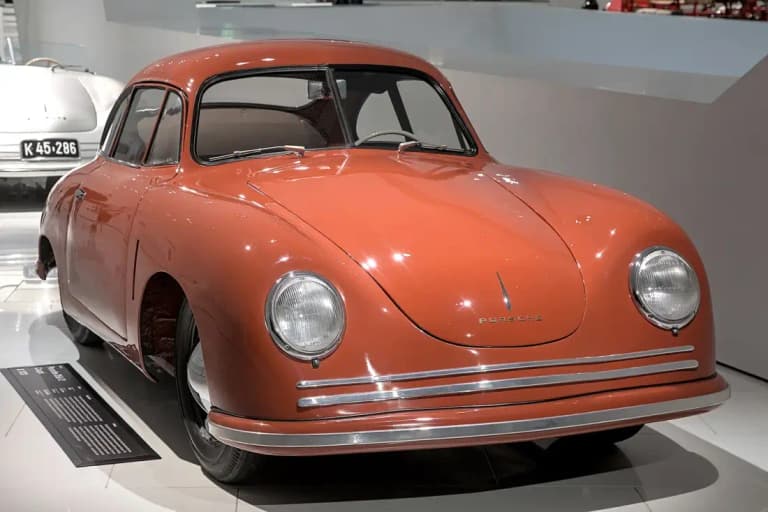
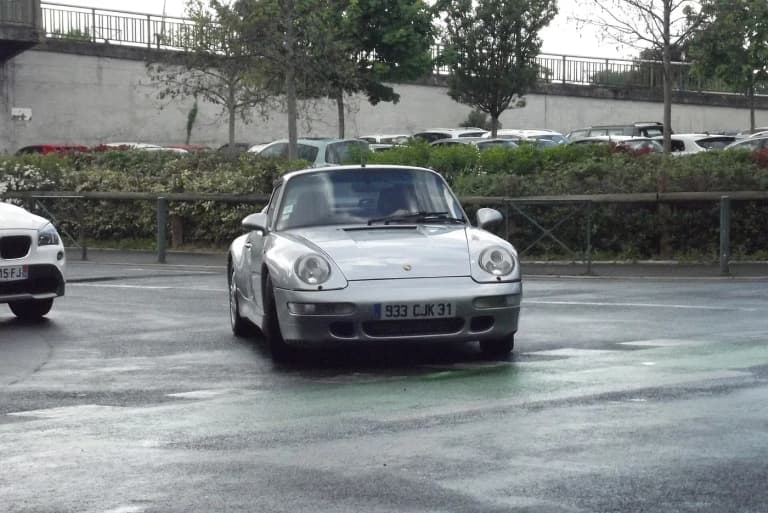
One point trips people up. Air-cooled 911s are often called classics, but the 1981 and later cars among them, including the 964 and the 993, do carry the modern 17-character VIN. The shorter chassis number only applies to genuinely pre-1981 cars.
The 993 is the last air-cooled 911 and the cleanest example of this overlap. People assume it must use an old chassis number because of its classic status, but a 1995 or later 993 reads exactly like any other modern Porsche VIN.
Where to Find the VIN
The Main VIN Locations
On almost every modern Porsche the VIN sits on a small plate at the base of the windshield on the driver’s side. You read it from outside the car through the glass. A matching VIN also appears on a door jamb sticker in the driver’s door opening.
There are backup locations. The VIN is recorded on the registration and title paperwork, and modern cars stamp it in the front luggage compartment. On 1973 to 1998 models it is stamped under the carpet in the front trunk near the hood latch, which is worth checking on an older car to confirm the body is original.
Matching Numbers and Resale
When you buy a used Porsche, check that every location shows the same number. A mismatch between the windshield plate, the door label, and the paperwork is a red flag that the car may have been in a serious accident or had panels replaced.
The phrase collectors use for this is matching numbers. On a valuable classic it means the engine and gearbox stampings agree with the chassis number on record. A matching-numbers car commands a clear premium, so the VIN is not just an identifier. It is part of the price.
How to Use a Porsche VIN Decoder
Decoding the VIN by eye is the first step. The bigger value is what the full number unlocks. A VIN is the key to a car’s history and its correct parts.
Run the VIN through a vehicle history service to check for accidents, title problems, and the recorded mileage trail. In the United States the free NHTSA VIN decoder confirms the basic build details on record for any car. A Porsche dealer can pull the original build sheet from the VIN, which lists every factory option the car left with. That build sheet is the gold standard for confirming a car is what the seller claims, and it is essential reading before buying any Porsche. Our 911 buyer’s guide covers how to fold a VIN check into a wider inspection.
For maintenance, the VIN ensures you order the right parts. Porsche parts catalogs are keyed to the VIN so that a part matches the exact build, which avoids the common mistake of fitting a component from the wrong model year. The VIN is the thread that ties buying, restoring, and servicing back to one specific Porsche.
Model Codes and Option Codes
The VIN tells you the car’s identity, but two other Porsche codes finish the picture. One names the generation, the other lists the factory options. Both are worth knowing when you decode a Porsche.
Internal Model Codes
Porsche assigns each generation an internal model code, and enthusiasts use it far more than the marketing name. The 911 alone runs through 964, 993, 996, 997, 991, and 992. The 996 marked the switch to water cooling and the first all-new 911 platform in decades.
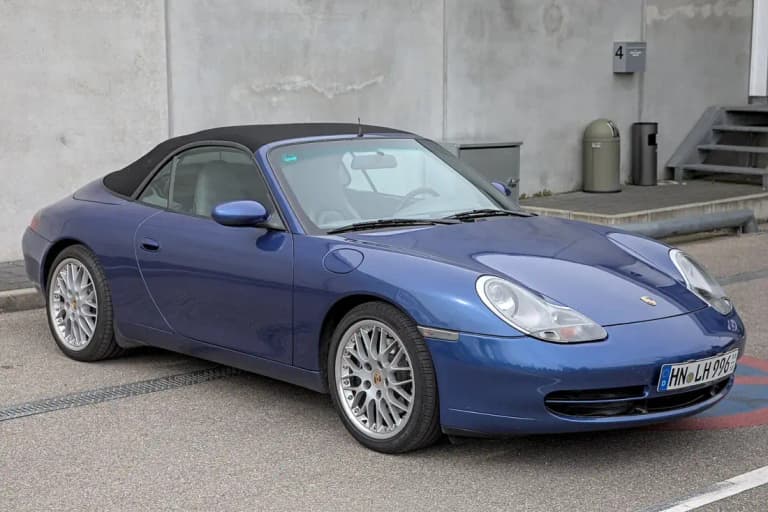
The model code is not a clean single field in the VIN. Porsche derives it internally from the descriptor positions and the year, which is why the official NHTSA VIN decoder may show the marketing name while a Porsche specialist quotes the 996 or 997 code. If you trade in 911 circles, learn the generation codes alongside the VIN.
Porsche Option Codes
Separate from the VIN, every Porsche carries a list of three-digit option codes on a build sticker. On modern cars this sticker lives in the service booklet and in the front trunk. Each code names one factory option, from the paint and wheels to the sport exhaust and the limited-slip differential.
The build sticker is the honest record of how the car left the factory. Sellers describe options loosely, but the option-code list does not lie. Cross-check the codes against the car in front of you, and you catch added aftermarket parts that someone is passing off as factory fitment.
Frequently Asked Questions
How do I decode a Porsche VIN for free?
Read the 17 characters in order. Positions 1 to 3 are the manufacturer code, with WP0 for sports cars and WP1 for SUVs. Position 10 is the model year and position 11 is the factory. Positions 12 to 17 are the build sequence. The tables in this guide let you decode the year and plant by hand without paying for a service.
What does WP0 mean on a Porsche VIN?
WP0 is Porsche’s manufacturer code for sports and passenger cars built in Germany, including the 911, 718, Taycan, and Panamera. The W signals Germany, the P signals Porsche, and the 0 signals a passenger sports car. SUVs like the Cayenne and Macan use WP1 instead.
Where is the VIN on a Porsche?
On almost every modern Porsche the VIN sits on a plate at the base of the windshield on the driver’s side, visible through the glass. It also appears on a sticker in the driver’s door jamb and in the front trunk. On 1973 to 1998 cars it is stamped under the carpet in the front luggage compartment near the hood latch.
How do I find the model year in a Porsche VIN?
The tenth character is the model year. A letter or number maps to a year, for example K is 2019 and S is 2025. The code repeats every 30 years, so B is both 1981 and 2011. The plant code and the overall VIN format tell the two eras apart.
Do classic Porsches have a 17-character VIN?
No. The 17-character VIN standard began with the 1981 model year. Porsche cars built before 1981 use shorter chassis numbers that grew from five digits in the early 356 era to ten digits by 1980. Air-cooled 911s from 1981 onward, including the 964 and 993, do use the modern 17-character VIN.
Images: Hero by Alexander Migl, Taycan Turbo by OWS Photography (CC BY 4.0), Panamera by Matti Blume, Macan S by Alexander-93, Cayenne Turbo by Matti Blume, 997 Carrera S by TTTNIS (CC0), 718 Cayman by Alexander-93, 356-2 Coupe by Alexander Migl, 996 Carrera by Alexander-93, and 993 Carrera by Handelsgeselschaft. Licensed CC BY-SA 4.0 except where noted. Via Wikimedia Commons.