The Porsche Cayman is a two-seat mid-engine sports coupe that sits below the 911 in the Porsche range. It launched in 2005 as the hardtop sibling of the Boxster, and it became famous for balance and steering feel rather than outright power. Engines have run from a 2.7 liter flat-six up to the 493 horsepower flat-six in the 718 Cayman GT4 RS, with prices today spanning roughly 25,000 to 230,000 US dollars depending on year and model.
In this article, we’ll explore the Porsche Cayman, Porsche’s mid-engine sports coupe. We’ll cover its generations, GT4 models, engines, and pricing.
Contents
What Is the Porsche Cayman
The Cayman is Porsche’s mid-engine coupe. The engine sits behind the seats and ahead of the rear axle, which is the same layout used by far more expensive supercars. That position puts the heaviest part of the car close to the center, and the result is a chassis that turns and stops with a precision the rear-engine 911 cannot quite match.
Porsche launched the Cayman in 2005 as a fixed-roof version of the Boxster roadster. For years the company deliberately kept it less powerful than the 911 so it would not steal sales from the flagship. Enthusiasts noticed anyway. The Cayman earned a reputation as the best-handling car Porsche sold, and the later GT4 versions finally gave it the engine to match the chassis.
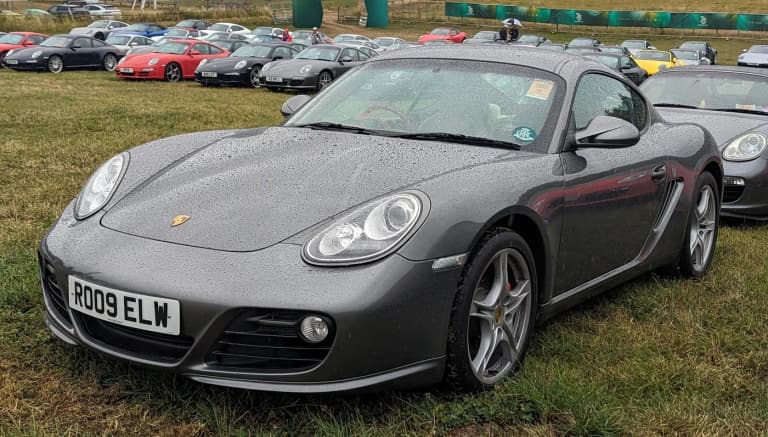
It has always been a strict two-seater built for driving rather than practicality. There is a boot at each end, no rear seats, and a focus on the connection between driver and road. If the 911 is the icon, the Cayman is the purist’s choice.
Cayman Generations
There have been three Cayman generations. Each one shares its platform with the Boxster of the same era, so the chassis codes below cover both cars.
| Generation | Years | Engine | Power |
|---|---|---|---|
| 987 Cayman | 2005 to 2012 | 2.7 to 3.4 flat-six | 240 to 330 hp |
| 981 Cayman | 2013 to 2016 | 2.7 to 3.8 flat-six | 271 to 380 hp |
| 718 Cayman | 2017 to 2025 | 2.0 to 2.5 turbo flat-four, 4.0 flat-six | 296 to 493 hp |
987 Cayman (2005 to 2012)
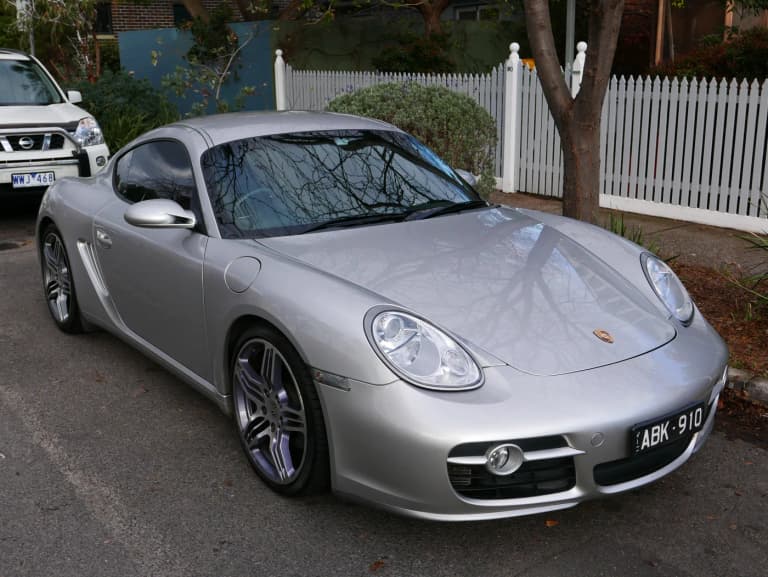
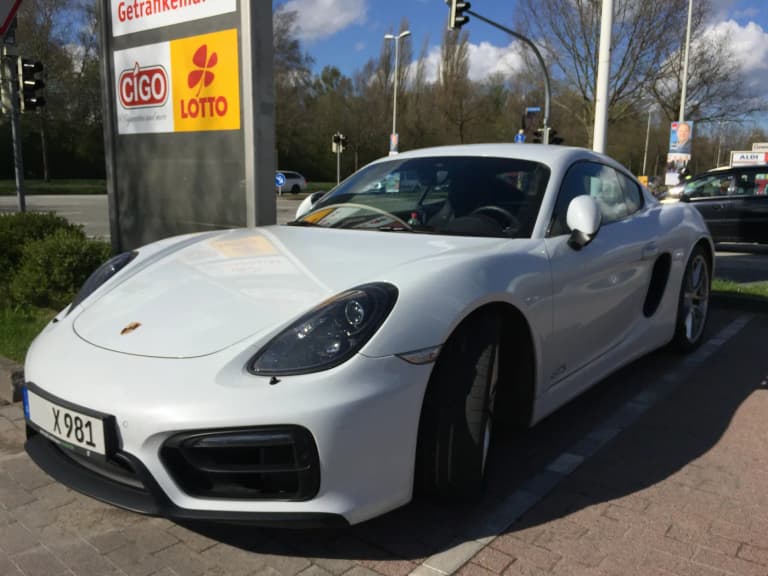
The first Cayman arrived as the Cayman S in 2005, with the base model following in 2006. Early cars used a 2.7 liter flat-six making around 240 horsepower, while the S used a 3.4 liter unit with close to 290 horsepower. The S could reach 60 mph in about 5.4 seconds, which felt quick for the era and the price.
The big change came in 2009 with the facelifted 987.2. Porsche introduced a new engine family and the seven-speed PDK dual-clutch gearbox in place of the old Tiptronic automatic. The 3.4-liter S gained direct fuel injection, while the base 2.9-liter car retained port injection. Power rose to roughly 265 horsepower for the base car and 320 horsepower for the S. Porsche also built the focused Cayman R in 2011, a lighter and sharper 330 horsepower model limited to 1,621 cars.
See our Porsche 987 buyer’s guide for the full 987.1 versus 987.2 breakdown.
981 Cayman (2013 to 2016)
The 981 was a clean-sheet redesign with a longer wheelbase, wider track, and a far better cabin. It looked sharper and finally got styling that stood on its own rather than reading as a roofed Boxster. The base 2.7 liter car made 271 horsepower and the 3.4 liter S made 321 horsepower.
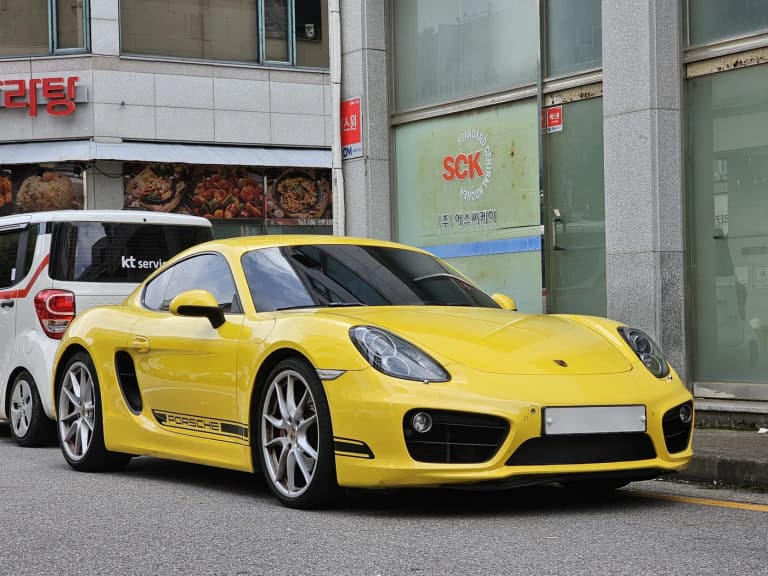
Porsche added a Cayman GTS in 2014 with 335 horsepower and standard sport equipment. The 981 generation is widely seen as the sweet spot for the naturally aspirated flat-six Cayman, since it combines modern handling with the high revving six-cylinder engine that the next generation would drop. Our Porsche 981 generation guide covers the engines, the switch to electric steering, and how to check recalls before you buy.
718 Cayman (2017 to 2025)
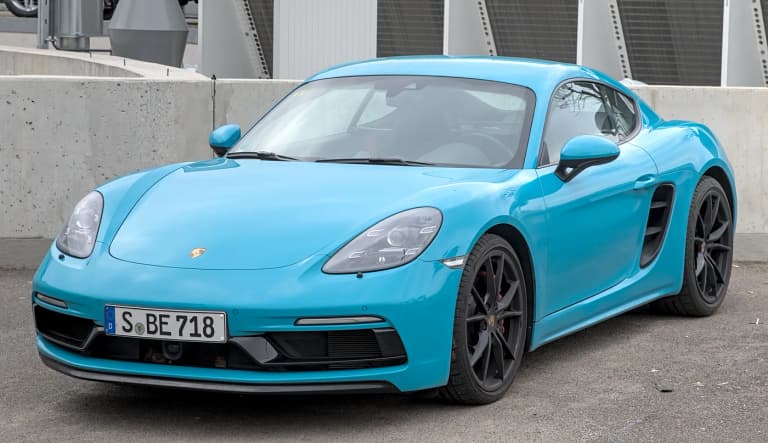
The 718 brought the most controversial change in Cayman history. Porsche replaced the flat-six in the base and S models with turbocharged flat-four engines, a 2.0 liter with 296 horsepower and a 2.5 liter with 345 horsepower. The cars were faster on paper and more efficient, but many buyers missed the sound and the linear power of the old six.
Porsche answered the criticism in 2020 by putting a 4.0 liter naturally aspirated flat-six back into the range, first in the GTS 4.0 and then in the GT4 models. Production of all combustion 718 Cayman and Boxster models ended in October 2025. You can read how this generation stacks up against the flagship in our 718 versus 911 comparison.
The GT4 Lineage
The GT4 cars are where the Cayman stopped being the junior Porsche and became a genuine track weapon. These are the models built by the same department that makes the 911 GT3, and they carry proper motorsport hardware.
981 Cayman GT4 (2015 to 2016)
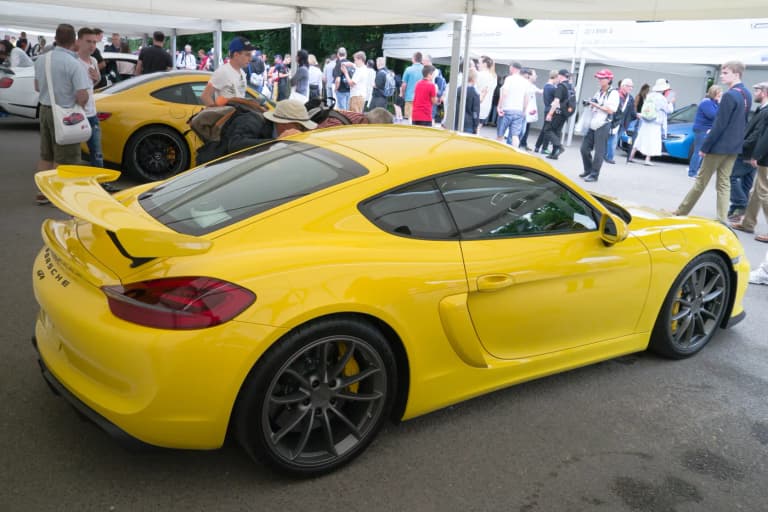
The first Cayman GT4 borrowed the 3.8 liter flat-six from the 991 Carrera S and tuned it to 380 horsepower. It came only with a six-speed manual gearbox, sat 30 mm lower than a standard Cayman, and used brakes and suspension parts from the 911 GT3. It reached 60 mph in about 4.4 seconds and topped out near 183 mph.
This car proved the Cayman could be a serious driver’s machine without an automatic and without a turbo. It is now a collectible in its own right.
718 Cayman GT4 and GT4 RS (2020 to 2025)
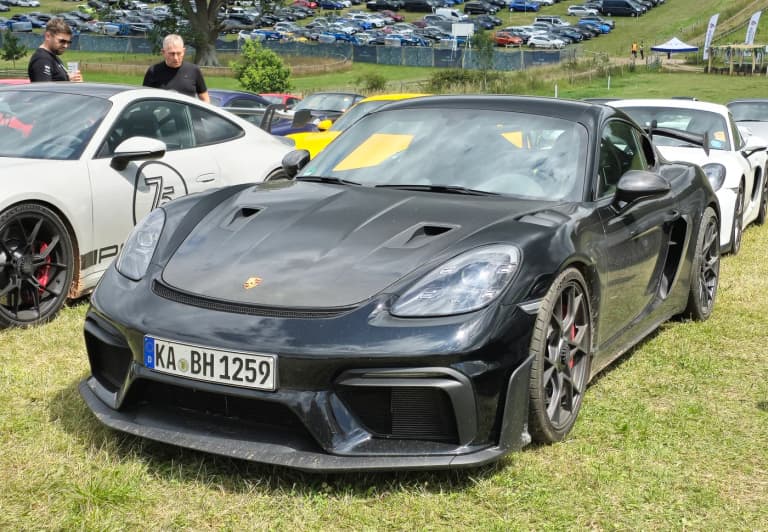
The 718 Cayman GT4 used a new 4.0 liter naturally aspirated flat-six making 414 horsepower with an 8,000 rpm redline. It was offered with a six-speed manual, and it answered every complaint about the turbocharged four-cylinder cars below it. Sixty miles per hour came up in about 4.2 seconds.
Then came the 718 Cayman GT4 RS in 2022, and it changed the conversation entirely. Porsche dropped in the 4.0 liter flat-six from the 911 GT3, raised output to 493 horsepower, and lifted the redline to 9,000 rpm. With the seven-speed PDK as the only gearbox, the RS hit 60 mph in 3.2 seconds and lapped the Nürburgring Nordschleife in 7 minutes and 9 seconds. The intakes sit beside your ears, so the engine sound inside the cabin is extraordinary.
Engines and Powertrain
The Cayman has used three very different engine families across its life. Knowing which one a car has tells you most of what you need to know about how it drives and what it is worth.
The naturally aspirated flat-six powered every Cayman from 2005 through 2016. These engines rev cleanly to high rpm and make one of the best noises in modern motoring. If you want the classic Cayman experience, this is the engine to find. You can learn more about the layout in our guide to the Porsche flat-six engine.
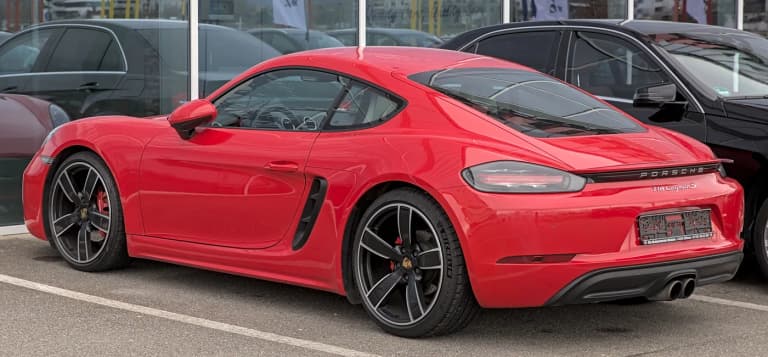
The turbocharged flat-four arrived with the 718 in 2017 and sits in the base and S models. It produces more torque lower down and better fuel economy, but it lacks the top-end sparkle and the sound of the six. The third family is the 4.0 liter naturally aspirated flat-six in the GTS 4.0 and GT4 cars, which brought the six-cylinder character back to the top of the range.
Gearbox choices matter as much as the engine. Early cars offered a manual or a Tiptronic automatic, while 2009 onward cars use the much better PDK dual-clutch. The GT4 came as a manual and the GT4 RS as a PDK only. If you are weighing your options, our PDK versus manual guide covers the trade-offs in detail.
The Mid-Engine Advantage
The mid-engine layout is the heart of the Cayman story. Placing the engine ahead of the rear axle puts the car’s mass near its center, which lowers the polar moment of inertia. In plain terms, the car changes direction more willingly and feels more stable when it does.
Porsche has always understood this. The brand built mid-engine racing cars going back decades, and it revived the idea for the road with the Boxster in 1996. The Cayman inherited that chassis and added a fixed roof, which made the structure even stiffer and the handling even sharper.
The catch is that Porsche never wanted the Cayman to outshine the 911. For years it limited power so the cheaper car would not embarrass the flagship. The GT4 models finally removed that ceiling, and the result is a car that many reviewers rate as the finest-handling Porsche you can buy.
Cayman vs Boxster vs 911
The Cayman, the Boxster, and the 911 are easy to confuse, but they serve different drivers. The Cayman is the fixed-roof coupe, and the Boxster is the same car with a folding fabric roof. Mechanically they are near twins, so the choice comes down to whether you want the open sky or the stiffer coupe shell.
The 911 is the bigger decision. It has rear seats, a rear-mounted engine, far more power across its range, and the badge that carries the history. The Cayman counters with sharper balance, a lower price, and a purity that many drivers prefer on a back road. We break the rivalry down fully in the Cayman versus 911 comparison, and you can see where the coupe fits in the wider lineup in our Porsche 911 guide.
Pricing and the Used Market
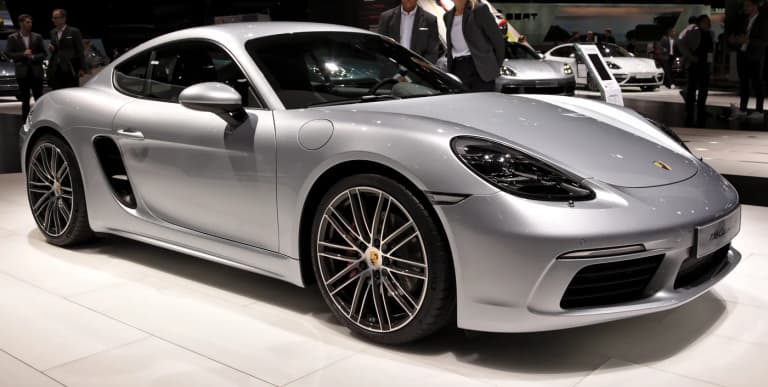
The Cayman is among the cheapest ways into Porsche ownership. Early 987 cars now start around 25,000 US dollars, which makes the Cayman a regular feature in our guide to the cheapest Porsche models. Clean 981 cars with the naturally aspirated six tend to sit in the 40,000 to 60,000 dollar range, and they hold value well because buyers prize that engine.
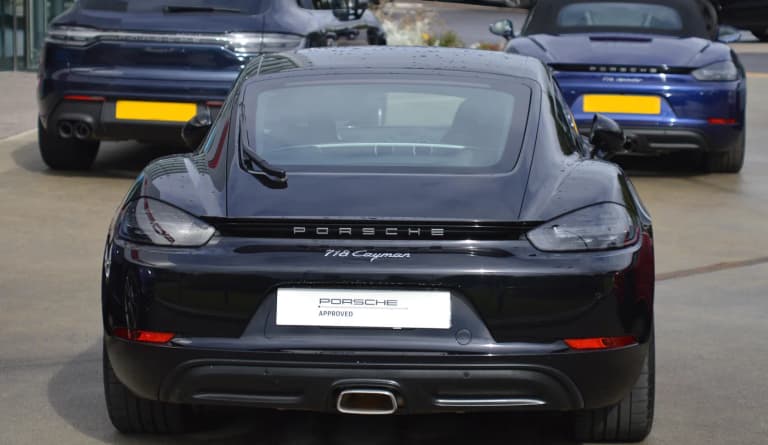
The 718 base and S cars span roughly 50,000 to 80,000 dollars depending on year and mileage. The GT4 models are a different market. A 981 GT4 or a 718 GT4 commands well over 100,000 dollars, and the limited GT4 RS trades far higher, often above 200,000 dollars. These prices move with collector demand, so treat them as a guide rather than a fixed number.
Ownership and Reliability
The Cayman is one of the more sensible Porsche purchases when it comes to running costs, but the early cars carry one well-known risk. The 987 and its M96 and M97 flat-six engines can suffer intermediate shaft bearing failure, the same issue that affects the equivalent 911s. Any buyer of a 2005 to 2008 Cayman should read our IMS bearing guide and budget for a retrofit if the work has not already been done.
Later cars are far more robust. The 2009 onward direct injection engines removed the IMS bearing entirely, and the 981 and 718 generations have strong reliability records. Normal Porsche service costs apply, so factor in tires, brakes, and regular maintenance, but none of the modern Caymans are money pits when looked after.
The Future of the Cayman
Porsche ended production of the combustion 718 Cayman in October 2025. The plan had been to replace it with a fully electric model, and Porsche has shown electric prototypes. More recently the company signalled that a combustion or hybrid version may continue alongside the electric car, in response to softer demand for electric sports cars.
Whatever comes next, the run of naturally aspirated flat-six Caymans from 2005 to 2025 now looks like a closed chapter. That is part of why the GT4 and GTS 4.0 cars are climbing in value, and why the best of the older sixes are worth seeking out while they remain affordable.
Frequently Asked Questions
Is the Porsche Cayman a real Porsche or just a cheap one?
It is a full Porsche built on the same mid-engine platform as the Boxster and developed by the same engineers. Many drivers and reviewers consider it the best-handling car Porsche makes, and the GT4 versions share parts and a development team with the 911 GT3.
Which Cayman generation is best?
For the classic experience, the 981 with the naturally aspirated flat-six is the popular sweet spot. For outright performance, the 718 Cayman GT4 RS is the fastest and most extreme model ever built. The right answer depends on whether you value purity and value or speed and drama.
Why did Porsche limit the Cayman’s power?
Porsche kept the Cayman below the 911 on purpose so the cheaper coupe would not take sales from its flagship. The mid-engine chassis was always capable of more, which the GT4 models proved once Porsche removed the restriction.
Does the Cayman have the IMS bearing problem?
Only the early 987 cars from 2005 to 2008 carry the intermediate shaft bearing risk. The 2009 facelift moved to direct injection engines without the IMS bearing, and every Cayman since is free of the issue.
Is the four-cylinder 718 Cayman worth buying?
It is quick and efficient, and it drives well, but it lacks the sound and the high-rpm feel of the six-cylinder cars. If the engine character matters to you, look at a 981 or one of the 4.0 liter 718 models instead.
Image Credits
Images: 987 Cayman S by OSX (Public Domain). 981 Cayman GTS by KarleHorn, CC BY 3.0. 981 Cayman GT4 by Edvvc, CC BY 2.0. 718 Cayman GTS by Alexander-93, CC BY-SA 4.0. 718 Cayman GT4 RS by Calreyn88, CC BY-SA 4.0. 718 Cayman S rear by Alexander Migl, CC BY-SA 4.0. 2009 987 Cayman S by Calreyn88, CC0. 2018 718 Cayman by 多多123, CC BY 4.0. 718 Cayman S by Alexander-93, CC BY-SA 4.0. 981 Cayman S by Damian B Oh, CC BY-SA 4.0. Via Wikimedia Commons.