The Porsche Boxster is a mid-engine, rear-wheel-drive two-seat roadster produced from 1996 to 2025 across four generations. It uses a flat-six or turbocharged flat-four engine mounted ahead of the rear axle and shares its platform with the Porsche Cayman coupe. Power ranges from 201 horsepower in the original 986 to 500 horsepower in the final 718 Boxster Spyder RS. Porsche produced the Boxster through the 2025 model year before transitioning the nameplate to a new platform.
In this article, we’ll explain the Porsche Boxster, the mid-engine roadster Porsche sold across four generations. We’ll cover every generation, its engines, current pricing, and special editions.
Contents
- 1 Quick Summary
- 2 What Is the Porsche Boxster
- 3 First Generation Boxster (986, 1996 to 2004)
- 4 Second Generation Boxster (987, 2005 to 2012)
- 5 Third Generation Boxster (981, 2012 to 2016)
- 6 Fourth Generation Boxster (718, 2016 to 2025)
- 7 Engines and Powertrain
- 8 Performance and Specs
- 9 Chassis and Handling
- 10 Interior and Technology
- 11 Design
- 12 Pricing
- 13 Ownership
- 14 Special Editions
- 15 Frequently Asked Questions
Quick Summary
Four generations across nearly 30 years, each with a flat-six at its heart except for the turbocharged flat-four years of the early 718.
| Generation | Years | Engine | Power Range |
|---|---|---|---|
| 986 Base | 1996–2004 | 2.5L / 2.7L flat-six | 201–217 hp |
| 986 S | 1997–2004 | 3.2L flat-six | 252–260 hp |
| 987 Base | 2005–2012 | 2.7L flat-six | 240–245 hp |
| 987 S | 2005–2012 | 3.2L / 3.4L flat-six | 276–310 hp |
| 981 Base | 2012–2016 | 2.7L flat-six | 265 hp |
| 981 S | 2012–2016 | 3.4L flat-six | 315 hp |
| 718 Base | 2016–2025 | 2.0L turbo flat-4 | 300 hp |
| 718 S | 2016–2025 | 2.5L turbo flat-4 | 350–365 hp |
| 718 GTS 4.0 | 2020–2025 | 4.0L flat-six | 400 hp |
| 718 Spyder RS | 2023–2025 | 4.0L flat-six | 500 hp |
What Is the Porsche Boxster
The Boxster is Porsche’s two-seat, mid-engine convertible roadster. The name blends “Boxer” (the horizontally opposed engine layout Porsche has used since the 356) with “Speedster” (a nod to the 550 Spyder era of open two-seaters). When it launched in 1996, it was the first purpose-built Porsche roadster since the 914 ended production in 1976.
The car arrived at a critical moment for Porsche. The company was in genuine financial trouble in the early 1990s, relying on 911 sales that were declining as the car aged. The Boxster was developed alongside the 996-generation 911, which gave Porsche a second model to sell. It drew in younger buyers who wanted the Porsche experience without the 911 price. It was Porsche’s highest-volume seller from 1996 until the Cayenne SUV arrived in 2003.
What makes the Boxster’s engineering significant is the engine placement. Unlike the 911, which mounts the engine behind the rear axle, the Boxster places it directly ahead of the rear wheels. This gives the car near-perfect weight distribution and keeps the center of gravity low. The result is handling that enthusiasts often describe as more pure than the 911, with better balance and less tendency to oversteer under braking.
The platform has always been shared with a coupe sibling. The 986 and 987 shared running gear with the Cayman starting in 2005. The 981 and 718 continued that partnership. Mechanically the two cars are very close; the main differences are body rigidity (the hardtop Cayman is stiffer) and a small weight advantage for the Boxster when the roof is down.
First Generation Boxster (986, 1996 to 2004)
Our Porsche 986 buying guide maps the exact model-year, engine, IMS, roof, and inspection differences within the first generation.
The 986-generation Boxster launched as a 1997 model year car in the United States in late 1996. It used a 2.5-liter naturally aspirated flat-six producing 201 horsepower, paired with a five-speed manual gearbox.
A significant update arrived for model year 2000. The base engine grew to 2.7 liters, while the Boxster S debuted with a 3.2-liter engine and six-speed manual gearbox. A five-speed Tiptronic S automatic was available. Porsche also revised the front fascia and added larger intake scoops for the S model at this point.
The 986 is remembered most for its controversial styling. To save development costs, Porsche shared the front bumper, headlights, and some interior components with the contemporaneous 996-generation 911. The round headlights drew particular criticism at the time and are one reason both cars now trade at a discount relative to their successors. From the doors back the 986 is a clean and elegant design, but the shared nose made buyers feel the car was a 911 lite rather than something distinct.
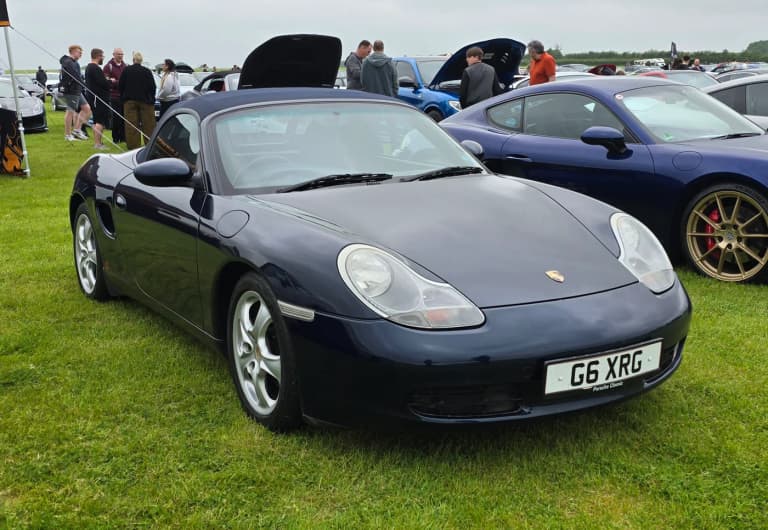
The other legacy of the 986 is the intermediate shaft bearing issue. Early cars up to around 2000 used an IMS bearing design that could fail without warning. A failure typically destroyed the engine. The fix is an aftermarket bearing upgrade that is now common among pre-2000 cars. Buyers looking at early 986s should confirm the IMS upgrade has been done. Cars from 2003 and 2004 used a revised bearing that is much less prone to failure. If you want to read more about this problem across all affected 911 and Boxster models, the IMS bearing guide covers it in full.
986 Key Specs
| Variant | Engine | Power | 0-60 |
|---|---|---|---|
| Boxster (1997) | 2.5L flat-six | 201 hp | 6.9 sec |
| Boxster (2000+) | 2.7L flat-six | 217 hp | 6.7 sec |
| Boxster S | 3.2L flat-six | 252 hp | 5.7 sec |
| Boxster S 550 | 3.2L flat-six | 260 hp | 5.5 sec |
Second Generation Boxster (987, 2005 to 2012)
The 987 arrived for 2005 with a completely revised body. Porsche gave the Boxster its own headlights (round but now visually distinct from the 996) and a cleaner, more aggressive front end. The car grew slightly in every dimension, and the 987 introduced a more driver-focused interior with better ergonomics and a cleaner dashboard layout.
Engine options carried over in displacement but gained power. The base 2.7-liter now produced 240 to 245 horsepower depending on the year, and the S switched to a 3.4-liter producing 295 to 310 horsepower. Porsche introduced a five-speed Tiptronic initially, later replaced by the seven-speed PDK dual-clutch in 2009, which improved both acceleration and fuel economy significantly.
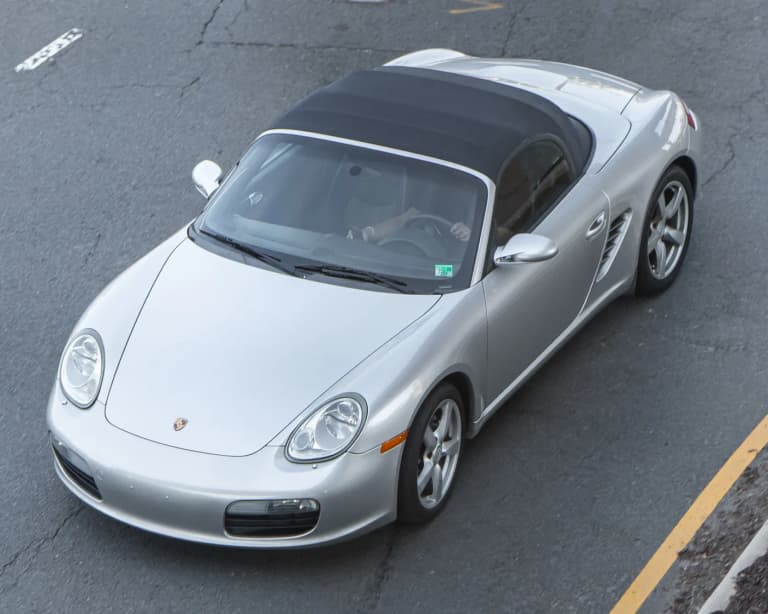
The 987 is the last Boxster generation with hydraulic power steering. Many enthusiasts consider this a point in the car’s favor. The steering feel in a well-maintained 987 S is direct and communicative in a way that the electric-assisted systems of later generations do not fully replicate. A 2009 or later car with PDK is the most practical choice from this generation; a manual 987 S is the most rewarding to drive.
In 2010 Porsche added the Boxster Spyder to the lineup. It used the 3.4-liter S engine tuned to 320 horsepower, combined with a stripped-out interior, a lightweight manual soft-top, and a significant weight reduction compared to the standard car. The Spyder was 176 pounds lighter than the base Boxster S of the same year and is one of the more sought-after 987 variants today. For the exact engine and gearbox differences between the earlier 987.1 and this facelifted 987.2, along with a version-by-version inspection sequence, see our Porsche 987 buyer’s guide.
987 Key Specs
| Variant | Engine | Power | 0-60 |
|---|---|---|---|
| Boxster (2005) | 2.7L flat-six | 240 hp | 6.0 sec |
| Boxster S (2005) | 3.4L flat-six | 295 hp | 5.5 sec |
| Boxster S (2009+) | 3.4L flat-six | 310 hp | 5.1 sec |
| Boxster Spyder | 3.4L flat-six | 320 hp | 4.9 sec |
Third Generation Boxster (981, 2012 to 2016)
The 981 is widely regarded as the finest-handling Boxster ever built. Porsche increased torsional rigidity by 40 percent, extended the wheelbase by 60 millimeters, and reduced weight through increased use of aluminum in the body structure. The platform update sharpened the steering, improved balance, and gave the car a more planted feel at the limit without making it nervous at everyday speeds.
Engines remained naturally aspirated flat-sixes. The base model used a 2.7-liter producing 265 horsepower, and the S used a 3.4-liter with 315 horsepower. The S could reach 60 mph in 4.5 seconds with the PDK gearbox and had a top speed of 172 mph. Six-speed manual and seven-speed PDK were available on both variants.
The 981 also introduced electric power steering for the first time. This was contentious when it arrived, but the actual implementation was well-calibrated. The steering is lighter than the 987 at low speeds but remains precise and reasonably connected at higher speeds. Most drivers adapt to it quickly, and it does not undermine the car’s fundamental balance.
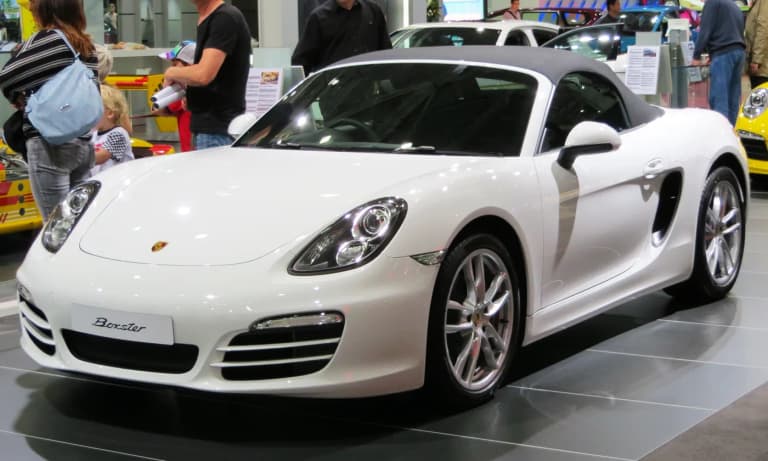
Porsche introduced the Cayman GT4 on the 981 platform in 2015 using a 3.8-liter engine taken from the 991 Carrera S. At 385 horsepower it was the most powerful 981-based car and is now among the most collectible Boxster-platform cars of any generation. Only the Cayman received the GT4 designation in this generation; the Boxster got its own version called the Spyder in 2016, using the same 3.8-liter unit tuned to 375 horsepower. Our Porsche 981 generation guide covers the base and S engines, the GTS, and where the GT4 and Spyder sit in the range.
981 Key Specs
| Variant | Engine | Power | 0-60 |
|---|---|---|---|
| Boxster (2012) | 2.7L flat-six | 265 hp | 5.4 sec (PDK) |
| Boxster S (2012) | 3.4L flat-six | 315 hp | 4.5 sec (PDK) |
| Boxster Spyder (2016) | 3.8L flat-six | 375 hp | 4.5 sec (PDK) |
Fourth Generation Boxster (718, 2016 to 2025)
Porsche renamed the Boxster the 718 Boxster for 2017, referencing the historic 718 racing car from the late 1950s. The most significant mechanical change was the switch from naturally aspirated flat-six engines to turbocharged flat-four engines for the base and S variants. The base car used a 2.0-liter producing 300 horsepower, and the S used a 2.5-liter producing 350 horsepower. Both figures exceeded their predecessors, and 0 to 60 times improved substantially.
For the full model breakdown and roadster-specific inspection steps, read our Porsche 718 Boxster buying guide.
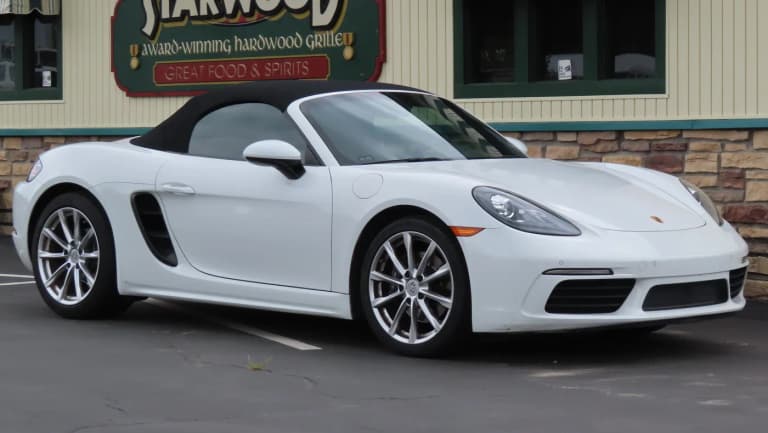
The flat-four decision was commercially sensible but upset a portion of the enthusiast community. The turbocharged engines produce more power and torque than what they replaced, but the flat-four’s sound is noticeably different from the naturally aspirated flat-six. The idle note and high-rev character that made earlier Boxsters so satisfying were gone. Porsche heard the feedback.
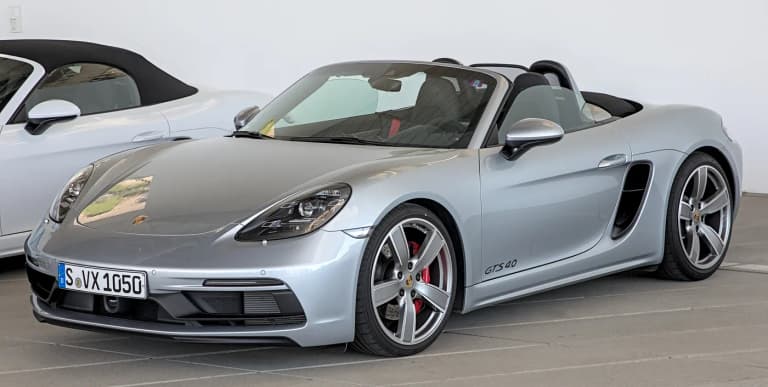
Starting with the 2020 model year, Porsche introduced the 718 Boxster GTS 4.0 with a new 4.0-liter naturally aspirated flat-six producing 400 horsepower. This version addressed virtually every complaint about the flat-four generation. The exhaust note returned, the linear power delivery came back, and reviewers consistently rated it as one of the best-sounding open cars on sale. If you want a modern 718 with a flat-six engine, the GTS 4.0 is the one to focus on.
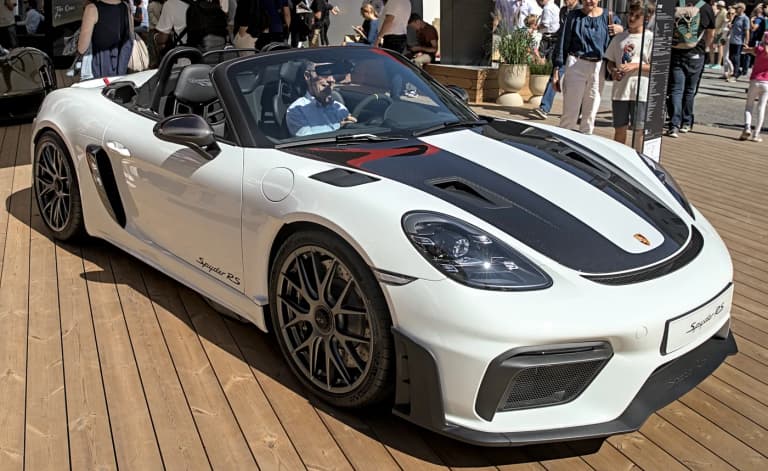
The range-topper was the 718 Boxster Spyder RS, launched in 2023. It used the same 4.0-liter flat-six as the track-focused GT4 RS, tuned to 500 horsepower in the Boxster body. The Spyder RS reached 60 mph in 3.4 seconds and offered Weissach Package lightweight options. Production ended in October 2025 when Porsche wound down 718 production ahead of the next-generation platform.
718 Key Specs
| Variant | Engine | Power | 0-60 |
|---|---|---|---|
| 718 Boxster | 2.0L turbo flat-4 | 300 hp | 4.7 sec (PDK) |
| 718 Boxster S | 2.5L turbo flat-4 | 350 hp | 4.0 sec (PDK) |
| 718 Boxster GTS 4.0 | 4.0L flat-six | 400 hp | 4.0 sec (PDK) |
| 718 Boxster Spyder RS | 4.0L flat-six | 500 hp | 3.4 sec (PDK) |
Engines and Powertrain
Every Boxster up through the 981 used a naturally aspirated flat-six mounted ahead of the rear axle. This mid-engine placement keeps the power unit low and central, which is fundamental to the car’s handling balance. The flat-six layout also keeps the engine physically narrow and low, so it does not compromise the car’s center of gravity the way a tall inline or V engine would.
Naturally Aspirated Flat-Six (986, 987, 981)
The 986’s original 2.5-liter engine was a purpose-built unit with a dry-sump oil system shared with the contemporary 911. The S variant’s 3.2-liter used a longer-stroke crank to achieve its displacement. The 987 generation’s engines were significantly revised with improved breathing and combustion, and the 981 generation engines were tuned further for both power and efficiency.
The naturally aspirated character of these engines is what enthusiasts most value about the older generations. Power builds linearly with revs, and the engines feel most alive above 5,000 rpm. The 981 S engine at 315 horsepower is the sweet spot of the naturally aspirated era for road use, offering enough power to feel quick in any context while retaining the linear delivery that makes the car rewarding on a winding road.
Turbocharged Flat-Four (718 Base and S)
The 718-generation base and S models used turbocharged flat-four engines. The 2.0-liter base unit produces 300 horsepower and 280 lb-ft of torque. The 2.5-liter S engine produces 350 horsepower and 310 lb-ft of torque. Both engines make substantially more torque than the naturally aspirated units they replaced, and the extra low-end grunt makes the cars feel quicker in everyday driving.
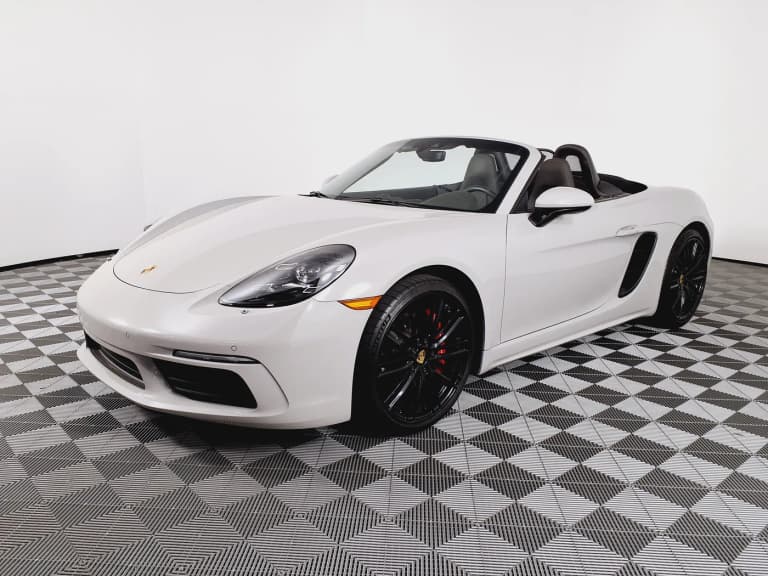
The trade-off is character. Turbocharged engines compress the power delivery into a narrower RPM band and add a small degree of turbo lag at very low revs. The flat-four sound at idle and under full throttle is functional rather than evocative. For buyers who prioritize lap times and acceleration numbers, the flat-four 718 S is genuinely excellent. For buyers who prioritize the experience, the GTS 4.0 is worth the additional cost.
4.0-Liter Flat-Six (GTS 4.0 and Spyder RS)
The 4.0-liter flat-six in the GTS 4.0 is derived from the unit used in the 911 GT3. It revs to 8,000 rpm, produces its peak 400 horsepower at 7,000 rpm, and sounds entirely different from the turbocharged variants. The Spyder RS version of the same engine, tuned to 500 horsepower, uses the same high-revving architecture as the Cayman GT4 RS and is the most extreme production Boxster engine ever fitted to the car.
Performance and Specs
The Boxster’s performance has improved steadily across every generation. The original 986 was genuinely quick for its era; the final 718 Spyder RS is objectively supercar-fast.
| Model | 0-60 mph | Top Speed |
|---|---|---|
| 986 Boxster (2.5L) | 6.9 sec | 149 mph |
| 986 Boxster S (3.2L) | 5.7 sec | 161 mph |
| 987 Boxster S (3.4L) | 5.1 sec | 169 mph |
| 981 Boxster S (3.4L) | 4.5 sec | 172 mph |
| 718 Boxster S (2.5T) | 4.0 sec | 178 mph |
| 718 GTS 4.0 | 4.0 sec | 182 mph |
| 718 Spyder RS | 3.4 sec | 190 mph |
For context on where the Boxster sits relative to the 911, the full 718 versus 911 comparison covers the performance differences in detail, including how the GTS 4.0 closes the gap considerably compared to the base models.
Chassis and Handling
The Boxster’s mid-engine layout gives it a weight distribution close to 47 percent front and 53 percent rear, depending on generation and options. This is significantly more balanced than the 911’s rear-heavy setup and means the car’s handling is inherently neutral. Under hard braking the nose stays settled rather than lightening, and corner exit oversteer requires genuine provocation rather than appearing uninvited.
The 986 and 987 offer traditional hydraulic steering with genuine weight and feel. Many drivers consider the 987 S the best-steering car Porsche made in its era. The 981 moved to electromechanical steering and retained acceptable feel despite the change. The 718’s steering is similarly electric-assisted and is well-tuned for a modern car.
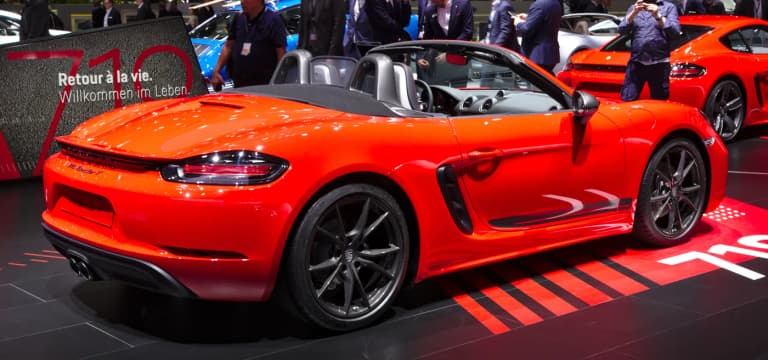
Suspension across all generations uses MacPherson struts at the front and a multi-link setup at the rear. Porsche-Active Suspension Management (PASM) is available on S models from the 987 generation onward, adding electronically adjustable dampers. Sport Chrono Package adds a dedicated Sport and Sport Plus mode on top of that.
The 981 generation is the benchmark for those who prioritize handling purity. The combination of the longer wheelbase, reduced weight, and the refined platform produced a car that magazines and instructors consistently called one of the best-balanced road cars on sale during its production run.
Interior and Technology
The 986’s interior is functional but dated. The dashboard shared components with the 996 and used low-grade plastics by modern standards. Climate controls and audio are analog and simple, which many owners now find appealing rather than limiting.
The 987 improved significantly with better materials, clearer instrument graphics, and a more logically arranged center console. The PCM navigation system appeared on higher trim levels. The 987 still feels authentically analog and is the last Boxster without a touchscreen as standard.
The 981 introduced a proper touchscreen PCM as standard on most markets, along with improved audio options and available Sport Design interior packages. The interior quality stepped up noticeably from the 987, with better leather, standard aluminum trim, and a more modern driving position.
The 718’s interior received a full redesign. The PCM system grew to 10.9 inches, the instrument cluster is cleaner, and the Sport Chrono Package added a dedicated analog clock in the center of the dashboard. The layout is similar to the contemporary 992 generation 911 and feels genuinely premium by roadster standards. Connectivity is comprehensive with Apple CarPlay and Android Auto available.
Design
The 986’s design was compromised by the decision to share its front end with the 996 911, but the 987 corrected this and established the Boxster’s visual identity. The 987’s rounder, more muscular body led directly to the 981, which sharpened the same theme with tighter lines and wider-looking rear haunches. The 718 made a significant stylistic departure, with a flatter bonnet, deeper front air intakes, and a wider, lower stance.
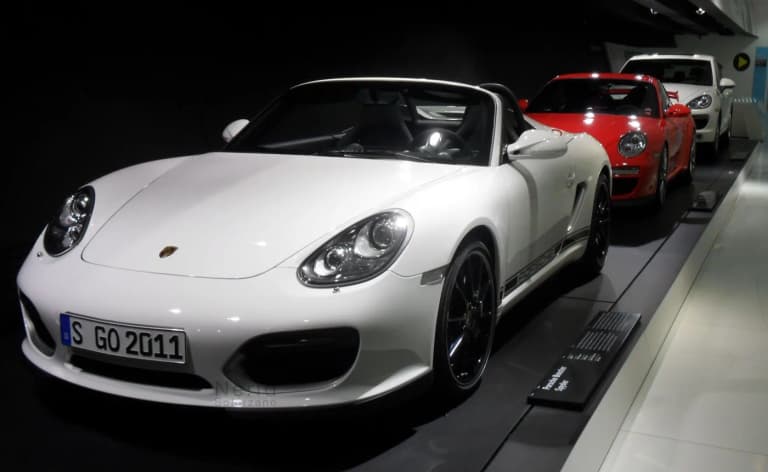
All four generations use a fabric folding roof that stores behind the seats without a tonneau cover. Porsche engineered the roof to open or close in approximately 9 to 12 seconds at speeds up to 31 mph on later generations. The Boxster Spyder variants across generations replaced the standard roof with a simplified manually operated soft-top to save weight.
The front luggage compartment holds approximately 150 liters, and there is a second compartment of around 130 liters behind the engine in the rear. Total storage capacity is reasonable for a weekend car but not a practical daily driver if luggage is required.
Pricing
Historical New Prices
When the 986 launched in the United States it started at approximately $40,100 for the base car. The 987 opened at around $44,400 for the base model in 2005. The 981 started at $49,500 in 2012, and the 718 launched at around $53,400 before prices rose through the generation to approximately $56,900 for the 2021 model year base car. The 718 GTS 4.0 opened at $82,900, and the Spyder RS started above $130,000.
Used Prices (2026)
The 986 generation is now the most affordable entry point into Porsche ownership. Base cars in fair condition start around $10,000, and well-maintained S models with the IMS upgrade and documented service history trade between $15,000 and $22,000. Clean 550 Spyder editions with low mileage ask above $25,000.
The 987 commands a premium over the 986 due to its styling improvements and more reliable later IMS design. Base 987 cars start around $18,000, and S models in good condition range from $25,000 to $40,000. Late 987 Spyder models with service history ask $45,000 to $60,000.
The 981 has appreciated relative to earlier expectations. Base models start around $35,000, and S cars range from $45,000 to $65,000 depending on mileage and specification. The 981 Spyder is a genuine collector item and asks $80,000 to $100,000 in good condition.
The 718 remains close to its new price in many configurations. A base 718 Boxster from 2017 to 2019 starts around $45,000 used. The GTS 4.0 holds value well and trades from around $80,000 upward depending on mileage and options.
Ownership
The 981 and 718 generations are the most reliable Boxsters from an ownership perspective. Porsche resolved the IMS bearing issue that affected early 986 cars, and the 981 platform is known for very few systematic mechanical problems. Regular oil changes and attention to coolant condition cover most of the preventive maintenance required.
The 986 requires specific attention to the IMS bearing on cars built before 2003. Any pre-2000 986 that has not had the bearing upgraded with an aftermarket unit is carrying a meaningful failure risk. The water pump on the 986 is also known to fail prematurely; replacing it proactively is standard advice for any 986 buyer. Porsche revised the water pump design for later production runs.
The 987 is generally more reliable than the 986. IMS bearing failures are far less common but not impossible on early 987 cars. The air oil separator (AOS) can fail and cause oil consumption; this is a known item and relatively inexpensive to address when caught early. A pre-purchase inspection from a Porsche specialist is strongly recommended for any 987 purchase.
Running costs for all Boxster generations are reasonable by Porsche standards. Parts availability is excellent even for the 986, and specialist independent workshops are common in most markets. Tires are the largest recurring expense; the car’s low-profile fitments wear normally but need to be replaced in sets to maintain the calibrated handling balance.
Special Editions
Boxster Spyder
The Spyder name appeared three times across Boxster generations: the 987 Spyder (2010, 320 hp), the 981 Spyder (2016, 375 hp), and the 718 Spyder (2019, 420 hp). Each version stripped weight from the standard car using a simplified roof, lighter seats, and removed sound deadening. The 981 Spyder and 718 Spyder used engines normally reserved for the Cayman GT4, giving them significantly more power than the standard S models of their respective generations.
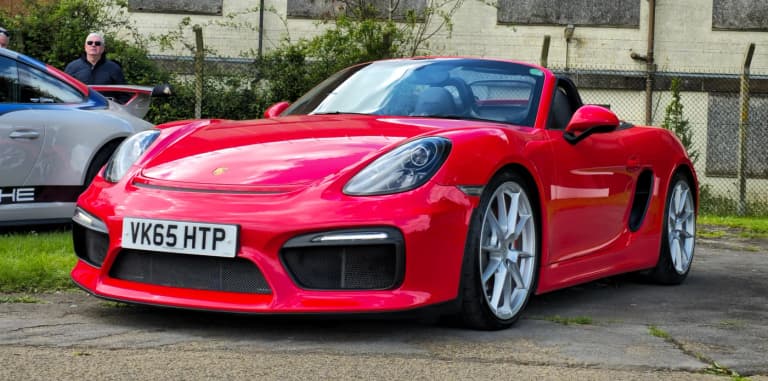
All three Spyder editions are collector-grade cars today. Supply is limited because Porsche produced relatively few units, and the stripped-out character makes them increasingly desirable as the used market matures. The 718 Spyder in particular competes on lap times with cars costing substantially more and represents one of the better value-per-lap propositions in the used sports car market.
Boxster S 550 Spyder (2004)
Porsche produced 1,953 units of the Boxster S 550 Spyder edition in 2004 to celebrate the 50th anniversary of the 550 Spyder. The car used the 3.2-liter S engine tuned to 260 horsepower, came exclusively in GT Silver Metallic, and featured specific 550 Spyder exterior graphics, dark-painted wheels, and a numbered production badge. The interior used Boxster Red leather and carried the 550 anniversary logo. These cars are now sought after among 986 collectors.
718 Boxster 25 Years (2021)
In 2021 Porsche produced 1,250 units of the 718 Boxster 25 Years to mark the nameplate’s first quarter-century. The car used ET Neodyme Metallic (a copper-influenced bronze), the GTS 4.0’s 400 horsepower engine, and included unique interior touches including a two-tone leather and Alcantara combination with contrast stitching. Production numbers match the original 356 Speedster production count of 1,234 units, adjusted to 1,250 for the 25-year milestone.
Frequently Asked Questions
What does “Boxster” mean?
The name combines “Boxer” (the horizontally opposed flat-six engine Porsche is known for) with “Speedster” (a reference to the legendary 356 Speedster and 550 Spyder open-top cars from the 1950s). Porsche trademarked the name in 1993 before the production car launched in 1996.
What is the difference between the Boxster and Cayman?
The Boxster is a convertible roadster with a fabric folding roof. The Cayman is a fixed-roof coupe on the same platform. The Cayman is slightly stiffer due to the closed roof structure, which some drivers prefer on a track. The Boxster weighs a similar amount with the roof down but is slightly heavier overall. Both use the same engines in each generation. For a full comparison, see the Cayman versus 911 guide which covers how the mid-engine platform stacks up against the rear-engine alternative.
Which Boxster generation should I buy?
For the best driving experience on a budget, a 987 S with PDK from 2009 or later is the sweet spot. It has hydraulic steering, a proper naturally aspirated flat-six, and trades at accessible prices. If budget allows, the 981 S offers sharper dynamics with no IMS risk. The 718 GTS 4.0 is the best modern choice for buyers who want a flat-six and are comfortable with used 718-generation pricing.
Is the Porsche Boxster reliable?
The 981 and 718 generations are very reliable. The 987 is reliable with proper maintenance, particularly attention to the air oil separator. The 986 is reliable IF the IMS bearing has been upgraded on pre-2003 cars. Always buy with a full service history and have any used Boxster inspected by an independent Porsche specialist before purchase.
Is the Boxster good as a daily driver?
A 987 or 981 with PDK works well as a daily driver in a mild climate. Luggage capacity is limited but workable for a single commuter. The fuel economy in normal driving is reasonable at around 22 to 27 mpg combined depending on generation and driving style. Tire costs are the main ongoing expense. For very cold or wet climates, the open-top body and summer tire fitment on most Boxsters make winter driving impractical without a second car or a seasonal tire change.
What replaced the Porsche Boxster?
Porsche ended 718 Boxster production in October 2025. The fifth-generation platform is planned as a hybrid, moving away from the fully electric direction that was originally announced. Porsche CEO Oliver Blume confirmed the next generation will use a 3.6-liter six-cylinder boxer engine in top variants alongside hybrid systems. An arrival timeline in the medium term was confirmed but specific dates have not been published as of mid-2026.
Images: Hero, 718 Boxster GTS 4.0 by Alexander Migl, CC BY-SA 4.0. 986 Boxster (2000) by Calreyn88, CC BY-SA 4.0. 987 Boxster by OWS Photography, CC BY 4.0. 981 Boxster Spyder (2015) by Calreyn88, CC BY-SA 4.0. 718 Boxster Spyder RS by Alexander Migl, CC BY-SA 4.0. 981 Boxster by OSX, public domain. 718 Boxster by MercurySable99, CC BY-SA 4.0. 718 Boxster S by HJUdall, CC0. 718 Boxster T by Alexander Migl, CC BY-SA 4.0. 987 Boxster Spyder by K@dosh, CC BY-SA 2.0. Via Wikimedia Commons.