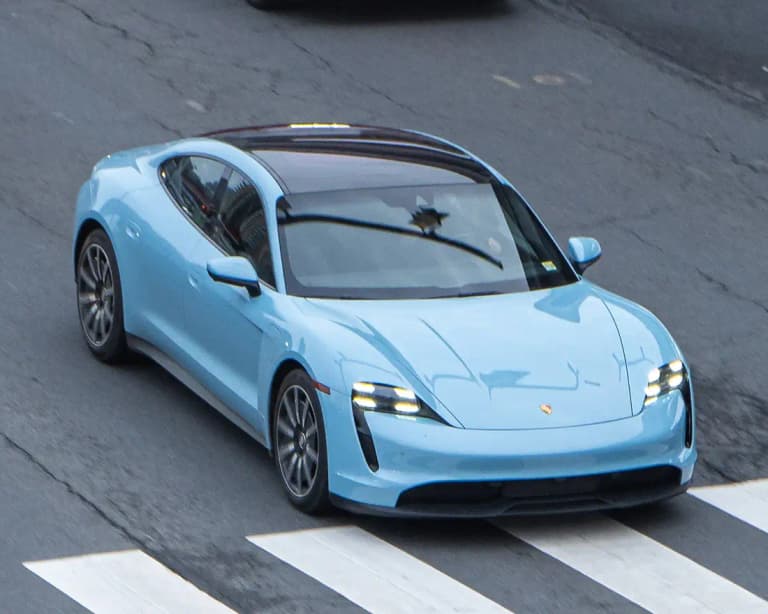
The Porsche Taycan 4S is the mid-range, dual-motor version of Porsche’s electric sport sedan. It has all-wheel drive and runs an 800-volt system for very fast charging. After the 2024 update it makes up to 590 horsepower with launch control. It sits between the rear-wheel-drive base Taycan and the Turbo cars, and it is widely seen as the value sweet spot of the range.
In this article, we’ll examine the Porsche Taycan 4S, the value pick of the electric lineup. We’ll cover its powertrain, range, chassis, and pricing.
Contents
- 1 Quick Summary
- 2 What the Porsche Taycan 4S Is
- 3 Taycan 4S Generations: Original and 2024 Facelift
- 4 Powertrain: Two Motors and the Performance Battery
- 5 Taycan 4S Range: EPA, WLTP, and the Real Number
- 6 Porsche Active Ride and the 4S Chassis
- 7 Taycan 4S vs the Rest of the Range
- 8 Body Styles: Sedan, Sport Turismo, and Cross Turismo
- 9 Taycan 4S Interior and Technology
- 10 Buying a Taycan 4S: Price, Depreciation, and Ownership
- 11 Frequently Asked Questions
Quick Summary
- Drivetrain: Dual-motor all-wheel drive, the first AWD trim in the Taycan range, sitting above the rear-wheel-drive base Taycan and below the GTS, Turbo, and Turbo S.
- Power (2024 facelift): Up to 590 horsepower with launch control and a 0-60 mph time of about 3.5 seconds.
- Power (original, 2019-2024): Up to 523 hp with the Performance Battery or 563 hp with the Performance Battery Plus, with 0-60 mph in about 3.8 seconds.
- Range: The updated 4S is EPA rated at up to 315 miles on 19-inch wheels; original cars were rated between about 199 and 227 miles.
- Charging: 800-volt architecture peaks at 320 kilowatts on the updated car, with a 10 to 80 percent top-up in about 18 minutes; pre-2024 cars peaked at 270 kilowatts.
- Battery: The Performance Battery Plus grew from 93 to 105 kilowatt-hours gross with the 2024 update.
- Pricing: A new 4S starts around $120,300 in the US; used pre-2024 cars often sell between $80,000 and $100,000.
- Warranty: The high-voltage battery is covered for 8 years and 100,000 miles and transfers with the car.
What the Porsche Taycan 4S Is
The Porsche Taycan 4S is the mid-tier version of Porsche’s first electric car. It is a low, four-door sport sedan with two electric motors and permanent all-wheel drive. The 4S is the practical enthusiast’s pick in the lineup. It gives up little of the driving experience while costing far less than the Turbo models.
The Taycan launched in 2019 as Porsche’s first series-production electric vehicle. The 4S arrived shortly after the top Turbo cars. It quickly became the trim most buyers gravitate toward. It balances real speed, real range, and a price that does not reach six figures on the used market.
Where the 4S Sits in the Range
The 4S is the first all-wheel-drive Taycan. It sits directly above the rear-wheel-drive base car and below the GTS, Turbo, Turbo S, and the range-topping Turbo GT. Every trim from the 4S up gets a second motor on the front axle. That front motor is what separates the 4S from the base Taycan.
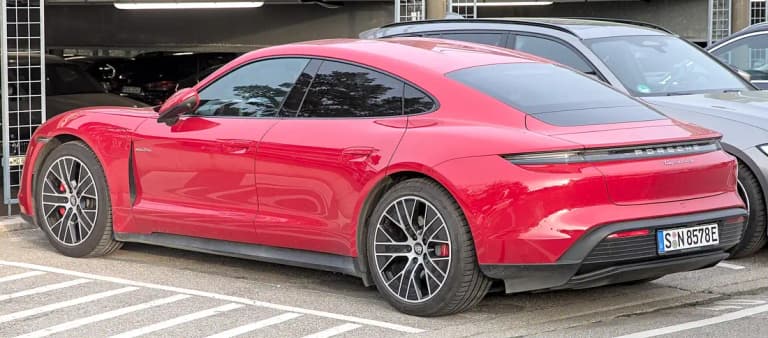
You can read the full lineup in our Porsche Taycan buyer’s guide. This article focuses on the 4S alone, since it is the trim most people actually shop for.
Why the 4S Is the Value Pick
The 4S shares its platform, its cabin, and its 800-volt charging hardware with the far pricier Turbo models. You pay less, but the core experience is the same. The performance gap versus a GTS or Turbo is real on a track. In everyday driving, it is much smaller than the price gap suggests.
For most buyers, the 4S is the point where the Taycan makes the most sense. It is quick enough to embarrass most sports cars, it charges as fast as any Taycan, and it carries four people in comfort. Spending more buys bragging rights, not a better daily car.
Taycan 4S Generations: Original and 2024 Facelift
There are two clear versions of the Taycan 4S to know. The original ran from 2019 to 2024. The heavily updated facelift arrived for the 2024 model year and is what dealers sell new today. If you shop used, the difference between the two is large, so it pays to know which car you are looking at.
The Original Taycan 4S (2019 to 2024)
The original 4S came with a choice of two batteries. With the standard Performance Battery, it made up to 523 horsepower in overboost with launch control. With the larger Performance Battery Plus, output rose to up to 563 horsepower. The 0-60 mph time was around 3.8 seconds, and top speed was 155 mph. These figures come from the Porsche Taycan specification record.
Range was the original car’s weak spot. EPA figures sat between roughly 199 and 227 miles depending on the battery and wheels. That was usable but never class-leading. The car charged at a peak of 270 kilowatts, which was still among the fastest in its class at launch.
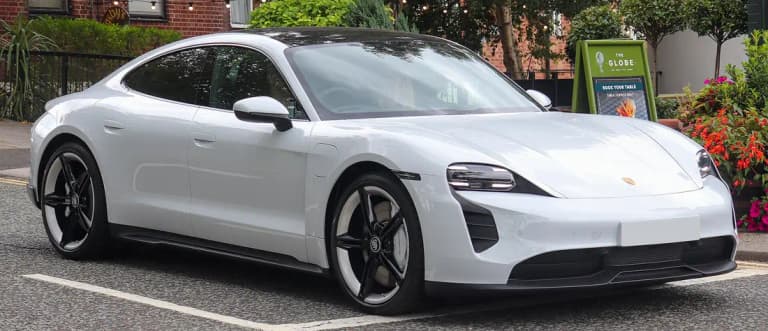
Original cars still drive beautifully and represent strong value used. Just go in knowing the range and charging numbers trail the newer car by a wide margin.
The 2024 Facelift Taycan 4S
The 2024 update was a major step, not a light refresh. Porsche reworked the motors, the battery, and the software across the whole range. The 4S gained a big jump in power, range, and charging speed. Peak output with launch control rose to 590 horsepower with the Performance Battery Plus, and the 0-60 mph time dropped to about 3.5 seconds. Porsche quotes 0 to 100 km/h in 3.7 seconds.
The battery grew too. The Performance Battery Plus went from 93 to 105 kilowatt-hours of gross capacity, per the Porsche Newsroom launch release. Peak charging jumped from 270 to 320 kilowatts. This is the car most buyers search for, and it fixes the original’s biggest weaknesses.
Powertrain: Two Motors and the Performance Battery
The Taycan 4S powertrain is the heart of the value argument. It uses the same basic hardware as the more expensive Taycans, tuned to a lower but still very high output. The result is a car that feels effortlessly fast without the Turbo price.
Dual-Motor All-Wheel Drive
The 4S runs two electric motors, one on each axle. The rear motor does most of the work in normal driving. The front motor adds traction and extra power the moment you ask for it. That layout gives the 4S permanent all-wheel drive and huge launched grip.
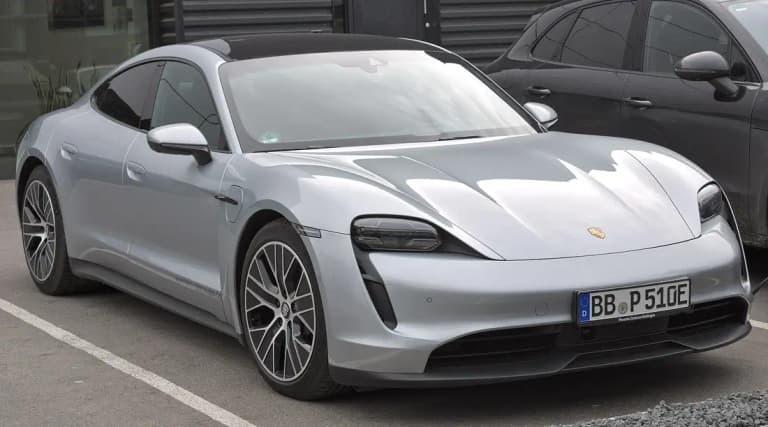
Like every Taycan, the 4S also has a two-speed gearbox on the rear axle. Most electric cars use a single fixed gear. The short first gear helps standing-start acceleration, and the taller second gear keeps the motor efficient at high speed. It is one reason the 4S still feels strong well past highway pace.
Performance Battery and Performance Battery Plus
The 4S offers two battery options. The standard Performance Battery is the smaller pack. The optional Performance Battery Plus is the larger one, and it is the one most buyers should want. On the updated car it holds 105 kilowatt-hours gross, with about 97 kilowatt-hours usable.
The bigger battery does more than add range. It also unlocks the highest power figures and the fastest charging. On a used car, check which battery is fitted, since it changes both the range and the value. The Performance Battery Plus was a costly option new, so cars with it are worth more.
800-Volt Architecture and Fast Charging
The Taycan was the first production car built on an 800-volt electrical system, double the 400 volts most electric vehicles use. Higher voltage means lower current for the same power. That produces less heat and lets the car hold its peak charging rate for longer.
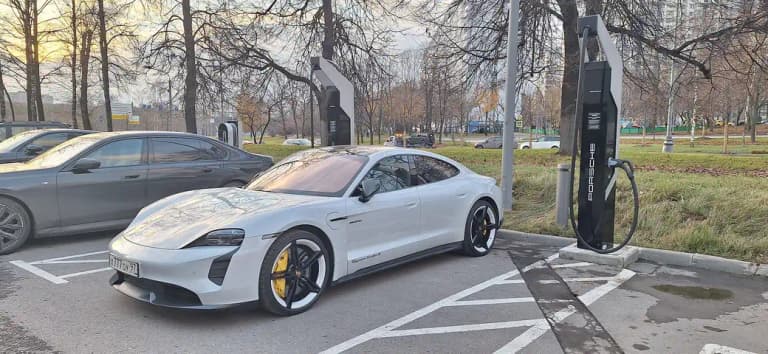
On the updated 4S, peak fast charging reaches 320 kilowatts on a compatible DC charger. A 10 to 80 percent top-up takes about 18 minutes in good conditions. At home, an 11-kilowatt wallbox fills the battery overnight in roughly 9 to 10 hours. That charging speed is what makes long trips painless despite the modest range on paper.
Taycan 4S Range: EPA, WLTP, and the Real Number
Range is where the two generations differ most, so it deserves a clear look. The honest picture is that the paper number and the real number are not the same. How you drive changes the result more than any spec sheet.
EPA and WLTP Range
The updated 4S with the Performance Battery Plus is EPA rated at up to 315 miles on 19-inch wheels. Larger 21-inch wheels drop that to around 295 miles, according to the 2025 Taycan EPA range figures. On the European WLTP cycle the number is higher, since WLTP is a gentler test than the EPA method.
The original 4S was rated far lower, between roughly 199 and 227 miles on the EPA cycle. That single gap is the clearest reason the newer car commands a premium. If range is a priority, the facelift is worth the extra money.
Actual Range in Daily Driving
The actual range you see depends on speed, wheels, and temperature. At a steady highway cruise, most electric cars fall short of their rating, because sustained high speed is the hardest test for efficiency. In town, where regenerative braking recovers energy, the 4S often beats its number.
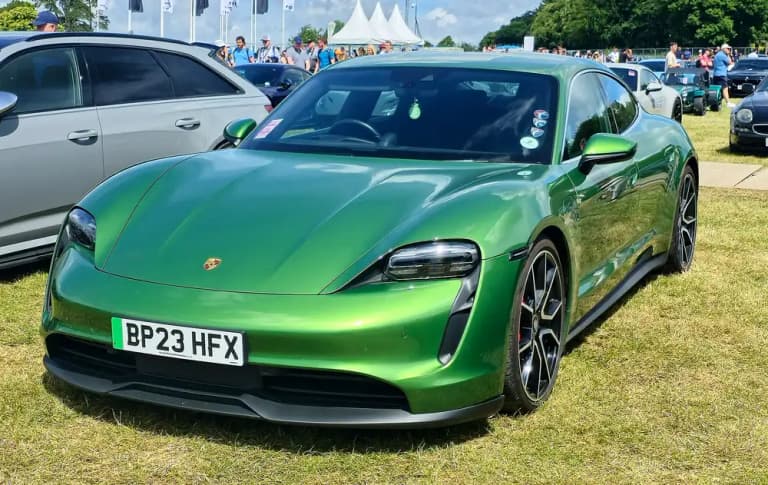
Independent testing backs this up. In an Edmunds real-world range test, an updated 4S covered 337 miles on a charge. That is well past its EPA rating. Cold weather is the main enemy of range. In winter, expect a real drop, since the battery and cabin both draw energy to stay warm. Big wheels and hard driving cut it further.
Porsche Active Ride and the 4S Chassis
The 4S drives like a sports car first and an electric car second. The battery sits under the floor, so the center of gravity is very low. The weight is spread evenly between the axles. The result is a big sedan that changes direction like something much smaller.
What Porsche Active Ride Does
Porsche Active Ride is a new suspension option introduced with the 2024 update. It is an active system that keeps the body level at all times. Under hard braking the nose does not dive. Under acceleration the tail does not squat. In corners it counters body roll, so the car stays flat.
Porsche offers Active Ride as an option on all all-wheel-drive Taycans, which means the 4S can have it. The rear-wheel-drive base car cannot. The system widens the gap between a soft, comfortable cruise and a sharp, controlled sporting mode. For a heavy performance sedan, that flat, composed body control is a genuine step forward.
Standard Suspension and Handling
Even without Active Ride, the 4S handles well. Adaptive air suspension with Porsche Active Suspension Management is standard on the all-wheel-drive car. It firms up or softens to suit the drive mode. It can also raise the body for speed bumps or lower it for stability at speed.
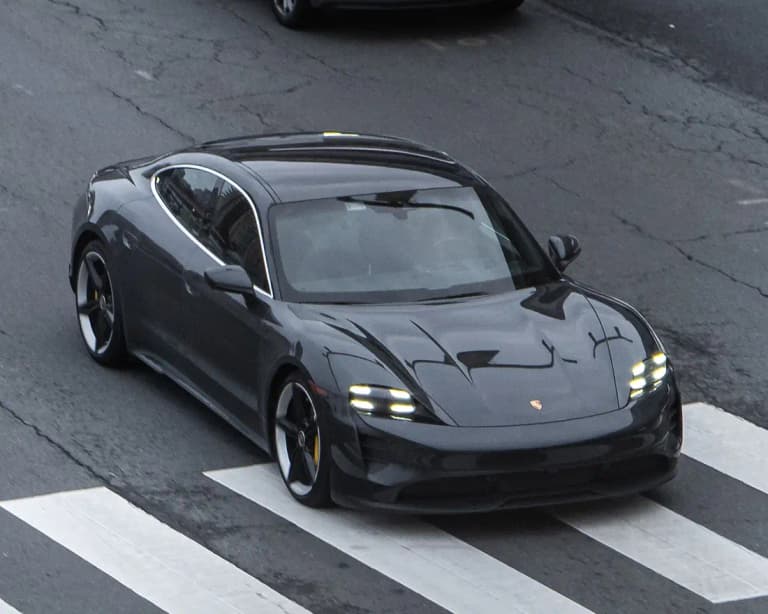
The steering is weighted and accurate rather than chatty. It does not have the pure feel of a 911, but it is better than most electric cars. Optional rear-axle steering sharpens low-speed agility and adds high-speed stability. The brakes blend regenerative and friction stopping smoothly, so most driving barely touches the pads.
Taycan 4S vs the Rest of the Range
The 4S makes the most sense when you see it next to the trims on either side. Below it sits the rear-wheel-drive base car. Above it sit the Turbo and Turbo S. The table below uses the updated 2024 figures with launch control, drawn from the sources above and our full Taycan guide.
| Model | Drive | Power | 0-60 mph |
|---|---|---|---|
| Taycan | RWD | up to 429 hp | 4.5 sec |
| Taycan 4S | AWD | up to 590 hp | 3.5 sec |
| Taycan Turbo | AWD | 871 hp | 2.5 sec |
| Taycan Turbo S | AWD | 938 hp | 2.3 sec |
4S vs the Base Rear-Wheel-Drive Taycan
The base Taycan is rear-wheel drive with a single motor. It is the most efficient car in the range and often the longest on range. What it lacks is the 4S’s traction and pace. The jump from the base car to the 4S is the biggest single step in the lineup, because it adds a whole extra motor.
Pick the base car if maximum range and lowest price matter most. Pick the 4S if you want the all-weather grip and the far quicker acceleration. For most buyers the 4S is the better all-rounder, and the price gap is modest.
4S vs the Taycan Turbo and Turbo S
The Turbo and Turbo S are much faster, but they cost far more and sacrifice some range for their extra power. The Taycan Turbo S is the flagship of the regular range, with hypercar-level acceleration. On a public road, the 4S rarely feels slow next to them.
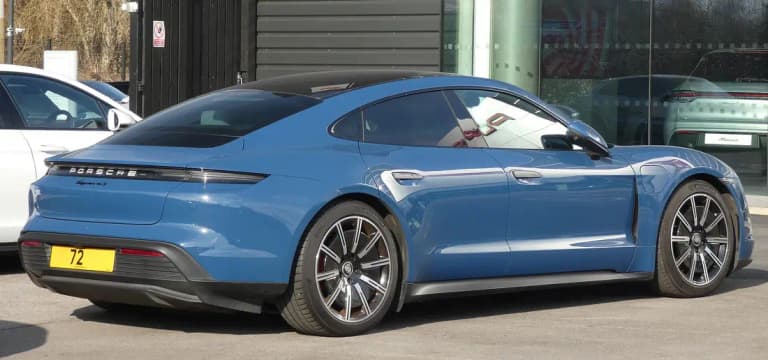
The honest math is simple. The Turbo cars are worth it if you value the last tenth of a second and the extra kit. The 4S delivers most of the experience for a lot less money. That is the whole reason it earns the “sweet spot” label.
Body Styles: Sedan, Sport Turismo, and Cross Turismo
The Taycan 4S comes in three body styles. All three share the same platform, the same powertrain, and the same batteries. The choice is about space and looks, not speed.
Taycan 4S Sedan
The sedan is the original body and the sleekest of the three. It has a fastback roofline, a front trunk under the hood, and a rear luggage area. The low roof limits headroom for tall rear passengers. This is the body most 4S buyers choose, and it is the sharpest to look at.
Taycan 4S Cross Turismo and Sport Turismo
The Cross Turismo is the rugged wagon version of the 4S. It adds a raised ride height, body cladding around the wheel arches, and standard air suspension. It has more rear headroom and a bigger cargo area than the sedan. It also has mild off-road ability that the low sedan lacks.
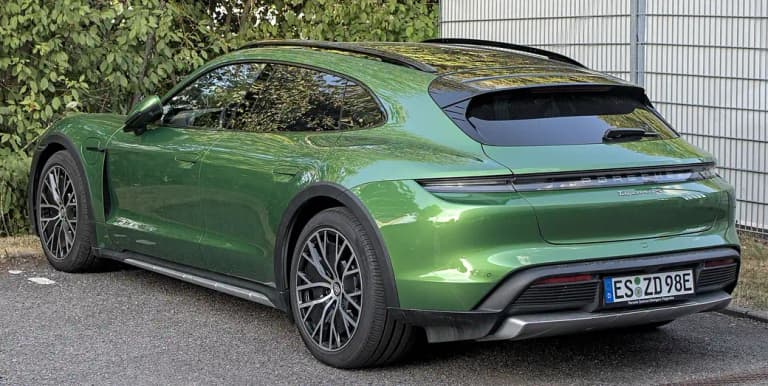
The Sport Turismo is the low-riding wagon, sharing the Cross Turismo’s roof without the raised body. It gives you the extra headroom and cargo space of an estate while keeping the sedan’s stance. Both wagons drive much like the sedan and suit buyers who carry people or gear often.
Taycan 4S Interior and Technology
The 4S cabin is identical in quality to the most expensive Taycans. That is a big part of the value story. You do not sit in a cheaper interior just because you chose the cheaper trim.
Cabin and Materials
The dashboard is low and horizontal, which makes the cabin feel wide and open. Build quality is excellent throughout. Materials feel genuinely premium rather than just convincing at a glance. Standard adaptive sport seats hold you in place, with more supportive buckets available as an option.
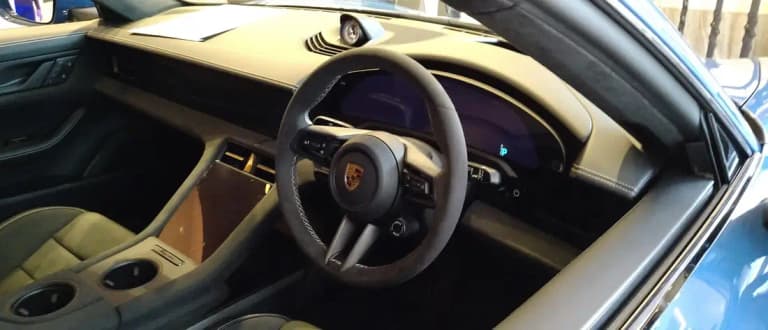
Practicality beats what the low roofline suggests. There is a usable rear seat for two adults, a front trunk for charging cables, and a rear hatch area. The 4S works as a genuine daily car, not just a weekend toy.
Screens and Driver Assistance
The 4S uses Porsche’s clean, screen-led layout. A curved digital driver display sits ahead of the wheel. A central touchscreen runs the Porsche Communication Management system, with wireless Apple CarPlay and Android Auto. The 2024 update added back some physical controls for climate, which owners had asked for.
Standard driver assistance covers adaptive cruise control, lane keeping, and a surround-view camera. Route planning factors in the battery state and suggests charging stops on longer journeys. The system updates over the air, so the car can gain features after you buy it.
Buying a Taycan 4S: Price, Depreciation, and Ownership
The 4S is where the numbers start to work in your favor. New, it undercuts the Turbo cars by a wide margin. Used, it benefits from the steep depreciation that hits all electric cars. Here is how to buy one well.
New Price and Options
A new Taycan 4S starts around $120,300 in the US before options. That places it above the base car near $103,300 and well below the GTS and Turbo trims. The options list adds up fast. The Performance Battery Plus, larger wheels, rear-axle steering, and Porsche Active Ride can each add thousands to the sticker.
Spec the car for how you drive. The Performance Battery Plus is the box most buyers should tick, since it adds range, power, and charging speed. Very large wheels look great but trade away some range and ride comfort.
Used Prices and Depreciation
Electric cars depreciate hard, and the Taycan is no exception. The 2024 update made older cars look dated on range and charging, which pushed pre-2024 prices down further. A used original 4S often sits between $80,000 and $100,000 with reasonable mileage. That is a lot of car for the money.
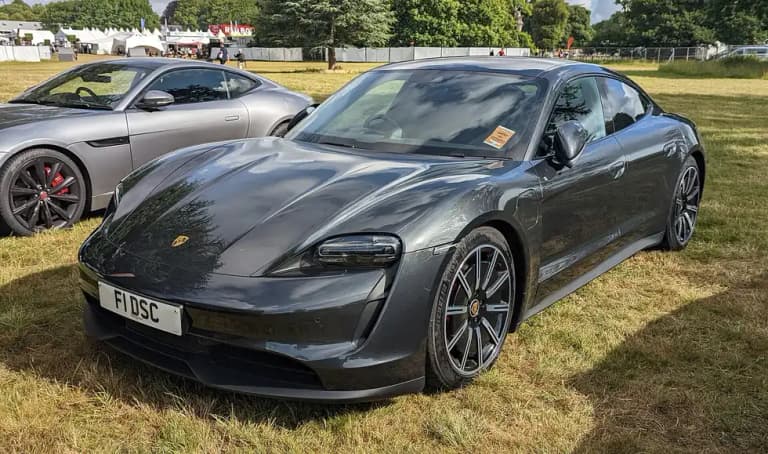
The depreciation that stings a first owner is a gift to a used buyer. Just buy with your eyes open. Check the battery State of Health with a diagnostic read. Confirm the charging history and that all software recalls have been applied. A car with the Performance Battery Plus is worth paying more for.
Battery Warranty and Home Charging
Porsche warrants the Taycan for 4 years and 50,000 miles in the US. The high-voltage battery is covered separately for 8 years and 100,000 miles against defects and capacity falling below a set threshold. That battery warranty transfers with the car, which matters a lot on a used purchase.
Home charging is where the 4S is easiest to live with. Most owners plug in overnight on a wallbox and start every morning with a full battery. You rarely touch a public charger for daily driving. That routine removes the range worry that puts some buyers off electric cars.
Importing a Taycan 4S to Thailand
For buyers in Thailand, the Taycan is sold officially through Porsche’s local network, and electric cars have enjoyed government incentives in recent years. Bringing in a used example privately is a different story. Import duty and excise tax on a car like this are steep, and the paperwork is heavy.
If you are weighing a private import, read our guides on importing a Porsche to Thailand and the Thailand car tax rules first. They cover the duties, the excise structure, and the registration steps that decide whether an import makes financial sense.
The Taycan also sits at the sharp end of Porsche’s electric push. To see where it fits among the brand’s other models, our Porsche electric cars overview and the electric Macan guide are good next reads.
Frequently Asked Questions
How much is a Porsche Taycan 4S?
A new Taycan 4S starts around $120,300 in the US before options. Used pre-2024 cars often sit between $80,000 and $100,000 with reasonable mileage. That makes the 4S one of the better-value ways into a fast electric Porsche.
Is the Porsche Taycan 4S all-wheel drive?
Yes. The 4S uses two electric motors, one on each axle, for permanent all-wheel drive. It is the first all-wheel-drive trim in the Taycan range, sitting just above the rear-wheel-drive base car.
What is the range of the Porsche Taycan 4S?
The updated 2024 Taycan 4S with the Performance Battery Plus is EPA rated at up to 315 miles on 19-inch wheels. Original 2020 to 2023 cars were rated closer to 200 to 227 miles. Real-world range depends on speed, wheels, and temperature.
How fast does the Taycan 4S charge?
The updated 4S peaks at 320 kilowatts on an 800-volt DC fast charger. It can go from 10 to 80 percent in about 18 minutes. Pre-2024 cars peaked at 270 kilowatts, which is still quick by class standards.
What is the difference between the Taycan 4S and the base Taycan?
The base Taycan is rear-wheel drive with a single motor. The 4S adds a second front motor for all-wheel drive, far more power, and a much quicker 0-60 time. The base car trades that pace for a slightly lower price and strong range.
Is the Porsche Taycan 4S a good used buy?
It can be, if you check the battery health and buy from a Porsche-approved source with warranty. Electric cars depreciate hard, so a used 4S offers a lot of car for the money. The 8-year battery warranty transfers with the car.
Image Credits
Images: Taycan 4S (hero, blue) and Taycan 4S (dark grey) by OWS Photography, CC BY 4.0. Taycan 4S (red) and Taycan 4S (silver) by Alexander Migl, CC BY-SA 4.0. Taycan 4S (white) by Vauxford, CC BY-SA 4.0. Taycan 4S (green) and Taycan 4S (grey, show) by Calreyn88, CC BY-SA 4.0. Taycan 4S Cross Turismo by Alexander-93, CC BY-SA 4.0. Taycan 4S (blue, rear) by Harvey Bold, CC0. Taycan interior by Aos.1905, CC BY 4.0. Taycan charging by Kirill Borisenko, CC BY-SA 4.0. Via Wikimedia Commons.