Porsche’s electric lineup in 2026 covers the Taycan sports sedan, the Macan Electric SUV, and the new Cayenne Electric. All three use an 800-volt architecture for very fast charging. Power runs from 355 hp in the base Macan to 1,139 hp in the Cayenne Turbo Electric, the most powerful production Porsche ever.
In this article, we’ll detail Porsche’s electric car lineup: the Taycan, Macan Electric, and Cayenne Electric. We’ll cover their power and range, charging, pricing, and what’s next.
Contents
- 1 Quick Summary
- 2 Porsche Electric Vehicles in 2026: Three Model Lines
- 3 Porsche Taycan: The Electric Sports Sedan
- 4 Porsche Macan Electric: The Volume Seller
- 5 Porsche Cayenne Electric: The New Flagship SUV
- 6 The 800 Volt Architecture and Charging
- 7 Launch Control and 0-60 mph Times
- 8 Range and Batteries: EPA vs WLTP
- 9 Driving Dynamics: Air Suspension and Chassis Tech
- 10 Porsche Electric Prices in 2026
- 11 The Electric 718 Boxster and Cayman
- 12 From Mission E to Formula E: A Short History
- 13 Choosing the Right Electric Porsche
- 14 Frequently Asked Questions
Quick Summary
- Model lines: Taycan sedan (2019), Macan Electric SUV (2024), and Cayenne Electric SUV (revealed November 2025)
- Architecture: all three run an 800-volt system for faster charging than typical 400-volt EVs
- Starting prices: Macan Electric from $80,300, Cayenne Electric from $109,000, Taycan from $111,900
- Power range: 355 hp in the base Macan up to 1,139 hp in the Cayenne Turbo Electric
- Range: up to 332 EPA miles in the Macan Electric, 318 EPA miles in the Taycan, and 399 WLTP miles in the Cayenne Electric
- Fast charging: the Cayenne Electric peaks at 400 kW, the fastest charging of any Porsche
- Quickest model: the Taycan Turbo GT Weissach hits 60 mph in 2.1 seconds
- What’s next: an electric 718 Boxster and Cayman is delayed to around 2027
Porsche Electric Vehicles in 2026: Three Model Lines
Porsche electric vehicles now cover three model lines. The Taycan is the sports sedan that started it all in 2019. Porsche added its first electric SUV, the Macan Electric, in 2024. A year later the Cayenne Electric completed the set with its November 2025 reveal.
All three share the same core idea. Each one runs an 800-volt electrical system, which charges faster and runs cooler than the 400-volt setups most EVs use. Each one is tuned to drive like a Porsche first and an electric car second.
The spread of ability is wide. A base Macan is a practical family SUV with 355 hp. A Cayenne Turbo Electric makes 1,139 hp and out-accelerates most supercars. This guide walks through every model, then covers charging, range, pricing, and what comes next.
Porsche Taycan: The Electric Sports Sedan
The Taycan is where Porsche electric performance started. It launched in 2019 as the production version of the Mission E concept. It proved an electric Porsche could steer, brake, and communicate like the gas cars.
The big 2025 facelift sharpened the whole package. Porsche fitted a larger 105 kWh battery, faster 320 kW charging, and more power across the range. Adaptive air suspension became standard on every trim. For the full story, read our complete Porsche Taycan guide.
Taycan Trims and Body Styles
The sedan alone runs to eleven trims, from the base rear wheel drive car to the Turbo GT Weissach. The base Taycan makes 402 hp and starts at $111,900 in the US. From there the ladder climbs through 4, 4S, GTS, Turbo, and Turbo S.
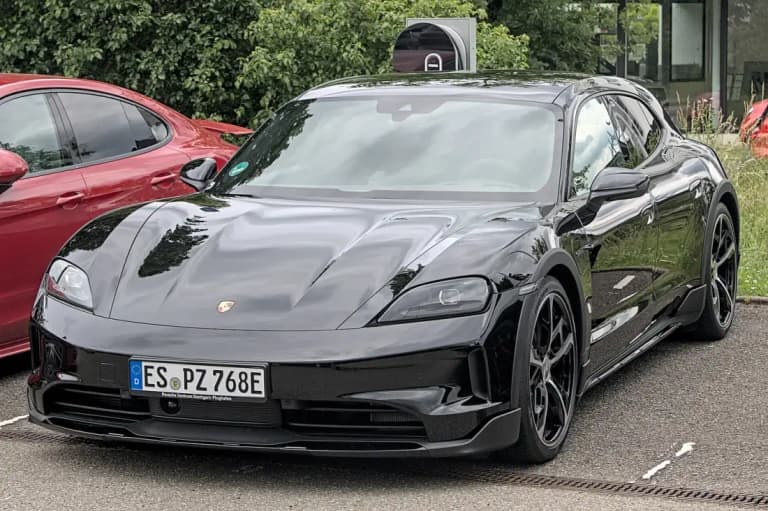
There is also a wagon. The Taycan Cross Turismo adds a longer roof, more cargo space, and a touch of extra ride height. Some markets also get the Sport Turismo, which keeps the wagon body without the rugged trim.
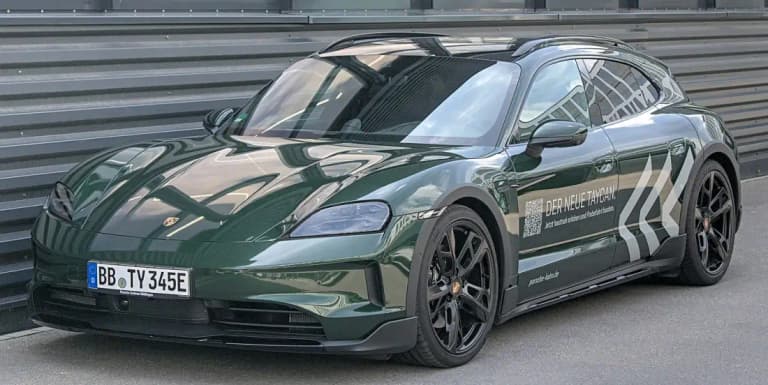
The Cross Turismo is the pick for buyers who want one car that does everything. It swallows bikes and luggage, and it gives up very little pace to the sedan.
Taycan Turbo GT and Track Speed Records
The Taycan Turbo GT is the halo car. Its rear motor upgrade lifts peak output to 1,019 hp with Launch Control. With the Weissach package it hits 60 mph in 2.1 seconds.
The track speed backs up the numbers. A Turbo GT with the Weissach Package lapped the Nurburgring in 7:07.55, a record for electric production cars at the time. It set another record at Laguna Seca the same week.
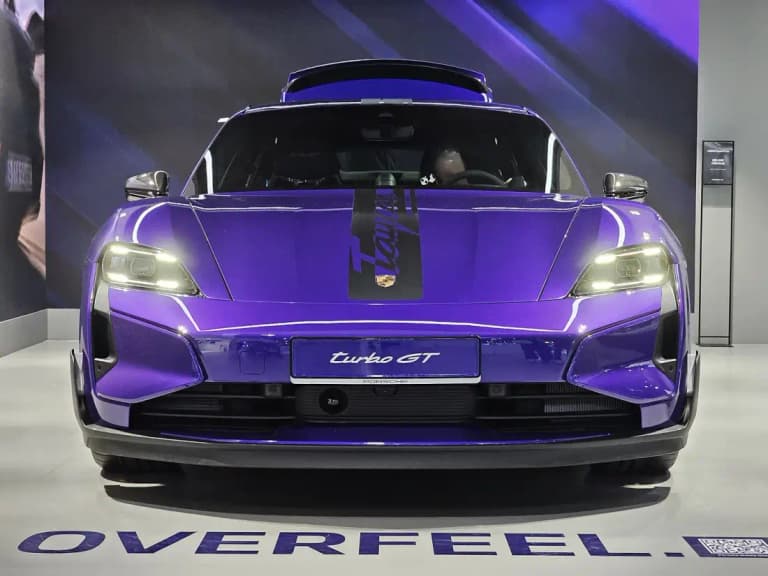
Below the GT sits the 938 hp Turbo S, still a monster in its own right. Our Taycan Turbo S guide covers that car in detail. Both prove that instant torque changes what a four-door can do.
Porsche Macan Electric: The Volume Seller
The Porsche Macan Electric is the electric Porsche most people actually buy. It is a compact luxury SUV built on the PPE platform, 800-volt hardware Porsche developed with Audi. In most markets it has already replaced the gas Macan entirely.
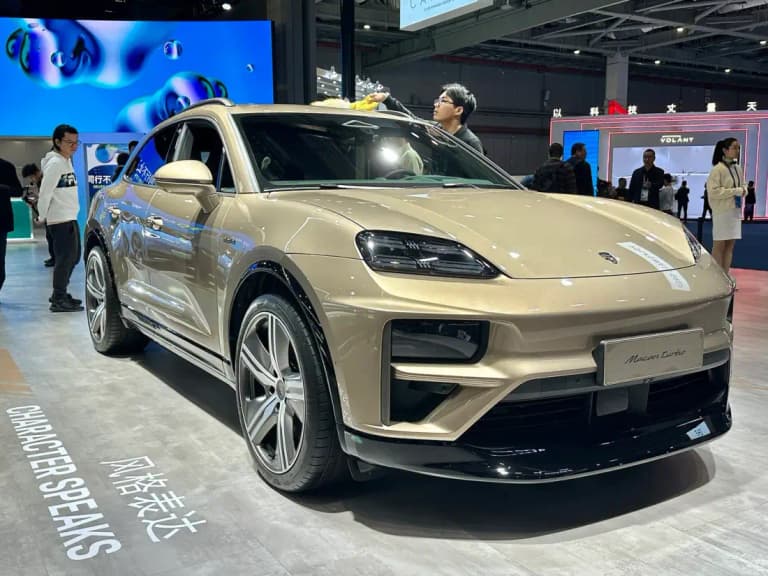
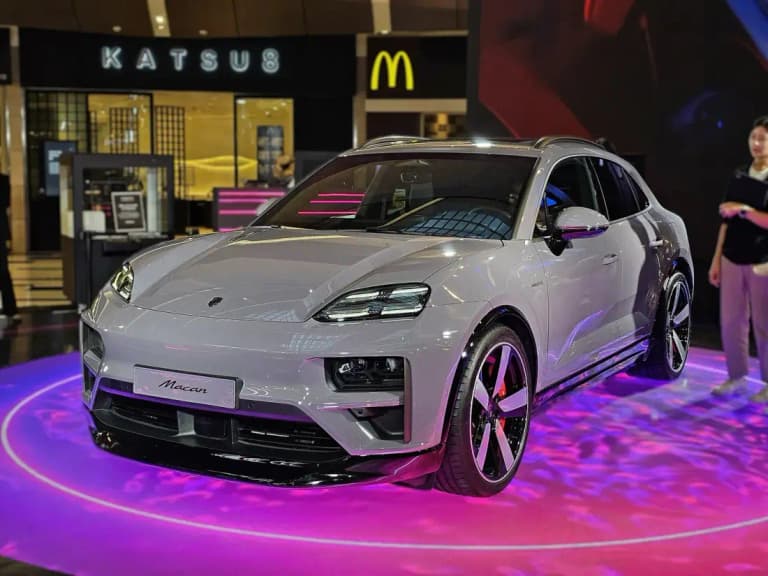
The Macan EV lineup spans five trims, all sharing a 100 kWh battery with 270 kW charging. We break down every trim, the range figures, and the gas comparison in our full Porsche Macan EV guide.
Macan and Macan 4
The base Macan uses a single rear motor with 355 hp and starts at $80,300. It is the value pick and the range champion at 332 EPA miles. Rear wheel drive keeps it light, and the efficiency shows in that figure.
The Macan 4 adds a front motor for all wheel drive and 402 hp. It costs $84,000 and gives up only a few miles of range. For most buyers the Macan 4 is the sweet spot of the whole Macan Electric lineup.
Macan 4S, GTS, and Macan Turbo
The Macan 4S steps up to 509 hp and a 3.9 second sprint to 60 mph. The Macan GTS arrived in late 2025 with 563 hp, a lower ride, and a sharper chassis tune. Both get standard air suspension.
The Macan Turbo tops the range with 630 hp and 833 lb ft of torque. It reaches 60 mph in 3.1 seconds, quicker than any gas Macan ever built. The Macan Turbo starts at $112,700.
Porsche Cayenne Electric: The New Flagship SUV
The Cayenne Electric is the newest Porsche EV. Porsche gave it a digital world premiere on November 19, 2025, then showed it live in Dubai. It is the fourth generation of Porsche’s big SUV, and it is electric only.
Every version carries a 113 kWh battery and charges at up to 400 kW, the fastest of any Porsche. The gas and hybrid third generation stays on sale alongside it. Our Porsche Cayenne guide covers that combustion range.
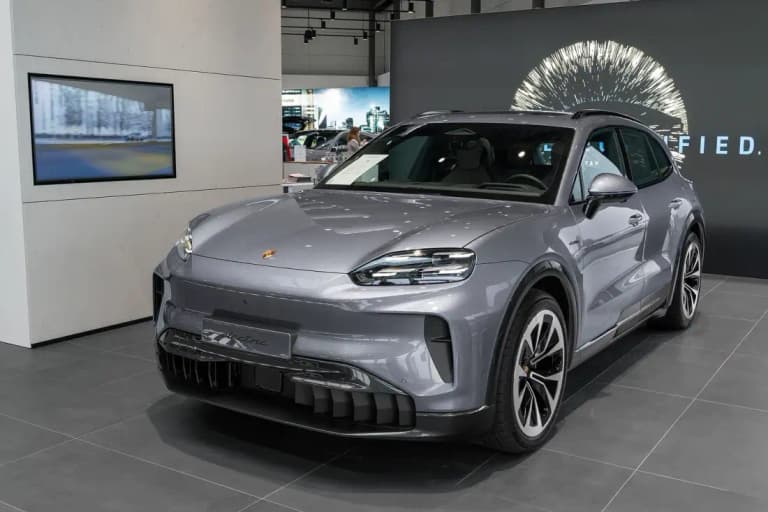
US deliveries were scheduled to begin in the second half of 2026. Production started at the Bratislava plant in early 2026.
Cayenne Electric and Cayenne S Electric
The base Cayenne Electric unlocks 435 hp on Launch Control and hits 60 mph in 4.5 seconds. It starts at $109,000 in the US. On the European WLTP cycle it covers up to 399 miles.
The Cayenne S Electric joined the lineup in March 2026 with a 657 hp peak and a 3.8 second run to 62 mph. US pricing starts at $128,650. It slots neatly between the base car and the Turbo.
Cayenne Turbo Electric Performance
The Cayenne Turbo Electric is the most powerful production Porsche ever made. Its two motors produce 1,139 hp with Launch Control. It reaches 60 mph in 2.4 seconds and tops out at 162 mph.
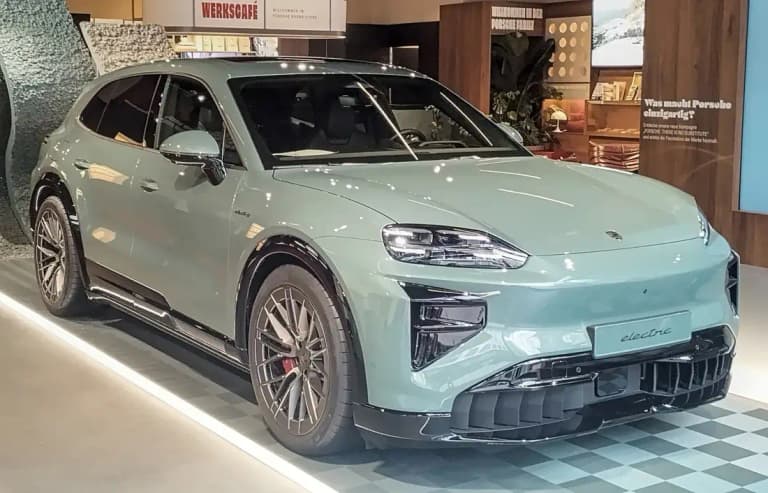
Those are hypercar numbers from a five-seat family SUV. The Turbo starts at $163,000, which reads almost reasonable against the performance. Nothing else in the Porsche lineup accelerates harder.
The 800 Volt Architecture and Charging
Every electric Porsche runs an 800-volt architecture instead of the usual 400 volts. Doubling the voltage moves more power through thinner cables. The system charges faster, weighs less, and holds up better under repeated hard use.
Porsche debuted the tech on the Taycan in 2019, years before most rivals. It remains the biggest practical advantage of Porsche electric vehicles over cheaper EVs.
DC Fast Charging Speeds
DC fast charging is where the 800-volt system shines. Each generation has pushed the peak higher, and charge times keep falling.
| Model | Peak DC | 10-80% |
|---|---|---|
| Taycan | 320 kW | 18 min |
| Macan Electric | 270 kW | 21 min |
| Cayenne Electric | 400 kW | 16 min |
The Cayenne Electric leads the industry here. Charging from 10 to 80 percent in under 16 minutes makes a coffee stop long enough for a road trip top-up. Real speeds depend on the fast charger itself, the battery temperature, and the weather.
Home Charging and Everyday Usability
Most owners rarely touch a public charger. Home charging at up to 11 kW refills any of these cars overnight. A full battery every morning covers a week of normal city driving without planning, and range anxiety fades fast.
Everyday usability is the quiet strength of the electric lineup. There is no oil to change, brake wear drops thanks to regeneration, and preheating or cooling the cabin happens from an app. The electric Cayenne even offers wireless inductive home charging, a first for the brand.
Launch Control and 0-60 mph Times
Acceleration is the party trick of every electric Porsche. The headline outputs are overboost figures, unlocked when you engage Launch Control. The car preloads both motors, then releases everything at once.
How the Electric Motors Deliver Power
Each electric motor delivers its full torque from zero rpm. That instant torque is why a heavy SUV can leave a sports car behind at a stoplight. There is no gearbox pause and no waiting for boost.
Porsche uses permanently excited synchronous motors across the range. They hold their output under repeated launches instead of overheating after two runs. The Taycan adds a two-speed rear transmission for a stronger launch and relaxed highway cruising.
0-60 mph Times Compared
Here is how the key models stack up from a standstill. All times use Launch Control.
| Model | Power | 0-60 mph |
|---|---|---|
| Taycan Turbo GT Weissach | 1,019 hp | 2.1 s |
| Taycan Turbo S | 938 hp | 2.3 s |
| Cayenne Turbo Electric | 1,139 hp | 2.4 s |
| Macan Turbo | 630 hp | 3.1 s |
| Taycan (base) | 402 hp | 4.5 s |
| Macan (base) | 355 hp | 5.4 s |
For context, a Tesla Model S Plaid plays in the same 2.1 second territory. The difference shows at the second and third launch, where the Porsche hardware repeats without fading.
Range and Batteries: EPA vs WLTP
Range numbers confuse more buyers than any other spec. The US EPA range test is strict and close to real-world driving. The European WLTP test is gentler and produces figures roughly 15 to 20 percent higher.
Always compare like with like. A 399 mile WLTP Cayenne and a 332 mile EPA Macan are closer than the raw numbers suggest.
EPA Range Estimates by Model
EPA range estimates for the current lineup run from 252 to 332 miles. The base Macan Electric leads at 332 miles, and the rear-drive Taycan with the big battery manages 318. Performance trims trade range for power, with the Macan 4S at the bottom near 290 miles.
Official EPA estimates for the Cayenne were still pending as this guide went live. Expect low 300s for the base car once they land. Battery range also drops in cold weather and at sustained highway speeds, whatever the sticker says.
Battery Sizes and Warranty
Pack capacity scales with the size of the car. The Taycan carries up to 105 kWh gross with the Performance Battery Plus, the Macan 100 kWh, and the Cayenne 113 kWh. All use lithium-ion packs mounted flat in the floor.
Porsche backs every high-voltage battery with an eight year or 100,000 mile warranty. Packs are engineered to keep the bulk of their capacity across that span. Over-the-air updates keep improving charging behavior after purchase.
Driving Dynamics: Air Suspension and Chassis Tech
Driving dynamics are what separate a Porsche EV from the rest of the electric market. The batteries sit low in the floor, so you get a low center of gravity, below that of the equivalent gas car. Porsche then layers its chassis technology on top, and the handling benefits.
Air Suspension and Active Ride
Air suspension is standard on every Taycan and on the upper Macan and Cayenne trims. It keeps the body flat in corners and comfortable on broken pavement. Adaptive dampers firm up or relax with the drive mode.
The party piece is Porsche Active Ride, an active suspension option on all wheel drive Taycans and the top Cayenne. It counteracts pitch and roll almost completely, so the body stays level under hard braking and cornering. The driving experience feels smaller and lighter than the curb weight suggests.
Interior Tech and the Digital Key
Inside, the SUVs run a curved driver display, a central touchscreen, and an optional passenger screen. The infotainment system is built on Android Automotive with Apple CarPlay on top. An augmented reality head-up display projects navigation arrows onto the road.
The Cayenne Electric introduces a digital key that lives in your phone’s wallet app. You can unlock the car with a phone or watch and share access with family remotely. The Porsche app also handles charging schedules, cabin preconditioning, and locating the car.
Porsche Electric Prices in 2026
Porsche electric pricing spans a huge band. The base Macan Electric at $80,300 is the cheapest way into a new electric Porsche. The Taycan sedan opens at $111,900, and the Cayenne Electric at $109,000.
At the top, the Taycan Turbo GT starts at $233,350, and the Cayenne Turbo Electric at $163,000. The actual selling price usually runs well above base once options land. Wheels, Active Ride, and interior packages add up fast on any build sheet.
None of the current lineup qualifies for the US federal EV tax credit. In Thailand and most of Asia, import duty and local taxes push prices far above US levels. For a wider look at ownership costs, see our guide to what a Porsche actually costs.
The Electric 718 Boxster and Cayman
The next chapter is the electric 718. Gas production of the Boxster and Cayman ended in October 2025, closing out three decades of combustion mid-engine Porsches. Their replacements will be electric sports cars on a new dedicated platform.
The launch has slipped, though. Battery supplier problems pushed the electric 718 back to 2027. Porsche has also confirmed new combustion variants of the fifth generation 718. Prototypes promise a low seating position and a battery stacked behind the seats to mimic a mid-engine balance.
Until deliveries start, treat every 718 EV spec as provisional. Porsche has changed this plan before and may change it again.
From Mission E to Formula E: A Short History
Porsche’s electric story starts earlier than most people think. Ferdinand Porsche designed the Lohner-Porsche in 1900, an electric carriage driven by wheel hub motors. Electric mobility sat in the company’s DNA for a century before the market caught up.
The modern era began with the Mission E concept at the 2015 Frankfurt show. It promised 600 hp, 800-volt charging, and a genuine Porsche shape. Four years later it became the Taycan with most of its design intact.
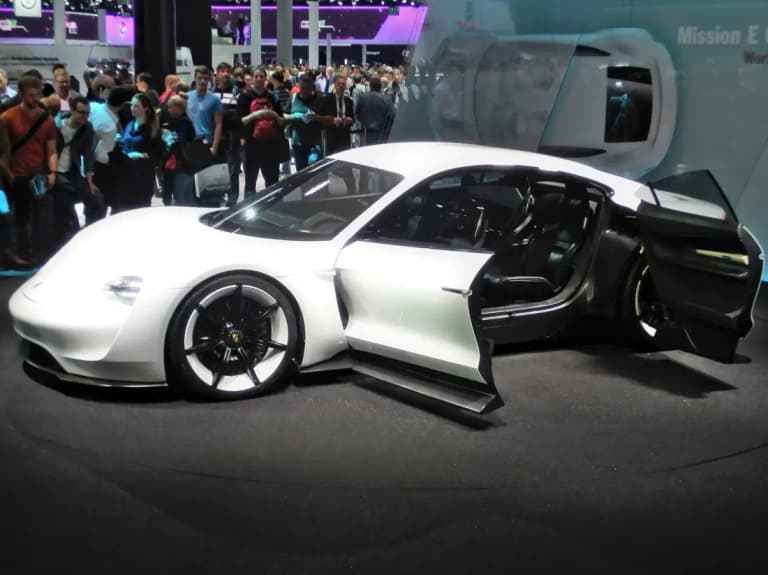
Seen today, the concept reads like a production preview. The four-point headlights, the low nose, and the full-width rear light all made it to the showroom.
The 918 Spyder Hybrid Bridge
Between the concept car era and the Taycan came the hybrid bridge. The 918 Spyder of 2013 paired a V8 with two electric motors for 887 hp. Only 918 units were built.
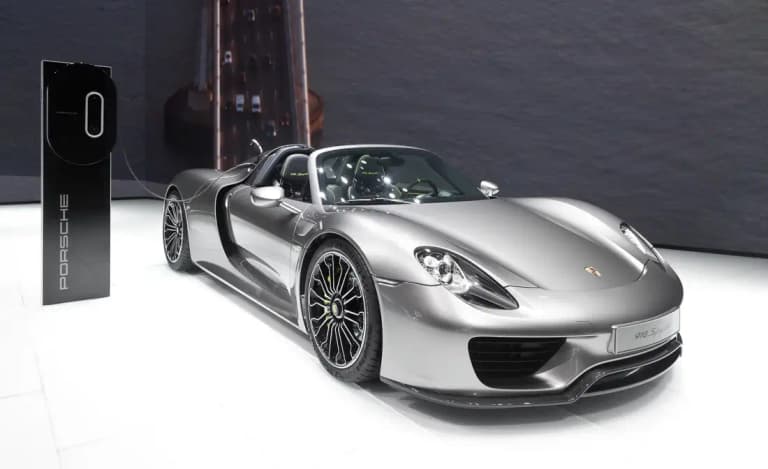
The 918 taught Porsche how electric power sharpens a car rather than dulling it. Its torque-fill trickery previewed everything the Taycan does now. Read our 918 Spyder guide for the full story of that car.
Porsche in Formula E
Porsche also races electric. The factory team entered the Formula E world championship in 2019 with the 99X Electric single-seater. Lessons from race energy management feed straight back into the road cars.
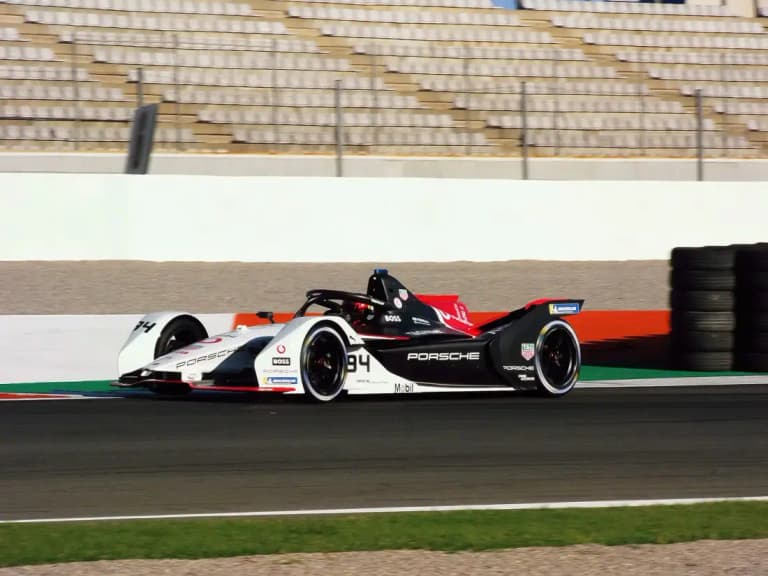
The results came. Pascal Wehrlein won the 2024 Formula E drivers’ world championship for Porsche. The team added the teams’ and manufacturers’ titles the following season.
Choosing the Right Electric Porsche
The right electric Porsche depends on your daily driving. For most buyers the Macan 4 wins: all wheel drive, 324 miles of EPA range, and the full Porsche chassis for $84,000. It is the do-everything choice.
Pick the Taycan if the driving experience comes first. It sits lower, steers quicker, and feels the most like a traditional Porsche sports car. The Cross Turismo version adds the practicality the sedan lacks.
Pick the electric Cayenne if you need the space, the towing ability, and the fastest charging. If the budget stretches well into six figures, go for the extremes. The Taycan Turbo GT and the top Cayenne deliver acceleration the rest of the range cannot touch.
Frequently Asked Questions
Does Porsche make an electric car?
Yes, Porsche builds three electric model lines. The Taycan sports sedan launched in 2019, the Macan Electric SUV arrived in 2024, and the Cayenne Electric was revealed in November 2025. An electric 718 Boxster and Cayman are expected in 2027.
How much does an electric Porsche cost?
US pricing starts at $80,300 for the base Macan Electric. The Taycan sedan starts at $111,900 and the Cayenne Electric at $109,000. The range tops out with the Taycan Turbo GT at $233,350 before options.
How far can an electric Porsche go on one charge?
EPA range runs from 252 miles for a Taycan 4S with the smaller battery to 332 miles for the base Macan Electric. The new Cayenne Electric reaches 399 miles on the gentler European WLTP test.
Will there be an electric Porsche 911?
Not any time soon. Porsche has said the 911 will be the last model to go electric, and it added a hybrid GTS in 2024 instead. Expect the 911 to keep combustion power for as long as regulations allow.
What was Porsche’s first electric car?
The Taycan, launched in 2019, was Porsche’s first series production electric car. The deeper answer is the Lohner-Porsche of 1900, an electric carriage with wheel hub motors designed by Ferdinand Porsche himself.
Images: Hero and Cross Turismo by Alexander-93, CC BY-SA 4.0. Taycan Turbo GT and gray Macan by Damian B Oh, CC BY-SA 4.0. Gold Macan Turbo by JustAnotherCarDesigner, CC0. Cayenne Electric by Alexandre Prevot, CC BY-SA 4.0. Cayenne Turbo Electric and Mission E by Alexander Migl, CC BY-SA 4.0. 918 Spyder by Thomas Wolf (foto-tw.de), CC BY-SA 3.0 DE. 99X Electric by KAgamemnon, CC BY-SA 4.0. Via Wikimedia Commons.