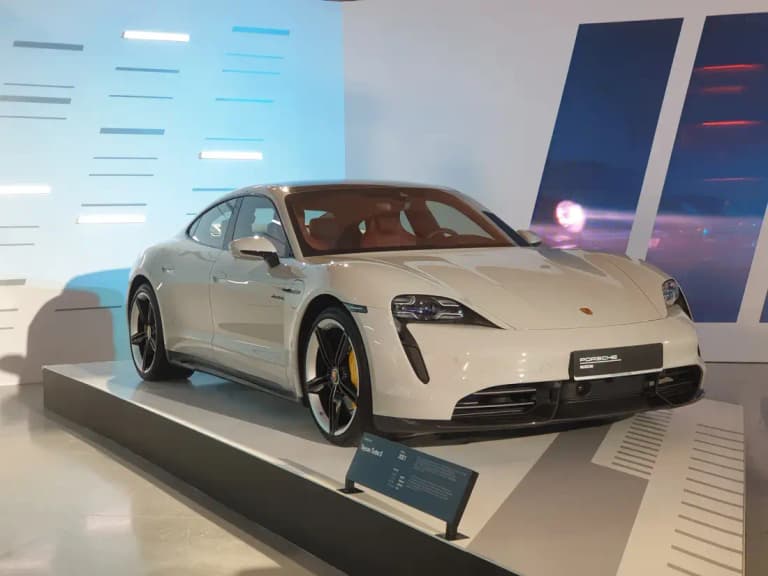
The Porsche Taycan Turbo S is the flagship of the regular Taycan range. It’s a dual-motor, all-wheel-drive electric sedan making up to around 750 hp originally and roughly 938 hp after the 2024 update. The 0-60 mph time is near 2.3 seconds. It sits above the Taycan Turbo and below the new Taycan Turbo GT.
In this article, we’ll profile the Porsche Taycan Turbo S, the flagship of the regular Taycan range. We’ll cover its performance, 2024 update, range and charging, and rivals.
Contents
- 1 Quick Summary
- 2 The Porsche Taycan Turbo S, Explained
- 3 Performance: Power, Launch Control, and 0-60
- 4 The 2024 Update and the Taycan Turbo GT
- 5 Range, Charging, and the 800-Volt System
- 6 Handling: Rear-Axle Steering and Chassis
- 7 Taycan Turbo S Interior and Technology
- 8 Body Styles and Price
- 9 Taycan Turbo S vs the Competition
- 10 Exterior Colors, Options, and Trims
- 11 Taycan Turbo S: The Verdict
- 12 Frequently Asked Questions
Quick Summary
- Power: 616 hp in normal driving, up to 938 hp on launch control after the 2024 update
- 0-60 mph: 2.3 seconds after the 2024 update, down from 2.6 seconds on the original car
- Range: roughly 280 to 290 miles EPA after the 2024 update, up from 200 to 220 miles originally
- Charging: 800-volt architecture, 10 to 80 percent in about 20 minutes on a fast DC charger
- Drivetrain: dual electric motors with permanent all-wheel drive and a two-speed rear gearbox
- Price: starts around $210,000 before options
- Position: sits above the Taycan Turbo and below the newer Taycan Turbo GT
- Body styles: sedan or the wagon-bodied Cross Turismo
The Porsche Taycan Turbo S, Explained
The Porsche Taycan Turbo S is the high-performance flagship of the Porsche Taycan range, the brand’s first fully electric car. The “Turbo” badge is borrowed from Porsche tradition rather than describing forced induction; there is no turbo on an electric motor. Instead it signals the top of the line, the same way Turbo does across the rest of the lineup.
Above the rear-drive base car, the Taycan 4S, and the Taycan Turbo sits the Turbo S: the version with the most power, the strongest brakes, and the most standard kit. Since 2024 it shares the top of the range with the even more extreme Taycan Turbo GT, but for most buyers the Turbo S is the definitive performance Taycan.
The Taycan name means “lively young horse,” a nod to the leaping horse on the Porsche crest, and the Turbo S was the car that proved Porsche could build an EV worthy of the badge. When it launched it reset expectations for how a heavy electric sedan could accelerate, handle, and charge, and it remains the benchmark rivals are measured against.
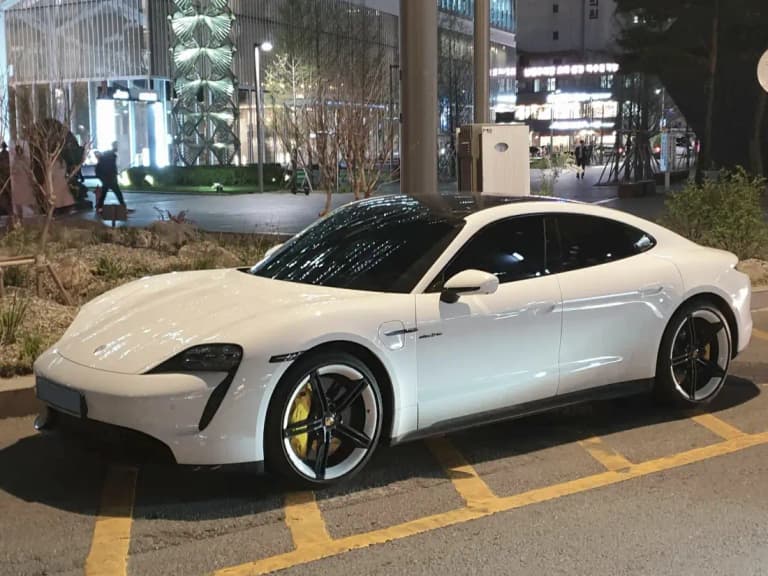
Performance: Power, Launch Control, and 0-60
Straight-line speed is the Taycan Turbo S party trick. The original car made 616 hp in normal driving and up to around 750 hp on launch control overboost, enough for a 0-60 mph time near 2.6 seconds. The 2024 update went further, lifting peak power to roughly 938 hp and cutting 0-60 to about 2.3 seconds. Those are hypercar numbers from a four-door you can charge at home.
What makes the performance usable rather than a party trick is how the Turbo S delivers it. Selectable drive modes sharpen the throttle, suspension, and steering from a relaxed cruise to a hard-edged Sport Plus, and a Sport Response button gives a 20-second burst of maximum attack for overtakes. Unlike many fast EVs, the Turbo S can repeat its launches without dramatically wilting, because Porsche engineered the cooling and the two-speed gearbox to handle sustained hard use. The upshot is a car that is shocking in a straight line yet completely undramatic in traffic. That is exactly the Porsche brief: massive capability you can lean on every day, not just once before the battery gets too hot.
Two Electric Motors and All-Wheel Drive
The Turbo S uses two electric motors, one on each axle, giving it permanent all-wheel drive. The rear motor does most of the work in normal driving, while the front motor adds traction and extra power when you ask for it. That layout is why the Taycan Turbo S launches so hard: all four wheels put the power down at once, with no wheelspin drama.
Launch Control and the Two-Speed Gearbox
Launch control is what unlocks the headline figures. With it engaged, the car briefly overboosts to peak power for a savage standing start. Unusually for an EV, the Taycan Turbo S also has a two-speed gearbox on the rear axle: a short first gear for explosive acceleration and a taller second gear for efficiency and high-speed cruising. Most electric cars use a single fixed gear, so this two-speed setup is part of what gives the Taycan its sustained, repeatable performance rather than a single hard hit.
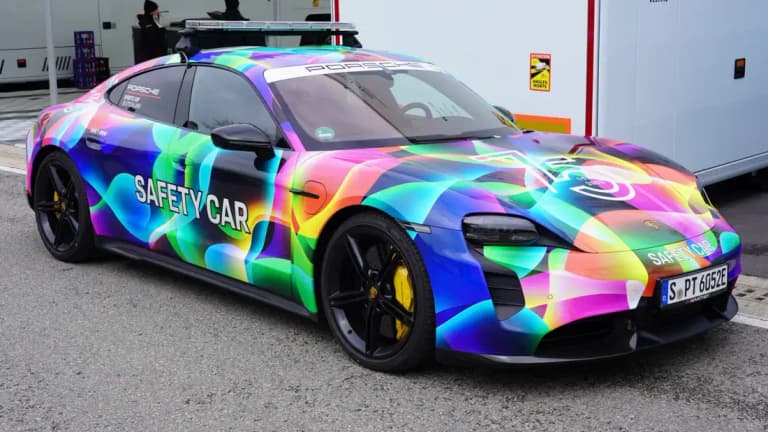
The 2024 Update and the Taycan Turbo GT
The 2024 model-year refresh was a major step. Porsche reworked the motors, battery, and software, lifting power, range, and charging speed across the lineup. The Taycan Turbo S gained a big jump in launch-control power to around 938 hp and shaved meaningful time off its 0-60.
The same update introduced the Taycan Turbo GT, a new flagship above the Turbo S with roughly 1,000-plus horsepower and a track-focused setup that has set production EV lap records. That reshuffles the range: the Turbo GT is the halo car, while the Turbo S remains the fastest Taycan most people will actually live with day to day.
Range, Charging, and the 800-Volt System
Range was the original car’s weak spot, with EPA figures around 200 to 220 miles, partly because performance and big wheels cost efficiency. The 2024 update improved this significantly, with real-world range moving closer to 280 to 290 miles depending on wheels and spec. It still trails some rivals on paper, but the way it charges and drives is the point.
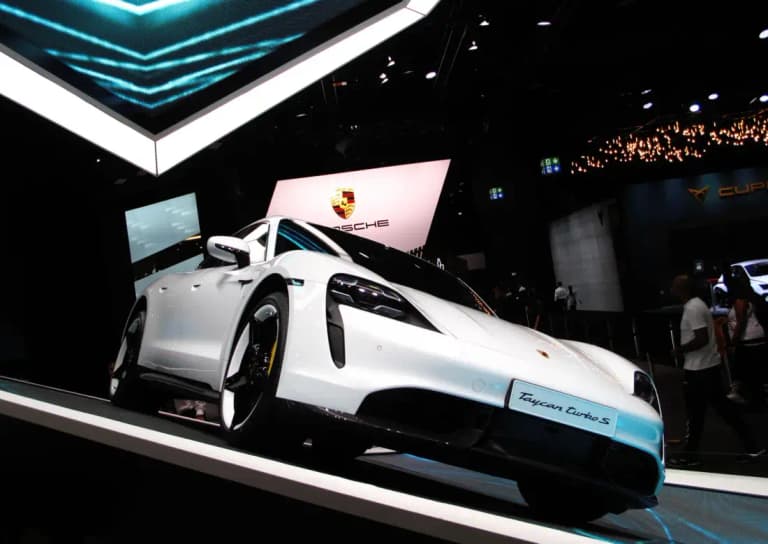
800-Volt Fast Charging
The Taycan was the first production car built on an 800-volt electrical architecture, double the 400 volts most EVs use, and that is its long-trip superpower. On a powerful DC charger it pulls very high charging speeds, taking the battery from roughly 10 to 80 percent in around twenty minutes when conditions are right. That turns a range deficit on paper into a non-issue on a real road trip, because the stops are short.
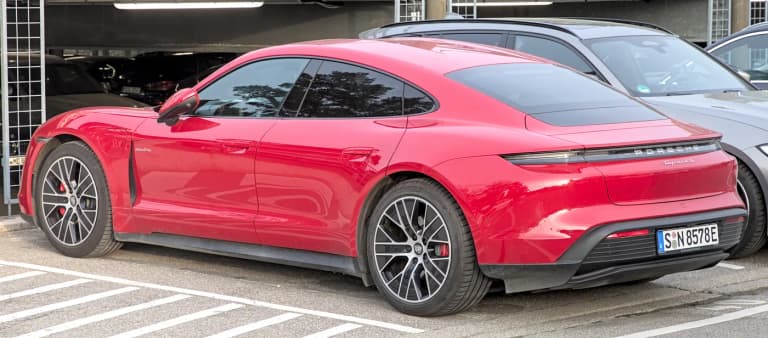
Home Charging and Real Range
For daily use, most owners simply charge at home overnight and start every morning full. Real-world range sits lower than the EPA figure if you use the performance, especially on big wheels in cold weather, so treat the rating as a ceiling. The 2024 update’s efficiency gains made this far less of a worry than on the original car.
Handling: Rear-Axle Steering and Chassis
The Taycan Turbo S is not just a drag racer. The battery sits low in the floor, so the center of gravity is lower than a 911’s, and the car feels planted and agile despite its weight. Standard adaptive air suspension and torque vectoring keep it composed, and rear-axle steering sharpens it further: the rear wheels turn slightly opposite the fronts at low speed for agility, and with them at speed for stability.
The result is a big electric sedan that changes direction like something far smaller. Combined with strong, consistent brakes, the rear-axle steering and chassis tuning are why reviewers consistently rate the Taycan as the EV that drives most like a true sports car. For the gas-and-hybrid take on a Porsche four-door, our Panamera guide covers the alternative.
What surprises most first-time drivers is how the Taycan Turbo S delivers all that power. There is no drama, no noise beyond a synthetic hum, just instant, repeatable shove every time you press the pedal. A gas car of this pace would be shouting at you; the Turbo S simply teleports. The flip side is the weight you feel under hard braking and the way big wheels and winter conditions eat into range, so it rewards a smooth, deliberate driving style as much as an aggressive one.
Taycan Turbo S Interior and Technology
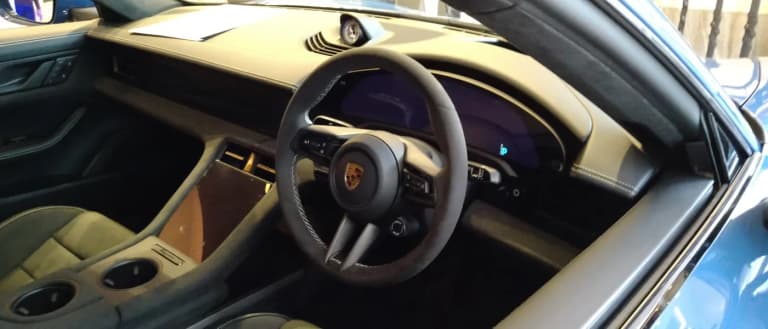
Inside, the Turbo S gets Porsche’s clean, screen-led cabin: a curved digital driver’s display, a central touchscreen, and an optional passenger screen. Standard adaptive sport seats hold you in place, with 18-way buckets available for the keenest drivers, and the materials and build feel every bit a flagship Porsche.
Practicality is better than the low roofline suggests. There is a usable rear seat for two adults, a front trunk for cables, and a rear hatch area, so the Taycan Turbo S works as a genuine daily car. Big standard wheels fill the arches and underline the performance intent without spoiling the ride on the air suspension.
Day to day, the technology is the quiet selling point. You wake up to a full battery if you charge at home overnight, the cabin pre-conditions on a timer, and the 800-volt system means the rare public stops are short. Standard equipment is generous at this price point. Adaptive cruise, a full driver-assistance suite, and Porsche’s connected services are all included. The Turbo S asks for very few extra-cost boxes to feel complete compared with the cheaper Taycan trims.
Body Styles and Price
The Taycan Turbo S comes as the low-slung sedan and as the Cross Turismo, a raised, wagon-bodied version with more rear headroom and a rugged look. Both share the same drivetrain, so the choice is about practicality and style rather than speed.
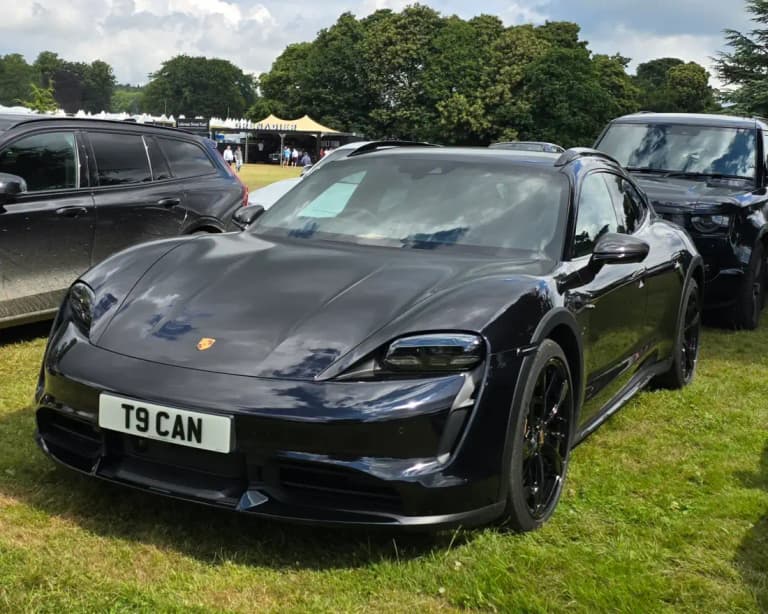
On price, the Taycan Turbo S starts around $210,000 in the US before options, sitting above the Taycan Turbo and below the Turbo GT flagship. Options add up fast at a Porsche dealer, and the Cross Turismo carries a small premium. For where it lands among the brand’s priciest cars, see our most expensive Porsche guide, or compare the gas flagship in our 911 Turbo S guide.
Taycan Turbo S vs the Competition
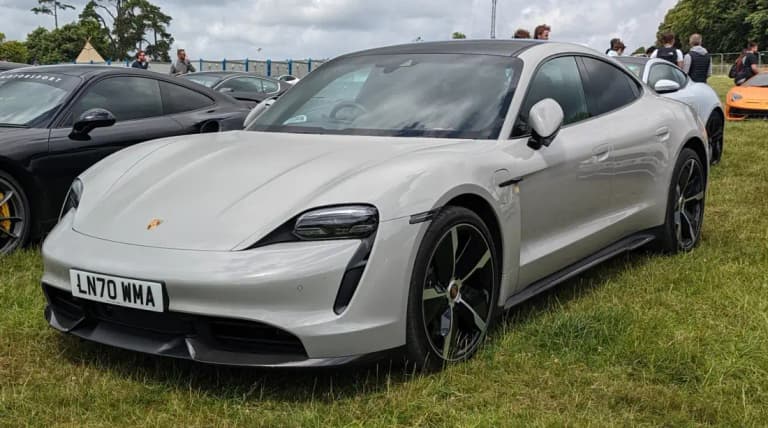
The Taycan Turbo S plays in a small, fierce field of high-performance electric sedans. Here is how it stacks up against the two cars buyers cross-shop most, and against its own gas-powered sibling.
vs Tesla Model S Plaid
The Tesla Model S Plaid is quicker in a straight line, goes notably further on a charge, and costs far less. What the Porsche Taycan Turbo S answers with is everything around the acceleration: build quality, interior materials, seat support, and a chassis that feels engineered rather than just fast. On a back road or a track the Porsche is the driver’s car; the Tesla is the drag racer. If the spec sheet is all that matters, the Plaid wins; if how it drives matters, the Turbo S does.
vs Lucid Air Sapphire
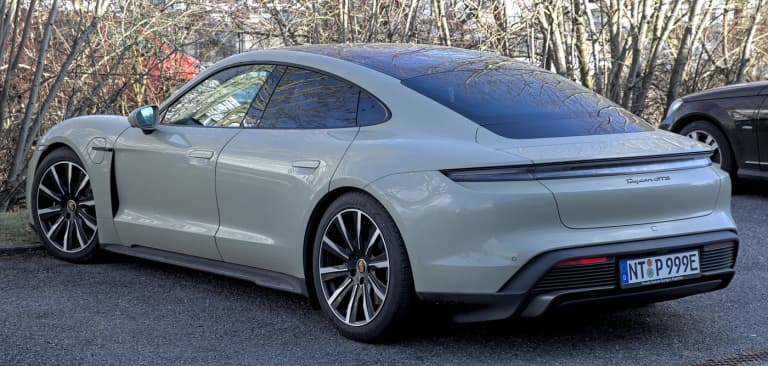
The Lucid Air Sapphire outguns the Taycan on both power and range, with a huge, airy cabin. The Turbo S counters with Porsche’s badge, a real dealer network, proven reliability, and decades of sports-car handling knowledge baked into the rear-axle steering and chassis. Lucid is the technical marvel; Porsche is the known quantity you can service anywhere.
vs the Gas 911 Turbo S
Some buyers cross-shop the electric flagship against the gas 911 Turbo S. They cost similar money and trade blows on pace, but they are different tools. The 911 is a focused two-plus-two sports car with sound and drama. The Taycan Turbo S is a silent four-door that out-accelerates it off the line and seats a family in comfort.
Exterior Colors, Options, and Trims
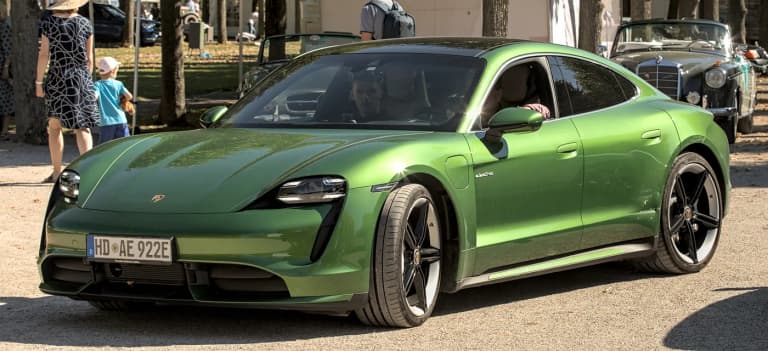
The Turbo S comes loaded, but the Porsche options list still tempts. Popular adds include carbon-ceramic brakes, rear-axle steering (standard on Turbo S), the 18-way adaptive sport seats, Paint to Sample colors, and bigger wheels. Each pushes the price up, and the most aggressive wheels trade a little range for looks, so spec with how you actually drive in mind.
Taycan Turbo S: The Verdict
If you want the quickest, best-driving Taycan you can live with daily and you do not need the Turbo GT’s track focus, the Turbo S is the sweet spot of the range. It is not the cheapest way into a fast EV, and rivals beat it on raw range and value, but nothing else blends this acceleration, this handling, and this build in a four-door. For the right buyer, that combination is exactly what the price buys.
Frequently Asked Questions
How fast is the Porsche Taycan Turbo S?
The original Taycan Turbo S hit 60 mph in about 2.6 seconds using launch control. The 2024 update pushed power to around 938 hp and dropped the 0-60 time to roughly 2.3 seconds, making it one of the quickest-accelerating production cars sold.
What is the difference between the Taycan Turbo and Turbo S?
Both are all-wheel-drive performance Taycans, but the Turbo S sits above the Turbo with more power on launch control, the strongest brakes, and more standard equipment. The Turbo is slightly slower and a bit cheaper.
Is there anything above the Taycan Turbo S?
Yes. The 2024 Taycan Turbo GT now sits above the Turbo S as the top model, with around 1,000-plus horsepower and a track focus. The Turbo S remains the flagship of the everyday Taycan range below it.
Does the Taycan Turbo S have all-wheel drive?
Yes. It uses two electric motors, one on each axle, for permanent all-wheel drive. A two-speed gearbox on the rear axle helps both standing-start acceleration and high-speed efficiency.
What is the range of the Taycan Turbo S?
EPA range on the original car was roughly 200 to 220 miles. The 2024 update improved range notably, closer to 280 to 290 miles depending on wheels and spec, and its 800-volt system allows very fast DC charging.
How much does a Porsche Taycan Turbo S cost?
It starts around $210,000 in the US before options, sitting above the Turbo and below the Turbo GT. Options and the Cross Turismo body style push the price higher.
Images: Taycan Turbo S (Chalk) by Damian B Oh, CC BY-SA 4.0; Taycan Turbo S (White) by Damian B Oh, CC BY-SA 4.0; Taycan Turbo S show car by Rutger van der Maar, CC BY 2.0; Taycan Turbo S Safety Car by MarcelX42, CC BY-SA 4.0; Taycan Turbo S Cross Turismo by Calreyn88, CC BY-SA 4.0; 2020 Taycan Turbo S by Calreyn88, CC BY-SA 4.0; Taycan interior by Aos.1905, CC BY 4.0; Taycan GTS, Taycan 4S, and Taycan Turbo by Alexander-93, CC BY-SA 4.0. Via Wikimedia Commons.