Quick Answer: An air-cooled Porsche uses a fan and engine oil, rather than radiator coolant, to control heat. The classic lineup runs from the 356 through the final 993-generation 911 in 1998. The best first car for most buyers is a documented 911 Carrera 3.2, not the cheapest project.
In this article, we’ll explain air-cooled Porsche models and smart starting points. We’ll cover the 356 and early cars, every air-cooled 911 era, and the inspection work that protects your budget.
Contents
Quick Summary
- Last 911: the 993 ended the air-cooled 911 era in 1998.
- Early start: the 356 put an air-cooled flat-four behind the rear axle.
- Best first 911: a well-documented Carrera 3.2 is the sensible entry point.
- Driving feel: you hear the fan, feel the steering, and manage weight transfer yourself.
- Big risk: cheap cars can hide rust, tired repairs, and incomplete service records.
- Buyer rule: pay for an independent Porsche specialist inspection before money changes hands.
What Makes a Porsche Air-Cooled
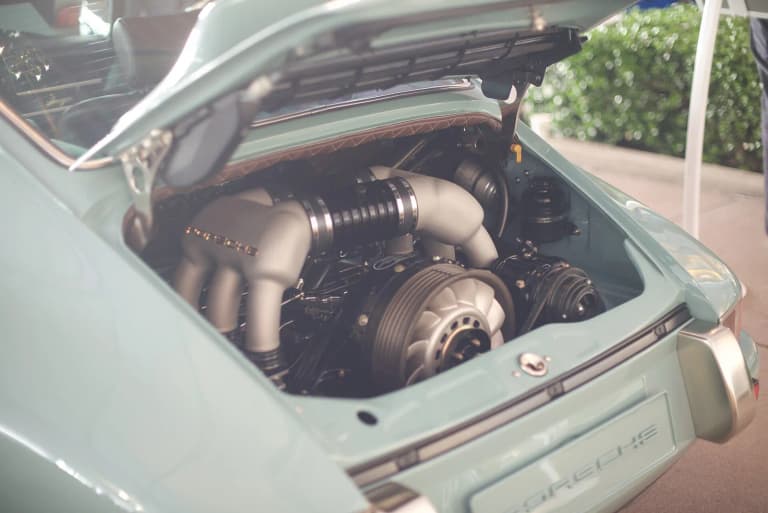
An air-cooled Porsche engine sheds heat through fins on its cylinders and heads. A large belt-driven fan pushes air across them. Engine oil also carries heat away, which is why oil level, oil condition, and the oil-cooling system deserve real attention.
The layout sounds simple because it is. There is no radiator, coolant hose, or water pump. That does not make an old Porsche carefree. It makes service quality more important, especially in hot traffic or during hard use.
Porsche built rear-engined air-cooled road cars for decades. The 356 started the story in 1948. The 911 followed in 1964, and Porsche’s own 60-year history of the 911 traces the car from that launch to the modern era.
Air-Cooled Porsche Models
356 and four-cylinder cars
The 356 is the first production Porsche and uses an air-cooled flat-four. It is small, light, and now firmly a classic. Read our Porsche 356 guide for the pre-A, A, B, and C breakdown.
The 912 paired the early 911 body with a 356-derived four-cylinder engine. The mid-engined 914 also used air-cooled four-cylinder power in its common forms. Both can be rewarding, but neither is a shortcut around inspecting rust and past repairs.
The air-cooled 911 family
The big family is the 911. Every regular 911 from the original car through the 993 used an air-cooled flat-six. Porsche changed displacement, injection, body shape, and suspension, but kept the basic rear-engine formula until the water-cooled 996 arrived for 1999.
The Air-Cooled 911 Generations
Original and long-hood 911, 1964 to 1973: These are the slim early cars with light weight and a direct feel. They are valuable, and correct details can be expensive. A cheap example often turns into a restoration invoice.
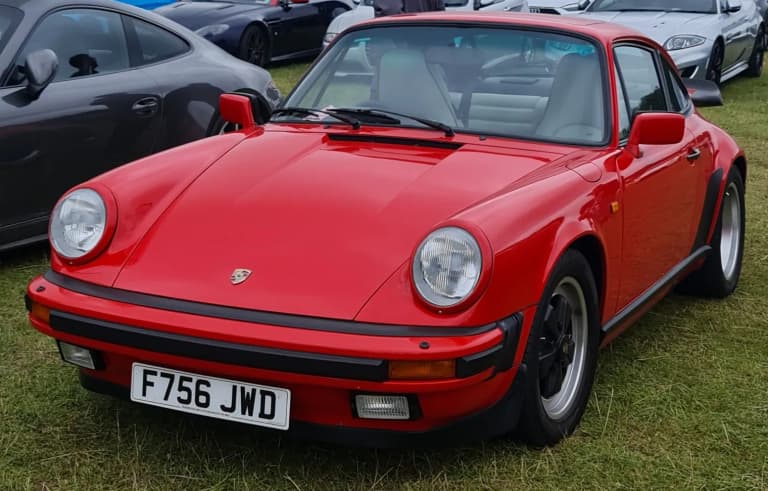
G-series, 1974 to 1989: The impact-bumper era is the practical old-school 911. Later Carrera 3.2 cars brought Bosch Motronic engine management and the G50 gearbox arrived for 1987 in many markets. This is where many first-time buyers should look.
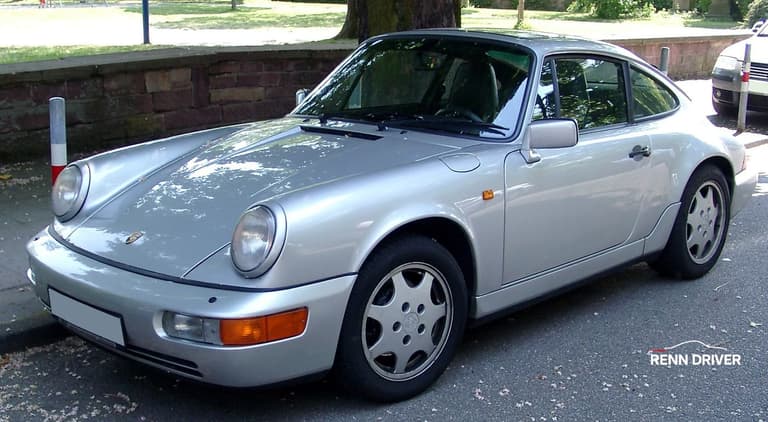
964, 1989 to 1994: The 964 looks classic but added major changes, including coil springs and available all-wheel drive. It feels more modern than a G-series car while keeping the old engine and body proportions. See our 964 guide.
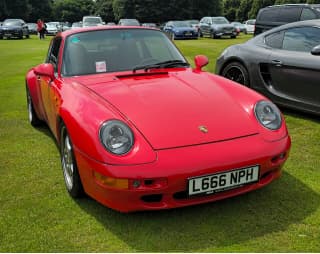
993, 1994 to 1998: The 993 is the final air-cooled 911. It has a more refined chassis and a redesigned rear suspension. That last-of-the-line status gives it a strong following. Our 993 guide explains the range in more detail.
What They Feel Like to Drive
An air-cooled Porsche gives you more mechanical noise than a modern car. You hear the fan, valvetrain, and flat-six pulse. The steering and pedals ask for deliberate inputs. That is the appeal, but it also means a worn example can feel loose and tiring instead of charming.
The rear engine puts weight over the driven wheels. Learn to brake in a straight line, turn cleanly, and get back on the throttle smoothly. A healthy car feels alive on a normal road. It does not need a giant highway pull to make the trip good.
For the other side of the divide, read our air-cooled versus water-cooled 911 comparison. The newer cars are easier daily drivers. The older cars make you part of the process.
Choosing an Air-Cooled Porsche
Buy a Carrera 3.2 if you want a usable first air-cooled 911. It has classic lines, usable power, and broad specialist knowledge. A car with records beats a prettier car with a vague story.
Buy a 964 if you want more comfort and a more modern chassis. It is still an air-cooled 911, but it feels less primitive on a long drive.
Buy a 993 if the final air-cooled 911 is the whole point. It is not automatically the best value. The condition and history still decide the deal.
Buy a 356 or early 911 only when you want the older-car experience and have a specialist close by. These are not cars to choose from an online listing and a hopeful phone call.
What to Inspect Before Buying
Start with a pre-purchase inspection from a Porsche specialist. Ask for compression and leak-down results where appropriate, a check for oil leaks, an underbody inspection, and a review of service records. Check that chassis and engine numbers match the car’s paperwork when originality is part of the price.
Rust can be more expensive than an engine repair. Inspect the battery area, floors, suspension mounting points, windshield surrounds, and the lower body. A clean paint finish does not prove clean metal underneath.
On the road, make sure the gearbox shifts cleanly when warm, the clutch behaves properly, and the car tracks straight under braking. Test every electrical item. The right seller will let the inspector work. The wrong seller saves you time by refusing.
Frequently Asked Questions
What was the last air-cooled Porsche?
The last regular-production air-cooled Porsche 911 was the 993, built through 1998. The 1999 996 replaced it with a water-cooled flat-six.
Which Porsche production cars are air-cooled?
The Porsche 356, 912, 914, and 911 through the 993 are air-cooled production road cars. The 911 remained air-cooled from 1964 through the final 993 generation in 1998.
Are air-cooled Porsches reliable?
Yes, air-cooled Porsches can be reliable with specialist servicing and a thorough inspection before purchase. Age, previous repairs, oil leaks, and corrosion are bigger concerns than mileage alone.
What is the best air-cooled Porsche to buy?
A Carrera 3.2 is a strong first air-cooled Porsche, with classic feel, a developed engine, and a better gearbox. Buy the best documented car you can afford.
Why are air-cooled Porsches expensive?
Air-cooled Porsches have a limited supply, a distinct driving feel, and strong collector demand. Condition, originality, body style, and service history can change the price dramatically.
Images: Porsche 964 front by Rudolf Stricker, CC BY-SA 3.0. 1988 Porsche 911 Carrera 3.2 Coupe Sport by MrWalkr, CC BY-SA 4.0. Air-cooled Porsche flat-six by steve lyon from yosemite, ca, usa, CC BY-SA 2.0. Via Wikimedia Commons.