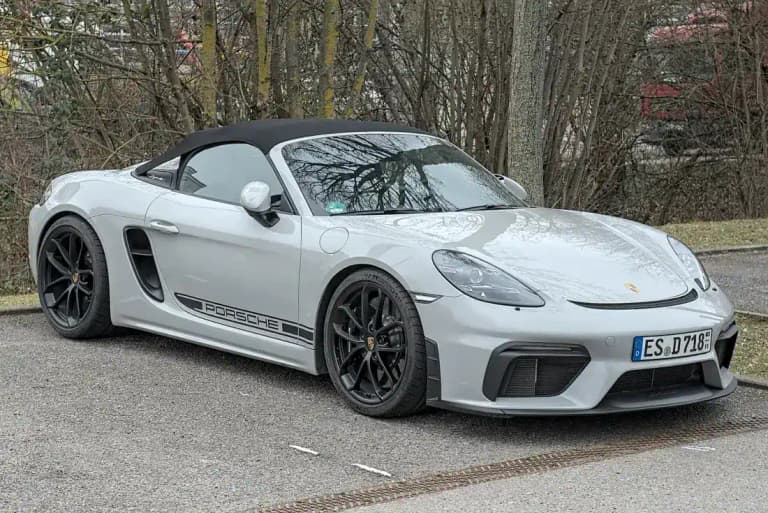
The Porsche 718 Spyder is the open top flagship of the 718 Boxster range, built from 2019 to 2025. It pairs a 414 hp naturally aspirated 4.0 liter flat six with the chassis of the Cayman GT4. The 493 hp Spyder RS of 2023 added the 911 GT3 engine and sent the combustion 718 out on a high.
In this article, we’ll explain the Porsche 718 Spyder, the open-top flagship of the 718 range. We’ll cover flat six, Spyder RS, performance, and prices.
Contents
- 1 Quick Summary
- 2 The 718 Spyder Story: An Open Top GT4 for the Road
- 3 The High Revving 4.0 Liter Flat Six
- 4 Chassis and Brakes From the 718 Cayman GT4
- 5 The Manual Roof and the Spyder Rear Deck
- 6 718 Spyder Performance: 0-60, Top Speed, and Sound
- 7 718 Spyder RS: The GT3 Engine Sendoff
- 8 718 Spyder vs 718 Cayman GT4
- 9 718 Spyder vs the Regular 718 Boxster
- 10 Porsche 718 Spyder Prices: New and Used
- 11 Spyder Heritage: The 550, the 718 RSK, and the Boxster Spyders
- 12 Buying a 718 Spyder and What Comes Next
- 13 Frequently Asked Questions
Quick Summary
- Production years: built from 2019 to October 2025, the last combustion 718
- Engine: naturally aspirated 4.0 liter flat six making 414 hp, revving to 8,000 rpm
- Gearbox: six speed manual standard, seven speed PDK optional from the 2021 model year
- Chassis: shares GT suspension, brakes, and wheels with the 718 Cayman GT4
- Performance: 0-60 mph in 4.2 seconds (3.7 with PDK), top speed 187 mph
- Spyder RS: the 2023 update with the 911 GT3 engine, 493 hp, a 3.2 second 0-60, and 191 mph top speed
- Launch prices: $96,300 for the Spyder, $160,700 for the Spyder RS
- Used prices in 2026: roughly $115,000 to $150,000 for the Spyder, near $200,000 for the Spyder RS
The 718 Spyder Story: An Open Top GT4 for the Road
Porsche revealed the 718 Spyder in June 2019, side by side with the 718 Cayman GT4. The two cars are mechanical twins. One is a coupe with a big wing, the other a roadster with a low black soft top.
That launch fixed the old Spyder compromise. Earlier open Spyders made do with upgraded standard hardware, while the coupe got the serious parts. For the first time, the open car received the full GT chassis and the same engine as its coupe twin.
Where the Spyder Sits in the 718 Range
The regular Porsche Boxster range covers the base car, the S, the GTS, and the T. The 718 Spyder sits above all of them as the flagship roadster. It costs more, revs higher, and sits lower than any other open 718.
Porsche’s GT division in Flacht developed the Spyder alongside its racing programs. That pedigree separates it from every Boxster below it. It is a GT car first and a convertible second.
Built From 2019 to October 2025
US deliveries of the 718 Spyder began in spring 2020. The PDK gearbox arrived for 2021, and the Spyder RS landed for 2024. Production of the combustion 718 ended in October 2025, closing out the model line.
That end date frames the whole story. The 718 Spyder is the last combustion roadster of its kind from Porsche. Nothing with this engine layout follows it.
The High Revving 4.0 Liter Flat Six
The engine defines the 718 Spyder. While every other Boxster of the era used a turbocharged four cylinder, the Spyder got a naturally aspirated 4.0 liter flat six. It was developed specifically for the Spyder and the GT4.
Engine Specs and the 8,000 rpm Redline
The six produces 414 hp and 309 lb ft of torque, and it revs to 8,000 rpm. Response is immediate because there is no turbo lag. Power builds all the way to the top of the tach.
It is clever as well as loud. It shuts down one bank of cylinders under light load to save fuel. A dedicated sport exhaust gives the flat six a hard, clean sound that turbo engines cannot match.
Manual and PDK Gearbox Options by Year
The 718 Spyder launched with a six speed manual as the only gearbox. For the 2021 model year, Porsche added the seven speed PDK as an option. The PDK car is quicker, and it also gained a stronger locking rear differential.
Most buyers still chose the manual, and the used market pays more for it. If you want help picking, our PDK vs manual guide breaks down the trade. For a car like this, the shift lever is part of the appeal.
Chassis and Brakes From the 718 Cayman GT4
Underneath, the Spyder runs GT4 hardware wholesale. Porsche carried over the complete GT suspension, inspired by the 911 GT3 and proven in racing. That single decision turned the open 718 into a genuine track car.
GT Suspension and Ride Height
The body sits about 1.2 inches lower than a standard Boxster. PASM adaptive dampers firm up or relax at the press of a button. Ball joints replace rubber bushings at key points, so the front end reacts the moment you steer.
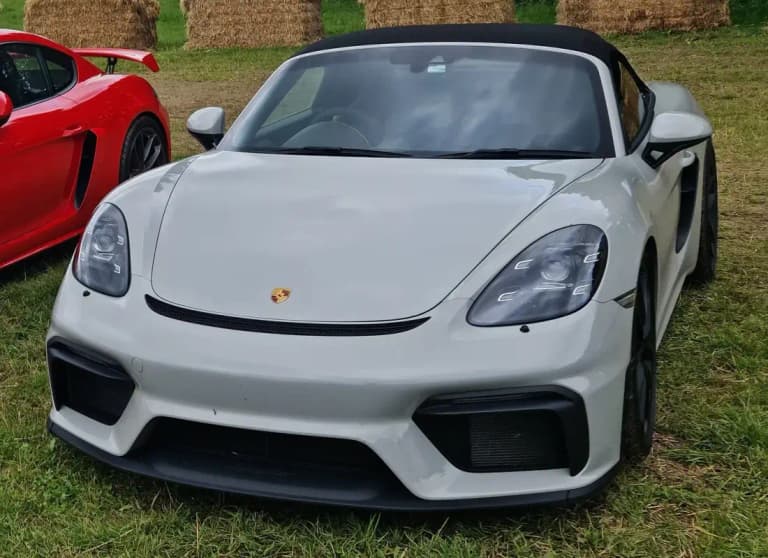
Porsche Torque Vectoring and a mechanical limited slip differential manage traction out of corners. The steering is among the best fitted to any modern Porsche. The whole car feels tied down without punishing you on a rough road.
Brakes, Wheels, and Tires
The brakes come straight from the GT4, with large steel rotors and six piston front calipers. Carbon ceramic brakes were available as an option for track regulars. Neither setup fades in normal fast road driving.
The car runs 20 inch wheels with genuine sports tires developed for the GT program. Grip is enormous for a roadster of this weight. They need temperature to work, so cold mornings ask for patience.
The Manual Roof and the Spyder Rear Deck
The roof is the Spyder’s signature feature. It is a lightweight manual soft top, not the powered unit from the regular Boxster. You unlatch it, fold it by hand, and clip the rear deck back down. The job takes a couple of minutes.
Porsche made the top light to save weight where it counts, high up in the car. The trade is a little more wind noise on the highway. With the top stowed, nothing above your shoulders interrupts the engine sound.
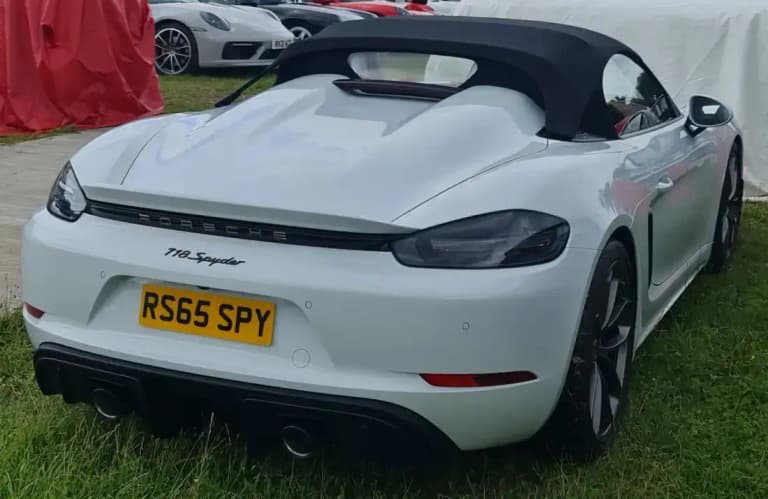
The rear deck carries two humps behind the seats, a nod to classic Porsche racing roadsters. A small spoiler lip rises from the tail, and a functional rear diffuser works underneath. No other open Boxster body got that piece of aero.
718 Spyder Performance: 0-60, Top Speed, and Sound
The manual 718 Spyder hits 60 mph in 4.2 seconds and runs on to 187 mph. The PDK car cuts the sprint to 3.7 seconds. Curb weight sits around 3,200 lb, light by modern sports car standards.
Raw numbers undersell it. The Spyder’s pace comes from momentum, grip, and a power band you have to work. You chase the redline through third gear with the roof down, and the noise arrives unfiltered.
On track it behaves like the GT4 with more weather. The chassis stays flat, the brakes repeat lap after lap, and the balance rewards clean inputs. Few cars at any price connect driver and road this directly.
718 Spyder RS: The GT3 Engine Sendoff
In 2023 Porsche gave the roadster one final upgrade. The 718 Spyder RS took the engine from the 911 GT3 and dropped it behind the seats. It was the first time that motor appeared in an open mid engine Porsche.
Spyder RS Engine and Performance
The RS engine makes 493 hp and 331 lb ft, and it revs to 9,000 rpm. A short ratio seven speed PDK is the only gearbox. The run to 60 mph takes 3.2 seconds, and top speed is 191 mph.
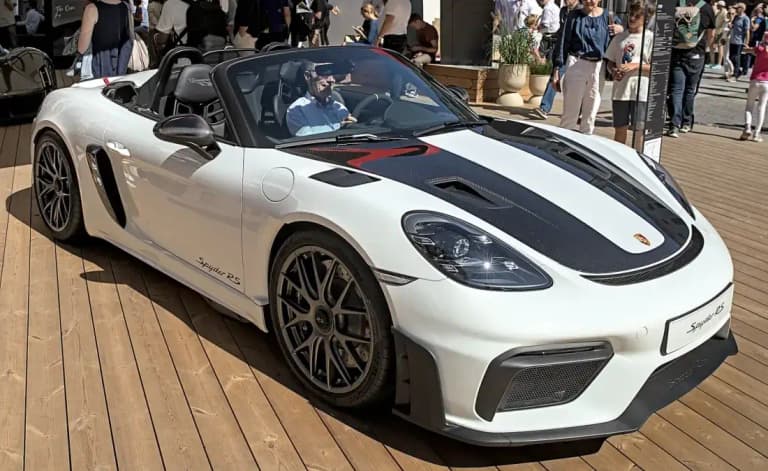
Air intakes sit right behind your head, where the small rear windows would be. Owners describe the induction noise as the loudest thing Porsche sells. The 79 hp jump over the standard Spyder is obvious everywhere past 5,000 rpm.
Spyder RS Weight, Aero, and Price
The RS weighs 59 lb less than a PDK Spyder. Its single layer soft top weighs just over 40 lb, more than 16 lb lighter than the standard roof. A carbon fiber hood with an air outlet and NACA brake cooling ducts handles airflow up front.
At the back sits a prominent ducktail spoiler, larger than the standard car’s lip. The chassis drops 30 millimeters with sport tuned PASM. Porsche listed the Spyder RS at $160,700, and the Weissach package added magnesium wheels and extra carbon.
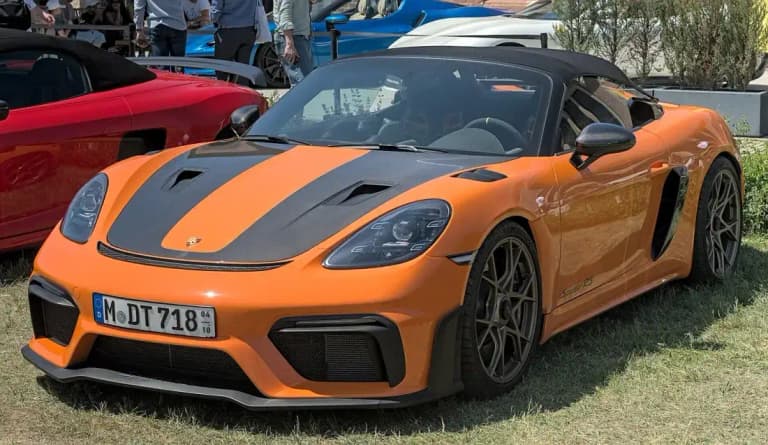
The RS is the collector piece of the pair. It combines the GT3 engine, the open body, and the final year of production. Values reflect exactly that combination.
718 Spyder vs 718 Cayman GT4
The Spyder and the GT4 share their engine, gearboxes, suspension, and brakes. Choosing between them comes down to body style and intent. The coupe is stiffer and carries a fixed wing with real downforce, so it is the sharper track tool.
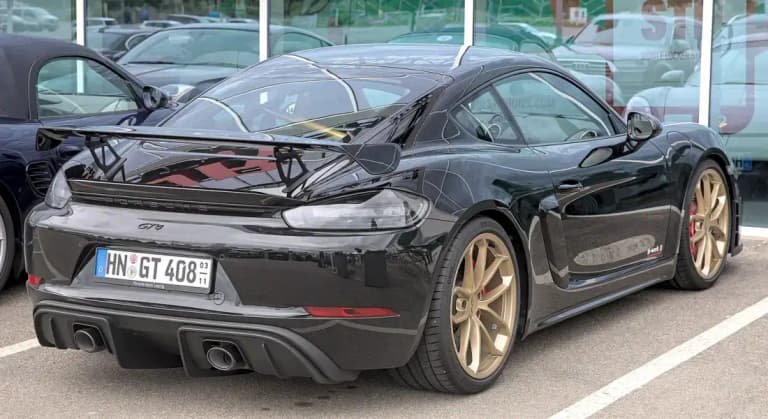
The Spyder answers a different question. It trades a little aero for open air and the full engine sound. Lap times favor the coupe, while road drives favor the roadster. The same logic runs through our wider Cayman vs Boxster comparison.
718 Spyder vs the Regular 718 Boxster
A base 718 Boxster is a brilliant sports car, but the Spyder plays a different game. The standard car uses a 2.0 liter turbo four with 300 hp. Above it, the GTS 4.0 gets a softer 394 hp version of the six, with comfort focused suspension.
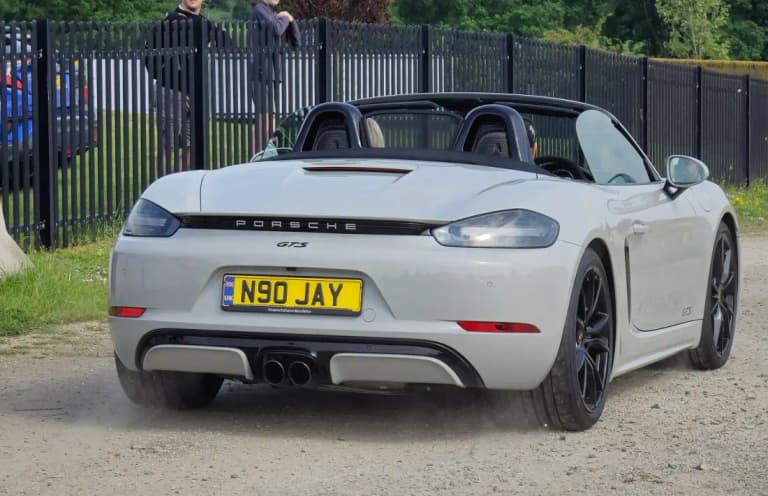
The Spyder adds the GT chassis, the ride height drop, the aero, and the full 414 hp engine. It also swaps the powered roof for the manual top. The result is louder, firmer, and far more focused than any regular Boxster.
Buyers who want a daily convertible should look at the GTS 4.0 instead. The Spyder asks for commitment and pays it back on the right road. That is the tradeoff, and it has always been true of Spyder Porsches.
Porsche 718 Spyder Prices: New and Used
Porsche 718 Spyder pricing started reasonable and has stayed strong. Depreciation barely touched this car. Here is how the money works in 2026.
Original MSRP and Key Options
The 718 Spyder launched at $96,300 in the US before options. Carbon ceramic brakes, bucket seats, and front axle lift pushed many builds past $110,000. The Spyder RS opened at $160,700, and Weissach cars went well beyond that.
Options move used values today. Buckets, ceramics, and rare paint colors all add real money on resale. For context on the wider range, see our guide to what a Porsche actually costs.
The Used Market in 2026
Most standard 718 Spyders for sale list between roughly $115,000 and $150,000, depending on miles, gearbox, and options. Manual cars command a premium over PDK. Low mileage examples sit close to or above their original sticker.
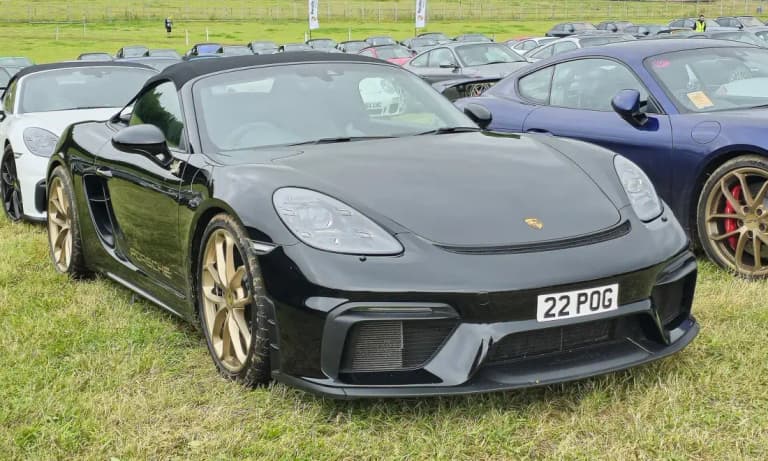
The Spyder RS market runs higher. Clean cars list around $200,000, comfortably above MSRP. The end of production put a floor under both models, and sale prices have held firm since.
Spyder Heritage: The 550, the 718 RSK, and the Boxster Spyders
The Spyder name carries real weight at Porsche. It marks the company’s open racing cars and the road cars that honor them. The 718 Spyder wears both halves of that history in its name.
The Race Cars That Named It
It starts with the 550 Spyder of 1953, Porsche’s first purpose built race car. Low, light, and mid engined, it beat far more powerful machinery. James Dean made it famous, and racing made it respected.
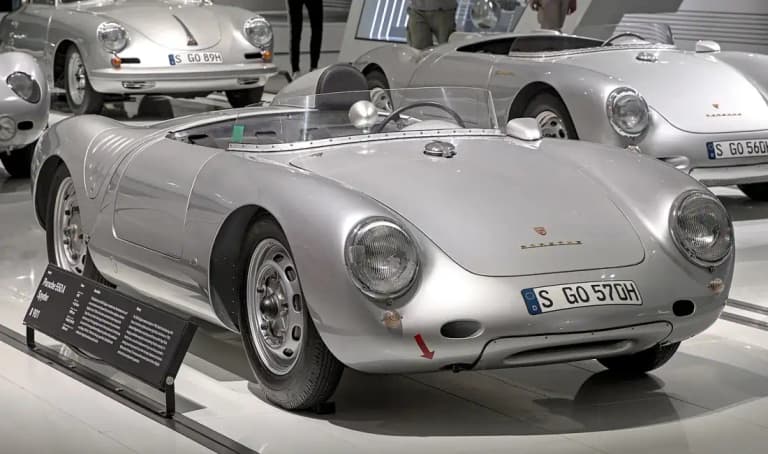
The 718 RSK followed in 1957 as its direct evolution. It took outright wins at the Targa Florio and kept Porsche competitive against bigger engined rivals. On the road side, Porsche’s four cylinder tradition carried on in the 912 of the 1960s.
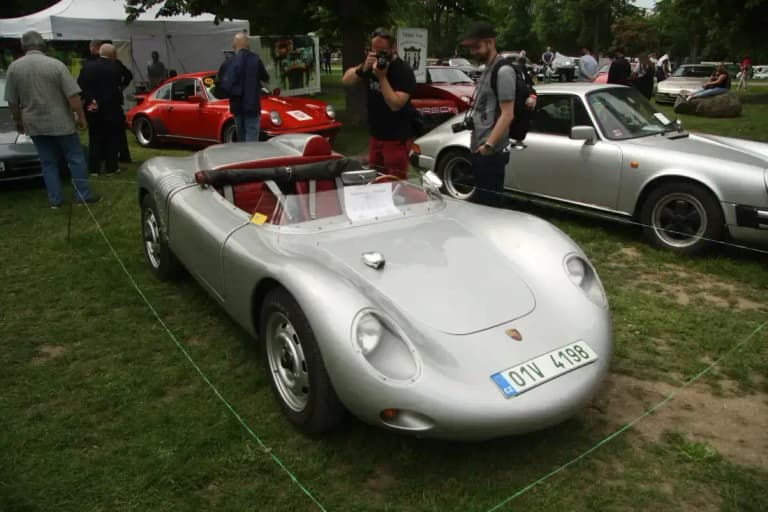
That race car is where the 718 badge comes from. When Porsche renamed the Boxster line in 2016, it reached back to these Spyders. The modern 718 Spyder is the most literal heir to that name.
Boxster Spyder 987 and 981
The modern Spyder line began with the 987 Boxster Spyder of 2010. It was the lightest Porsche on sale at the time, with a low manual top and aluminum doors. The 981 Boxster Spyder followed in 2015 with a 375 hp 3.8 liter six.
See our Porsche 987 guide and Porsche 981 generation guide for how the Spyder fits each generation’s lineup.
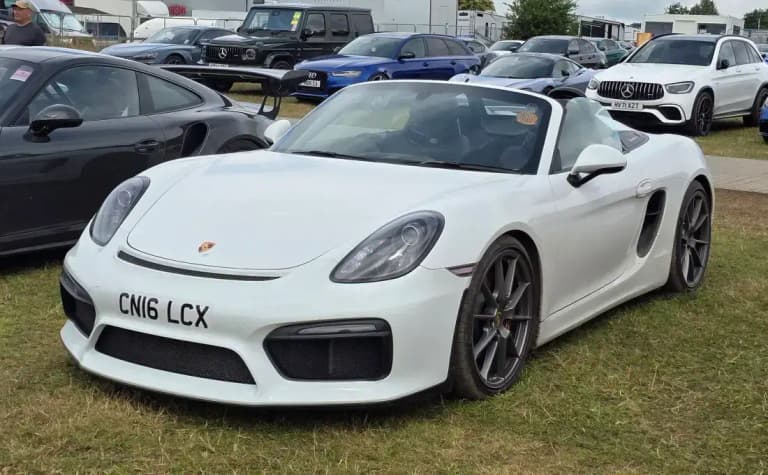
Both earlier cars kept standard suspension underneath. The 982 generation 718 Spyder broke that pattern by taking the GT4 hardware complete. That is why it stands as the peak of the line.
Buying a 718 Spyder and What Comes Next
Buying advice is simple: buy the spec, not the year. The big six proved reliable, and the cars are too new for major age issues. Check the service history and the listing photos for curbed wheels and tired tires.
A manual car with buckets and ceramics is the collector spec. A PDK car is the value play and no less capable. Either way, insist on a clean history, because these cars get driven hard.
The future makes the case stronger. The next 718 generation goes electric, expected around 2027. A high revving, naturally aspirated roadster with a manual gearbox will never come from Porsche again. The 718 Spyder already reads like a future classic, and the market agrees.
If you are still weighing the mid engine cars against the classic silhouette, our 718 vs 911 comparison settles that question. For pure driving per dollar, the Spyder is very hard to beat.
Frequently Asked Questions
Is the Porsche 718 Spyder the same as a Boxster?
The 718 Spyder is the flagship version of the Boxster body, but it is a different car underneath. It uses the chassis and brakes of the GT4 coupe and a naturally aspirated 4.0 liter flat six. Regular Boxsters of the era use turbocharged four cylinder engines.
How much is a Porsche 718 Spyder?
The 718 Spyder started at $96,300 when it launched in the US. On the used market most cars now list between roughly $115,000 and $150,000. The Spyder RS carried a $160,700 MSRP, and clean examples list around $200,000.
Does the 718 Spyder have the GT3 engine?
The standard 718 Spyder does not. Its 414 hp 4.0 liter flat six is a different unit that revs to 8,000 rpm. The 718 Spyder RS of 2023 does use the 911 GT3 engine, tuned to 493 hp with a 9,000 rpm redline.
Is the Porsche 718 Spyder manual or automatic?
The 718 Spyder launched in 2019 with a six speed manual only. Porsche added the seven speed PDK for the 2021 model year, cutting the 0-60 time to 3.7 seconds. The Spyder RS is PDK only.
Will the Porsche 718 Spyder go up in value?
The signs point that way. Production ended in October 2025, the next 718 generation goes electric, and the Spyder pairs a naturally aspirated six with a manual gearbox. Used prices have stayed strong, with many cars listing near their original sticker.
Images: Hero, white Spyder RS, orange Spyder RS, Cayman GT4, and 550 Spyder by Alexander Migl, CC BY-SA 4.0. Spyder rear view and Spyder front view by MrWalkr, CC BY-SA 4.0. 718 RSK by Jiří Sedláček, CC BY-SA 4.0. Black Spyder, Boxster GTS, and 981 Boxster Spyder by Calreyn88, CC BY-SA 4.0. Via Wikimedia Commons.