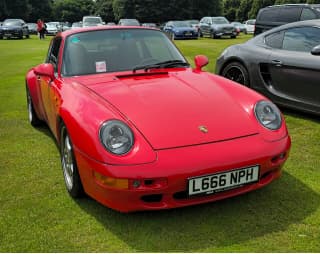
Quick Answer: A well-maintained Cayman is usually a solid car, but the weak spots depend on the generation. Early 987.1s deserve the most caution for bore scoring, oil leaks, and, on some cars, IMS bearing trouble. Across the range, also check the air-oil separator, cooling system, suspension, and gearbox.
If you’re shopping for one, have a Porsche specialist inspect the exact generation rather than working from a generic Cayman checklist.
In this article, we’ll explain the common problems found across the Porsche Cayman generations. We’ll cover engine risks, recall checks, common wear items, and pre-purchase inspections.
Contents
Quick Summary
- 987.1 Concern: Scored cylinder bores and the intermediate-shaft (IMS) bearing need a specialist conversation; give an independent Porsche specialist the VIN and prior work invoices
- 987.2 Concern: The 9A1 engine family replaces the earlier M96/M97 design; verify the powertrain and gearbox against the build sheet
- 981 Concern: Certain 2014-15 Cayman/Cayman S and 2015 GTS cars fall under NHTSA campaign 21V679 for rear-axle carrier side sections
- 718 Concern: Base and S cars use turbo flat-fours while GTS 4.0 and GT4 models use flat-sixes; confirm the exact engine and trim, then run the VIN
- Common Wear Items: Oil leaks, a failing air oil separator, a worn water-pump bearing, and worn spark plugs or coils show up across generations
- Buyer Action: Run the VIN through the NHTSA recall lookup and require a written independent Porsche-specialist pre-purchase inspection
What Counts as a Common Problem
A credible list of Porsche Cayman common problems names a defined model, a supported defect, and a buyer action. A safety recall identifies a precise defect and remedy. Treat broad seller claims and internet model-year blacklists as leads to verify, not as evidence about a specific car.
The PcarWise Porsche Cayman index and CM Autohaus 718 guide provide a practical symptom checklist.
- Oil leaks: the rear main seal, valve-cover seals, spark-plug tube seals, and oil-cooler seals are possible sources. Oil in a plug tube can contribute to misfires.
- Air oil separator: a failing AOS can pull oil into the intake, which CM Autohaus links with oil burning, misfires, and a check engine light.
- Cooling: a worn water-pump bearing or a degraded impeller can cause coolant loss and overheating.
- Ignition: worn spark plugs or cracked coils are possible causes of a misfire.
- Manual linkage: a worn shifter cable can leave the lever loose or gear changes inconsistent.
- Cabin: the 718 guide lists sagging headliners and loose or fading trim, especially in hot or humid conditions.
Use these as inspection clues, not predictions about a specific car.
Porsche Cayman Common Problems by Generation
Reliability tracks powertrain architecture more than the calendar year. The boundaries below mark where each era sits and the question each one raises.
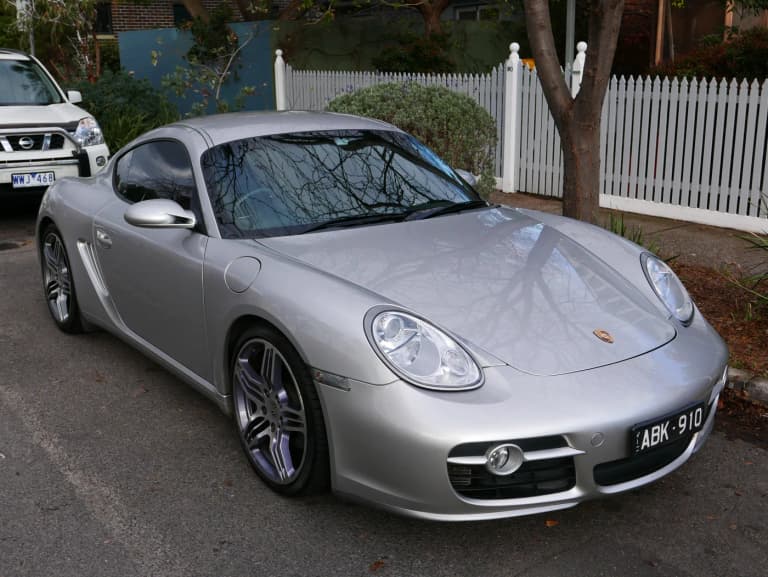
987.1 Porsche Cayman Problems: M96/M97 Engines
The 987.1 uses Porsche’s M96 or M97 flat-six architecture, and our Porsche 987 generation guide covers how it differs from the later 987.2. The Porsche Club of America’s bore-scoring series documents cylinder bore scoring as a diagnostic concern on affected water-cooled Porsche engines. It lists rising oil use, soot, and noise among the clues that justify diagnosis. Those clues are not proof that a particular engine is damaged.
These engines also use a shaft that drives the camshaft timing chains, and its bearing can fail and damage the engine; the Porsche IMS bearing guide explains the mechanism. Give the specialist the VIN, powertrain and gearbox details, invoices, and evidence of prior engine work, then ask whether a borescope examination is appropriate. It can describe current cylinder-wall condition. It cannot guarantee future mechanical condition.
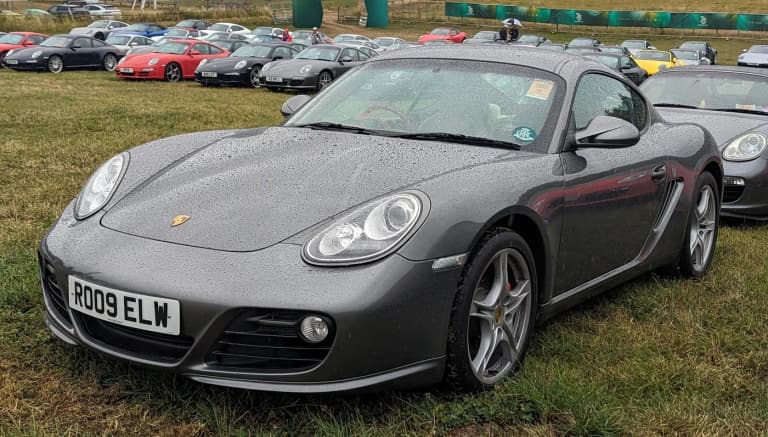
987.2 Porsche Cayman Problems: 9A1 Engines
The same 987 generation guide identifies the 987.2’s later 9A1 engine family, which does not use the earlier shaft, so the bearing question does not carry over. Porsche’s 2010 Cayman specification sheet lists 265 hp for the 2.9-liter model and 320 hp for the 3.4-liter S, both with manual or PDK. The 987.2 does not inherit every 987.1 engine question, but it still needs condition-based checks.
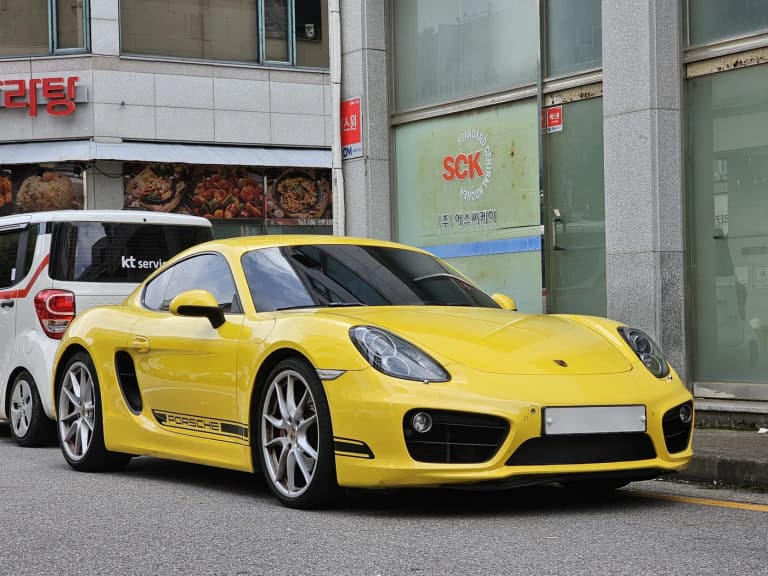
981 Porsche Cayman Problems
Porsche’s 2014 Cayman specification sheet lists 275 hp for the 2.7-liter model and 325 hp for the 3.4-liter S, with a six-speed manual or seven-speed PDK. Those figures describe configuration, not a failure rate.
Campaign 21V679 covers certain 2014-15 Cayman and Cayman S cars, plus 2015 Cayman GTS cars, for out-of-specification rear-axle carrier side sections. Run the VIN, confirm whether the remedy applies and was completed, and keep the result with the inspection file.

718 Porsche Cayman Problems
The 718 badge does not describe one engine. Porsche’s 718 Cayman launch material confirms a 300-hp 2.0-liter turbo flat-four for the base car and a 350-hp 2.5-liter turbo flat-four for the S. Porsche’s 2021 718 specifications identify the Cayman GTS 4.0 as a naturally aspirated 4.0-liter six-cylinder car. The 718 Cayman GT4 press kit identifies its specially developed 4.0-liter six-cylinder boxer engine. Establish the exact engine and trim before applying model-wide advice.
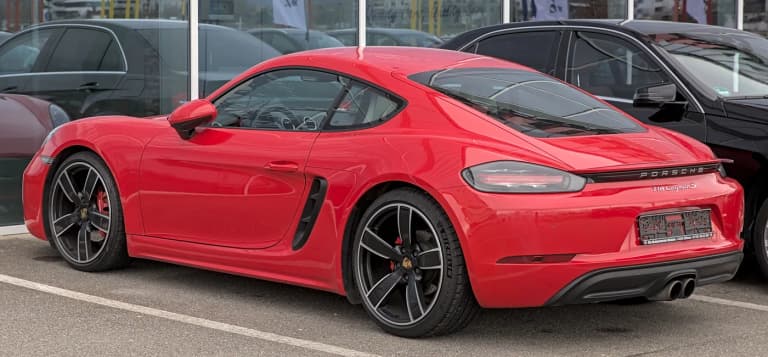
Several campaigns are VIN specific to the 718. Fuel-system campaign 17V054 covers certain 2017 cars, and side-airbag sensor campaign 19V179 covers certain 2018 cars. Campaign 21V200 concerns connecting rods in certain 2021 GTS 4.0 and GT4 cars. Campaign 24V-343 covers 14 potentially involved 2024 Boxster and Cayman vehicles whose PDK transmission might not lock in Park, with shift-cable replacement as the remedy.

Records, Warranty, and Mileage
Bring maintenance invoices for engine work, oil changes, and spark plugs to the inspection, with notes about smoke, noise, or oil use. A recent water-pump, rear-main-seal, air oil separator, or spark-plug repair shows what was done, not the condition of related systems. Match the maintenance scope to Porsche’s applicable schedule rather than accepting “well maintained” as evidence.
A Porsche Cayman sold through the Porsche Approved Certified Pre-Owned program carries a minimum 24-month warranty, according to Porsche’s U.S. Finder listing. Coverage still varies by program and by car, so ask the dealer for the written terms on the exact vehicle before comparing it with an independent warranty or a private-sale price.
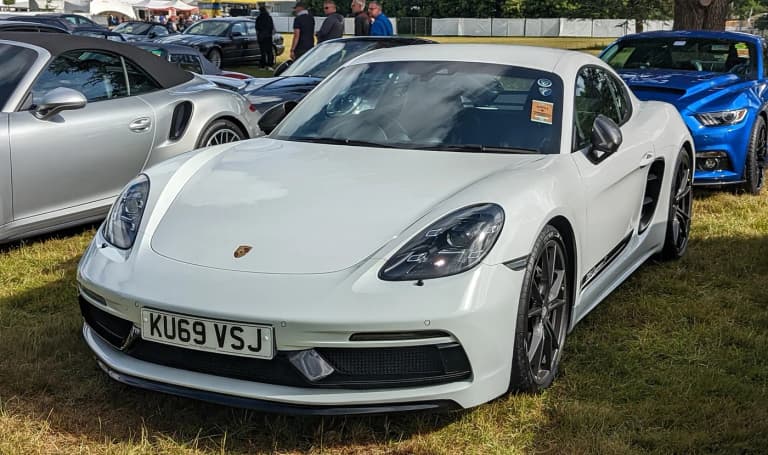
Cayman mileage and maintenance history
Mileage alone does not predict reliability. Divide it by the car’s age, then look for steady use or storage gaps. Put registration records, service stamps, invoices, and tire dates in order, matching consequential work to the VIN, mileage, date, workshop, parts, and diagnosis. Give that timeline to the inspector and mark gaps as unverified.
Recall Campaigns Are VIN Specific
Campaign 21V157 covered certain 2021 cars for suspension threaded connections. A VIN result identifies the affected vehicle, defect, and remedy; a model year does not. If needed, use our Porsche VIN decoder guide, then run the US regulator’s recall lookup on the inspection day.
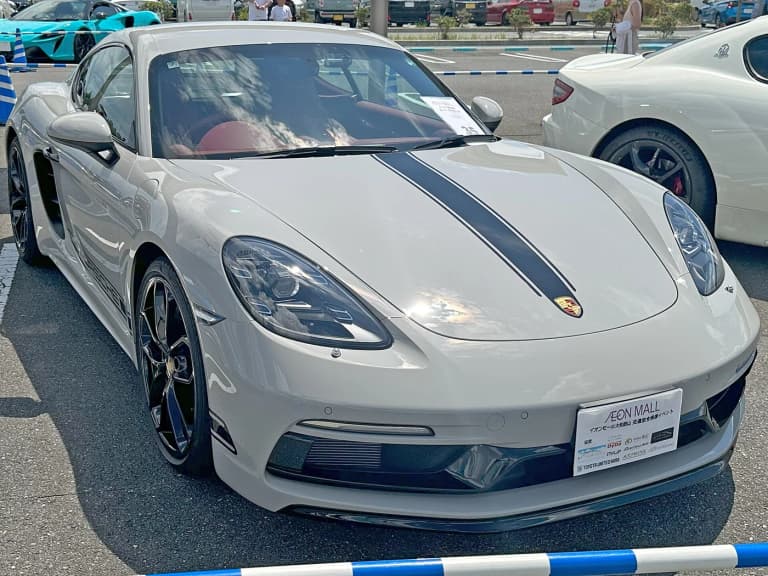
Porsche Cayman Common Problems: Pre-Purchase Questions
What follows is a scope for a pre-purchase inspection, not a diagnosis. Choose an independent marque specialist with engine and diagnostic experience, let that mechanic select and interpret the tests, and plan the appointment before you agree on a price. Ask the shop to state what it could not inspect, including access limits, a cold start limitation, or missing maintenance records. That makes the remaining uncertainty visible before you negotiate.
Symptoms to record before diagnosis
| Symptom | What the inspection should record |
|---|---|
| Blue smoke after startup or acceleration | Timing, duration, oil level, intake oil, and air oil separator findings |
| Coolant smell or temperature warning | Leak location, coolant level, pump area, radiators, reservoir, and test result |
| Check engine light or misfire | Exact codes, freeze-frame data, plugs, coils, intake condition, and reproduced symptoms |
| Vague manual shifts | Gear selection, clutch feel, linkage movement, cable condition, and reproduced noise |
Engine, cooling, gearbox, and chassis inspection
| System | Start with | Useful evidence |
|---|---|---|
| Engine and oil | Oil leaks, rear main seal area, valve covers, plugs, intake oil, cold-start behavior | Photos, scan results, oil history, and a stated inspection limit |
| Cooling | Water pump area, radiators, hoses, reservoir, fans, coolant smell, temperature behavior | Visible findings, fault codes, and the pressure or diagnostic test used |
| Gearbox and controls | Manual linkage and clutch, or PDK engagement and shift quality | Road-test notes, stored faults, service invoices, and campaign status |
| Chassis and cabin | Suspension, steering, brakes, tires, battery, warning lights, water ingress, and trim | Condition notes, dated photos, measurements where relevant, and unresolved questions |
- Identify the car. Record the VIN, engine, gearbox, market specification, and modifications.
- Match the evidence. Compare invoices and mileage with the vehicle; on a 987.1, ask whether a cylinder evaluation is appropriate.
- Get written findings. Cover the engine, gearbox, cooling, chassis, brakes, tires, body, cabin, and electronics, with inspection limits and unresolved items stated.
- Check campaigns. Run the VIN and retain the result and any completion paperwork.

Air oil separator, cold start smoke, and stored codes
Before pricing a rear-main-seal repair, have the inspector locate the oil. The CM Autohaus 718 guide lists rear-main, valve-cover, and spark-plug-tube seals as possible sources. White or blue smoke after startup, intake oil, or rising oil use justifies checking the air oil separator. Establish whether the oil is active or old residue, then retain exact codes and test conditions.
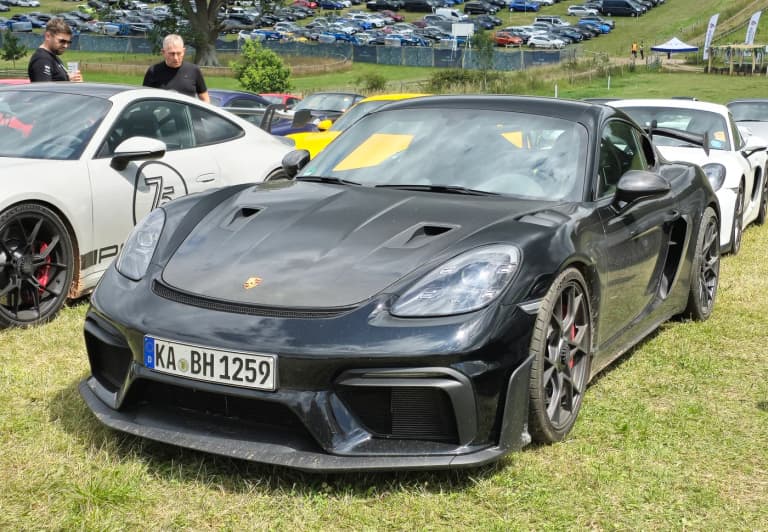
Cooling, water pump, and coolant
CM Autohaus links water-pump bearing wear, plastic-impeller deterioration, or leaks with overheating or coolant loss. Coolant smell, visible leaks, temperature changes, or pump-area noise justify inspection of the pump, radiators, hoses, reservoir, and fans, plus a stated pressure or diagnostic test.
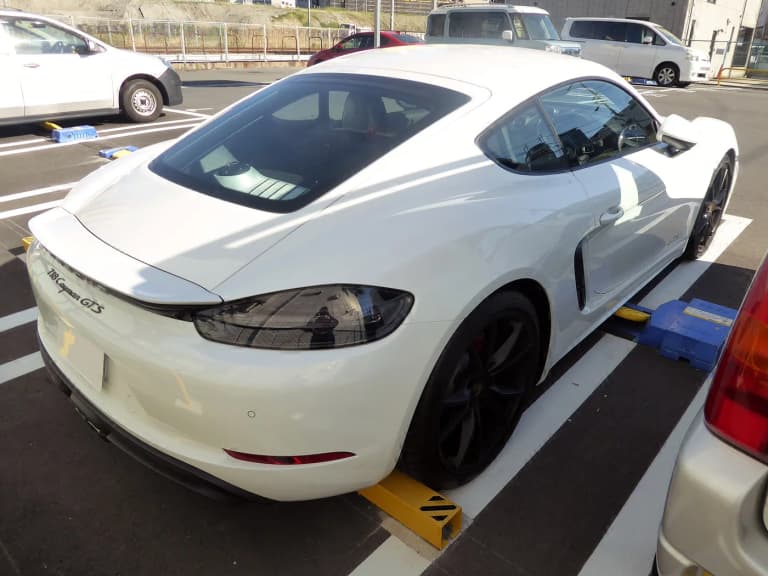
Shift cables, ignition switch, clutch, and PDK
On a manual, vague shifts justify checking the linkage and cables. For PDK, pair the road test with scan data, warnings, stored faults, and maintenance records; our PDK versus manual guide covers the choice. Test the battery before treating a no-start or warning light as a switch fault.
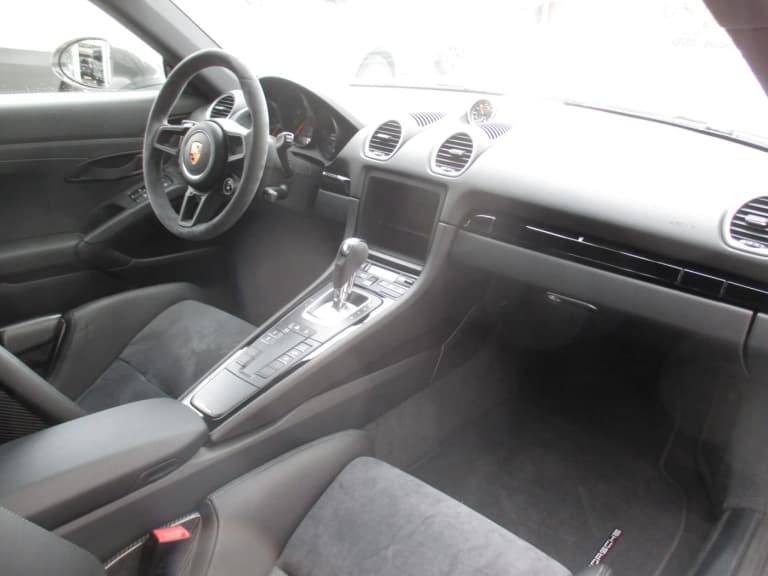
Modifications and the factory baseline
List hardware, software, exhaust, suspension, wheel, tire, and brake changes with installer, date, mileage, and original parts. The inspector should identify factory differences and inspection limits. Judge the workmanship, records, warnings, fit, and road behavior, not the modification label.

Repairs and rechecks
Treat a seller repair as new evidence, not closure. Request the diagnosis, itemized invoice, parts, technician notes, VIN, and mileage, then repeat the affected test. A cleared warning or clean engine bay does not explain the original symptom.

Remote inspection records
For a remote purchase, choose and instruct the shop yourself. Get the report and scan record directly, plus dated photos of the VIN, cluster, underside, tire markings, and leaks. Match VIN and mileage across the title, invoices, recall result, and sales agreement.
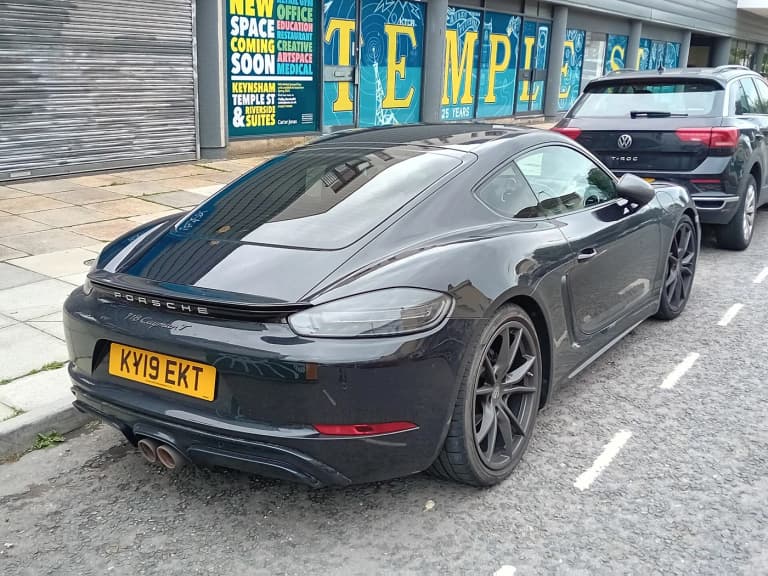
Porsche Cayman common problems and repair priorities
Sort each finding into repair before purchase, schedule soon, monitor with a trigger, or optional improvement. Record the condition, supporting test or photo, and next action. Keep an unresolved diagnosis as uncertainty, then negotiate, request a documented repair and recheck, or walk away.
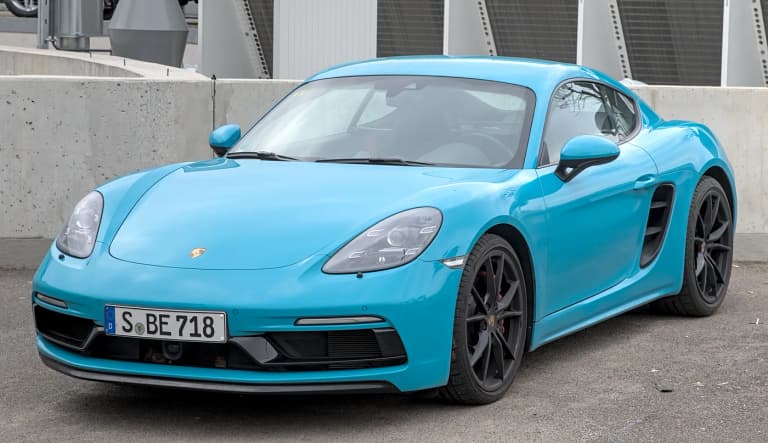
What the written inspection should say
For every symptom, request the observed evidence, test, result, limit, and next action. The useful purchase file combines the configuration, VIN recall result, invoices, and a specialist’s written findings. Price an unresolved consequential question as uncertainty or leave the car.
Best Year, Low Prices, and When to Walk Away
There is no single best year. For a naturally aspirated flat-six, compare a 987.2, 981, 718 GTS 4.0, or GT4; for a turbo, compare base and S 718s. The early IMS question belongs to the 987.1, not later cars. A documented 987.1 can still be a better buy than a neglected 981. Spend the first money on an inspection, not a deposit, and walk away if it is refused, records do not match, or the remaining uncertainty exceeds your budget.
The broader reliability guide explains why one brand-level score cannot replace that process. The Cayman versus Boxster guide covers the open-top alternative if a fixed roof isn’t required.
Frequently Asked Questions
Is a Porsche Cayman reliable?
Yes. A well-maintained, well-documented Porsche Cayman can be a reliable sports car, but the clean inspection is what counts. A badge, a low odometer, or a seller’s reassurance is not. Start with the generation and engine, review the maintenance and recall history, and use a written pre-purchase inspection to judge the specific car.
Which Porsche Cayman years should I avoid?
No Porsche Cayman model year is an automatic reject. An undocumented 987.1 needs its cylinder condition and M96/M97 context addressed first. On a 718, establish the trim and engine, then check the VIN and the maintenance record. For every era, require an independent inspection before treating a cheap asking price as a bargain.
Can a pre-purchase inspection rule out bore scoring?
No. A qualified specialist can decide whether a borescope examination and related evidence are appropriate for a particular car. Those findings can identify current concerns, but they cannot guarantee future engine health.
What should I check on a 2024 Porsche Cayman?
For a US-market 2024 Porsche Cayman, run the VIN through NHTSA’s recall lookup. Campaign 24V-343 applied to 14 potentially involved Boxster and Cayman vehicles whose PDK transmission might not lock in Park, with shift-cable replacement as the remedy. Then complete a normal independent inspection.
What is the best year Porsche Cayman to buy?
There is no single best year, so choose by engine and use. For a naturally aspirated flat-six, look within the 987.2, 981, or 718 GTS 4.0 and GT4 range. For a turbocharged engine, look at a base or S 718. For an early IMS question, separate a 987.1 from a 987.2 before applying any general advice. Then buy the best-documented car in that group.
Which Porsche Cayman year is the most reliable?
No single model year is the most reliable. Reliability follows the engine architecture and the car’s own records. The 987.2 uses the 9A1 family rather than the M96/M97 layout, which removes the early IMS question. The 981 and 718 are later generations with their own engine choices. Within any of those groups, the best-documented car with a clean inspection is the reliable one.
How many miles will a Porsche Cayman last?
Read a Porsche Cayman odometer as an annual average, not a lifetime total. Divide total miles by the vehicle’s age in years, then check whether those miles came from steady use or from long trips with storage gaps. A low reading with no paperwork behind it is not automatically the safer buy.
How should I assess a low-priced Porsche Cayman?
A low advertised price does not tell you whether a Porsche Cayman is a good buy. Start with maintenance records and a written pre-purchase inspection. Budget for that inspection before you make an offer.
Does every Porsche Cayman need an IMS bearing replacement?
No. The question belongs to M96/M97-equipped 987.1 cars. The 987.2 uses the later 9A1 engine family rather than the M96/M97 layout. The 981 and 718 are separate later generations, so confirm the engine before applying 987 advice. Ask a specialist whether an early car’s history justifies the concern.
Additional images: 981 Cayman GTS by KarleHorn, CC BY 3.0. 981 Cayman GT4 by Edvvc, CC BY 2.0. 718 Cayman GTS by Alexander-93, CC BY-SA 4.0. 718 Cayman GT4 RS by Calreyn88, CC BY-SA 4.0. 718 Cayman S rear by Alexander Migl, CC BY-SA 4.0. 2009 987 Cayman S by Calreyn88, CC0. 2018 718 Cayman by 多多123, CC BY 4.0. Via Wikimedia Commons.
Additional images: white 718 Cayman T by Calreyn88, CC BY-SA 4.0. black 718 Cayman T by Hugh Llewelyn, CC BY-SA 2.0. 718 Cayman Style Edition and white 718 Cayman GTS rear by Tokumeigakarinoaoshima, CC BY-SA 4.0. 718 Cayman T interior by Sokrates 399, CC BY-SA 4.0. black 718 Cayman GT4 by Alexander Migl, CC BY-SA 4.0. Via Wikimedia Commons.
Images: Featured photo: 2006 Porsche Cayman (987) S coupe by OSX, public domain. 981 Cayman S by Damian B Oh, CC BY-SA 4.0. 718 Cayman S by Alexander-93, CC BY-SA 4.0. Via Wikimedia Commons. Local copies resized and converted to WebP.