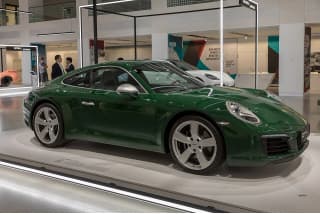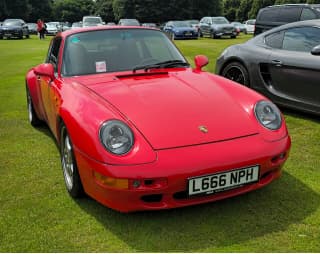
The Porsche 987 is the internal type number for the first-generation Cayman coupe and the second-generation Boxster roadster, sold from 2005 to 2012. It splits into two distinct halves. The earlier 987.1 (2005 to 2008) uses the M96/M97 engine family and a Tiptronic automatic option. The facelifted 987.2 (2009 to 2012) adds the PDK dual-clutch gearbox and the newer 9A1 engine family. Its 3.4-liter S uses direct fuel injection, while the base 2.9-liter retains port injection.
Pin down which half, which body, and which trim a car is before you judge its risk profile, its running costs, or its fit for you.
In this article, we’ll compare the 987.1 and 987.2 halves of the Porsche Cayman and Boxster generation. We’ll cover their engines and gearboxes, known problems, inspection steps, and ownership costs.
Contents
- 1 Quick Summary
- 2 What “987” Actually Means
- 3 The 987 Timeline: Boxster and Cayman
- 4 Engines and Gearboxes by Exact Version
- 5 Base, S, Cayman R, and Boxster Spyder
- 6 Known Problems, Mapped to the Exact Version
- 7 How to Inspect a 987 Before You Buy
- 8 What a 987 Actually Costs to Own
- 9 Which 987 Fits Which Buyer
- 10 Porsche 987 FAQs
Quick Summary
- Type Number: 987 is Porsche’s internal code for the first-generation Cayman and second-generation Boxster, sold 2005 to 2012
- 987.1 (2005-2008): M96/M97 engine family, hydraulic steering, manual or five-speed Tiptronic S automatic
- 987.2 (2009-2012): Newer 9A1 engine family, manual or seven-speed PDK dual-clutch
- Fuel Injection Split: 987.2 base 2.9-liter uses port injection; the 987.2 3.4-liter S uses direct injection
- IMS Bearing Risk: Applies only to the M96/M97 engines in 987.1 cars; the 987.2’s 9A1 family has no intermediate shaft
- Special Versions: Cayman R and Boxster Spyder are lighter, more focused variants built late in the 987.2 run
- Best Fit: 987.2 S with PDK for daily ease; manual 987.2 S for the most engaging drive
What “987” Actually Means
987 is Porsche’s internal type number for this car, not a trim or a marketing name. Porsche has always identified each model generation with a number like this, separate from the badge on the trunk. The same 987 code covers both the Boxster roadster and the Cayman coupe, because they share a platform, engines, and most of their mechanical parts.
The 987 sits between the original 986 Boxster and the later 981. For the Boxster it was the second generation. For the Cayman it was the first, since the coupe did not exist until the 987 platform arrived. If you want the full history of either nameplate before and after this window, the Cayman guide and the Boxster guide cover every generation in one place.
Porsche explains that numbers such as 987 are internal type designations used across its model lines. Knowing the type number does not tell you the trim. It does tell you the platform, the era, and which specification sheet applies to the car in front of you.
The 987 Timeline: Boxster and Cayman
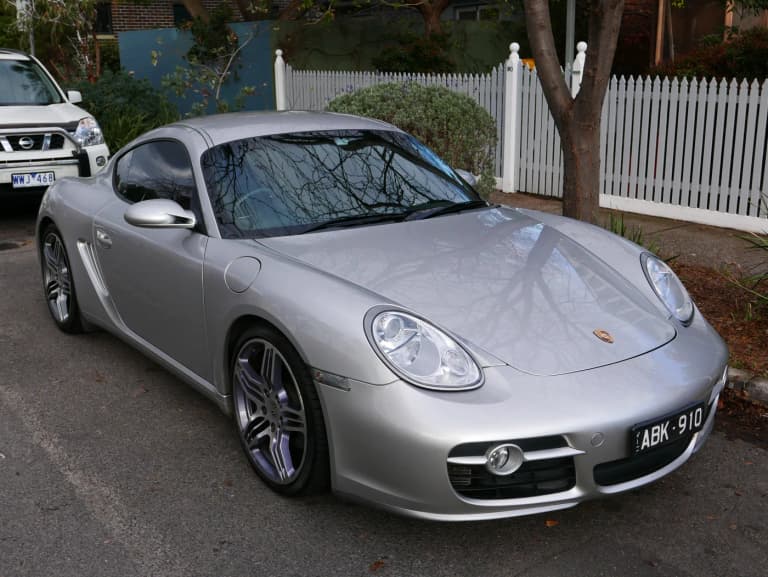
Porsche introduced the 987 Boxster for the 2005 model year, debuting the car with fresh styling that moved away from the 986’s shared front end with the 911. The Cayman coupe joined the range as a 2006 model. It used the same mid-engine layout, with a fixed roof in place of the Boxster’s folding top. Porsche’s Boxster history identifies 987 as the second Boxster generation.
987.1 Boxster and Cayman (2005 to 2008)
The early cars, now generally called 987.1, carried over Porsche’s existing flat-six architecture with updated styling and a nicer interior than the 986. Both the base car and the S used port fuel injection rather than direct injection, and the only automatic option was the five-speed Tiptronic S. Hydraulic power steering gave these cars a steering feel that many owners still prefer to what came later.
Cabin materials and switchgear improved over the outgoing 986 as well, with a cleaner dashboard layout and better-feeling controls. The underlying flat-six architecture still carried over from the previous generation.
987.2 Boxster and Cayman (2009 to 2012)
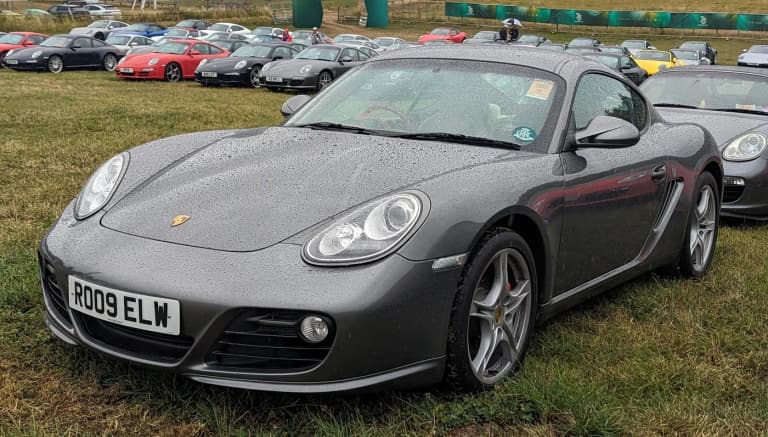
Porsche revealed the facelifted 987.2 Boxster at the Los Angeles Auto Show in November 2008, and the Cayman received the same update shortly after. Both cars got a mild styling refresh, new engines, and the option of the seven-speed PDK dual-clutch gearbox in place of Tiptronic S. This is the half of the 987 range most buyers mean when they talk about the “later” or “facelifted” car. It carries meaningfully different engine and gearbox choices from the 987.1.
Engines and Gearboxes by Exact Version
The engine and gearbox in a 987 depend entirely on which half you are looking at, and mixing them up is the easiest way to misjudge a car. Treat every spec claim below as tied to its exact model year rather than to “the 987” as a whole.
987.1 Flat-Six Engines
The 987.1 base car used a 2.7-liter flat-six. The S started with a 3.2-liter unit, before Porsche moved the S to a 3.4-liter engine partway through the 987.1 run. Both used the M96 and M97 family of engines that Porsche had been refining since the 986 and the contemporary 996 and 997.1 911.
These are the engines carrying intermediate shaft bearing risk. The IMS bearing guide covers this in full, including which specific years and configurations are affected and what owners typically do about it.
987.2 Flat-Six Engines, and Which One Is Actually Direct Injected
Porsche’s 2010 US Boxster specification sheet lists the base 2.9-liter engine using sequential multipoint fuel injection, while the 3.4-liter S uses direct fuel injection (DFI). The base Boxster produced 255 horsepower at 6,400 rpm and 214 lb-ft of torque. The Boxster S produced 310 horsepower at 6,400 rpm and 266 lb-ft.
Direct injection lets an engine run a higher compression ratio and meter fuel more precisely. That is part of how the 987.2 S built more power without a larger jump in displacement.
The base 2.9-liter remained port injected throughout the 987.2 run, while the 3.4-liter S used DFI. Porsche’s 2011 US Cayman sheet lists 265 horsepower for the base Cayman and 320 horsepower for the Cayman S. The table layout can make the fuel-system row look shared, but Porsche Club of America’s 2009 base Cayman guide confirms that the base 2.9 did not receive the S model’s DFI system.
Do not assume the two bodies are identical on paper for a given model year. Confirm the exact body, trim, model year, and engine code before applying a specification.
Manual, Tiptronic S, and PDK
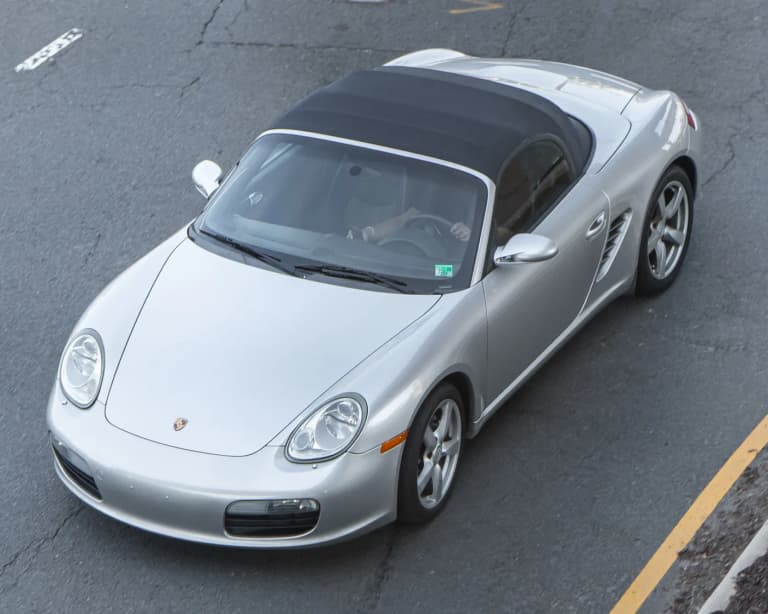
A 987.1 pairs its manual gearbox with the five-speed Tiptronic S automatic as the only other option. The 987.2 keeps a six-speed manual as standard and swaps Tiptronic S for the seven-speed PDK dual-clutch. Porsche’s 2010 US Boxster sheet lists separate acceleration and fuel-economy figures for the manual and PDK configurations, so compare the exact body and trim rather than treating every 987.2 result as identical.
In everyday traffic, PDK avoids clutch-pedal work in stop-and-go driving. A manual keeps the driver responsible for every shift and may suit buyers who value that involvement. If you are undecided between the two, our manual versus PDK guide walks through the tradeoffs in more depth.
Base, S, Cayman R, and Boxster Spyder
Base and S
Every 987 was sold as either a base car or a higher-output S within the core range. The S added the larger engine and larger brakes, but exact chassis equipment still depends on model year, market, and options. For most buyers looking for the classic 987 experience, the S from either half of the generation is the more satisfying car to drive. The base car is the more affordable way into 987 ownership.
Equipment varied by model year and market. Check the build sheet for Porsche Active Suspension Management (PASM), Sport Chrono, seat type, wheel size, and limited-slip differential availability rather than assuming an S badge guarantees a particular option package.
Cayman R and Boxster Spyder
Porsche introduced the Boxster Spyder at the Los Angeles Auto Show in November 2009. It was based on the S engine but tuned to 320 horsepower, and fitted into a stripped-out body with a simplified manual soft top. It was the lightest Porsche on sale at the time.
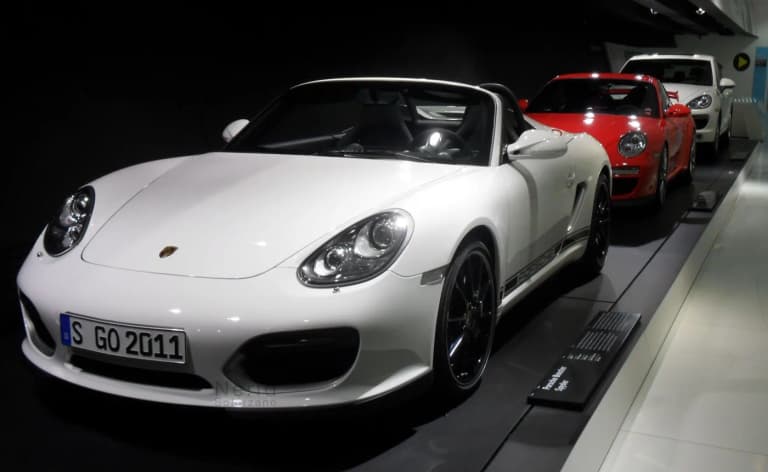
The Cayman R followed as the coupe’s answer, a lighter and more focused version of the Cayman S from late in the 987.2 run. Both are late-production, low-volume cars, and detailed specs, options, and typical values sit outside the scope of this generation guide.
Known Problems, Mapped to the Exact Version
Every problem below is tied to a specific half of the generation. Treat any claim that starts with “the 987 suffers from” as a red flag rather than a fact, since the two halves use meaningfully different engines.
987.1 Concerns
Intermediate shaft bearing risk depends on the exact engine and production date, and it is not a 987-wide trait. The M96 and M97 engines used in 987.1 cars carry the architecture, but bearing design and service options differ within the period. The IMS bearing guide explains the distinction. A specialist should verify the engine number and service history before recommending any remedy.
Do not assume every 987.1 can receive the same retrofit. Ask the inspector to identify the bearing configuration first, then explain what can actually be checked or serviced on that specific engine.
987.2 Concerns
The newer 9A1 engine family used in the 987.2 does not use an intermediate shaft, so the IMS risk described above does not carry over. This applies to both the port-injected 2.9-liter base engine and the direct-injected 3.4-liter S. A cold start and borescope inspection can still help a specialist assess cylinder condition on a car you are seriously considering.
This is an inspection point, not a documented failure rate, and no reliable public data ties it to a specific percentage of cars.
The direct-injected 3.4-liter S can accumulate deposits on the intake side over time because fuel does not wash over the valves. That DFI consideration does not apply in the same way to the port-injected 2.9-liter base engine.
Regardless of which half you are looking at, budget for age-and-mileage maintenance that has nothing to do with engine risk. The coolant expansion tank, the water pump, suspension bushings, coil packs, and the air oil separator all wear out on a normal schedule. Boxster owners should also check the convertible top mechanism and its hydraulic pump for smooth operation. None of this is a defect specific to the 987; it is what any 15-to-20-year-old sports car needs.
Some of these jobs can be expensive once parts and labor are included, especially roof, cooling-system, or suspension work. A pre-purchase inspection should identify what is due and help you price the first year of ownership.
How to Inspect a 987 Before You Buy
History and Paperwork
Ask for the full service history before you look at the car in person. Confirm whether any IMS-related work has been done on a 987.1, and whether the convertible top motor has ever been replaced on a Boxster. Also ask whether the car has a gap in records that the seller cannot explain. A clean, documented history is worth more than a shiny paint job.
Look for evidence of regular oil changes at the intervals Porsche specifies, not just a low odometer reading. A thick stack of receipts from one trusted shop is a better signal than scattered invoices from different garages.
Cold Start and Drive
Listen to the very first few seconds after a cold start, before the car has been warmed up for you ahead of time. Knocking, tapping, or excessive smoke on startup are worth investigating further. On the drive, pay attention to how the gearbox shifts and whether the clutch on a manual car engages smoothly. Check whether the convertible top on a Boxster opens and closes cleanly without hesitation.
Test the gearbox in the conditions that match the car. On a 987.1 Tiptronic, check kickdown and manual shift mode. On a 987.2 PDK, watch for warnings, hesitation, or rough changes in both automatic and manual modes. On a manual, check for clutch slip under load and a consistent bite point.
On the Lift, and When to Escalate
Get the car on a lift and look for oil seepage around the rear main seal. Also check the areas a specialist would inspect for IMS-related leaks on a 987.1. A borescope inspection of the cylinder bores is worth the extra cost on any 987.2 you are seriously considering.
While the car is up, check the exhaust for corrosion and inspect the suspension bushings for age-related cracking. Climate, storage, mileage, and prior replacement history all affect their condition.
A pre-purchase inspection lowers your risk and helps you price your first year of ownership. It cannot guarantee a car, so treat it as one strong data point rather than a final verdict.
What a 987 Actually Costs to Own
Running a 987 costs roughly what you would expect for a fifteen-to-twenty-year-old Porsche sports car. Budget for routine service, tires, brakes, and the occasional larger repair as rubber and plastic components age out. Parts remain available, but labor rates and specialist access vary sharply by market. Get local quotes for routine service and likely age-related work before buying.
The staggered front and rear tire fitments can be a significant recurring cost. Price a complete set in the correct sizes before buying, and do not economize on the component that connects the car to the road.
Costs vary widely by region and by the individual car’s condition and history. Treat any specific dollar figure you see elsewhere with caution, and get a quote for the exact car you are considering.
Which 987 Fits Which Buyer
A 987.1 base car is the most affordable route into a mid-engine Porsche, and it rewards a buyer who is comfortable managing IMS risk with a proper inspection. A 987.2 S with PDK is the easiest to live with day to day, thanks to the better gearbox and the added power. A manual 987.2 S is the pick for a driver who wants to do the shifting themselves.
Body style is mostly a matter of taste rather than risk, since a Boxster and a Cayman of the same half and trim share the same engine and gearbox. Buyers who want the sharper, stiffer car pick the Cayman; buyers who want the wind in their hair pick the Boxster. Neither choice changes the version-specific engine or IMS questions covered above.
If you are cross-shopping the next generation, the newer 981 platform trades the 987’s hydraulic steering for an electric system and drops IMS risk entirely. Our Porsche 981 guide covers that generation the same way this one covers the 987.
Porsche 987 FAQs
What is the difference between a 987.1 and a 987.2?
The 987.1 ran from 2005 to 2008 with the earlier M96/M97 engine family and a five-speed Tiptronic S automatic option. The 987.2 ran from 2009 to 2012 with the newer 9A1 engine family and a seven-speed PDK option. Its 3.4-liter S used direct fuel injection, while the base 2.9-liter retained port injection.
Does every Porsche 987 have the IMS bearing problem?
No. Intermediate shaft bearing risk applies to the M96 and M97 architecture used in 987.1 cars, not to every 987. The newer 9A1 engine family in the 987.2 does not use an intermediate shaft. That applies to both the port-injected 2.9-liter base engine and the direct-injected 3.4-liter S.
Is the Cayman or the Boxster the better 987 to buy?
They share the same basic engines and gearboxes within a given model year, but the inspection priorities are not identical. The Cayman has a fixed roof, while the Boxster adds a folding roof, drains, seals, and hydraulic components that need checking. Choose between them by body style, condition, and service history rather than assuming one is categorically more reliable.
What is the 987 Cayman R or Boxster Spyder?
Both are lighter, more focused versions built late in the 987.2 run. The Cayman R is the fixed-roof choice, while the Boxster Spyder is the lightweight roadster with a simplified manual roof. Their equipment can differ significantly from a base or S, so verify the build sheet and original parts before paying a premium.
Should I buy a 987 with a manual or PDK?
A 987.1 only offers a manual or the older Tiptronic S automatic, so a manual is usually the more rewarding pick. A 987.2 adds the PDK dual-clutch gearbox, which is quicker and easier to live with day to day. A manual 987.2 S remains the more engaging choice for drivers who want to do the shifting themselves.
How much does a pre-purchase inspection cost on a 987?
Costs vary by shop and region, so it is worth calling a Porsche specialist directly for a quote rather than relying on a fixed number. What matters more than the price is finding an inspector who knows this generation. They should check the engine, the convertible top mechanism on Boxsters, and the service history in detail.
Images: Featured photo: Porsche Cayman 987 S by OSX, public domain. 987.2 Cayman S: Calreyn88, CC0. Boxster: OWS Photography, CC BY 4.0. Boxster Spyder: K@dosh, CC BY-SA 2.0. Local copies were resized and converted to WebP.