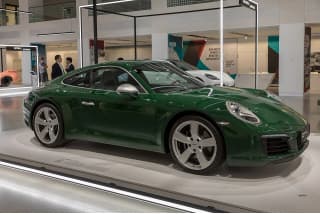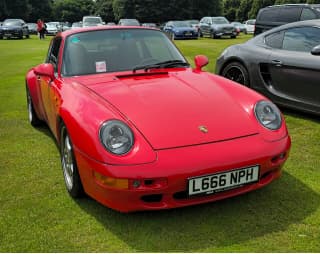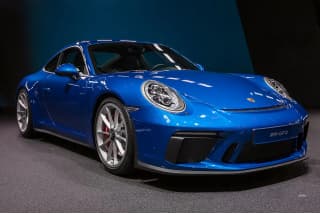
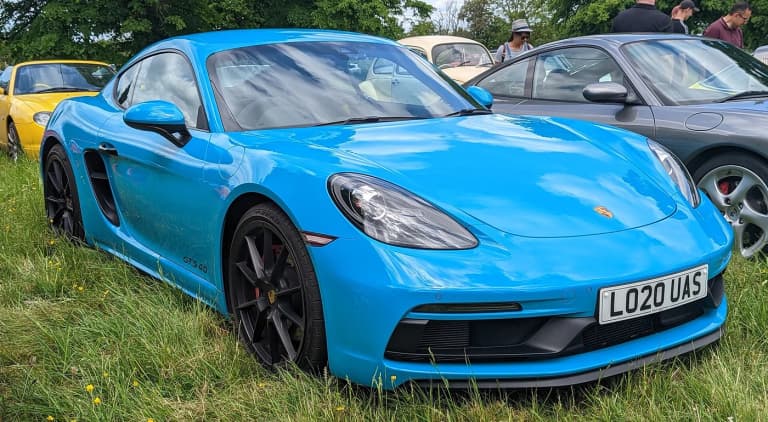
The 981 Cayman GTS pairs its 340-hp, naturally aspirated 3.4-liter flat-six with a manual or dual-clutch gearbox. The 718 Cayman GTS 2.5 pairs its 365-hp turbocharged flat-four with configuration-specific PDK pace. The 718 Cayman GTS 4.0 delivers the highest cited output, a 394-hp naturally aspirated six, with a manual or 2021-on dual-clutch box. Confirm the engine, gearbox, and model year before trusting the badge or a headline performance figure.
In this article, we’ll compare the 981 Cayman GTS with the 718 GTS 2.5 and the 718 GTS 4.0. We’ll cover their engine differences, gearbox options, performance figures, and standard equipment.
Contents
Quick Summary
- Three GTS Variants: 981 GTS (3.4L flat-six, 340 hp), 718 GTS 2.5 (2.5L turbo flat-four, 365 hp), and 718 GTS 4.0 (4.0L flat-six, 394 hp)
- 981 GTS Performance: 4.6 seconds 0-60 mph with the manual, 4.3 seconds with PDK and Sport Plus, 177 mph top speed
- 718 GTS 2.5 Performance: 3.9 seconds 0-60 mph with PDK, 180 mph top speed
- 718 GTS 4.0 Performance: 4.3 seconds 0-60 mph manual at launch, 3.8 seconds with PDK from 2021 on, 182 mph top speed
- PDK Availability: Offered alongside the manual on the 981 GTS and 718 GTS 2.5 from the start; the GTS 4.0 was manual-only until PDK arrived for model year 2021
- Standard Equipment: 718 cars get Porsche Torque Vectoring, PASM, and Sport Chrono; the GTS 4.0 adds a Sport Exhaust and PASM Sport lowered 20 mm
- Buying Check: Confirm engine displacement, gearbox, and model year against the build record and VIN before trusting the GTS badge alone
Identify Your GTS in 60 Seconds
Before you weigh a 0-60 number or factory equipment, work out which of the three cars is in the listing. The badge alone won’t tell you.
Porsche kept “718” in the name for both the turbocharged four and the later 4.0-liter six. Only the last of the three puts its displacement in the model name. Work through these four checks and you will have it identified before you finish your coffee.
- Read the engine displacement and cylinder count first. A 3.4-liter six is the 981 GTS. A 2.5-liter four is the 718 GTS 2.5. A 4.0-liter six is the GTS 4.0. That one line settles the question faster than anything else in the ad.
- Confirm naturally aspirated versus turbocharged. Only the 718 GTS 2.5 runs a turbocharged flat-four engine. The naturally aspirated sixes sound and pull differently: the earlier six is a 3.4-liter, the newer one a 4.0-liter. A listing that names the “GTS 4.0” while describing turbo boost has an error somewhere.
- Check the model year if the car has the dual-clutch box. A PDK-equipped 4.0-liter car only exists from model year 2021 on; earlier examples came with a six-speed manual gearbox alone. That one date check either confirms or kills the transmission claim.
- Cross-check the named standard equipment against the engine. Porsche Torque Vectoring, a Sport Chrono package, and Porsche Active Suspension Management (PASM) are named for the turbocharged 718 GTS. The 4.0-liter car keeps those and adds a standard Porsche Sport Exhaust with a lowered PASM Sport suspension. If the equipment list and the claimed engine don’t line up, ask the seller before you ask anything else.
Run through all four and you’ve done more identification work than most listings ever require of a buyer. The comparisons below assume you already know which car you’re looking at.
Which GTS Fits Which Buyer
Once you know which car you’re looking at, the choice comes down to driving dynamics and gearbox flexibility, drawn from the same factory releases as the table below.
- The 981 GTS is the pick if you want the earlier naturally aspirated 3.4-liter six. Porsche offered manual and dual-clutch gearboxes side by side from the start, so there is no gearbox restriction.
- Choose the 718 GTS 2.5 if the turbocharged flat-four is the character you’re after. Porsche’s quoted 3.9-second 0-60 time is specific to the PDK gearbox, not the model in every configuration.
- The 4.0-liter 718 GTS is the pick if you want the highest cited factory output and the later naturally aspirated six. The three-pedal gearbox was available at launch, while the dual-clutch option arrived for model year 2021.
| Decision factor | 981 GTS | 718 GTS 2.5 | 718 GTS 4.0 |
|---|---|---|---|
| Best fit for | Buyers who want the earlier naturally aspirated six and either gearbox | Buyers who want the turbocharged four and its PDK-quoted performance | Buyers chasing the highest cited output and the later naturally aspirated six |
| Engine | 3.4L naturally aspirated flat-six, 340 hp | 2.5L turbocharged flat-four, 365 hp | 4.0L naturally aspirated flat-six, 394 hp |
| Transmission by model year | Three-pedal or 7-speed PDK together, per the 2015 technical sheet | Six-speed standard, dual-clutch optional, per the 2018 release | Three-pedal only at the 2020 launch; the dual-clutch option arrived for model year 2021 |
| Factory 0-60 | 4.6 sec three-pedal / 4.3 sec PDK with Sport Plus | 3.9 sec dual-clutch | 4.3 sec three-pedal (launch) / 3.8 sec dual-clutch (2021 on) |
| Standard chassis / equipment Porsche named | 2015 sheet gives the specification, not an itemized list; check options individually | Porsche Torque Vectoring with mechanical rear diff lock, PASM, and the drive-mode package below | Sport Exhaust, PASM Sport lowered 20 mm, torque-vectoring system with mechanical LSD, and the drive-mode package below |
| Single most important listing check | Confirm the Cayman column, not Boxster, on the 2015 sheet, and match the 0-60 time to the right gearbox | Confirm the 2.5-liter turbo four against the documentation, since it shares the “718” name with the 4.0 | Confirm the model year on any dual-clutch claim: 2021 or later only, since a 2020 PDK car doesn’t exist |
Some spec-aggregator pages quote the newer flat-six at a flat 180-mph top speed and a flat 4.0-second 0-60 time. They may also list current asking prices as if they were fixed specs. The factory releases cited here do not support those claims.
The 180-mph and 3.9-second numbers belong to the 718 GTS 2.5, while the newer six has gearbox-specific numbers listed above. Pricing and generic model-year ranges also move with the market, equipment, and region. Confirm them against the specific car’s documentation.
Porsche Cayman GTS Generations Compared
Everyone shopping a Cayman GTS wants the sharpest version of Porsche’s mid-engine coupe short of a full GT car. The badge earns that reputation across three GTS models in two generations, and the comparison below lines them up on what actually differs. Keep each factory time attached to its gearbox and condition because “4.3 seconds” belongs to two different cars in this table.
| Spec | 981 GTS | 718 GTS 2.5 | 718 GTS 4.0 |
|---|---|---|---|
| Engine / displacement | 3.4L naturally aspirated flat-six | 2.5L turbocharged flat-4 | 4.0L naturally aspirated flat-six |
| Power | 340 hp at 7,400 rpm | 365 hp | 394 hp |
| Torque | Not quoted in the cited Porsche sheet | Porsche states it differs between manual and PDK | 309 lb-ft (manual) / 317 lb-ft (dual-clutch) |
| Transmission | Six-speed manual or 7-speed PDK | Six-speed standard, dual-clutch optional | Six-speed at launch; dual-clutch added for 2021 |
| 0 to 60 mph | 4.6 sec three-pedal / 4.3 sec dual-clutch with Sport Plus | 3.9 sec (dual-clutch) | 4.3 sec (three-pedal, launch spec) / 3.8 sec (dual-clutch) |
| Top track speed | 177 mph (three-pedal) | 180 mph | 182 mph (three-pedal, launch spec) |
| Layout / standard kit Porsche called out | Mid-engine layout, rear-wheel-drive coupe | Porsche Torque Vectoring with mechanical rear diff lock, Sport Chrono, PASM | Sport Exhaust, PASM Sport lowered 20 mm, PTV with mechanical LSD, Sport Chrono |
Table sourced from Porsche’s 2015 Cayman GTS technical sheet, 2018 718 GTS release, 2020 flat-six launch release, and 2021 PDK release.
Two gaps are worth flagging before you take the table at face value. The 2015 sheet never publishes a torque number for the 981 GTS, and the 718 GTS 2.5’s torque varies by gearbox without a published headline number (the 718 GTS 2.5 section below has the detail). All three models share a mid-engine chassis layout and rear-wheel drive. Displacement and induction, not the chassis, are what actually separate them.
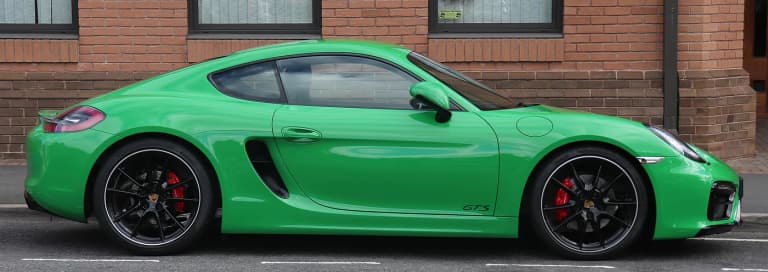
981 GTS: 3.4-Liter Six
The 981 GTS is the earlier naturally aspirated-six option in this comparison. Porsche’s technical specifications describe a 3.4-liter, water-cooled, mid-mounted flat-six engine rated at 340 hp at 7,400 rpm, offered with a six-speed manual gearbox or a seven-speed PDK.
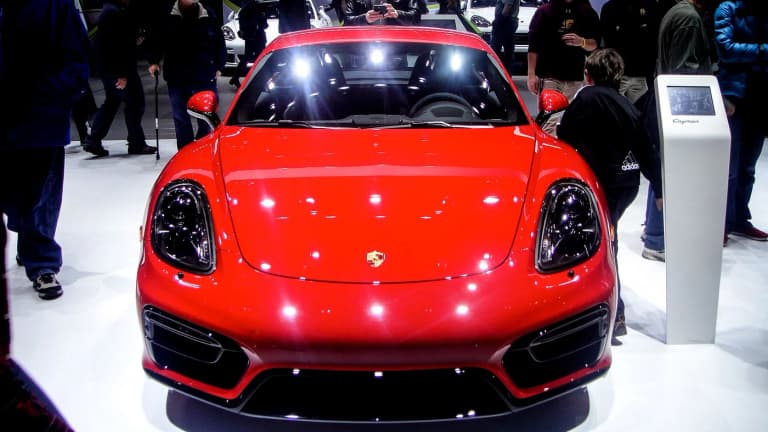
The factory times depend on configuration. Porsche quotes 4.6 seconds to 60 mph with the manual, 4.3 seconds with dual-clutch and Sport Plus engaged, and 177 mph for the three-pedal car. A listing quoting “4.3 seconds” for a manual car is reading the wrong row. The sheet covers the Boxster and the Cayman in parallel columns, so confirm you’re reading the Cayman one before you trust anything on it.
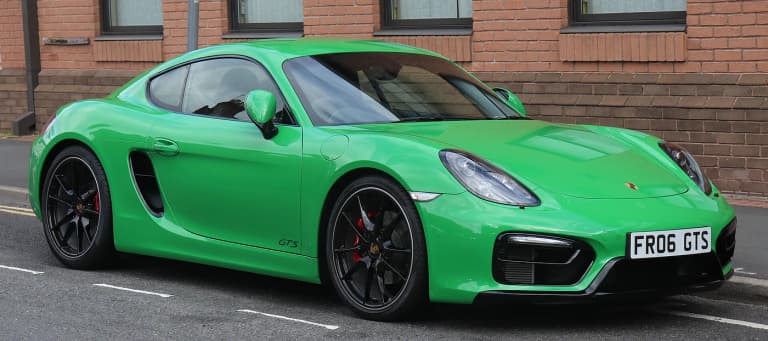
Once you’ve confirmed the engine and gearbox, check the options individually. Don’t assume a fixed equipment list came standard on every 981 GTS. Our Porsche 981 generation guide and Porsche Cayman guide cover the wider platform this car sits on.
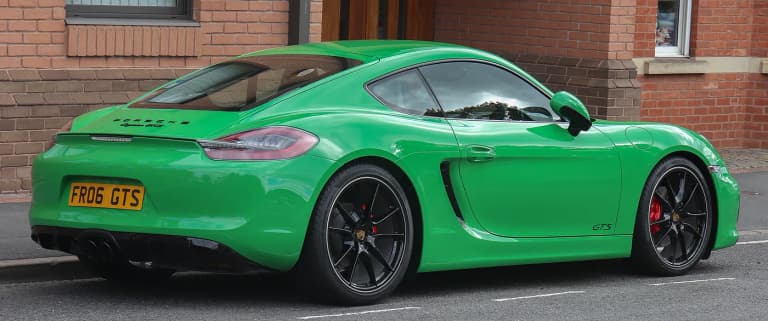
718 GTS 2.5: Turbocharged Four
The 2.5-liter 718 GTS divides opinion as the only GTS Cayman running a turbocharged flat-four engine instead of a naturally aspirated six. Porsche’s 2018 release rates it at 365 hp, 25 more than the 981 GTS, with a six-speed manual gearbox standard and PDK optional. Porsche quotes 0-60 in 3.9 seconds for the dual-clutch car and a 180-mph top speed.
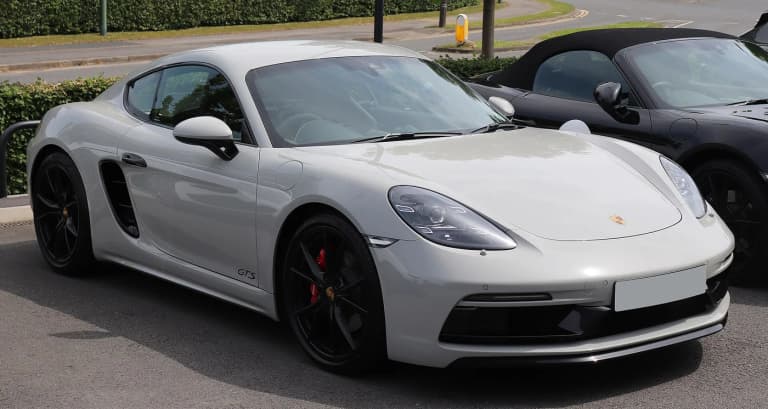
Factory equipment matters here too: Porsche names Porsche Torque Vectoring with a mechanical rear differential lock, PASM, and the Sport Chrono package listed above. Porsche says torque differs between manual and PDK but doesn’t publish a headline number here. Pull that value from the specific car’s documentation instead of a generic spec sheet.
The main confusion risk on this car is the “718” badge, since both the 2.5-liter turbo four and the 4.0-liter six carry it. The displacement check above rules that out. Next, verify the gearbox and documentation against the factory equipment because two cars from the same model year can be optioned differently. Our 718 Cayman guide shows how this engine fits the wider 718 range.
718 GTS 4.0: 4.0-Liter Six
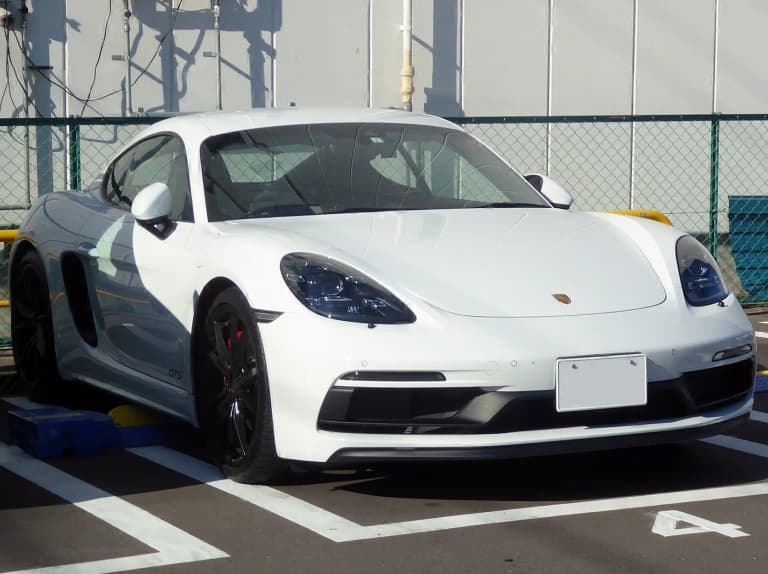
For 2020, Porsche retired the turbo four and installed a naturally aspirated 4.0-liter flat-six engine making 394 hp and 309 lb-ft. At launch, the only gearbox was a six-speed manual. The launch release quotes 0-60 in 4.3 seconds and a top speed of 182 mph for that configuration.
The 2021 model year added the dual-clutch option, quoted at 3.8 seconds to 60 mph and 317 lb-ft in the 2021 release. The 981 GTS and the three-pedal 4.0-liter car share the same 4.3-second 0-60 time. The conditions differ: the 981’s time requires PDK with Sport Plus, while the newer car’s applies to its standard manual gearbox. A number without context is close to useless when you’re comparing cars.
Porsche describes this flat-six as closely related to the 414-hp version fitted to the 718 Cayman GT4 and Spyder. It is the same engine family, tuned to different power outputs, so read a shared-engine claim in a listing as shared architecture rather than a matching spec sheet. The GT4’s 414 hp belongs to its own tune.
The cited 2020 release names a standard Sport Exhaust for the 4.0-liter car. Porsche also names a PASM Sport suspension, the adaptive dampers lowered 20 mm, and Porsche Torque Vectoring for it. Our 718 Cayman GT4 guide covers that related car on its own.
The 2021 PDK Cutoff
Transmission availability is the one constraint that can eliminate an otherwise perfect-looking 4.0-liter listing. The 981 GTS offered a manual transmission or PDK from day one. The 2.5-liter 718 GTS kept the same choice throughout its run, with the three-pedal gearbox standard and dual-clutch optional. The newer six is different: it launched manual-only in 2020, and the dual-clutch option didn’t arrive until the 2021 model year. A “2020 GTS 4.0 PDK” listing is describing a car that doesn’t exist.
Keep every factory time attached to its transmission. For the newer six, match the model year too.
- 981 GTS manual: 4.6 seconds to 60 mph, 177 mph top track speed.
- 981 GTS PDK: 4.3 seconds to 60 mph, with Sport Plus engaged.
- 718 GTS 2.5 PDK: 3.9 seconds to 60 mph. The cited material doesn’t publish a manual number to compare against.
- 4.0 manual (2020 on): 4.3 seconds to 60 mph, 182 mph top track speed, 309 lb-ft.
- 4.0 PDK (2021 on only): 3.8 seconds to 60 mph, 317 lb-ft.
Where Porsche published both, the dual-clutch car carries the quicker time and, on the 4.0-liter car, the higher torque number too. Comparing the 981’s manual number against the 718’s PDK number compares two configurations, not two cars. Stopwatch numbers favor the dual-clutch car, but plenty of buyers pick the manual anyway; if you’re undecided, our PDK versus manual guide works through the trade-off.
Chassis, PASM, and Factory Equipment by Version
Engine and gearbox are not the only things separating these three cars. Porsche’s own releases treat the chassis and suspension design differently for each generation, and that difference matters when you are staring at an options list you cannot verify from a photo. A seller who can point to the specific documentation for their car is worth more confidence than one who only points to the badge.
The 2015 technical sheet for the 981 GTS gives displacement, power, and gearbox choice. It does not itemize the chassis package the way the later 718 releases do. That is not evidence the 981 GTS shipped without PASM or a Sport Chrono package.
The specific car’s build sheet and options list, not a generic spec page, has to answer that question. Treat any “fully loaded” claim on a 981 GTS listing as something to confirm against paperwork, not something to take on faith.
Porsche’s 2018 release is more direct about the 718 GTS 2.5. It names Porsche Torque Vectoring with a mechanical rear differential lock, PASM, and the Sport Chrono package as standard. Porsche also says PASM lowers the car 10 mm compared with the standard 718 suspension.
That gives you a documented baseline you can hold a seller to. If a 718 GTS 2.5 listing is missing one of those three systems, ask why. Confirm the answer against the build sheet rather than the ad copy.
The GTS 4.0 goes further still. Porsche’s 2020 launch release adds a standard Sport Exhaust and PASM suspension that sits 20 mm below a standard 718. That is 10 mm lower than the standard PASM setup Porsche described for the 718 GTS 2.5.
That is a genuine chassis distinction, not a marketing label. Check that the ride height and exhaust are both present and unmodified on the specific car. Wheels, brakes, and tires still need an independent pre-purchase inspection, which is exactly why the checklist below treats them separately.
Equipment also touches the performance numbers you are comparing. The 981’s quicker dual-clutch time is conditioned on Sport Plus mode being engaged, not on the transmission alone.
Porsche’s 4.3-second PDK figure requires Sport Plus to be engaged. Match the window-sticker equipment to the specific configuration, just as you would match a 0-60 claim to its model year.
None of this equipment tells you the model year on its own. The Sport Exhaust and 20 mm-lower PASM setup were present on the GTS 4.0 from its 2020 launch, before the dual-clutch option arrived for 2021. A three-pedal 2020 car and a dual-clutch 2021 car can carry the same chassis equipment while differing in gearbox and model year.
Equipment helps confirm which GTS you are looking at. The build sheet and model year confirm its exact configuration. Ask for both before you commit.
Verify the Listing Before You Buy
Use the checklist at the top to identify the engine and gearbox. Then stop comparing badges across model years and vet the specific car in front of you.
| Confirm on the build record | 981 GTS | 718 GTS 2.5 | 718 GTS 4.0 |
|---|---|---|---|
| Displacement and cylinders | 3.4L, six, naturally aspirated | 2.5L, four, turbocharged | 4.0L, six, naturally aspirated |
| Transmission offered | Three-pedal gearbox or seven-speed PDK | Six-speed standard, dual-clutch optional | Three-pedal only at launch, dual-clutch from 2021 |
| Standard equipment Porsche named | The 2015 sheet gives the specification, not an itemized list; check options individually | Torque-vectoring system with mechanical rear diff lock and PASM; full package listed above | Sport Exhaust, PASM Sport lowered 20 mm, and torque-vectoring system with mechanical LSD; full package listed above |
| Model year consistency | 981-generation car | 718 generation, turbocharged four | A PDK car must be 2021 or later |
Layout won’t help you here. All three are mid-engine, rear-wheel-drive coupes, so identify them by engine displacement, cylinder counts, induction, and transmission.
A manual gearbox was offered on all three GTS models, so that alone narrows nothing. The transmission decides which factory times apply and, on the 4.0-liter car, which model years are possible. Factory equipment also separates the two 718 cars. The cited 2020 release names a standard Sport Exhaust for the newer six.
- Get the build record. It settles what the car left the factory as. Check it against the option list and the physical car, since two GTS cars from the same year can differ.
- Where the listing and the documentation disagree, believe the record. Run the VIN through the NHTSA recall lookup, and keep paperwork for anything open.
- Ask for full service records and invoices rather than a summary. A well-documented car beats an undocumented one, engine and equipment aside.
- Look hard at tires, brakes, and wheels, and ask about track history if the car has seen any. Book an independent Porsche-specialist inspection, not the selling dealer’s own check.
- Walk away if the seller won’t allow that independent inspection, if the documentation contradicts the listed engine or gearbox, or if a service history gap can’t be explained. None of those are things a good price fixes.
The cited material doesn’t establish prices, running costs, or reliability for any of these three cars. Use it to ask sharper questions, then let the documentation, the VIN check, and the inspection finish the job.
GTS Frequently Asked Questions
What are the different trim levels of the Porsche Cayman GTS?
GTS is a specification level applied across three different Cayman engines, not a ladder of sub-trims. The 981 GTS runs a 3.4-liter naturally aspirated flat-six at 340 hp. The 718 GTS runs a 2.5-liter turbocharged flat-four at 365 hp. The 718 GTS 4.0 runs a 4.0-liter naturally aspirated flat-six at 394 hp, each with its own standard equipment covered above. Variation within any one of the three is gearbox and options, not additional sub-trims.
Which Porsche Cayman model is considered the best?
There’s no single factual answer to “best” because it depends on the criterion you’re optimizing for. For the highest cited output, the 718 4.0-liter car leads: 182 mph in manual launch spec and 3.8 seconds to 60 mph with PDK. The 981 GTS is the earlier 3.4-liter naturally aspirated-six option. The turbocharged 2.5-liter car remains a distinct option with its own trade-offs rather than a lesser one.
Which is better, the Cayman GT4 or the Cayman GTS?
They’re built for different priorities. Porsche’s 2020 flat-six launch release describes this engine as closely related to the 414-hp variant in the 718 Cayman GT4 and Spyder. They share an engine family, but use different tunes and sit 20 hp apart.
The GTS 4.0 has its own substantial standard chassis package. Choose based on the specification, equipment, and use you want, and don’t attribute the GT4’s 414 hp to the GTS.
What are the common problems with Cayman GTS?
Straight answer: the Porsche factory material cited in this guide doesn’t establish model-specific failure rates or common-fault data for any of these three cars. Run the VIN through the NHTSA recall lookup and get the full service history as invoices rather than a summary. Book an independent Porsche-specialist pre-purchase inspection before you commit to a specific car.
Images: Red 981 Cayman GTS by Yahya S., CC BY 2.0. White 718 Cayman GTS 2.5 by Vauxford, CC BY-SA 4.0. Blue Cayman GTS 4.0 by Calreyn88, CC BY-SA 4.0. 2015 Cayman GTS front, side, and rear by Vauxford, CC BY-SA 4.0. 718 Cayman GTS front and rear by Tokumeigakarinoaoshima, CC BY-SA 4.0. Resized and converted to WebP. Via Wikimedia Commons.