The Porsche Cayman S is a good sports car when its condition and history check out. It has more power and larger brakes than the base Cayman. Choose the 987 or 981 for naturally aspirated flat-six character, or the 718 for stronger low-rpm turbo torque.
In this article, we’ll compare the 987, 981, and 718 Cayman S. We’ll cover engine performance, transmissions, generation differences, and buying checks to help you choose the right car.
Contents
Porsche introduced the Cayman S at the 2005 IAA as a closed-top mid-engine sports car. That basic layout stayed put, but the driving character changed more than the badge suggests.
Quick Summary
- Three Generations: 987 (2005-2012), 981 (2012-2016), and 718 (2017 on) Cayman S models, each with a different engine character
- 987.2 Engine: 3.4-liter naturally aspirated flat-six making 320 hp and 273 lb-ft, with a six-speed manual or PDK
- 981 S Engine: 3.4-liter naturally aspirated flat-six making 325 hp, 50 hp over the base Cayman’s 275 hp, with 330 mm front brakes versus 315 mm on the base car
- 718 S Engine: 2.5-liter turbocharged flat-four making 350 hp and 309 lb-ft, reaching 60 mph in 4.4 seconds manual or 4.2 seconds with PDK
- 718 S Cargo: 5.3 cu.-ft. front trunk and 9.7 cu.-ft. rear trunk
- Production Status: Porsche ended combustion 718 Boxster and Cayman production in October 2025, making the 718 S the final turbo-four Cayman S
- Buying Priority: Condition, service records, and a specialist pre-purchase inspection matter more than the generation badge
What the S Badge Changes: Engine, Power, and Brakes
The S badge marks a higher-output Cayman, not a GTS or GT4. It normally brings more power and torque, and it can bring larger brakes, different wheels, or performance options depending on year and market. Check the build record before treating an option as standard equipment.
The clearest factory comparison comes from Porsche’s US Cayman specifications. The 981 S has a 3.4-liter engine rated at 325 hp and 272 lb-ft. The base car has a 2.7-liter engine rated at 275 hp and 213 lb-ft.
The same specification lists 330 mm front brake discs and 19-inch wheels for the S. The base Cayman has 315 mm front discs and 18-inch wheels.
Those numbers explain the S premium better than the badge alone. They do not excuse weak records, worn brakes, or a car that drives badly. A clean base Cayman can still be the smarter purchase.
987 Cayman S Engine and Steering
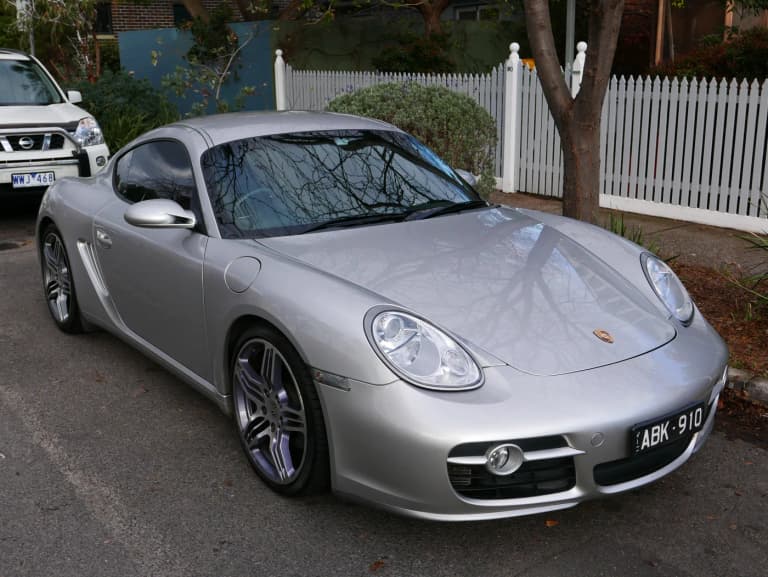
Porsche presented the Cayman S at the 2005 IAA. Its launch history calls it a closed-top mid-engine sports car, and that compact coupe shape remains the point of the 987.
The later 987.2 Cayman S gives a useful specification reference. Porsche’s US sheet for that model year lists a 3.4-liter naturally aspirated flat-six with 320 hp and 273 lb-ft. It lists a six-speed manual and PDK, without specifying the PDK’s gear count. Treat those figures as US-market, model-year-specific facts, not as a shortcut for every 987 S listing.
What to verify in a 987 Cayman S
The first-generation question is simple: do the car’s engine, transmission, maintenance invoices, and inspection all tell the same story? A seller’s short description is not enough. For more 987 context, use the Porsche 987 guide before you inspect a car.
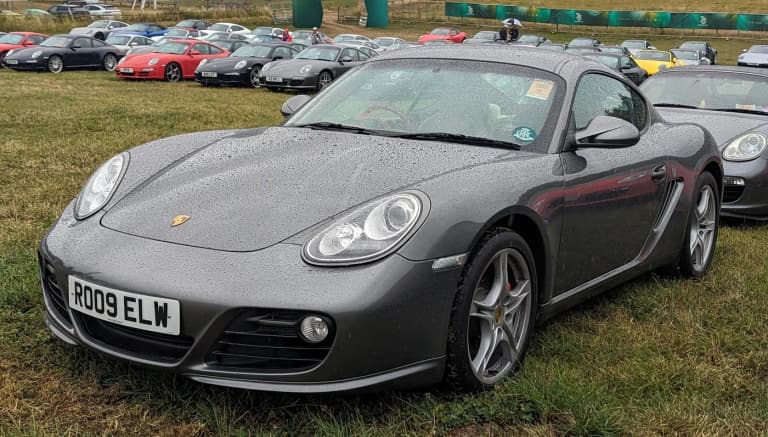
For a 987 S, use the road test to separate the car you want from the car that merely photographs well. Begin with the engine cold, then let it reach normal temperature before judging the clutch or PDK, brakes, suspension, and steering.
Drive over the same imperfect road you would use in daily life. Any noise, wandering, vibration, or inconsistent pedal response belongs in the inspection notes, not in an assumption that an older sports car should feel that way.
981 Cayman S Performance and Road Feel
The 981 Cayman S features a 3.4-liter flat-six engine. Porsche’s US specification shows a factory gap over the base car. The S makes 325 hp at 7,400 rpm, while the base Cayman makes 275 hp at the same engine speed.
That same sheet lists either a six-speed manual or seven-speed PDK for the S. With PDK and the Sport Chrono Package, Porsche listed 4.4 seconds from 0 to 60 mph and a 175 mph manual top track speed. It is a useful performance reference, not a promise that every used car will feel identical.
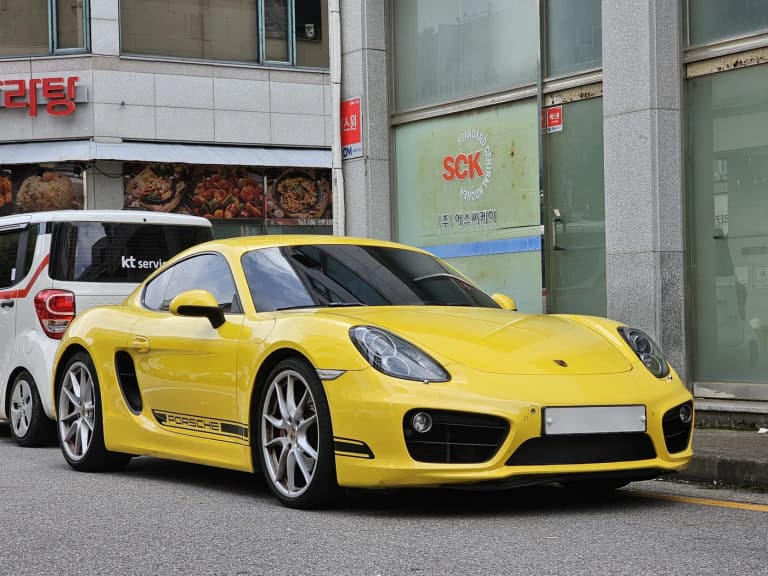
The 981 has enough performance that the buying decision often turns on the chassis, brakes, wheels, tires, interior condition, and equipment. Drive a base Cayman and an S back to back if both are available. The Porsche 981 guide is the right next read for the broader generation context.
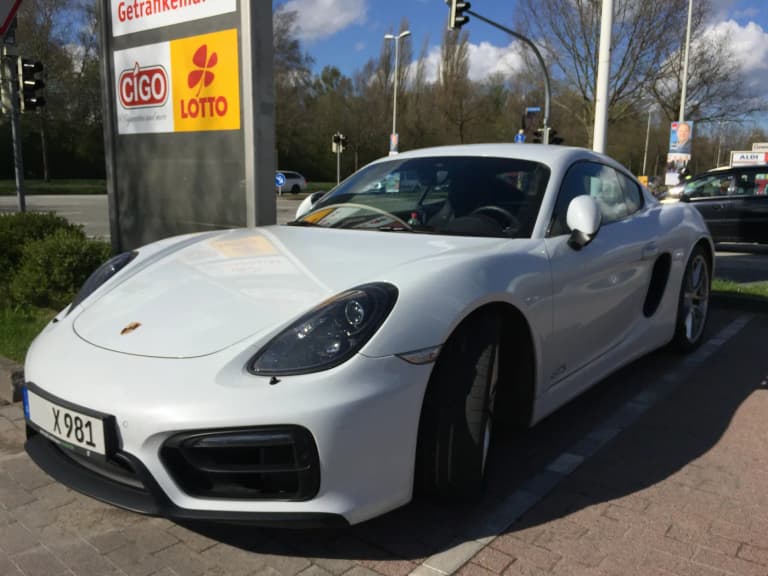
Make the 981 test drive specific. The factory numbers show what the S adds. They cannot tell you whether this car’s steering centers cleanly, whether the brake pedal feels consistent, or whether its suspension is settled on the roads you actually use.
Start with ordinary traffic, then include a few corners and rougher pavement. If you are comparing a base car and an S, keep the route, tire condition, and transmission as similar as possible. That turns a badge comparison into a useful handling and steering comparison.
718 Cayman S Turbo Engine and Chassis
The 718 Cayman S changed the engine formula from a naturally aspirated flat-six to a turbocharged flat-four. Unlike the earlier cars, it uses four cylinders instead of six. Porsche’s launch material identifies it as a turbocharged 2.5-liter, 350-hp model. Its US technical sheet lists a flat-four with 309 lb-ft from 1,900 to 4,500 rpm. For that US-market specification, the 718 Cayman S accelerates from 0 to 60 mph in 4.4 seconds with the manual or 4.2 seconds with PDK.
The headline difference is response. The naturally aspirated flat-six cars build power with revs. The turbo 718 S makes its torque much earlier. Neither is a universal winner, so a buyer should drive both engine types rather than buying an internet argument.
The 718 Cayman S offers dual trunk compartments for added practicality. Porsche’s US technical sheet lists 5.3 cu.-ft. in front, 9.7 cu.-ft. at the rear, a 4.0-second Sport+ PDK run to 60 mph, and a 177 mph top track speed. Treat those as model-year, market, and equipment-specific figures when you compare a listing.
Porsche’s 2024 international listing gives a useful metric reference for a later 718 S: 257 kW (350 PS) and 4.6 seconds from 0 to 100 km/h.
Porsche Active Suspension Management lowers the 718 Cayman S body by 10 mm when that option is fitted, according to Porsche’s 2016 technical material. Check the build record instead of assuming a car has it. The S could also be ordered with the lower PASM Sport suspension.
The 718 Cayman S has a mid-engine layout with a low and central center of gravity, according to Porsche’s model information. Its rear wing extends automatically at 125 km/h to reduce lift. Porsche describes the steering and suspension as designed for precise handling. Together with the dual trunks, those features support sharp handling and everyday usability, but the road test should still decide whether the car feels right to you.
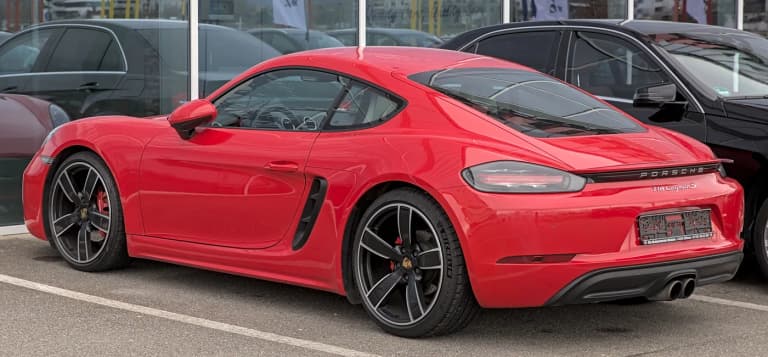
That makes the build record important before you draw conclusions about ride height or suspension setup. Then test the steering at low speed, through a few bends, and over uneven surfaces. The useful result is not a universal verdict on the generation. It is a clear record of how that exact car responds.
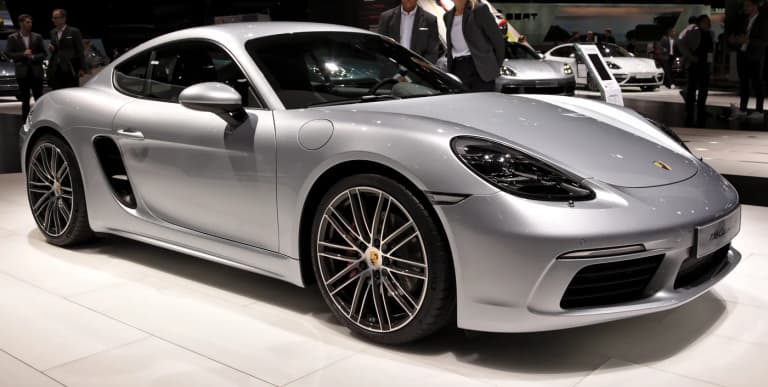
What changes in a 718 Cayman S
Porsche ended production of combustion 718 Boxster and Cayman models in October 2025, according to its 2025 delivery report. That makes a used 718 S the final turbo-four Cayman S choice, not a current new-car order. For the full 718 range, including the GTS and GT cars, see the 718 Cayman guide.
Base Cayman versus S
Choose the S when you will use the extra power, torque, brakes, and performance options. Choose the base car when it is better documented, better maintained, or simply more enjoyable on the road you drive. The S badge cannot repair poor service history.
For the US 718 range, the base Cayman has a 300-hp turbocharged 2.0-liter engine. Porsche’s US technical sheet lists the S with a 350-hp turbocharged 2.5-liter engine. That is a useful same-generation comparison. It does not apply to the naturally aspirated 981 pair.
Compare like for like. A 981 base Cayman and a 981 S have a real engine and brake difference. A 987 S and a 718 base Cayman need a different comparison. Engine character, model years, transmission options, and condition can outweigh the letter on the tailgate.
Do not cross-shop an S with a GTS or GT4 as though they are trim names for the same thing. They sit elsewhere in the range and have their own decisions. The 718 Cayman GT4 guide covers that track-focused branch.
For scale, Porsche’s 2024 718 comparison lists the GTS 4.0 at 294 kW (400 PS). It lists the GT4 RS at 368 kW (500 PS), while the S is 257 kW (350 PS).
Those metric outputs are about 394 hp for the GTS 4.0 and 493 hp for the GT4 RS. The S remains at 257 kW (350 PS) in that comparison. PS and US mechanical horsepower are not identical.
Start by judging an S against another S or a base Cayman. Then decide whether the more focused cars fit the plan and budget.
A useful back-to-back road test
Drive comparable cars on the same route if you can. At normal road speeds, note throttle response, brake-pedal feel, steering weight, and how each transmission behaves in traffic. Then use a safe, familiar stretch to compare how the suspension settles over broken pavement. A newer S with worn tires or tired brakes can feel less composed than a well-kept base car.
Bring the service records to the inspection. The goal is not to crown a winner from a spec sheet. It is to see whether the car’s performance, wheels, brake condition, and gearbox match the seller’s story and your own use. Do not reduce the decision to straight-line speed.
Manual, PDK, and Sport Chrono
Porsche’s 2011 US sheet shows the Cayman S offers a six-speed manual or PDK. The 2014 US sheet confirms a 6-speed manual transmission and optional 7-speed PDK. Porsche’s 718 S technical sheet lists the same choices. A manual asks more from the driver and gives a direct gear change. PDK makes repeatable, quick shifts and can change the acceleration number when Sport Chrono is fitted.
The package is optional equipment, not proof that a car has been cared for. Verify it against the build record, then drive the transmission from cold to warm. With a manual transmission, check clutch take-up and every gear. On PDK, check for smooth, consistent shifts and ask for maintenance evidence.
The Sport Chrono Package changes the available performance modes and the published acceleration figure when paired with PDK. Porsche’s 981 specification ties its quicker PDK 0 to 60 mph figure to that package. The 718 sheet also identifies a PDK Sport+ figure. Those are equipment-specific reference figures, not reasons to chase a button on the console.
A car with the package is the better fit only if you want its modes. Its history, tires, brakes, transmission, and chassis still need to pass the same inspection. Do not treat the package as a substitute for a careful road test.
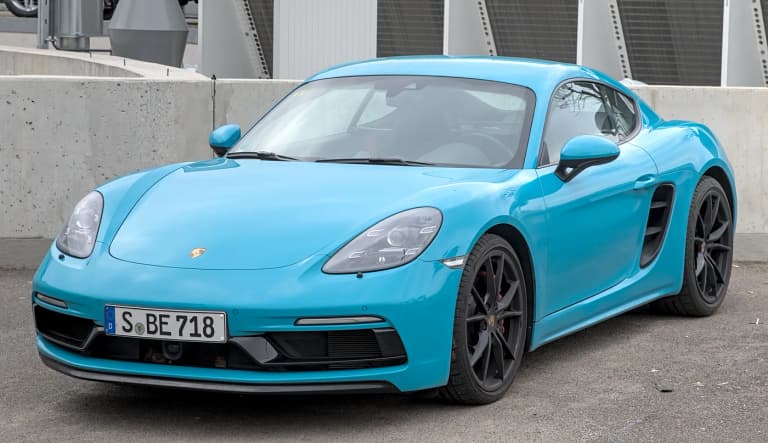
If the gearbox is the deciding factor, our Porsche PDK guide gives the system more room than a model page can.
Cayman S Buying Checks
Use a specialist pre-purchase inspection and keep the job focused on the individual car. Ask for invoices before the visit, not after you have become attached to the color or wheel design.
- Match the VIN, model year, engine, and transmission to the seller’s description.
- Read service invoices for dates, mileage, fluid work, tires, brakes, and repairs rather than relying on a stamped book alone.
- Start the engine cold and take a full road test. Check steering, throttle response, clutch or PDK behavior, brakes, chassis noise, and cooling temperature.
- Inspect tires and wheels for age, damage, uneven wear, and a mismatched set.
- Put the car on a lift with a Porsche specialist and keep the written findings.
- Run the VIN through the NHTSA recall lookup if it is a US-market car.
A reliable verdict needs that car-specific evidence. Do not let a famous model-year story replace the inspection. A used Cayman S is a sports car with Porsche-level parts, so leave room in the budget for the work the inspection finds.
Daily-Driving Practicality
A Cayman S is a two-seat coupe, so check how it works before deciding it can cover every job. The 718 S specification gives a useful, verifiable reference: 5.3 cu.-ft. in front and 9.7 cu.-ft. at the rear.
Use the actual car to test the question that matters to you. Bring the luggage, helmet, work bag, or child-seat-free weekend gear you expect to carry, and check both compartments yourself. A specification is a starting point; the openings, shapes, and your own kit decide whether it is practical enough.
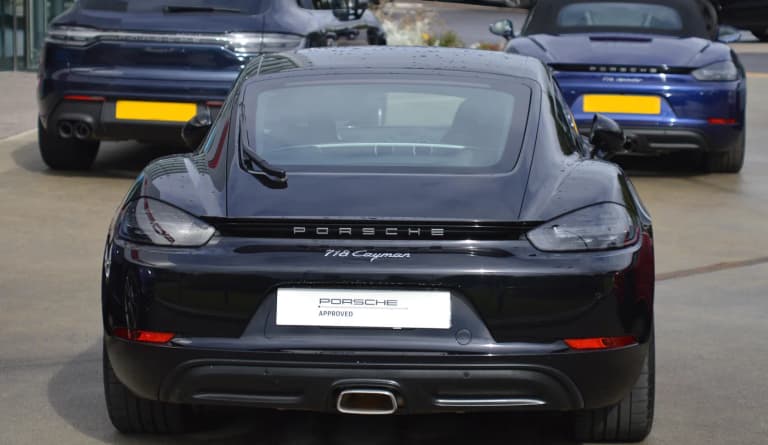
Daily use changes what you should notice on the drive. In traffic, check visibility, seating position, clutch effort or PDK behavior, and whether the engine character still suits you without chasing an acceleration number. On a longer test route, note road noise, brake response, handling, and how the suspension handles broken pavement. None of those observations replace a specialist inspection. They make sure you are inspecting a car that fits your trips.
Choosing the Right Cayman S Generation
| Choose this S if… | Start with |
|---|---|
| You want the original Cayman S formula and a compact flat-six coupe. | A well-documented 987 S, with the exact engine and transmission confirmed. |
| You want a later naturally aspirated flat-six and a clear factory base-versus-S specification gap. | A 981 Cayman S. |
| You want strong low-rpm turbo response and the final combustion Cayman platform. | A 718 Cayman S. |
| You care more about the gearbox than the performance number. | Drive manual and PDK examples from the same generation. |
| You want a car for regular road use as well as occasional fast driving. | Test the luggage compartments, traffic behavior, chassis, and steering with the equipment you will use. |
| You are deciding whether Sport Chrono matters. | Confirm the package on the build record, then compare otherwise similar cars on the same road. |
| You are choosing between similar cars from the same generation. | Put condition first: invoices, a cold start, tire age, brake wear, a full road test, and a specialist lift inspection. |
| You are comparing cars across generations. | Write down the engine type, transmission, chassis equipment, luggage needs, and test-drive notes before deciding which trade-off matters most. |
| You found a clean base Cayman and a neglected S. | Buy the car supported by inspection and records, not the badge. |
Use that matrix in order. First choose engine character: naturally aspirated flat-six in a 987 or 981 S, or early turbo torque in a 718 S. Next choose the gearbox by driving both options. Then confirm the equipment, including the Sport Chrono Package and suspension, from the build record.
Finally, make the individual car pass a cold start, full road test, paperwork review, tire and brake check, and lift inspection. This order prevents a preferred color or option list from outranking the evidence.
The Cayman S is worth its premium when the generation, engine, gearbox, equipment, chassis, steering, and condition fit the way you plan to drive. Do not stretch the budget for a car that cannot be verified.
Frequently Asked Questions
Is the Cayman S faster than the base Cayman?
Yes, within the same generation and market. Porsche’s 2014 US sheet lists the 981 S at 325 hp against 275 hp for the base Cayman, with a quicker PDK-and-Sport-Chrono 0-60 mph figure. Buy the S for that difference only after the car’s condition and records clear the same bar.
Is a Porsche Cayman worth buying?
It can be, if a specialist inspection and the documents support the individual car. Choose the generation for engine character and gearbox first. Then check the VIN, maintenance record, tires, brakes, fluids, and the findings from a proper road test and lift inspection.
Is the Cayman S available with an automatic transmission?
Yes. The 981 and 718 Cayman S offer an optional seven-speed PDK alongside a six-speed manual in the cited US specifications. The 987.2 sheet lists a six-speed manual and PDK without giving the PDK gear count.
How much luggage space does a Cayman S have?
The 718 Cayman S has front and rear luggage compartments. Porsche’s cited US sheet lists 5.3 cu.-ft. in front and 9.7 cu.-ft. at the rear. Test the openings with the bags you actually carry.
How fast is a Cayman S?
It depends on generation, transmission, and equipment. The cited 981 S reaches 175 mph. Porsche’s cited US technical sheet lists a 177 mph top track speed for the 718 Cayman S. Its cited metric reference gives 4.6 seconds from 0 to 100 km/h.
Which Cayman S generation should I buy?
Choose the 987 for the original compact flat-six formula, the 981 for a later naturally aspirated flat-six, or the 718 for earlier turbo torque. Then let condition, records, inspection results, and your road test decide between individual cars.
Image Credits
Images: 2006 Porsche Cayman (987) S by OSX, public domain. 2009 Porsche 987 Cayman S by Calreyn88, CC0. Porsche 981 Cayman S in Racing Yellow by Damian B Oh, CC BY-SA 4.0. Porsche 981 Cayman GTS by KarleHorn, CC BY 3.0.
Asset credits: 718-cayman-s-rear.webp is derived from Porsche 718 Cayman S by Alexander-93, CC BY-SA 4.0. 718-cayman-gts.webp is derived from Porsche 718 Cayman GTS, also by Alexander-93 under CC BY-SA 4.0. cayman-718-s.webp is derived from Porsche 718 Cayman S rear by Alexander Migl, CC BY-SA 4.0. cayman-718-base.webp is derived from 2018 Porsche 718 Cayman by 多多123, CC BY 4.0. Existing Commons images were resized and converted to WebP; the CC BY-SA derivatives retain their ShareAlike license.