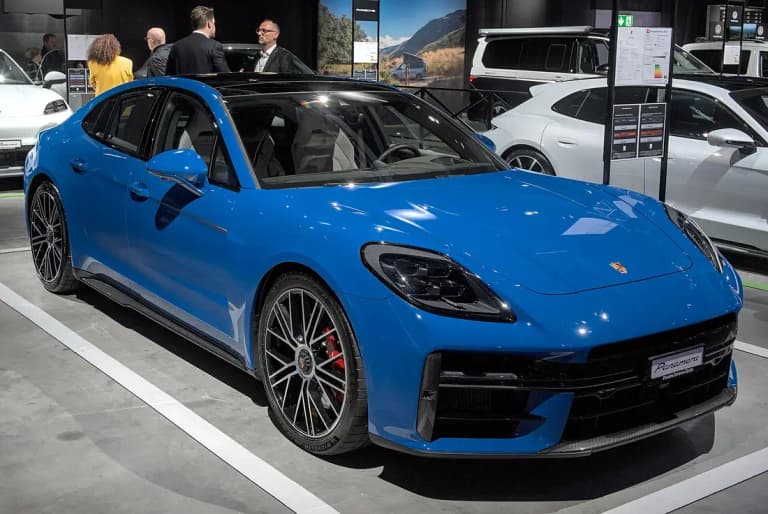
The Porsche Panamera GTS is the driver-focused V8 trim of the four-door range. It uses a 4.0 liter twin-turbo V8 making 493 hp, hits 60 mph in 3.6 seconds, and tops out at 188 mph. It sits between the base cars and the Turbo, and it is the last Panamera built around engine character rather than hybrid output.
In this article, we’ll examine the Porsche Panamera GTS, the V8 driver’s trim of the range. We’ll cover its generations, engine, performance, and buying advice.
Contents
- 1 Quick Summary
- 2 What the Porsche Panamera GTS Is
- 3 Panamera GTS Generations: 970, 971, and 972
- 4 Engine and Powertrain: The Twin-Turbo V8
- 5 Performance, Launch Control, and Top Speed
- 6 Chassis: Air Suspension and Rear Axle Steering
- 7 Panamera GTS vs the Rest of the Range
- 8 Body Styles: Sedan and Sport Turismo
- 9 Interior: Sport Seats, Race-Tex, and Screens
- 10 Buying a Used Panamera GTS
- 11 Frequently Asked Questions
Quick Summary
- Engine: the current 972 Panamera GTS uses a 4.0 liter twin-turbo V8 making 493 hp and 486 lb-ft.
- Performance: 0-60 mph in 3.6 seconds with Sport Chrono and a top track speed of 188 mph.
- Price: launched at $154,200 before options; Porsche’s US site now lists it from about $166,900.
- Generations: the 970 (2011-2016, naturally aspirated 4.8L V8, 424 hp), the 971 (2019-2024, twin-turbo V8, 453 to 473 hp), and the current 972 (2024 on, 493 hp).
- Body styles: the 971 offered a GTS Sport Turismo wagon from 2019 to 2024; the current 972 is sedan only.
- Standard equipment: sport exhaust, 8-speed PDK, all wheel drive, and adaptive air suspension come standard.
- Best used buy: the updated 2021-2024 971 GTS makes 473 hp and shares the newer car’s air suspension and sport exhaust for far less money.
What the Porsche Panamera GTS Is
The Porsche Panamera GTS is the trim Porsche builds for the person actually driving. It takes the twin-turbo V8 from the Turbo family, softens the output slightly, and hardens everything else. The result is a four-door car that leans on engine noise and chassis feel instead of headline power.
The current GTS makes 493 hp and 486 lb-ft. It reaches 60 mph in 3.6 seconds and has a top track speed of 188 mph, per Porsche’s US model page. Those are serious numbers. They are also no longer the biggest in the range, and that is the point of this car.
Where the GTS Sits in the Panamera Range
The GTS slots above the base Porsche Panamera and below the Turbo models. On paper it is the middle child. In practice it is the enthusiast pick, because the cars above it are now plug-in hybrids carrying a battery.
That layout gives the GTS a job nothing else in the lineup does. It is the only Panamera that combines V8 sound with a light, simple drivetrain. Every faster Panamera hauls extra hardware to get there.
What the GTS Badge Means
GTS stands for Gran Turismo Sport. Porsche uses the badge across the lineup for driver-focused cars, from the Cayenne GTS to the smaller Macan GTS. The recipe is consistent: more power than the mid-range car, sport suspension, darker trim, and a sport exhaust as standard.
The badge is not a stripped-out track special. A GTS keeps the leather, the screens, and the back seat. It just gives up a little comfort for sharper responses. Our guide to the GTS badge covers how the formula spread across the range.
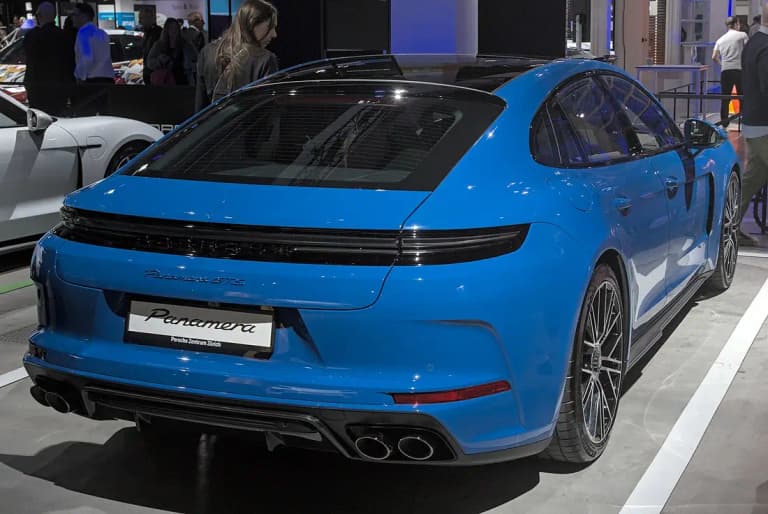
Panamera GTS Generations: 970, 971, and 972
There have been three Panamera GTS models, one per generation. The engine changed from naturally aspirated to twin-turbo along the way. The character stayed the same.
| Generation | Years | Engine | Power |
|---|---|---|---|
| 970 GTS | 2011-2016 | 4.8L NA V8 | 424 hp |
| 971 GTS | 2019-2020 | 4.0L twin-turbo V8 | 453 hp |
| 971 GTS | 2021-2024 | 4.0L twin-turbo V8 | 473 hp |
| 972 GTS | 2024 on | 4.0L twin-turbo V8 | 493 hp |
First GTS: 970 (2011 to 2016)
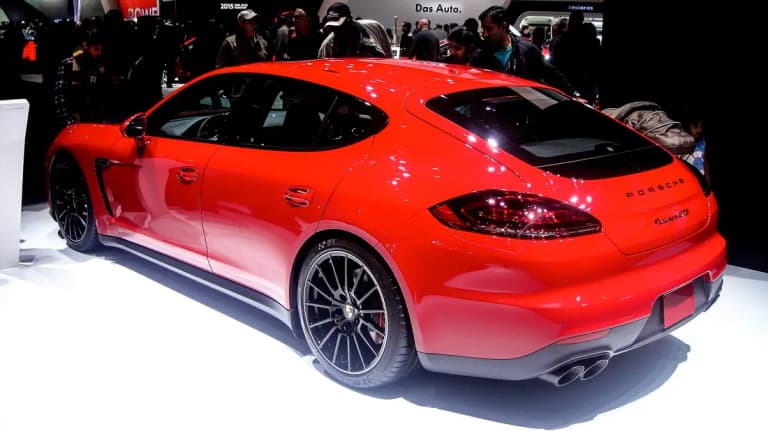
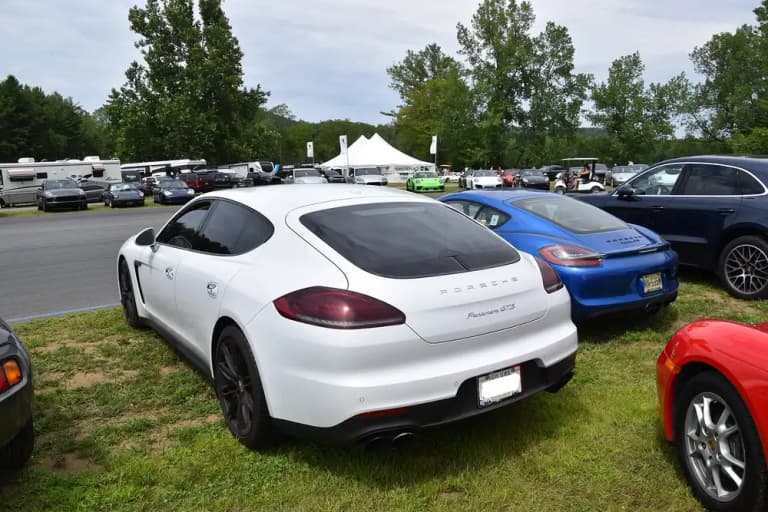
The first Panamera GTS arrived in 2011 with a naturally aspirated 4.8 liter V8. It made 430 PS, or 424 hp, with 384 lb-ft of torque, and topped out at 179 mph, per Wikipedia’s Panamera data. It revved to 6,700 rpm, which no turbocharged Panamera does.
This car is the reason people still talk about GTS sound. There was no turbo muffling the intake or the exhaust note. It was slower than a Turbo of the same year, and quite a lot more fun below the speed limit.
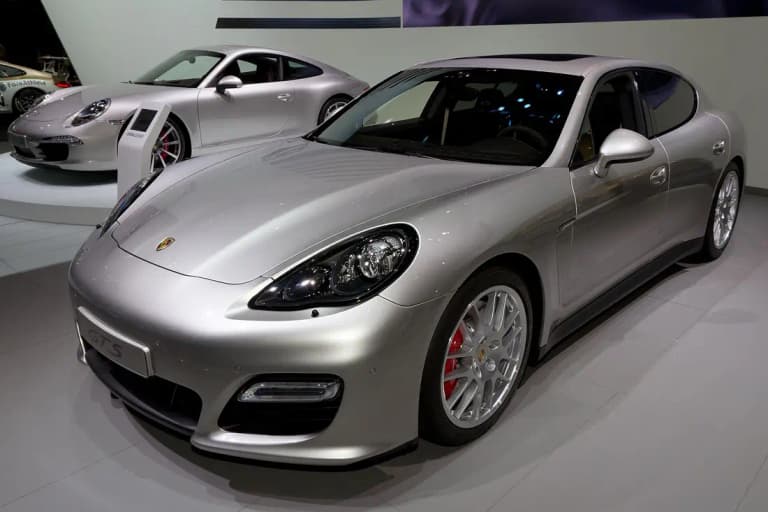
The 970 GTS came as a sedan only, with all wheel drive and a seven-speed PDK. Porsche gave it a lower ride height, black trim, and a sport exhaust. The 2013 facelift cleaned up the styling and carried the GTS through to 2016.
Second GTS: 971 (2019 to 2024)
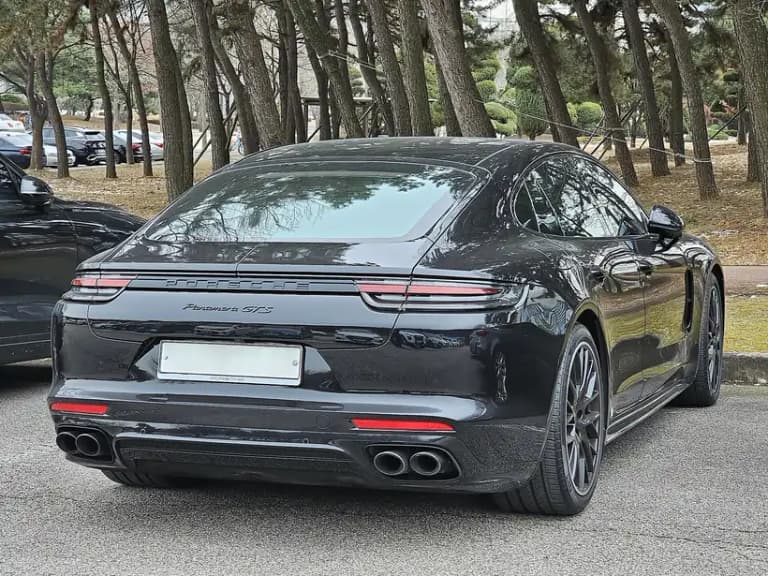
Porsche skipped the GTS at the 971 launch and brought it back in 2019. The naturally aspirated engine was gone. In its place came a 4.0 liter twin-turbo V8 making 453 hp and 457 lb-ft. That was good for 0-60 mph in 3.9 seconds and 181 mph, as Porsche set out in its 2019 GTS press release.
That car came loaded for the job. Adaptive air suspension was standard, with the body sitting 10 millimeters lower than other Panameras. So were the Sport Chrono package, a black-tipped sport exhaust, 20-inch black wheels, and 390 mm front brake discs.
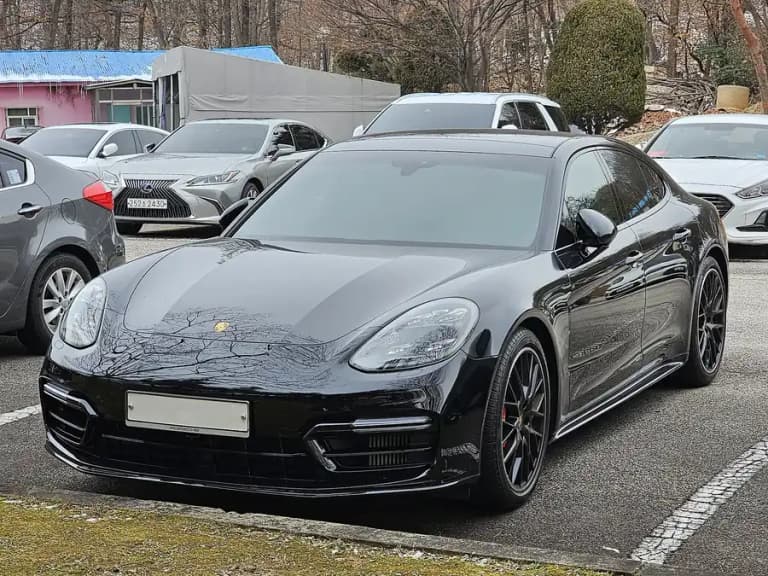
The 2021 update pushed output to 473 hp, with torque unchanged at 457 lb-ft, per Porsche Newsroom. Porsche also fitted a new sport steering wheel and satin black SportDesign fascias. This late 971 is the used-market sweet spot today.
Current GTS: 972 (2024 Onward)
The third-generation GTS landed in July 2024 alongside the Turbo S E-Hybrid. It makes 493 hp, which Porsche describes as 20 hp more than its predecessor. It runs 0-60 mph in 3.6 seconds and reaches 188 mph, per Porsche Newsroom.
The V8 is the same unit used in the Panamera Turbo E-Hybrid. Porsche switched it from twin-scroll to single-scroll turbochargers and raised peak combustion pressure to 140 bar. The car also gets dual-chamber air suspension, reinforced anti-roll bars, and 21-inch center-lock wheels.
Engine and Powertrain: The Twin-Turbo V8
The V8 is what people buy this car for. Everything else on the GTS exists to make that engine easier to enjoy.
| Spec | Panamera GTS (current) |
|---|---|
| Engine | 4.0L twin-turbo V8 |
| Power | 493 hp |
| Torque | 486 lb-ft |
| 0-60 mph | 3.6 sec |
| Top track speed | 188 mph |
| Transmission | 8-speed PDK |
| Drivetrain | All wheel drive |
| Body | Sedan |
| Launch MSRP | $154,200 |
The 4.0 Liter V8 in the Current Car
The engine sits at the front, with its two turbochargers mounted inside the vee. That layout shortens the plumbing and sharpens throttle response. Peak torque arrives low and holds, so the car pulls hard from any speed.
Porsche tunes this V8 differently for each model. In the Turbo E-Hybrid it plays a supporting role next to an electric motor. In the GTS it carries the whole car, and it is calibrated for noise and response rather than efficiency.
PDK Gearbox and All Wheel Drive
Power goes through an eight-speed PDK dual-clutch gearbox. Shifts are fast, and the gearbox holds gears properly in the sportier drive modes, which is what makes the GTS the most engaging car in the range to drive hard. If you want the background, our guide to Porsche PDK explains how it works.
Drive then splits across all four wheels through Porsche Traction Management. All wheel drive is standard on the GTS, and it is what makes the launch figures repeatable. On a wet road, it is also the difference between confident and nervous.
The Standard Sport Exhaust
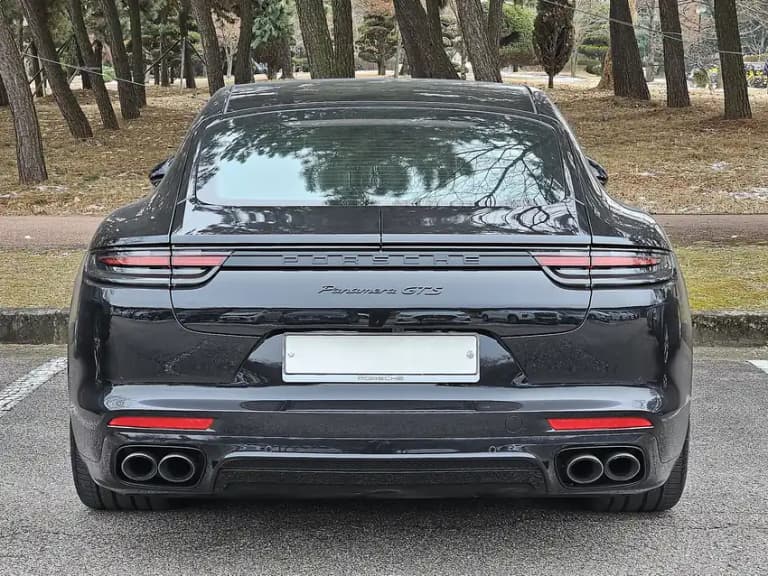
The sport exhaust is standard, not an option box. Porsche says the GTS system was developed specifically to produce an emotional sound. In practice it means a hard bark on start-up and real volume above 4,000 rpm.
This is the single feature that defines the car in daily use. You hear the V8 pulling away from a light. No hybrid Panamera does that, however fast it is.
Performance, Launch Control, and Top Speed
The GTS is quick by any normal standard and mid-pack by Panamera standards. That gap is smaller than the spec sheet suggests, because the GTS carries less weight.
0-60 mph and Top Track Speed
The current GTS runs 0-60 mph in 3.6 seconds with the Sport Chrono package, and reaches 188 mph on summer tires, per Porsche USA. Porsche notes the sprint is 0.1 seconds quicker than the previous car. The 971 GTS managed 3.9 seconds and 181 mph.
Top speed is largely academic outside Germany. The acceleration is not. A car this quick, with four doors and a trunk, covers ground in a way that still surprises passengers.
Sport Chrono and Launch Control
The Sport Chrono package is standard on the GTS. It brings the mode switch on the steering wheel and a stopwatch on the dash. It also adds a push-to-pass function for a short burst of maximum response. Our Sport Chrono guide breaks down what each part does.
Sport Chrono also brings launch control. You hold the brake, load the engine, and release. The all wheel drive system does the rest, which is why Porsche’s published time is one you can actually repeat.
Chassis: Air Suspension and Rear Axle Steering
The GTS chassis is where most of the money goes. Porsche does not just fit stiffer springs and call it a day.
Air Suspension and PASM
The current GTS comes with dual-chamber, two-valve adaptive air suspension and the PASM adaptive damper system as standard. The body sits 10 millimeters lower than other Panameras. Porsche also fits reinforced anti-roll bars for flatter cornering. The payoff is agility that a car this size has no business having, and grip that holds through long corners rather than washing wide.
Two-valve dampers let Porsche split rebound and compression control. The practical result is a wider gap between the comfort and sport settings. In Normal it rides like a luxury sedan, and in Sport Plus it stops moving around.
Rear Axle Steering and Torque Vectoring
Porsche Torque Vectoring Plus is standard, with a rear differential lock. It brakes the inside rear wheel to rotate the car into a corner. On a five meter sedan, that matters more than it sounds.
Rear axle steering is the option to look for. It is not on Porsche’s standard GTS equipment list, so it varies car to car. It turns the rear axle against the fronts at low speed to shrink the turning circle, then with them at speed for stability. On a used GTS, check the build sheet rather than assuming.
Wheels, Brakes, and Steering Wheel
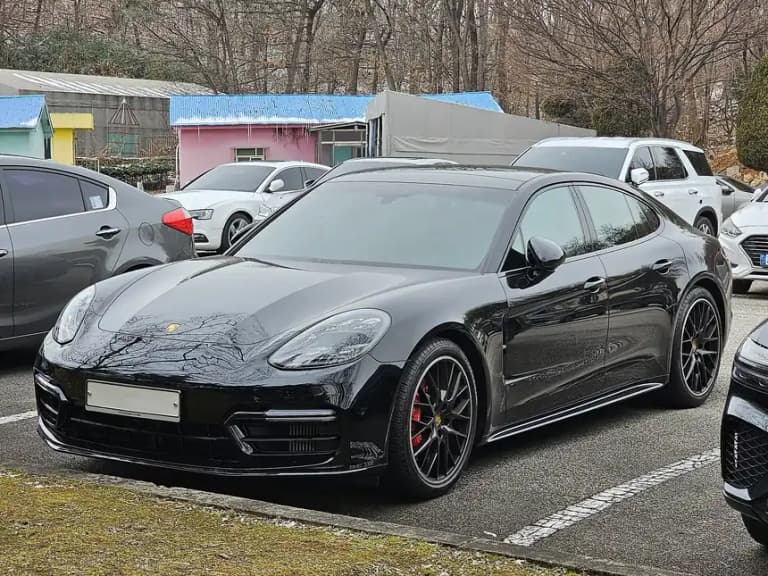
The current GTS wears 21-inch Turbo S center-lock wheels in anthracite gray, with red brake calipers. The 971 GTS ran 20-inch black wheels and 390 mm front discs. Both cars can be specified with carbon ceramic brakes.
Inside, the GTS gets a GT sport steering wheel, wrapped in Race-Tex on most cars. The 971 used a heated Alcantara sport wheel with paddles. It is a small detail that sets the tone the moment you sit down.
Panamera GTS vs the Rest of the Range
Understanding the GTS means understanding what sits on either side of it. The table below uses figures from Wikipedia’s Panamera specifications.
| Model | Engine | Power | Top speed |
|---|---|---|---|
| Panamera | V6 turbo | 348 hp | 169 mph |
| Panamera GTS | V8 twin-turbo | 493 hp | 188 mph |
| 4S E-Hybrid | V6 hybrid | 537 hp | 185 mph |
| Turbo S E-Hybrid | V8 hybrid | 771 hp | 202 mph |
GTS vs the Base Porsche Panamera
The base Porsche Panamera uses a turbo V6 and rear wheel drive. It is a fine grand tourer and a much cheaper one. It is also the version people mean when they say a Panamera feels like a big luxury car.
The GTS adds two cylinders, 145 hp, all wheel drive, and the entire sport chassis package. The gap in feel is bigger than the gap in numbers. One is a comfortable four-door, the other is a sports car with a back seat.
GTS vs the E-Hybrid Models
Porsche’s plug-in hybrids now out-power the GTS. The 4S E-Hybrid makes 537 hp, and the Turbo S E-Hybrid makes 771 hp with a 2.9 second 0-60 time. On raw pace, the GTS loses.
What the hybrids carry is weight, and it sits low and rearward in a battery pack. The GTS answers with less mass, no charging routine, and an engine you can hear. Buyers who want the electric side of Porsche are better served by the all-electric Taycan.
GTS vs the Panamera Turbo
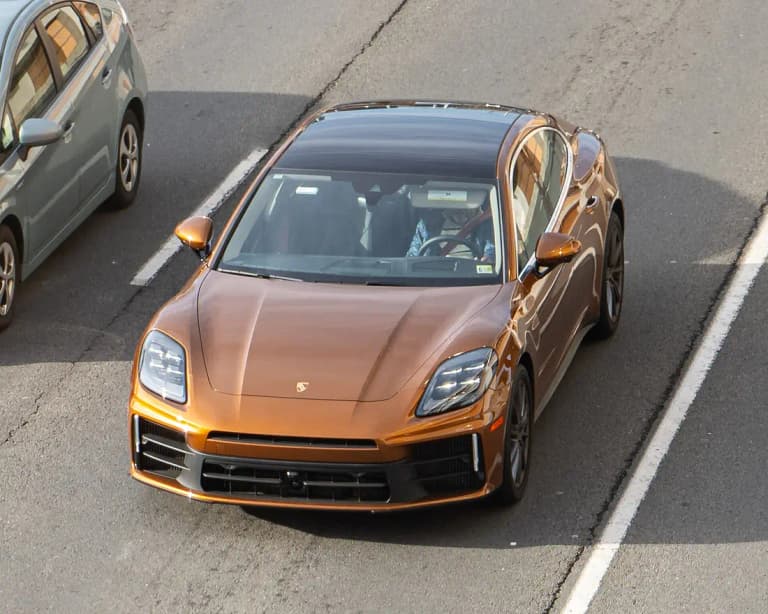
The Panamera Turbo has always been the fast one, and in the current range it is a plug-in hybrid making 671 hp. It is quicker everywhere and better equipped. It also costs a lot more and hides its engine behind a layer of electric assistance.
The GTS trades that speed for clarity. You feel the V8 build, you hear it change note, and the car responds directly to your right foot. For a lot of drivers, that trade is an easy one.
Body Styles: Sedan and Sport Turismo
Porsche sold a GTS Sport Turismo during the 971 years, from 2019 to 2024. It was the wagon-shaped Panamera, with a squared-off roof, a bigger tailgate opening, and the same 4.0 liter V8. The full Panamera Sport Turismo guide covers the body style, engine range, cargo differences, and used-buy checks. The 2019 launch car ran 179 mph, slightly down on the sedan.
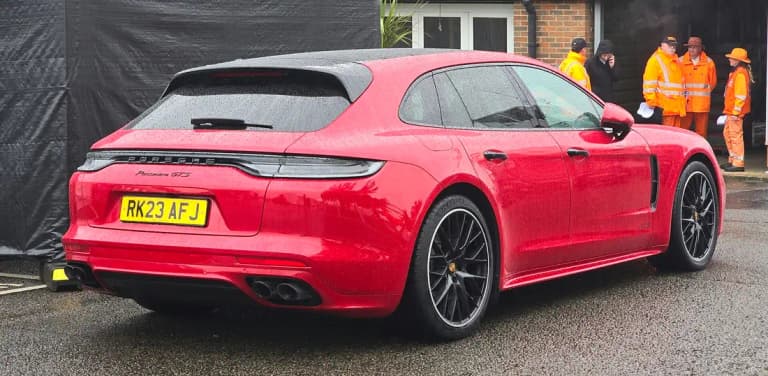
That body is gone. The third-generation 972 Panamera is a sedan only, so a GTS Sport Turismo can now only be bought used. If you want the wagon shape with a V8, a late 971 is the only way to get it.
Interior: Sport Seats, Race-Tex, and Screens
The GTS cabin is a Panamera cabin with the volume turned up. Porsche darkens the trim, adds its own materials, and fits seats built for cornering.
Seats and Cabin Trim
The current GTS comes with adaptive sport seats with 18-way adjustment. Porsche covers the roof lining, armrests, and door panels in Race-Tex, its suede-like material. Two GTS-specific interior packages are offered, one of them in Carmine Red.
The 971 GTS used black Alcantara with anodized aluminum trim and a heated Alcantara sport wheel. Both cars keep the four proper seats and the usable trunk. Comfort extras like ventilated seats live on the options list, so check what a given car was ordered with.
Displays and Controls
The 972 Panamera runs a curved digital driver display with a central touchscreen alongside it. A passenger screen is available as an option. Wireless smartphone mirroring is included, and a Bose sound system comes as part of the GTS package.
Porsche kept physical controls for the things you use while driving. The drive-mode switch sits on the steering wheel, where you can reach it without looking down.
Buying a Used Panamera GTS
The GTS is a strong used buy, because most of what makes it special is baked into the standard car. You are not hunting for a rare options combination to get the good version.
Which Generation to Buy
The 2021 to 2024 971 GTS is the value pick. It has the 473 hp V8, the updated interior, and the same air suspension and sport exhaust as the newer car. It costs far less than a new 972, and it is the last one available as a Sport Turismo.
The 970 GTS is the choice for the naturally aspirated engine. It is the cheapest way into the badge, and it is the oldest, so budget for maintenance. The 972 is the one to buy new, and it is the fastest GTS Porsche has built.
What to Check Before You Buy
Air suspension is the first thing to test. Check that the car rises and settles evenly, and that no corner sags overnight. Compressors and struts are wear items on any air-sprung car, and they are not cheap on a Panamera.
After that, treat it like any hard-driven V8. Look for a full service history, look for fresh brakes and tires, and get a pre-purchase inspection from a Porsche specialist. Also read the options sheet properly, because rear axle steering, ceramic brakes, and cooled seats are all worth money on resale.
Running One in Thailand
Thailand is the hardest place in the world to justify a big V8. Import duty and excise tax stack on top of each other, and engine size drives the excise band. That is why Panameras are rare on Thai roads compared with Singapore or Hong Kong.
Working out the real cost takes two steps. Start with our guide to importing a Porsche to Thailand, then read up on Thai car tax. Both explain the numbers you will actually pay. A privately imported GTS is possible, and it is never cheap.
Frequently Asked Questions
How much horsepower does the Porsche Panamera GTS have?
The current Porsche Panamera GTS makes 493 hp from a 4.0 liter twin-turbo V8, with 486 lb-ft of torque. That is 20 hp more than the previous GTS, which made 473 hp after its 2021 update.
How fast is the Porsche Panamera GTS?
The Panamera GTS reaches 60 mph in 3.6 seconds with the Sport Chrono package and tops out at 188 mph. The previous 971 GTS ran 3.9 seconds to 60 mph and reached 181 mph.
Is the Panamera GTS faster than the Panamera Turbo S E-Hybrid?
No. The Turbo S E-Hybrid makes 771 hp and hits 60 mph in about 2.9 seconds, so it is the quicker car. The GTS is lighter and simpler, with no battery pack, which is why enthusiasts still choose it.
Does the Panamera GTS still come as a Sport Turismo?
Not on the current car. Porsche sold a GTS Sport Turismo wagon during the 971 generation, from 2019 to 2024. The third-generation 972 Panamera is a sedan only.
How much does a Porsche Panamera GTS cost?
The new GTS launched at 154,200 US dollars before options and delivery. Porsche’s US site now lists it from about 166,900 dollars. Used 971 cars sell for a fraction of that.
Is the Panamera GTS naturally aspirated?
Only the first one was. The 970 GTS used a naturally aspirated 4.8 liter V8. Every GTS since 2019 has used a 4.0 liter twin-turbo V8, tuned to sound and feel like the old car.
Images: Hero and 972 rear by Alexander Migl, CC BY-SA 4.0. Silver 970 by Morio, CC BY-SA 3.0. Red 970 by Yahya S., CC BY 2.0. White 970 by Charles, CC BY 2.0. 971 front, 971 profile, 971 rear quarter and 971 exhaust by Damian B Oh, CC BY-SA 4.0. Sport Turismo by Calreyn88, CC BY-SA 4.0. Panamera 4S by OWS Photography, CC BY 4.0. Via Wikimedia Commons.