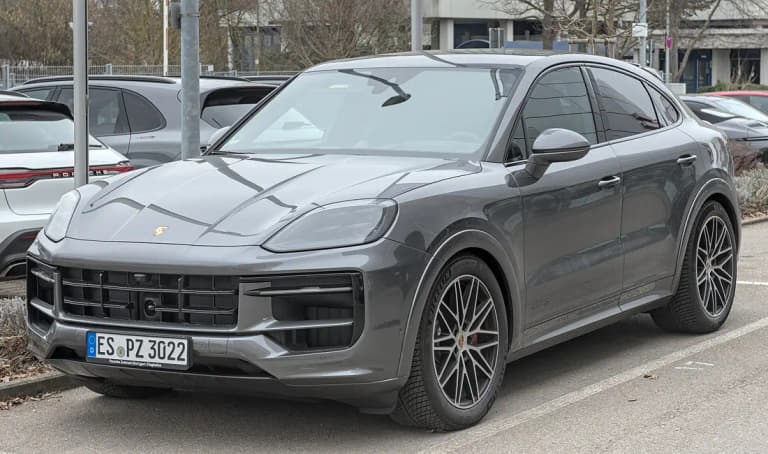
The Porsche Cayenne GTS is the sport-focused middle child of the Cayenne range. It uses a 493 horsepower 4.0 liter twin-turbo V8, hits 60 mph in 4.2 seconds, and reaches 171 mph. Porsche offers it as both a five-seat SUV and a lower-roofed Coupe, with sport suspension and a standard sport exhaust.
In this article, we’ll explain where the Porsche Cayenne GTS fits in the V8 lineup. We’ll cover its V8 engine, Coupe option, chassis upgrades, and pricing.
Contents
- 1 Quick Summary
- 2 What Is the Porsche Cayenne GTS
- 3 Cayenne GTS Generations
- 4 Engine and Powertrain
- 5 Performance and Specs
- 6 Chassis and Handling
- 7 Cayenne GTS SUV vs Coupe
- 8 Interior and Technology
- 9 How the GTS Fits in the Cayenne Range
- 10 Pricing
- 11 Ownership and Running Costs
- 12 Frequently Asked Questions
Quick Summary
- Engine: 493 hp twin-turbo 4.0-liter V8 with 487 lb-ft of torque.
- Performance: 0-60 mph in 4.2 seconds, top speed 171 mph.
- Body styles: Sold as both a five-seat SUV and a lower-roofline Coupe, sharing the same V8 and chassis.
- Transmission: Eight-speed Tiptronic S automatic with all-wheel drive.
- Standard exhaust: Sport exhaust comes standard, not optional.
- Starting price: $124,900 for the SUV and $129,500 for the Coupe (2025 model year).
- History: GTS badge on the Cayenne since 2007, switching from V8 to V6 between 2015 and 2017, then back to V8 in 2020.
What Is the Porsche Cayenne GTS
The Porsche Cayenne GTS is the sport-tuned version that sits between the mainstream Cayenne S and the range-topping Turbo. It pairs a twin-turbo V8 with firmer suspension, darker trim, and a standard sport exhaust. The idea is a Cayenne that drives sharper without stepping up to Turbo money.
GTS stands for Gran Turismo Sport, a badge Porsche uses across its lineup for driver-focused models. On the Porsche Cayenne, the GTS has become the enthusiast pick. It gives you most of the Turbo character, a lower ride height, and specific styling, for a lower price.
Porsche builds the GTS in two body styles. One is the tall five-seat SUV. The other is the Coupe, with a lower fastback roofline and the same five-seat layout. Both use the same engine and chassis hardware, so the split is about looks and rear headroom, not speed.
Cayenne GTS Generations
The GTS badge has appeared on the Cayenne since 2007. The engine under the hood has changed more than once. It started as a naturally aspirated V8, briefly switched to a turbo V6, then returned to a twin-turbo V8 that the car still uses today.
First GTS: 957 (2007-2010)
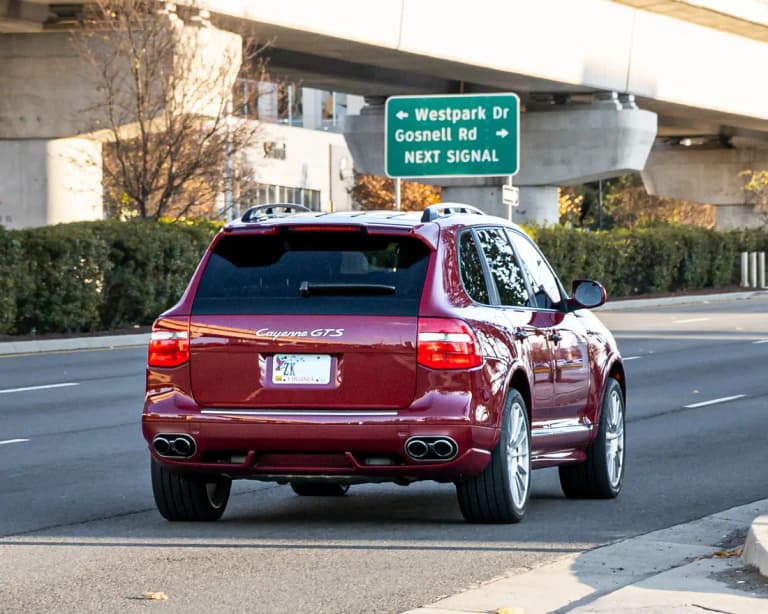
The first Cayenne GTS arrived with the 957 facelift of the original Cayenne. It used a naturally aspirated 4.8 liter V8 making 405 hp, with 369 lb-ft of torque, per Wikipedia’s Cayenne data. It reached 100 km/h in 6.1 seconds and topped out at 157 mph.
This first GTS set the template. It sat lower than a standard Cayenne, wore body-color trim, and offered a rare six-speed manual gearbox alongside the automatic. It was the driver’s Cayenne before that role had a clear name.
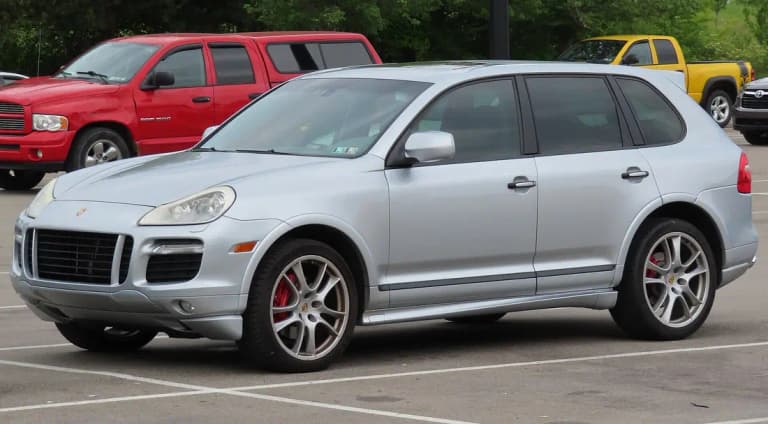
Early GTS cars looked purposeful without shouting. The silver example below shows the standard 957 GTS stance, with red brake calipers and multi-spoke wheels. These first cars are now the cheapest way into a V8 Cayenne GTS.
Second GTS: 958 V8 and V6 (2012-2017)
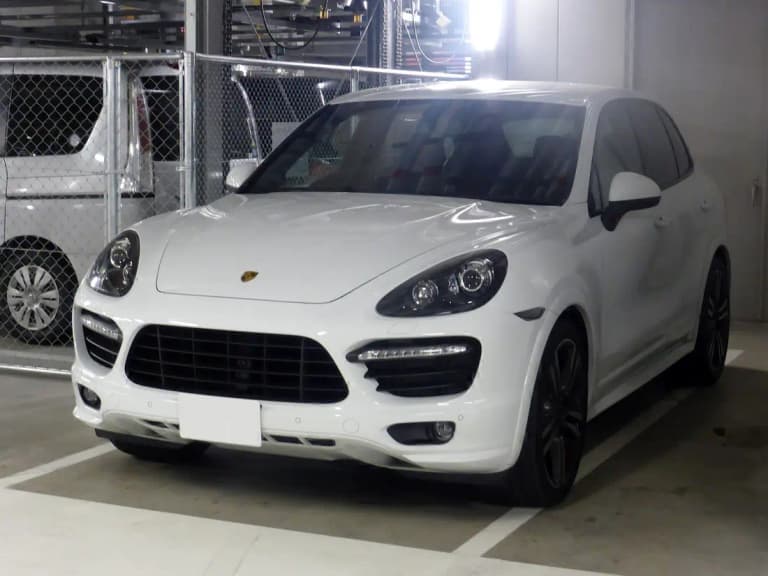
The second-generation Cayenne, code 958, kept the V8 GTS at first. That car used a 4.8 liter V8 making 420 hp, per Wikipedia’s Cayenne data. It was quicker and more refined than the 957, but it followed the same recipe.
The bigger change came with the 2015 facelift. Porsche dropped the V8 and fitted a 3.6 liter twin-turbo V6 making 434 hp, per Wikipedia. The V6 GTS was strong on paper, but many buyers missed the V8 sound. That reaction shaped what Porsche did next.
V8 Returns: 9YA (2020-2023)
Porsche brought the V8 back for the third-generation Cayenne, code 9YA. The 2020 GTS used a 4.0 liter twin-turbo V8 making 453 hp and 457 lb-ft, as Porsche detailed in its 2021 GTS press release. Porsche described it as the return of the V8 to the GTS.
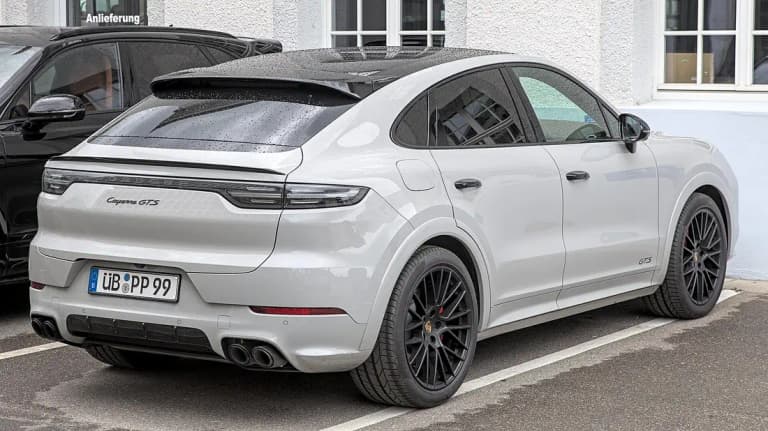
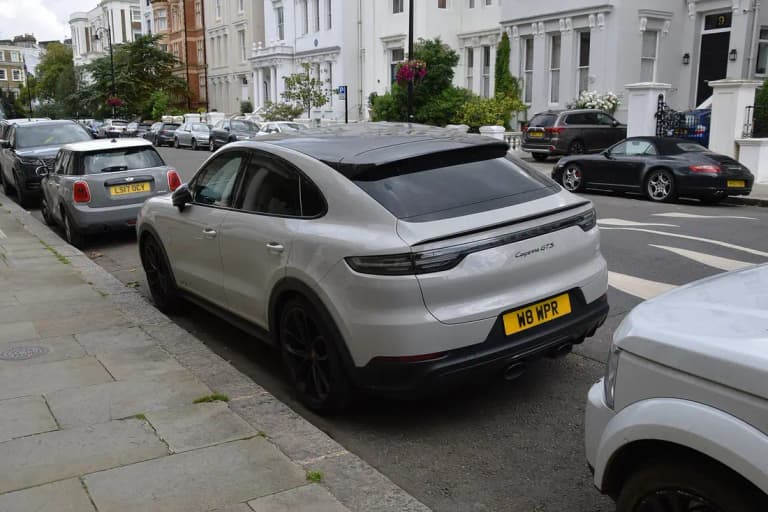
This car hit 60 mph in 4.5 seconds, or 4.2 seconds with Performance Start, and reached 168 mph. It came in both SUV and Coupe forms. The chalk-colored Coupe below is a 9YA GTS in the lower-roof body.
Current Car: 9YB Facelift (2024 on)
Porsche updated the Cayenne with a heavy facelift, known internally as the 9YB. The GTS joined that revised range for the 2025 model year. It gained power, fresh styling, and a longer list of standard equipment.
The current GTS makes 493 hp and 487 lb-ft, per Porsche Newsroom. That is a gain of 40 hp and 30 lb-ft over the 9YA car. It also cuts the 60 mph time to 4.2 seconds and raises top speed to 171 mph. This is the version on sale now.
Engine and Powertrain
The heart of the current Cayenne GTS is a 4.0 liter twin-turbo V8. Porsche builds it in Zuffenhausen and shares its basic design with the Cayenne Turbo. In the GTS it is tuned for a strong midrange and a vocal top end.
| Spec | Cayenne GTS (2025) |
|---|---|
| Engine | 4.0L twin-turbo V8 |
| Power | 493 hp |
| Torque | 487 lb-ft |
| 0-60 mph | 4.2 sec |
| Top speed | 171 mph |
| Transmission | 8-speed Tiptronic S |
| Drivetrain | All-wheel drive |
| Seats | 5 |
The 4.0 Liter Twin-Turbo V8
The V8 uses two turbochargers mounted in the vee, between the cylinder banks. That layout shortens the path from turbo to intake and helps throttle response. The result is strong pull from low revs, with 487 lb-ft available across a wide band.
Porsche revised this engine for the 9YB facelift. The changes lifted output to 493 hp without hurting daily drivability. Mechanically, it sits in the same V8 family as the Turbo models, just with a milder state of tune. That includes the Cayenne Turbo GT at the top of the range.
Transmission and All-Wheel Drive
The GTS sends power through an eight-speed Tiptronic S automatic. This is a torque-converter gearbox, not the dual-clutch PDK found in Porsche sports cars. It suits a heavy SUV, with smooth low-speed manners and quick kickdown when you want it.
Drive goes to all four wheels through Porsche Traction Management. The system runs an active center clutch that shifts torque front to rear as grip demands. On the 9YB GTS it uses a separate water cooling circuit, as Porsche notes in its 2025 GTS launch details.
The Standard Sport Exhaust
A sport exhaust is standard on the GTS, not an option. It gives the V8 the deep, hard-edged voice that buyers wanted back after the V6 years. The 9YB car fits dark bronze tailpipes as part of the GTS look.
Performance and Specs
The Cayenne GTS is quick without being extreme. It slots below the Turbo models and Turbo GT on pure speed, but it carries less weight over the front axle than the plug-in hybrids. That balance is a big part of its appeal.
0-60 mph and Top Speed
The current GTS reaches 60 mph in 4.2 seconds and tops out at 171 mph on summer tires, per Porsche’s official figures. Porsche’s US configurator quotes a 4.4 second 0-60 time for later cars, a small difference down to tires and model year. The optional Sport Chrono package adds launch control for the quickest repeatable launches off the line. Either way, the GTS is fast enough for almost any real-world use.
The 9YA car it replaced ran 4.5 seconds to 60 mph, or 4.2 with Performance Start. So the facelift’s 4.2 second figure now comes as standard. The extra 40 hp does most of that work.
Fuel Economy
A big-engined V8 SUV is not built for fuel economy, and the GTS is honest about that. Expect real-world figures in the high teens to low twenties in US mpg, depending on how you drive. Gentle highway cruising helps, but the V8 rewards a heavy foot and drinks accordingly.
Buyers chasing better numbers should look at the Cayenne E-Hybrid range instead. Those cars trade some of the V8 character for electric-only running and lower fuel use on short trips.
Chassis and Handling
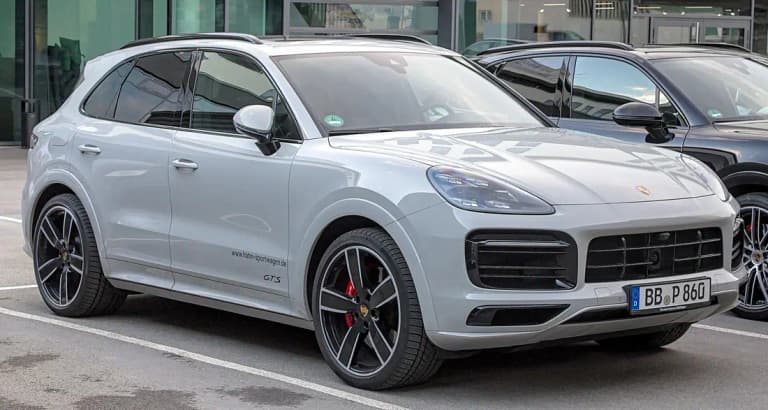
The GTS is the Cayenne set up to drive, and the hardware backs that up. Porsche lowers the ride height and firms up the suspension over lesser models. The goal is flatter cornering and sharper turn-in without wrecking the ride.
Air Suspension and PASM
The 9YB GTS comes with two-chamber adaptive air suspension as standard. It pairs with the adaptive damper system PASM, which adjusts each corner many times a second. Porsche also fits new two-valve damper technology on this car for a wider spread between comfort and control.
The GTS sits about 10 millimeters lower than a standard Cayenne, according to Porsche’s 2025 GTS release. That lower center of gravity, plus the stiffer setup, is what gives the GTS its keener feel. It reads the road well without punishing you on rough surfaces.
Torque Vectoring and PDCC
Porsche Torque Vectoring Plus is standard on the 9YB GTS. It uses a rear differential to brake the inside wheel and rotate the car into a corner. The GTS also borrows the front axle pivot bearings from the Cayenne Turbo GT, which sharpen the steering.
Buyers can add Porsche Dynamic Chassis Control, an active roll bar system that keeps the body flatter in fast corners. PDCC is a worthwhile option on a tall SUV. It cuts the lean you feel and makes the GTS behave more like a low sports car.
Cayenne GTS SUV vs Coupe
The choice between the GTS SUV and the GTS Coupe is about shape, not speed. Both share the same V8, gearbox, and chassis tuning. Both seat five people across two rows. The Coupe simply trades a little rear headroom and cargo height for a lower, sleeker roofline.
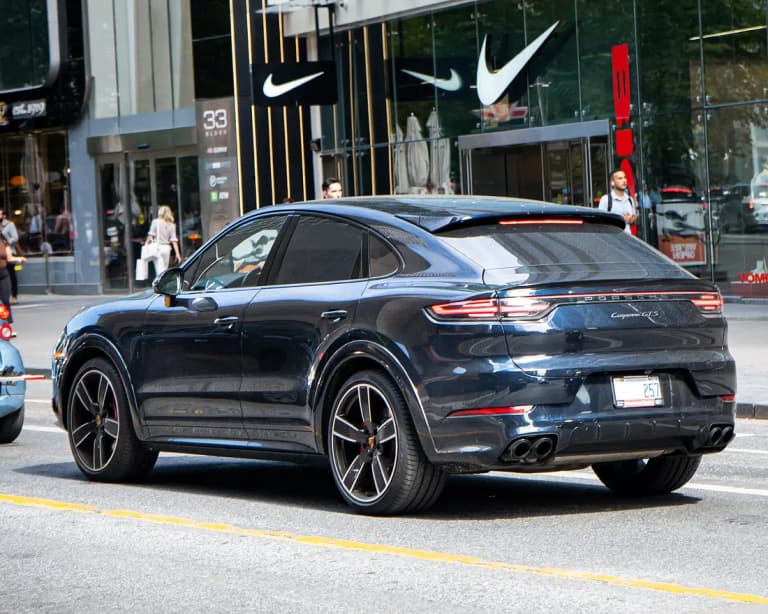
The Coupe roof drops toward a small ducktail spoiler and a wider rear track look. It also adds an adaptive roof spoiler that extends at speed. The SUV keeps the taller tailgate, slightly more rear space, and the classic Cayenne profile.
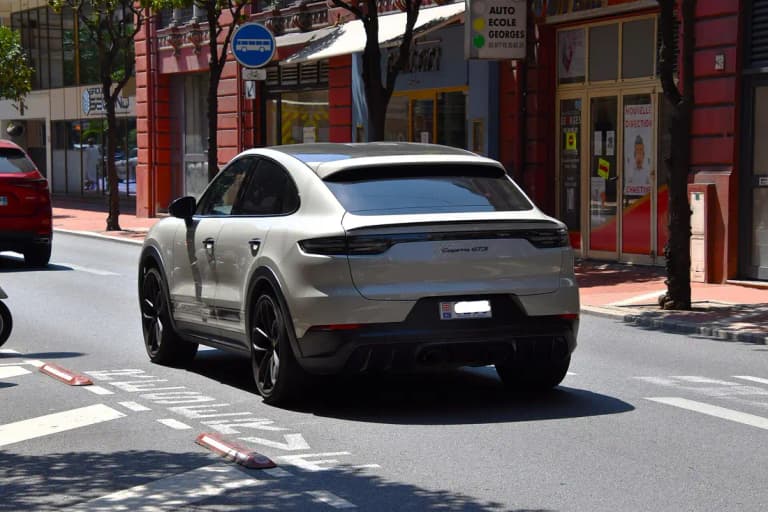
Both bodies carry the same GTS badge on the tailgate and the same darkened trim. The rear light bar and quad tailpipes are shared too. From the front, the SUV and Coupe are nearly identical.
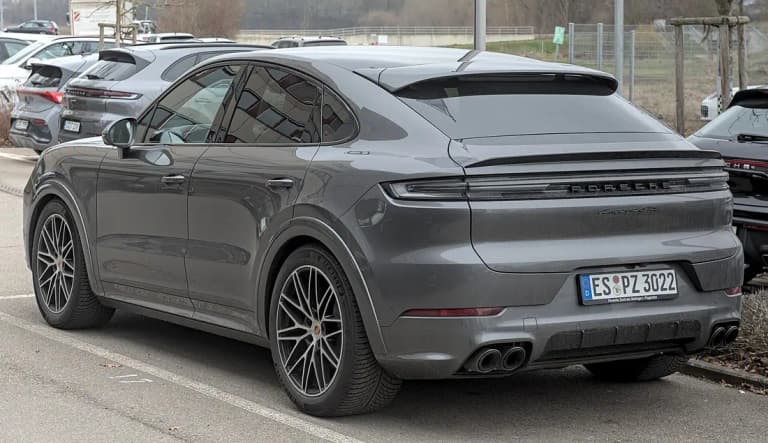
Neither body is faster than the other in a straight line. Pick the SUV for the extra practicality and headroom. Pick the Coupe if you want the sportier silhouette and do not carry tall rear passengers often.
Interior and Technology
Inside, the GTS gets its own dark theme. Porsche fits standard sport seats trimmed in black leather and Race-Tex, the brand’s suede-like material. GTS logos, contrast stitching, and darkened trim mark it out from a standard Cayenne.
The 9YB facelift brought a fully digital dashboard. A curved 12.6 inch driver display sits ahead of a 12.3 inch central touchscreen. A passenger display is available so the front passenger can control media and navigation. Wireless Apple CarPlay and Android Auto are included.
The GTS keeps everyday features you expect at this price. Ambient lighting is standard, while heated rear seats, a panoramic roof, adaptive cruise control, and lane keeping sit on the options list, many grouped into a premium package. The SUV body also keeps generous cargo space, with a practical cargo volume for the class. It is a genuine daily car, built for real use rather than a stripped-out special.
How the GTS Fits in the Cayenne Range
The GTS sits in the upper-middle of the Cayenne lineup. It is quicker and better equipped than the Cayenne S. It costs and weighs less than the Turbo E-Hybrid and the Turbo GT above it. For many buyers, that makes it the sweet spot.
GTS vs Turbo and Turbo GT
The Cayenne Turbo and Turbo GT use hotter versions of the same V8, with more power and higher prices. The 650 hp Turbo GT is the flagship and still holds a Nurburgring SUV record, but it comes only as a Coupe. The GTS gives up outright speed but keeps the pure V8 layout without a hybrid system.
If you want the sharpest, fastest Cayenne, the Cayenne Turbo GT is the answer. For most of the V8 character at far less money, the GTS makes more sense. It is the enthusiast’s value pick in the range.
GTS vs the E-Hybrid Models
The Cayenne E-Hybrid models add an electric motor and a battery for electric-only running. They can be very quick, and the Turbo E-Hybrid outguns the GTS on paper. But they carry extra weight low and behind the axle line.
The GTS answers with a lighter, simpler layout and a purer V8 feel. There is no charging to manage and no battery to haul around. For drivers who value feel and sound over efficiency, the GTS is the more focused choice.
Pricing
The 2025 Cayenne GTS SUV started at 124,900 US dollars, and the GTS Coupe started at 129,500 dollars, per Porsche Newsroom. Both prices exclude tax, title, registration, and a delivery fee. Later model years have edged higher, and the Porsche configurator now lists the GTS from about 132,400 dollars.
Options move the price quickly. PDCC, carbon ceramic brakes, rear axle steering, and interior packages all add up. A well-optioned GTS can approach Turbo money, so it pays to be selective on the order sheet.
On the used market, older GTS models offer strong value. A 957 or 958 V8 GTS is now the affordable way into the badge, though running costs stay high. Third-generation 9YA cars sit in the middle, below the price of a new 9YB.
Ownership and Running Costs
The Cayenne GTS is a usable everyday SUV, but it is a Porsche V8, so budget accordingly. Servicing, tires, and brakes all cost more than a mainstream SUV. The wide performance tires wear faster if you use the power the car gives you.
The 4.0 liter twin-turbo V8 has proven solid across the Cayenne and Panamera GTS lines. Keep up with oil changes and the car should be dependable. As with any turbocharged Porsche, a documented service history matters when buying used.
Fuel is the other running cost to plan for. This is a heavy SUV with a thirsty V8, and it will not sip fuel. If low running costs are a priority, an E-Hybrid or a smaller Macan may suit better. For buyers who want a fast, sonorous family Porsche, the GTS earns its keep.
Frequently Asked Questions
How much horsepower does the Porsche Cayenne GTS have?
The current Cayenne GTS makes 493 horsepower from a 4.0 liter twin-turbo V8. It also produces 487 lb-ft of torque. That is 40 hp more than the previous GTS.
How fast is the Porsche Cayenne GTS?
The Cayenne GTS reaches 60 mph in 4.2 seconds and tops out at 171 mph. Those figures put it just behind the Cayenne Turbo in the range.
Does the Cayenne GTS come as a Coupe?
Yes. Porsche builds the GTS in both the standard SUV body and the sloped-roof Coupe. The two share the same V8 and running gear, so the choice is mainly about styling and rear headroom.
Is the Cayenne GTS a V6 or a V8?
The current Cayenne GTS is a twin-turbo V8. Porsche used a 3.6 liter twin-turbo V6 for the GTS between 2015 and 2017, then brought the V8 back in 2020.
How much does a Porsche Cayenne GTS cost?
The Cayenne GTS SUV started around 124,900 US dollars at launch, and the GTS Coupe started around 129,500 dollars. Options and delivery push most cars higher.
How many seats does the Cayenne GTS have?
The Cayenne GTS seats five people across two rows. Both the SUV and the Coupe use the same five-seat layout, with the Coupe giving up a little rear headroom for its lower roofline.
Images: Coupe front and Coupe rear by Alexander Migl, CC BY-SA 4.0. Blue Coupe, Red 957 by OWS Photography, CC BY 4.0. Gray 9YA SUV and Chalk Coupe by Alexander-93, CC BY-SA 4.0. Silver 957 by MercurySable99, CC BY-SA 4.0. White 958 by Tokumeigakarinoaoshima, CC0. 2024 Coupe rear and 2021 Coupe by Charles, CC BY 2.0. Via Wikimedia Commons.