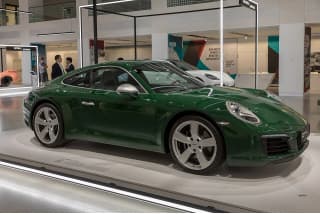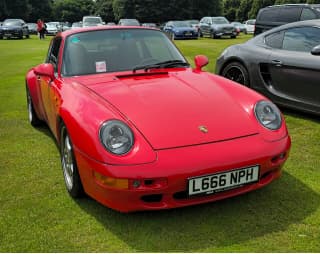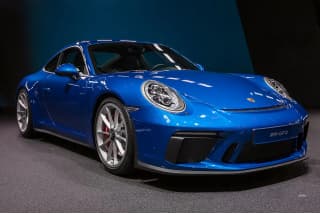
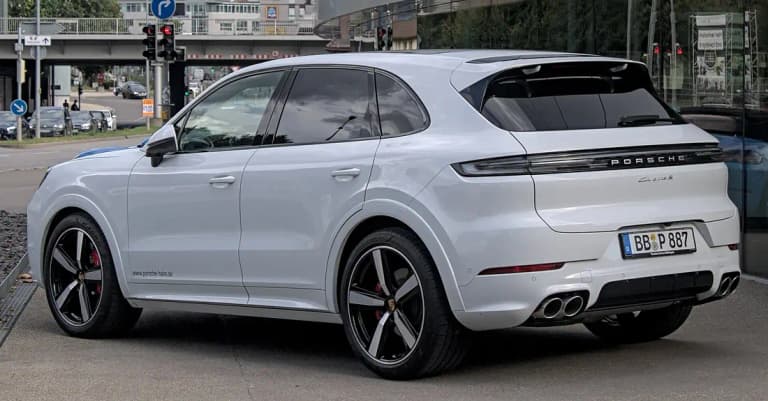
The Porsche Cayenne S is the mid-tier performance version of Porsche’s large SUV. It sits above the base V6 and below the GTS and Turbo models. Today it uses a 468 hp twin-turbo V8. The S ran on turbocharged V6 power from 2014 to 2023, then the V8 returned.
In this article, we’ll explain the Porsche Cayenne S and its return to V8 power. We’ll cover its engine history, generations, performance, and pricing.
Contents
- 1 Quick Summary
- 2 What Is the Porsche Cayenne S
- 3 Where the Cayenne S Sits in the Range
- 4 Cayenne S Generations and the V8 Story
- 5 Engine and Powertrain
- 6 Performance and Specs
- 7 The Cayenne S E-Hybrid
- 8 Chassis, Suspension, and Off-Road Ability
- 9 SUV and Coupe Body Styles
- 10 Interior, Standard Equipment, and Technology
- 11 Pricing and Used Value
- 12 Ownership and Reliability
- 13 Frequently Asked Questions
Quick Summary
- Current Engine: a 4.0 liter twin-turbo V8 making 468 hp and 442 lb-ft in the facelifted 2024 (9YB) Cayenne S.
- Performance: 0-60 mph in as little as 4.4 seconds with the Sport Chrono Package, with a 169 mph top speed.
- Engine History: the S launched as a naturally aspirated V8 in 2002, switched to a turbocharged V6 from 2014 to 2023, then returned to a twin-turbo V8 for 2024.
- New Price: the 2025 Cayenne S SUV starts around 101,600 US dollars, with the Coupe near 108,000 dollars.
- Vs GTS: the GTS shares the same 4.0 liter V8 but is tuned to 493 hp, leaving the S as the more affordable V8 pick.
- S E-Hybrid: a plug-in alternative making a combined 512 hp with a 25.9 kWh battery for short electric-only trips.
- Towing: a properly equipped Cayenne S can pull up to 7,716 pounds (3,500 kg).
- Known Issue: early V8 cars (955/957) can suffer cracked plastic coolant pipes, so check for a metal-pipe replacement before buying.
What Is the Porsche Cayenne S
The Porsche Cayenne S is the mid-tier version of Porsche’s large SUV. It is the step above the entry model and below the sportier GTS and Turbo trims. For most of its life the S has been the entry point to a V8 Cayenne.
The S badge has always signalled more power than the base car, without the price of the top models. It is the sweet spot for buyers who want real pace and the right engine, but do not need the fastest Cayenne built. That mix has made it a core seller since 2002.
The engine under the hood is the twist in the story. The S launched as a naturally aspirated V8. It switched to turbocharged V6 power for nearly a decade, then went back to a twin-turbo V8 in 2024. It sits within the wider Porsche Cayenne range.
Here is a quick spec summary for the current Cayenne S.
| Spec | Cayenne S (2024) |
|---|---|
| Engine | 4.0L twin-turbo V8 |
| Power | 468 hp |
| Torque | 442 lb-ft |
| 0-60 mph | 4.4 sec |
| Top speed | 169 mph |
| Transmission | 8-speed auto |
| Drivetrain | All-wheel drive |
| Seats | 5 |
Where the Cayenne S Sits in the Range
The Cayenne S has always been a middle trim, not a flagship. It gives you a clear jump over the base car in power and character. It leaves the outright speed and price of the Turbo models to buyers who want the very top.
The Cayenne Trim Ladder
The current Cayenne range runs from a base V6 up to a track-focused flagship. The base Cayenne uses a 3.0 liter turbo V6 with 348 hp. The S sits one rung up with its 468 hp V8, per Porsche’s 2024 Cayenne launch.
Above the S sit the sportier Cayenne GTS and the plug-in hybrid models. The range tops out with the Cayenne Turbo GT, a coupe-only flagship. A fully electric Cayenne is also on the way to sit alongside these combustion cars.
Cayenne S vs GTS vs Turbo E-Hybrid
The S, GTS, and Turbo E-Hybrid all share the same basic 4.0 liter V8. The difference is state of tune, added hardware, and price. The S is the value V8, the GTS is the driver’s pick, and the Turbo E-Hybrid is the muscle option.
| Spec | S | GTS | Turbo E-Hybrid |
|---|---|---|---|
| Engine | 4.0L V8 | 4.0L V8 | V8 hybrid |
| Power | 468 hp | 493 hp | 729 hp |
| 0-60 mph | 4.4 sec | 4.2 sec | 3.5 sec |
The GTS makes 493 hp and adds sport suspension as standard, per Porsche Newsroom. The 729 hp Turbo E-Hybrid is the most powerful Cayenne ever and hits 60 mph in 3.5 seconds. The S trades that firepower for a lower price and a simpler, non-hybrid layout.
Cayenne S Generations and the V8 Story
The Cayenne S has run across three generations since 2002. Its engine history is the reason buyers study it so closely. It went V8, then V6, then back to V8, and that path shapes which used car makes sense.
First Generation: 955 and 957
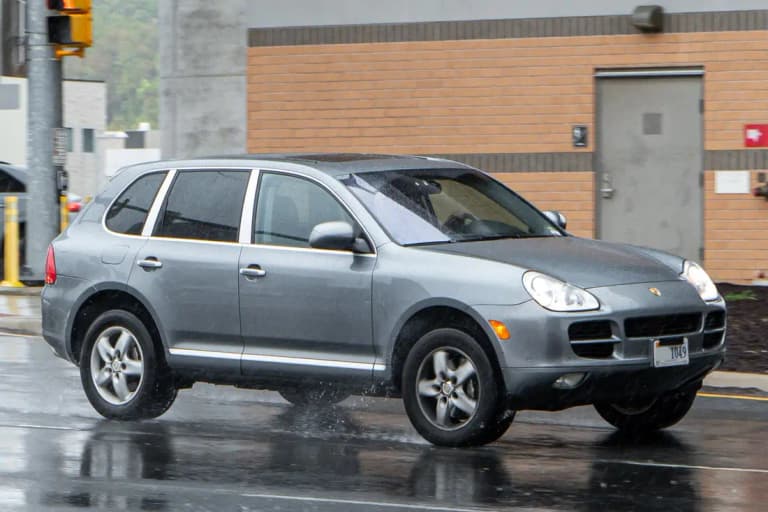
The first Cayenne S arrived in 2002 as the 955. It used a 4.5 liter naturally aspirated V8 making 340 PS, about 335 hp, with 310 lb-ft of torque, per Wikipedia’s Cayenne data. It reached 60 mph in 6.9 seconds and topped out at 150 mph.
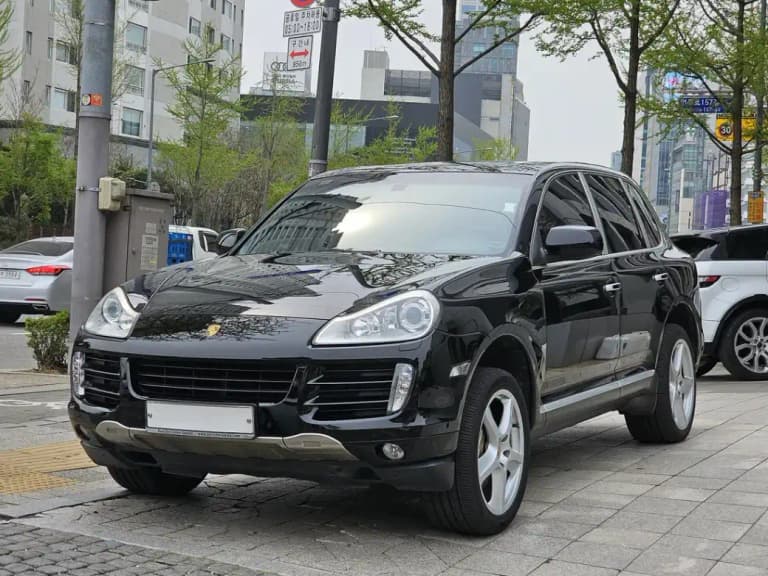
The 957 facelift landed in 2007 and grew the V8 to 4.8 liters. Output rose to 385 PS, roughly 380 hp, with 369 lb-ft, per the same Wikipedia data. This car dropped the 0-100 km/h sprint to 6.6 seconds and lifted top speed to 155 mph.
These first cars set the template for the S. A big, torquey V8 sat under a practical SUV body that could also go off-road. They are now the cheapest way into a V8 Cayenne S, with the caveats covered in the ownership section below.
Second Generation: The 958 V8
The second-generation Cayenne, code 958, arrived in 2010 and kept the V8 S. It carried a 4.8 liter naturally aspirated V8 making 400 PS, close to 395 hp, per Wikipedia. The car was lighter and more efficient than the model it replaced.
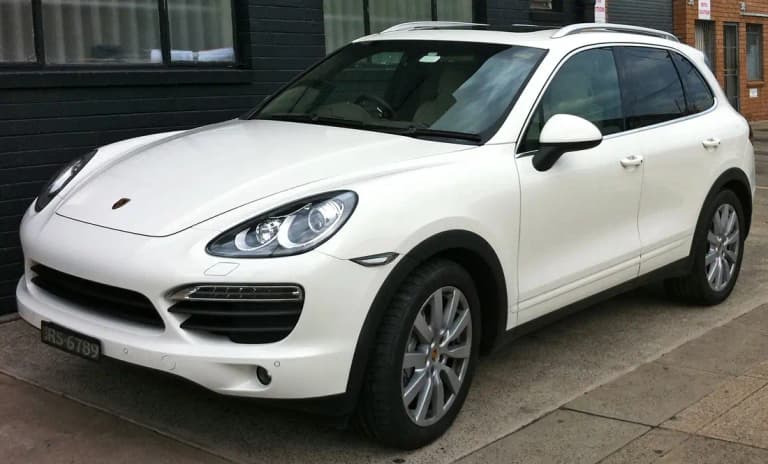
This 958 S is the last of the original naturally aspirated V8 cars. It kept the free-revving character that later turbo models traded for low-end punch. For some buyers, this is the S to have before turbocharging changed the feel.
The V6 Interlude: 958.2
Porsche facelifted the 958 in 2014, and this is where the engine story turns. The S dropped its V8 and switched to a 3.6 liter twin-turbo V6 making 420 PS, near 414 hp, per Wikipedia’s Cayenne data. On paper it was stronger than the V8 it replaced.
The new V6 was quick and efficient, but the change split opinion. Many buyers missed the V8 sound and the smooth power delivery. That reaction planted the seed for the V8 comeback years later.
Third Generation: The 9YA V6
The third-generation Cayenne, code 9YA, launched in 2017 and kept the S on V6 power. It used a 2.9 liter twin-turbo V6 making 434 hp with 405 lb-ft, per Wikipedia. It hit 60 mph in 4.9 seconds, or 4.6 seconds with the Sport Chrono Package.
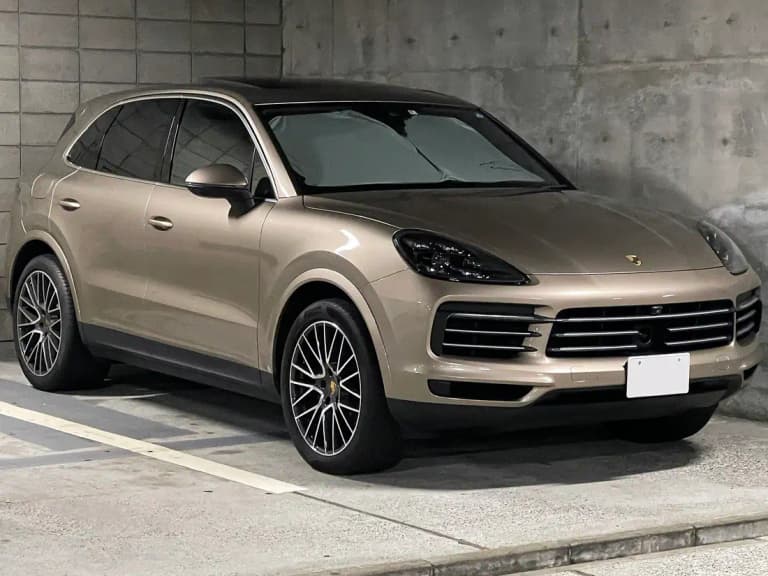
This 9YA S was fast and modern, with sharper handling than any Cayenne before it. Yet the V6 badge still bothered part of the audience. Buyers who wanted a V8 had to step up to the Turbo, which cost far more.
The V8 Returns: 9YB Facelift
The 2024 facelift, known internally as the 9YB, fixed the complaint head on. Porsche put a 4.0 liter twin-turbo V8 back in the S. It makes 468 hp and 442 lb-ft, per Porsche’s official launch details. That is 34 hp and 37 lb-ft more than the V6 it replaced.
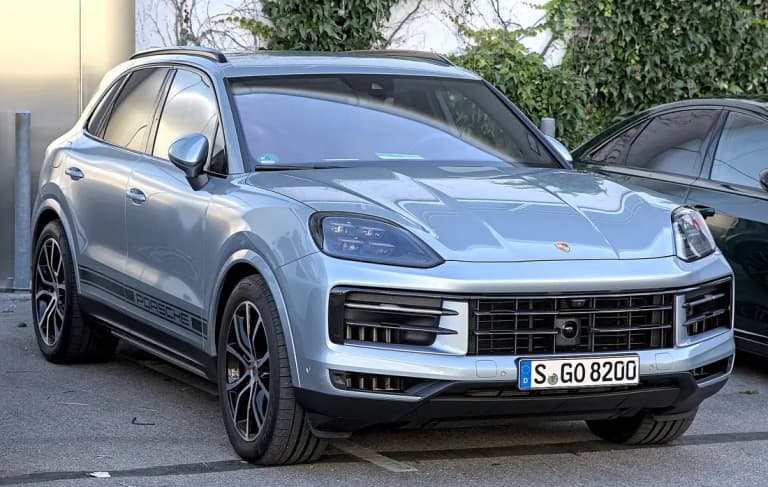
This is the version on sale now. It reaches 60 mph in up to 4.4 seconds with Sport Chrono and reaches a top track speed of 169 mph. The V8 return is the single biggest reason this generation of S has drawn so much interest.
Engine and Powertrain
The current Cayenne S runs the same V8 family found across the Porsche range. In the S it is tuned for strong daily response rather than headline numbers. It shares its core design with the GTS and Turbo models above it.
The Current 4.0 Liter Twin-Turbo V8
The 4.0 liter V8 places its two turbochargers inside the vee, between the cylinder banks. That layout shortens the path from turbo to intake and sharpens throttle response. The result is a wide band of torque that suits a heavy SUV.
Porsche revised this engine for the facelift, lifting output to the current 468 hp. It is the same basic unit as the one in the Cayenne Turbo lineage, just in a milder state of tune. In the S it favors smooth, usable power over an aggressive top end.
Transmission and All-Wheel Drive
The S sends power through an eight-speed Tiptronic S automatic. This is a torque-converter gearbox, not the dual-clutch PDK used in Porsche sports cars. It shifts smoothly at low speed and kicks down quickly when you ask for pace.
Drive goes to all four wheels through Porsche Traction Management. An active center clutch shifts torque front to rear as grip demands. This all-wheel-drive system is a big part of why the Cayenne feels planted in poor weather and light off-road use.
Performance and Specs
The Cayenne S is quick without chasing the flagship. It slots below the GTS and the hybrid models on outright speed. In return it stays lighter and simpler than the plug-in cars, which suits keen drivers.
0-60 mph and Top Speed
The current S reaches 60 mph in up to 4.4 seconds with the Sport Chrono Package, per Porsche’s 2024 Cayenne figures. Top track speed is 169 mph. The optional Sport Chrono Package adds launch control for the quickest repeatable starts.
Those numbers put the S just behind the 493 hp GTS. The gap in the real world is small. For a family SUV, the S already delivers pace that most owners will rarely fully use.
Fuel Economy
A twin-turbo V8 SUV is not built for economy, and the S is honest about it. Expect real-world figures in the high teens to low twenties in US mpg. Gentle highway cruising helps, but the V8 rewards a heavy foot and drinks to match.
Buyers chasing lower fuel bills should look at the E-Hybrid models. Those cars can run short trips on electricity alone, which cuts fuel use around town.
The Cayenne S E-Hybrid
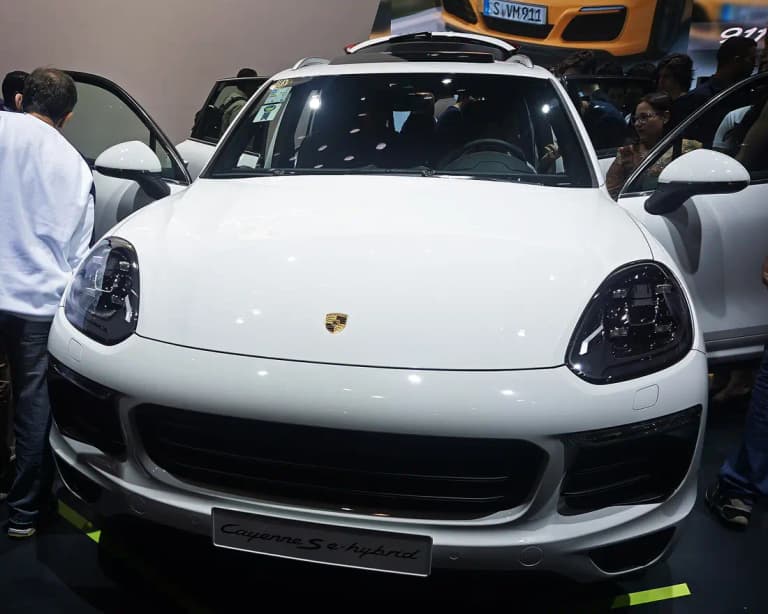
The Cayenne S E-Hybrid is the plug-in version of the S badge. It pairs a turbo V6 with an electric motor and a battery. The name first appeared on the 958.2 in 2015, and Porsche revived it for the current car.
System Power and Electric Range
The current S E-Hybrid produces a combined 512 hp and 553 lb-ft, per Porsche Newsroom. A 3.0 liter turbo V6 with 348 hp works with a 174 hp electric motor. It reaches 60 mph in 4.4 seconds, matching the V8 S.
Porsche fits a 25.9 kWh battery, up from 17.9 kWh on the older car. An 11 kW onboard charger cuts charging time to roughly two and a half hours on a suitable wallbox. The larger battery gives useful electric-only running for short daily trips.
S E-Hybrid vs the V8 S
The two share a name and a 0-60 time, but feel different. The E-Hybrid has more system power and can drive on electricity alone. It also carries extra weight low and behind the axle line from its battery pack.
The V8 S answers with a lighter layout and the sound of eight cylinders. There is no charging to manage and no battery to haul. For drivers who value feel and noise over efficiency, the V8 S is the purer choice.
Chassis, Suspension, and Off-Road Ability
The Cayenne S rides on the same well-sorted chassis as the rest of the range. Porsche gives it a broad spread between comfort and control. Options let owners tune it toward sport or long-distance ease.
Air Suspension and Adaptive Damping
Steel spring suspension is standard, with adaptive air suspension on the options list. The air setup pairs with adaptive dampers that adjust each corner many times a second. Together they let the S firm up for corners or soften for the highway.
Air suspension also lets the driver raise or lower the body. That helps with loading, high-speed stability, and clearing rough ground. It is one of the most useful boxes to tick on a used Cayenne S order sheet.
Off-Road Ability and Towing
The Cayenne has always been a real off-roader under its sporty skin. With air suspension raised, it clears ruts and light trails that stop many rivals. Its all-wheel-drive system and ground clearance make it genuinely capable away from tarmac.
Towing is another Cayenne strength. When properly equipped, the Cayenne S can pull up to 7,716 pounds, or 3,500 kg. That makes it a strong choice for owners who tow a boat or trailer and still want a Porsche to drive daily.
SUV and Coupe Body Styles
Porsche sells the Cayenne S in two shapes. One is the tall five-seat SUV. The other is the Cayenne Coupe, with a lower fastback roofline and the same running gear.
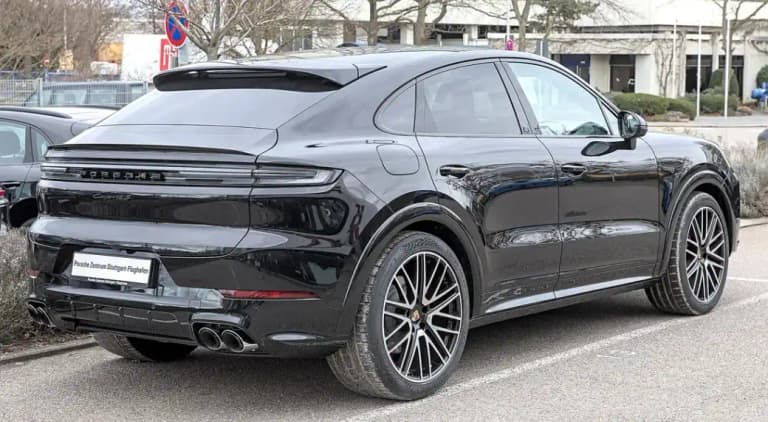
The Coupe trades a little rear headroom and cargo height for its sleeker profile. Both bodies use the same 468 hp V8 and the same chassis hardware. Neither is faster than the other in a straight line, so the choice is about looks and practicality.
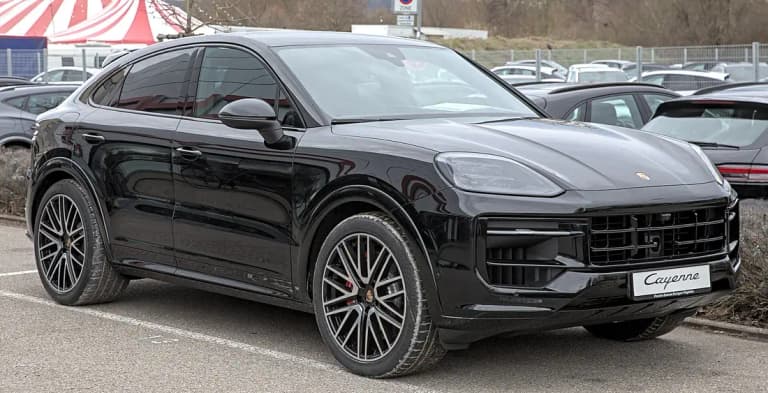
Pick the SUV for maximum space, rear headroom, and a taller tailgate. Pick the Coupe for the sportier silhouette if you rarely carry tall rear passengers. The S badge is available on both, so buyers do not have to compromise on power to get the shape they want.
Interior, Standard Equipment, and Technology
Inside, the Cayenne S carries Porsche’s modern SUV cabin. Material quality is high, and the layout puts the driver first. The S sits below the GTS, so it wears a slightly less aggressive theme.
Standard Equipment on the S
The S adds meaningful kit over the base Cayenne. Standard equipment typically includes larger wheels, upgraded brakes, and part-leather seats. Buyers can add features like heated rear seats, a panoramic roof, and a premium sound system through the options list.
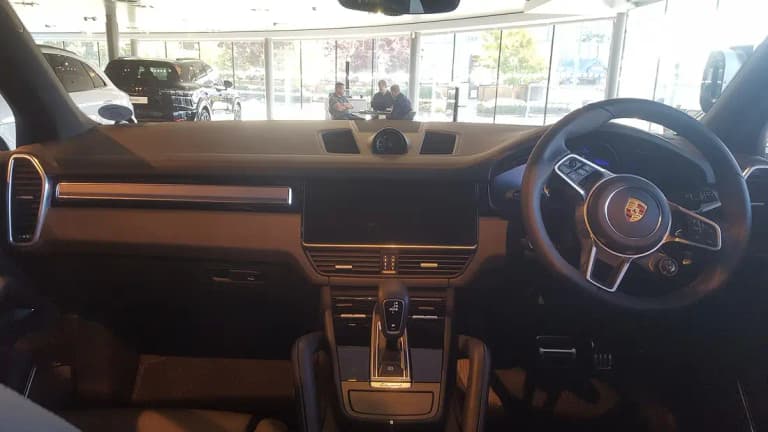
As with any Porsche, the options list is long and prices climb fast. A carefully specced S can feel close to a GTS inside. It pays to choose the boxes that matter to you rather than tick everything.
Screens and Driver Assists
The facelifted Cayenne S uses a fully digital dashboard. A curved driver display sits ahead of a central touchscreen, with an optional passenger screen. Wireless Apple CarPlay and Android Auto are included.
Driver assists cover the usual ground for the class. Adaptive cruise control, lane keeping, and parking aids are available, many grouped into packages. The result is a cabin that works as a genuine daily driver, not just a weekend toy.
Pricing and Used Value
The Cayenne S has always been priced as a middle model. New, it costs well above the base car but far below the Turbo models. Used, its value depends heavily on which engine sits under the hood.
New Cayenne S Prices
A new 2025 Cayenne S SUV starts around 101,600 US dollars, with the S Coupe near 108,000 dollars, per Kelley Blue Book. Those figures are before options and delivery. The base Cayenne starts far lower, near 86,000 dollars with destination.
Options move the price quickly on any Porsche. Air suspension, sport packages, and interior upgrades all add up. A well-optioned S can edge toward GTS money, so it pays to be selective.
Which Used Cayenne S to Buy
On the used market, the engine story drives value. The first and second generation V8 cars are now the cheapest way into a Cayenne S badge. They offer big V8 character for modest money, though running costs stay high.
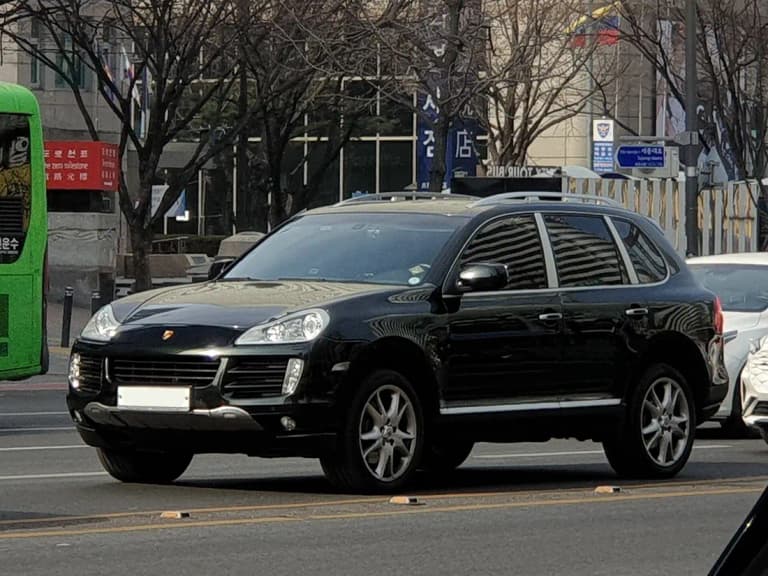
The 9YA V6 cars sit in the middle, with modern tech and strong pace. The current 9YB V8 holds its value best, since it brought the V8 back. For many buyers, a clean 958 V8 or an early 9YB V8 is the sweet spot between cost and character.
Ownership and Reliability
The Cayenne S is a usable everyday SUV, but it is a Porsche V8. Servicing, tires, and brakes all cost more than a mainstream SUV. A documented service history matters most when buying used.
Known Issues on the Early V8 Cars
The first generation V8 cars carry a few well-known weak spots. Early models used plastic coolant pipes that can crack and cause overheating, per Wikipedia’s Cayenne notes. Many cars have had these replaced with metal parts.
Two other issues are worth checking. The center driveshaft support bearing can fail on high-mileage first generation cars. The 4.5 liter V8 can also suffer cylinder bore scoring, so a compression check and service records are wise before buying.
Running Costs
Fuel is the running cost owners feel most. A heavy V8 SUV drinks accordingly, and hard driving makes it worse. Tires and brakes are the next big items, since the S rides on large performance rubber.
Buyers who want lower running costs have options within the range. An E-Hybrid cuts fuel use on short trips, while a smaller Macan costs less to run overall. For those set on a fast, sonorous family Porsche, though, the V8 S earns its keep.
Frequently Asked Questions
Is the Porsche Cayenne S a V8 or a V6?
The current Porsche Cayenne S is a twin-turbo V8. Porsche fits a 4.0 liter V8 with 468 hp in the facelifted 2024 car. Between 2014 and 2023 the S used turbocharged V6 engines instead.
How much horsepower does the Porsche Cayenne S have?
The current Cayenne S makes 468 hp from a 4.0 liter twin-turbo V8, per Porsche. That is 34 hp more than the 434 hp V6 it replaced. Older V8 S models ranged from 340 to 400 hp.
How fast is the Porsche Cayenne S?
The current Cayenne S reaches 60 mph in up to 4.4 seconds with the Sport Chrono Package. It tops out at 169 mph. That places it just behind the sportier Cayenne GTS.
How much does a Porsche Cayenne S cost?
A new 2025 Cayenne S SUV starts around 101,600 US dollars, with the S Coupe near 108,000 dollars. Used first and second generation V8 cars can be found for a fraction of that.
What is the difference between the Cayenne S and GTS?
The Cayenne S and GTS share the same 4.0 liter V8 family. The GTS is tuned higher to 493 hp, sits lower on sport suspension, and adds a standard sport exhaust. The S is the more affordable V8.
Is the Porsche Cayenne S E-Hybrid worth it?
The Cayenne S E-Hybrid makes 512 hp and adds short electric-only running. It suits buyers who want strong performance plus plug-in efficiency. Drivers who prefer engine sound tend to pick the V8 S instead.
Images: Hero, 9YB facelift, Coupe rear, and Coupe front by Alexander-93, CC BY-SA 4.0. 955 S by OWS Photography, CC BY 4.0. 957 S and Used first-gen S by Damian B Oh, CC BY-SA 4.0. 958 S by OSX, public domain. 9YA S by Tokumeigakarinoaoshima, CC BY-SA 4.0. Interior by Vauxford, CC BY-SA 4.0. S E-Hybrid by Mariordo, CC BY-SA 4.0. Via Wikimedia Commons.