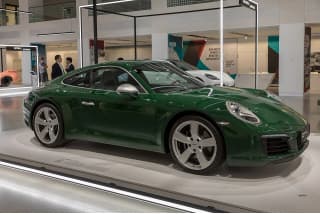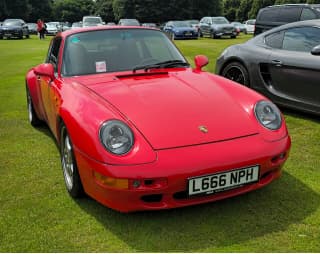
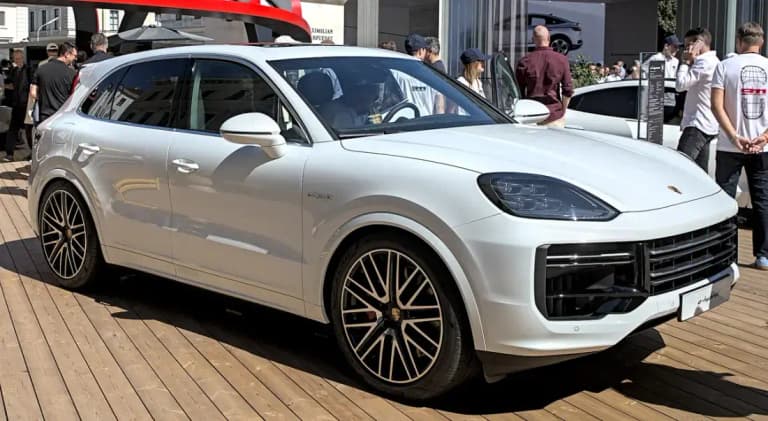
The Porsche Cayenne Turbo is the top-engine version of Porsche’s large SUV. It has used a twin-turbo V8 since 2002, and it now tops out with the 729 hp Turbo E-Hybrid. Across four generations it has grown from 450 hp to over 700 hp, and it remains the fast, do-everything flagship of the Cayenne family.
In this article, we’ll explain the V8-powered Porsche Cayenne Turbo. We’ll cover its generations, the Turbo E-Hybrid, the Turbo GT, and buying used.
Contents
- 1 Quick Summary
- 2 What Is the Porsche Cayenne Turbo
- 3 Porsche Cayenne Turbo Generations
- 4 Cayenne Turbo Engines and Power
- 5 Performance and Specs
- 6 Chassis and Handling
- 7 Turbo vs Turbo GT vs Turbo E-Hybrid vs GTS
- 8 The Cayenne Turbo GT
- 9 Interior and Technology
- 10 Cayenne Electric: Where the Range Goes Next
- 11 Buying a Used Cayenne Turbo
- 12 Frequently Asked Questions
Quick Summary
- Debut: The Porsche Cayenne Turbo has topped the Cayenne range since 2002, when the Cayenne became Porsche’s first SUV.
- Engine: Every generation has used a twin-turbo V8, shrinking from a 4.5 liter to a 4.8 liter and now a 4.0 liter unit.
- Current Power: The Cayenne Turbo E-Hybrid makes 729 hp combined, from a 591 hp V8 plus a 174 hp electric motor.
- Power History: Output has climbed from 450 hp in the 2002 955 Turbo to 570 hp in the last 958 Turbo S.
- Performance: The Turbo E-Hybrid hits 60 mph in 3.5 seconds and reaches a top speed of 183 mph.
- Non-Hybrid Retired: Porsche stopped selling the gasoline-only Cayenne Turbo in 2023, and the plug-in Turbo E-Hybrid became the flagship.
- Turbo GT: The Coupe-only, track-focused Turbo GT makes 650 hp, hits 60 mph in 3.1 seconds, and holds an SUV lap record at the Nurburgring Nordschleife.
- Used Prices: Classic.com lists average sold prices near $15,000 for a 955 Turbo and $22,000 for a 957 Turbo, while a new Turbo E-Hybrid starts around $147,000.
What Is the Porsche Cayenne Turbo
The Porsche Cayenne Turbo is the top-engine version of the Porsche Cayenne, Porsche’s large five-seat SUV. It has always used a twin-turbo V8, and it has always sat at the sharp end of the range. Think of it as the fast, comfortable flagship rather than the stripped-back track special.
The Cayenne itself was a big deal for Porsche. It arrived in 2002 as the first Porsche SUV, and it sold in huge numbers. That money helped fund the sports cars, from the 911 to the mid-engine cars. The Turbo was the halo model that set the tone for the whole line.
Since then the Turbo has spawned hotter offshoots. The Turbo S pushed power higher on the early cars. The track-focused Turbo GT arrived later, and the plug-in Turbo E-Hybrid now carries the badge. This guide walks through each generation, the engines, the chassis tech, and what to know before buying one.
Porsche Cayenne Turbo Generations
There have been four Cayenne generations, and the Turbo has appeared in every one. The core recipe has held steady. Take the biggest V8 Porsche offers, add two turbos, and give it the full chassis toolkit. What changed is the displacement, the power, and, most recently, the addition of a hybrid system.
First Turbo: 955 (2002-2007)
The original Cayenne Turbo used a 4.5 liter twin-turbo V8 making 450 PS, which is about 444 hp, per Wikipedia’s Cayenne data. It reached 100 km/h in 5.6 seconds. For a two-ton SUV in 2002, that was startling pace.
Porsche later added a Turbo S in 2006. It lifted output to 521 PS, or 514 hp, and cut the 0-60 mph time to 5.0 seconds. That car was the first sign that Porsche would keep pushing the Turbo further than most buyers needed.
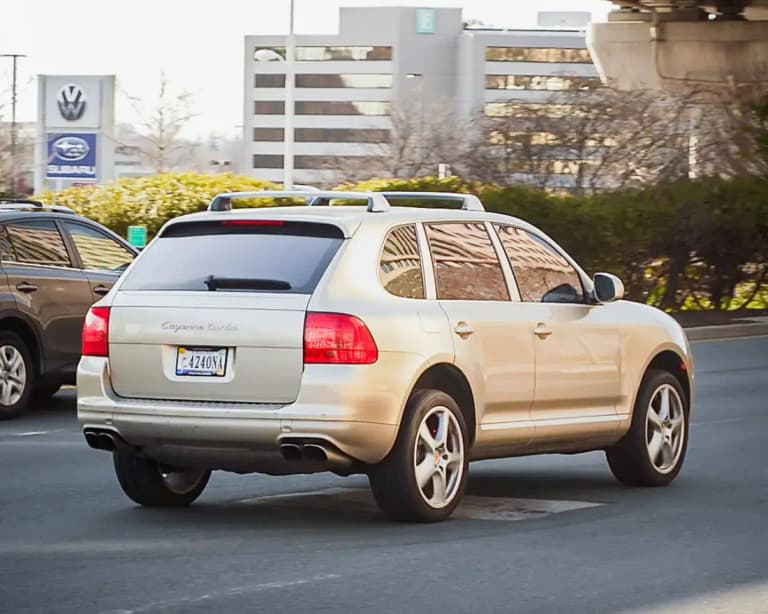
The 955 looks upright and tall next to a modern Cayenne. It rides high, wears round headlights, and carries its Turbo badge on the tailgate. These early cars are now the cheapest route into a V8 Cayenne, though they come with the caveats covered later in this guide.
Facelift Power: 957 (2007-2010)
The 957 was a facelift of the first Cayenne, but the Turbo got a real upgrade under the hood. Porsche fitted a larger 4.8 liter twin-turbo V8 making 500 PS, or 493 hp, according to the model’s Wikipedia entry. The 0-60 mph time dropped to 4.9 seconds.
The 957 Turbo S went further again. It made 550 PS, or 542 hp, and hit 60 mph in 4.7 seconds. This generation also brought cleaner styling and a better interior, which helped the facelift cars age more gracefully than the 2002 originals.
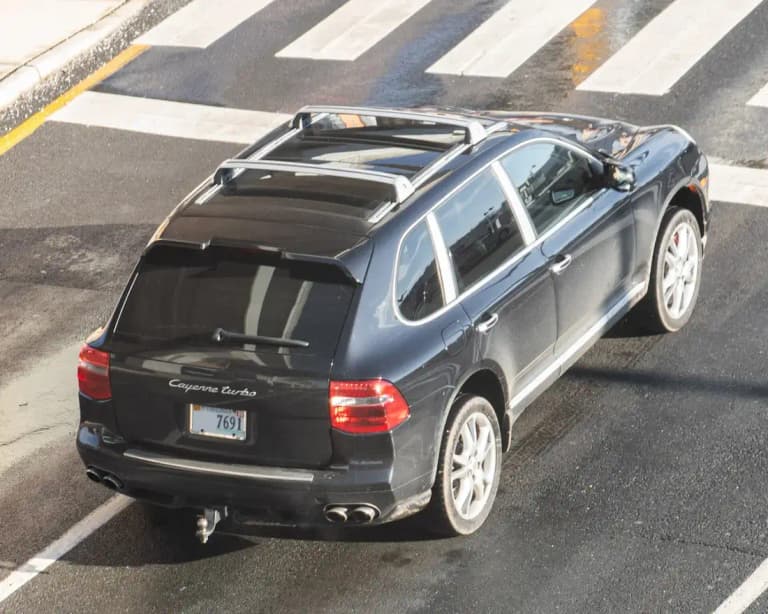
Visually the 957 is close to the 955, with revised lights and bumpers. The bigger 4.8 liter engine is the key change, and it carried over into the second-generation car. Many buyers see the 957 as the pick of the first-generation Turbos.
Second Generation: 958 (2010-2018)
The second-generation Cayenne, known internally as the 958 or 92A, arrived in 2010. It was lighter, lower, and far more car-like to drive. The Turbo kept the 4.8 liter twin-turbo V8, again with 500 PS, or 493 hp, per Wikipedia’s Cayenne data.
A 2014 facelift raised the Turbo to 520 PS, or 513 hp. The Turbo S went from 550 PS to 570 PS, or 562 hp, on the late cars. This was the point where the Turbo started to feel like a genuine sports SUV rather than a fast estate on stilts.
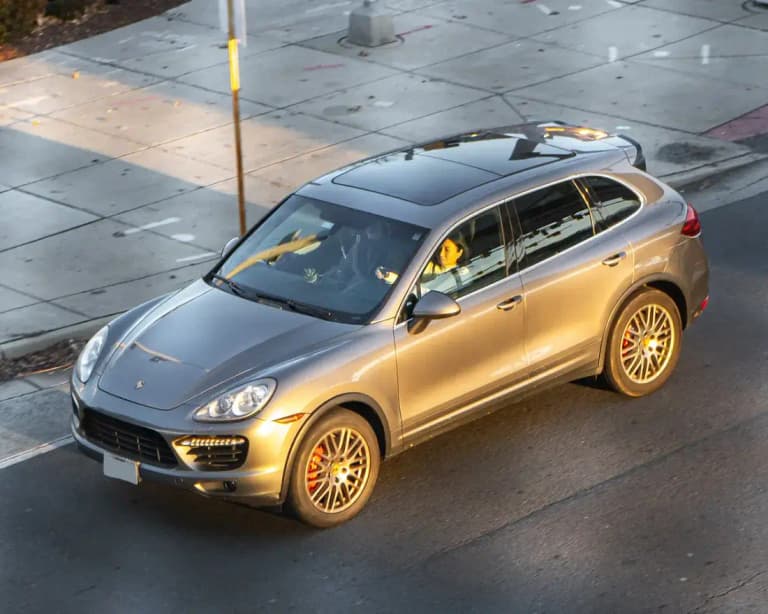
The 958 looks sleeker than the first car, with a lower roofline and sharper detailing. It handled a big step better too, thanks to a stiffer body and smarter chassis electronics. A clean 958 Turbo is often the value sweet spot for buyers who want modern pace without current-car prices.
Third Generation: E3 (2018-2023)
The current Cayenne platform, code E3 or 9YA, launched in 2018. Porsche switched the Turbo to a smaller but stronger 4.0 liter twin-turbo V8 making 549 PS, which is 541 hp, as recorded in the Cayenne’s Wikipedia history. The 0-62 mph time fell to 4.1 seconds.
This generation also brought the Cayenne Coupe in 2019, with a lower fastback roofline. The Turbo was offered in both the tall SUV body and the Coupe. The two shared the same engine and running gear, so the choice came down to styling and rear headroom.
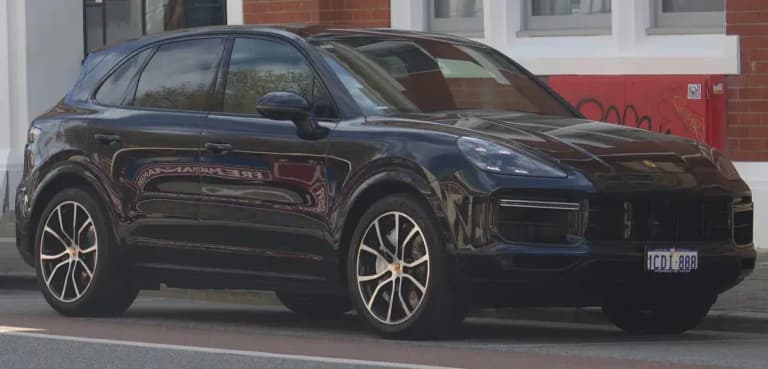
The E3 Turbo is the last of the pure gasoline Turbos. It runs a cleaner grille, slim tail lights joined by a light bar, and a proper V8 soundtrack. Porsche later dropped this non-hybrid Turbo, which makes it a landmark car for buyers who want the classic setup.
Turbo Goes Hybrid: E-Hybrid (2024 on)
Porsche gave the E3 a heavy facelift for 2024 and used it to reinvent the flagship. The non-hybrid Turbo was retired. In its place came the Cayenne Turbo E-Hybrid. It pairs the 4.0 liter V8 with an electric motor for 729 hp total, as Porsche detailed in its 2024 Turbo E-Hybrid press release.
That output made it the most powerful Cayenne road car of its type at launch. It hits 60 mph in 3.5 seconds and reaches a top track speed of 183 mph, per the same Porsche release. It also runs on electric power alone for short trips, thanks to a 25.9 kWh battery.
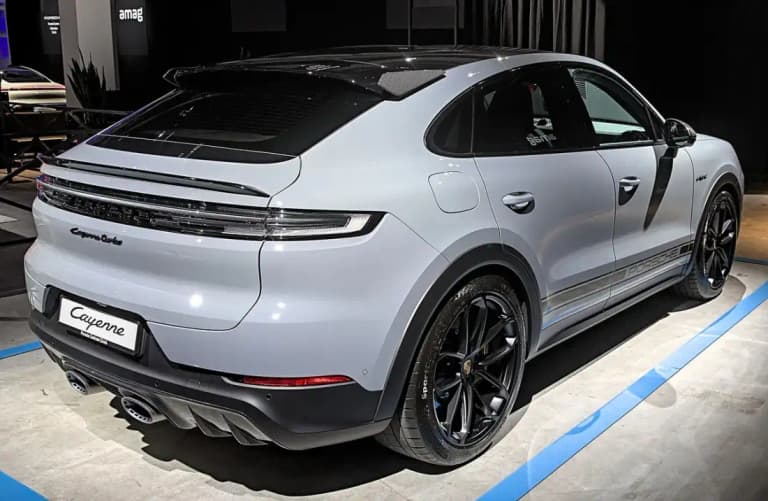
The Turbo E-Hybrid comes in both the SUV and Coupe bodies. It is the current answer to the question of what a Cayenne Turbo is. The badge now means big V8 power plus a plug, rather than a V8 on its own.
Cayenne Turbo Engines and Power
Every Cayenne Turbo has run a twin-turbo V8. The displacement has shrunk over time, from 4.5 liters to 4.0 liters, while power has climbed. That is the modern engineering story in one line. Smaller, harder-working engines now make more than the big early units did.
The 4.5 and 4.8 Liter V8s
The first Turbo used a 4.5 liter unit, then the 957 and 958 moved to a 4.8 liter version. Both were smooth, torque-rich engines with a deep V8 note. They gave the early cars real muscle, but they are also thirsty and heavy by modern standards.
These engines are strong when maintained, yet they carry known weak points that later designs fixed. Anyone shopping a first-generation Turbo needs to understand those points, which the buying section covers in detail. The 4.8 liter is generally seen as the better of the two.
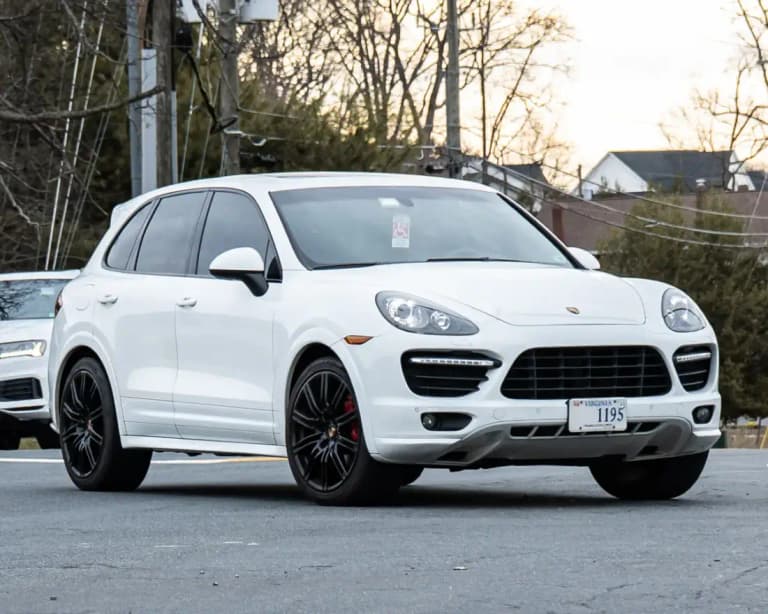
The white 958 above shows the second-generation Turbo, which used the 4.8 liter V8 to good effect. That engine gave the 958 its strong mid-range and its confident overtaking pace. It was the last big-displacement Turbo before Porsche downsized.
The 4.0 Liter Twin-Turbo V8
The E3 introduced a 4.0 liter twin-turbo V8 with the turbos mounted inside the vee. That layout shortens the path from turbo to cylinder, which sharpens throttle response. It also lets the engine sit lower for a better center of gravity.
This 4.0 liter unit is shared across the hot Cayennes. The Cayenne GTS, the Turbo, and the Turbo GT all use versions of it, tuned to different power levels. It is one of the most flexible V8s Porsche has built, and it also appears in other models across the group.
The Turbo E-Hybrid Powertrain
The current Turbo E-Hybrid bolts an electric motor between the V8 and the eight-speed automatic. The V8 makes 591 hp on its own, and the motor adds 174 hp, for a combined 729 hp and 700 lb-ft, per Porsche’s figures.
The 25.9 kWh battery sits under the trunk floor and charges through an 11 kW onboard charger. That allows real electric-only running for local trips, then instant V8 shove when you want it. The result is a sporty SUV that can also creep through town in silence.
Performance and Specs
The Cayenne Turbo has always been quick, and each generation raised the bar. The numbers below come from Porsche and Wikipedia’s Cayenne data. They show how far the badge has traveled in two decades.
0-60 mph Across the Generations
The 2002 Turbo needed 5.6 seconds to 100 km/h. The 957 cut that to 4.9 seconds, and the 958 and E3 kept trimming it. The E3 Turbo posts a 4.1 second 0-62 mph time, and it drops toward 3.9 seconds with launch control.
The current Turbo E-Hybrid is the quickest of all, at 3.5 seconds to 60 mph. Only the Turbo GT beats it, at 3.1 seconds. Both figures would have shamed most sports cars from the first Cayenne’s era.
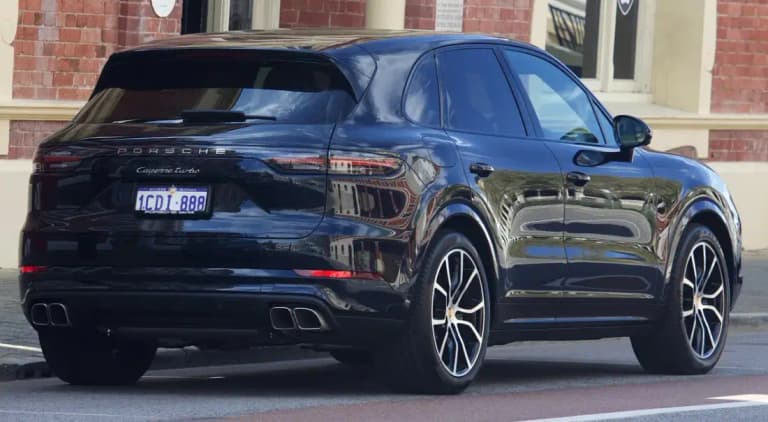
The quad tailpipes on the E3 Turbo hint at its pace. That car pulls hard from low revs and never runs out of breath. It is the kind of performance that makes a two-ton SUV feel far smaller than it is.
Top Speed and Towing
Top speeds have climbed with power. The E3 Turbo runs to 177 mph, and the Turbo E-Hybrid reaches 183 mph. The Turbo GT is the fastest, at 190 mph on the right tires. Those are supercar numbers in a family shell.
The Turbo is also a serious tow car. Most versions are rated to pull around 7,700 lbs, which covers most trailers and boats. That blend of speed and utility is a big part of why the Cayenne Turbo sells.
Chassis and Handling
Power is only half the Turbo story. The other half is the chassis hardware that keeps a tall, heavy SUV composed. Porsche fits the Turbo with the full toolkit, and most of it is standard rather than optional.
Air Suspension and Dynamic Chassis Control
The Turbo rides on adaptive air suspension. The system lowers the body at speed and lifts it for rough ground, and it firms up in the sportier drive modes. On the current car, Porsche uses a two-chamber, two-valve setup for a wider spread between comfort and control.
Above that sits Porsche Dynamic Chassis Control, an active anti-roll system. It uses the suspension to fight body lean in corners, then relaxes on the straight for a smooth ride. It is the main reason a Cayenne Turbo can change direction like a much lower car.
Torque Vectoring and Rear-Axle Steering
Porsche Torque Vectoring helps the Turbo turn in and put power down cleanly. It brakes the inside rear wheel and shuffles torque across the rear axle, which tightens your line through a bend. On the plug-in car it appears as the Plus version, tied to the electronic rear differential.
Buyers can also add rear-axle steering. At low speed the rear wheels turn opposite the fronts, which shrinks the turning circle in town. At high speed they turn the same way, which steadies the car through fast corners. It is a real help in a vehicle this size.
The Sport Chrono Package
The Sport Chrono Package adds a mode dial on the wheel, a dash timer, and launch control. It sharpens the throttle, gearbox, and chassis in the sportier settings. On hybrid cars it also unlocks a Sport Response button for a short burst of full attack.
Sport Chrono is standard on the Turbo E-Hybrid and the Turbo GT. On older cars it was a popular option, so most used Turbos have it. It is worth seeking out, since it unlocks the quickest acceleration figures and the sharpest responses.
Turbo vs Turbo GT vs Turbo E-Hybrid vs GTS
It helps to see the hot Cayennes side by side. The table below sets the current Turbo E-Hybrid, the Turbo GT, and the Cayenne GTS against the last non-hybrid Turbo. Figures come from Porsche and Wikipedia’s Cayenne data.
| Model | Engine | Power | Body |
|---|---|---|---|
| Turbo E-Hybrid | V8 plug-in | 729 hp | SUV or Coupe |
| Turbo GT | 4.0L V8 | 650 hp | Coupe only |
| Turbo (E3) | 4.0L V8 | 541 hp | SUV or Coupe |
| GTS | 4.0L V8 | 493 hp | SUV or Coupe |
The split is clear. The GTS is the value enthusiast pick, the Turbo E-Hybrid is the fast flagship, and the Turbo GT is the track weapon. The old E3 Turbo slots in as the last pure V8 flagship before the hybrid took over.
The Cayenne Turbo GT
The Cayenne Turbo GT is the extreme member of the family, and it earns its own guide. It uses a 650 hp version of the 4.0 liter V8, sold only in the Coupe body. It also holds an SUV lap record at the Nurburgring Nordschleife.
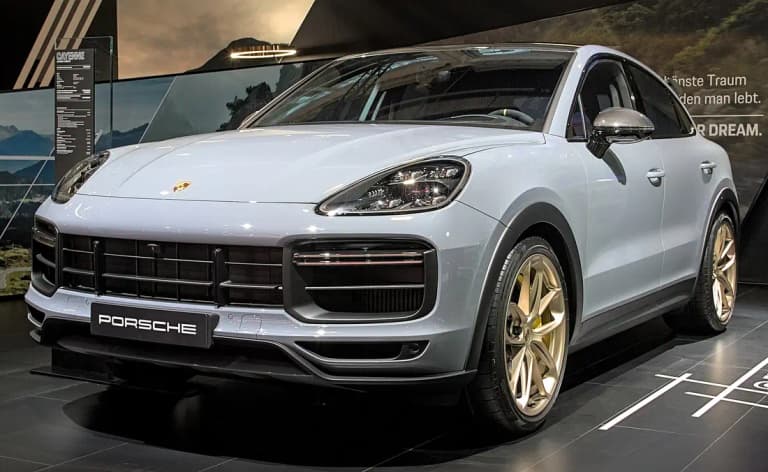
Where the Turbo E-Hybrid chases comfort and outright pace, the Turbo GT chases lap time. It gets stiffer suspension, more aggressive tires, and a lighter, louder character. For the full story on its specs, record, and price, read the dedicated Cayenne Turbo GT guide.
Interior and Technology
The Cayenne Turbo cabin has changed more than any other part of the car. The first cars used buttons and small screens. The latest cars run three digital displays and a curved driver’s cluster. Both eras share a focus on quality and a low, sporting seating position.
The First-Generation Cabin
The early Turbo interior looks dated now, but it was plush for its time. It paired thick leather with a chunky three-spoke wheel and a clear analog gauge cluster. The screen was small and the buttons were many, which is normal for a car of this age.
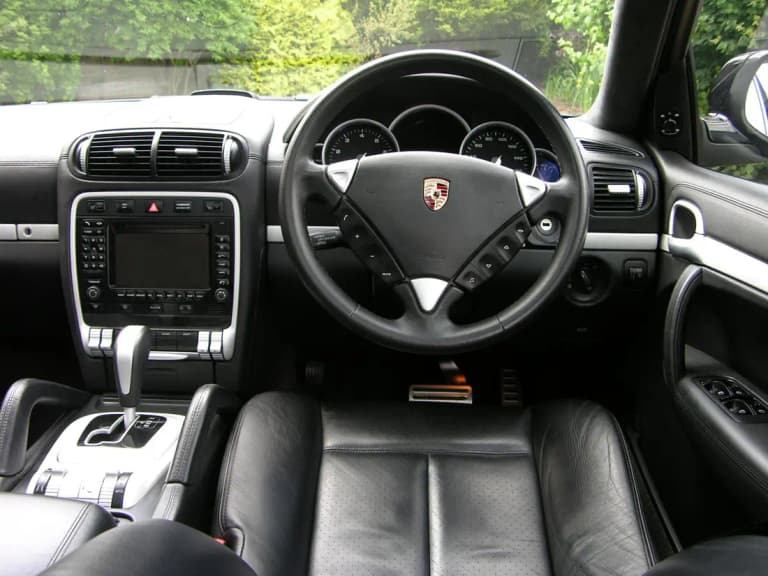
Build quality was a strong point even then. The switches feel solid, the leather wears well, and the driving position is spot on. It is a cabin that still feels special once you accept the older technology.
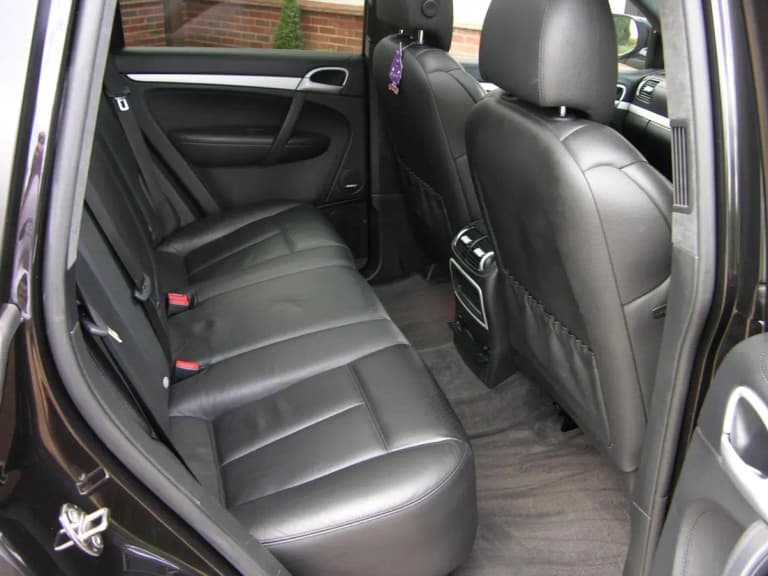
Space was always a Cayenne strength. The rear bench seats three, with real legroom and a flat, usable floor. That practicality is a big reason families chose a Cayenne Turbo over a lower, tighter sports car.
The Current Interior
The current car takes a very different path. It uses a digital driver’s display, a central touchscreen, and a separate passenger screen on higher trims. The gear selector has moved to the dash, which frees up the console for storage.
Material quality is a clear step up from the older cars. There is more soft-touch trim, better ambient lighting, and cleaner switchgear. The result feels closer to a luxury sedan than a traditional SUV, without losing the sporty driving feel.
Cayenne Electric: Where the Range Goes Next
Porsche is not replacing the Turbo with an EV yet, but the Cayenne Electric now sits alongside it. The all-electric Cayenne had its world premiere in November 2025 and is built in Bratislava, per Porsche’s Cayenne announcement.
The electric line launched with the Cayenne Electric and a Cayenne Turbo Electric, joined later by a Cayenne S. The Turbo Electric is quoted at up to 1,139 hp, which tops the whole range. Porsche says these EVs complement the gasoline and hybrid cars rather than kill them off.
So for now, buyers get a real choice. The combustion Turbo E-Hybrid, the gasoline GTS and Turbo GT, and the new electric cars all share a showroom. If you want the classic V8 Cayenne Turbo experience, it is still on sale as a hybrid.
Buying a Used Cayenne Turbo
A used Cayenne Turbo can be a lot of car for the money, or a costly trap. The difference comes down to generation, history, and condition. Here is how to shop one without getting burned.
Which Generation to Buy
The first-generation cars are cheap to buy but need careful checks and a maintenance budget. The 958 is the value sweet spot, with modern pace and fewer age-related faults. The E3 and current cars cost far more, but they feel current and need less work.
Match the car to your appetite for maintenance. If you enjoy wrenching or have a trusted specialist, an early Turbo can be a bargain. If you want to just drive, a clean 958 or a newer car is the smarter buy. The smaller Macan is worth a look too if size is a concern.
Known Problems on the 955 and 957
The first-generation V8 cars have two well-documented issues. The plastic coolant pipes in the engine vee grow brittle and crack, which can dump coolant and overheat the engine. Porsche revised the design over time, and specialists offer metal replacements, per FCP Euro’s first-generation guide.
The second issue is the driveshaft, or cardan shaft. Its center support bearing wears with age and mileage, which brings vibration and a heavy clunk. On a 955 or 957 it is a case of when, not if. Budget for both jobs and treat any car without records with caution.
What Used Values Look Like
First-generation Turbos are the cheap entry point. Classic.com lists an average sold price of about 15,000 dollars for a 955 Turbo and about 22,000 dollars for a 957 Turbo. Those figures move with condition and mileage.
Newer cars cost a lot more. The current Turbo E-Hybrid starts near 147,000 dollars before options, per Porsche’s pricing. Between those extremes sit the 958 and E3 Turbos, which offer most of the thrill for a fraction of new money.
Frequently Asked Questions
How much horsepower does the Porsche Cayenne Turbo have?
The current Porsche Cayenne Turbo E-Hybrid makes 729 horsepower from a twin-turbo V8 and an electric motor. Older Turbo models ranged from 450 hp in the 2002 car to 570 hp in the last Turbo S. The Turbo has always sat at or near the top of the Cayenne range.
What is the difference between the Cayenne Turbo and the Turbo GT?
The Cayenne Turbo is the fast everyday flagship, sold as an SUV or a Coupe. The Turbo GT is a track-focused, Coupe-only model with 650 hp and a Nurburgring record. The Turbo GT trades some comfort for lap time, while the Turbo E-Hybrid is quicker in a straight line.
Is there still a non-hybrid Cayenne Turbo?
No. Porsche stopped selling the non-hybrid Cayenne Turbo in 2023. The plug-in Turbo E-Hybrid replaced it as the flagship, with 729 hp. The only pure gasoline V8 above the GTS is now the Turbo GT.
How much does a used Porsche Cayenne Turbo cost?
First-generation Turbos are the cheap way in. Classic.com lists an average of about 15,000 dollars for a 955 Turbo and about 22,000 dollars for a 957 Turbo. Later cars cost far more, and the current Turbo E-Hybrid starts near 147,000 dollars new.
Is the Porsche Cayenne Turbo a V8?
Yes. Every Cayenne Turbo has used a twin-turbo V8. The first cars ran a 4.5 liter, then a 4.8 liter, and the current cars use a 4.0 liter. The latest Turbo E-Hybrid adds an electric motor to that V8.
How reliable is the Porsche Cayenne Turbo?
Later Turbos are the safer used buy. The 955 and 957 cars are known for cracked plastic coolant pipes and a worn driveshaft center bearing. Budget for both on any first-generation car, then judge each example on service history.
Images: Hero by Alexander-93, CC BY-SA 4.0. 955, 957, 958 silver, and 958 white by OWS Photography, CC BY 4.0. E3 front and E3 rear by EurovisionNim, CC BY-SA 4.0. Coupe by Alexander-93, CC BY-SA 4.0. Turbo GT by Alexander Migl, CC BY-SA 4.0. Dashboard and rear seats by The Car Spy, CC BY 2.0. Via Wikimedia Commons.