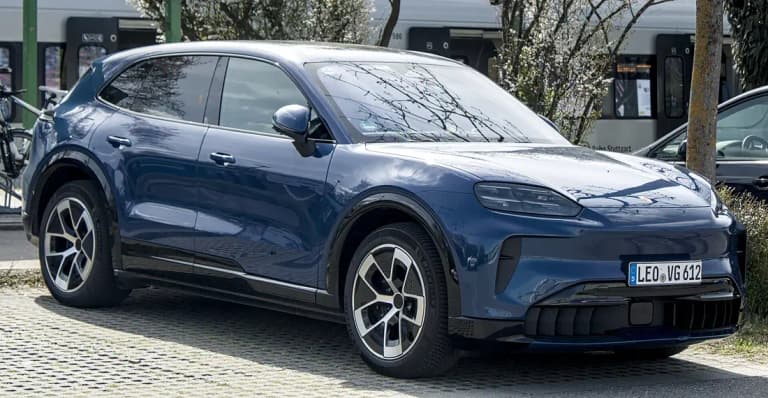
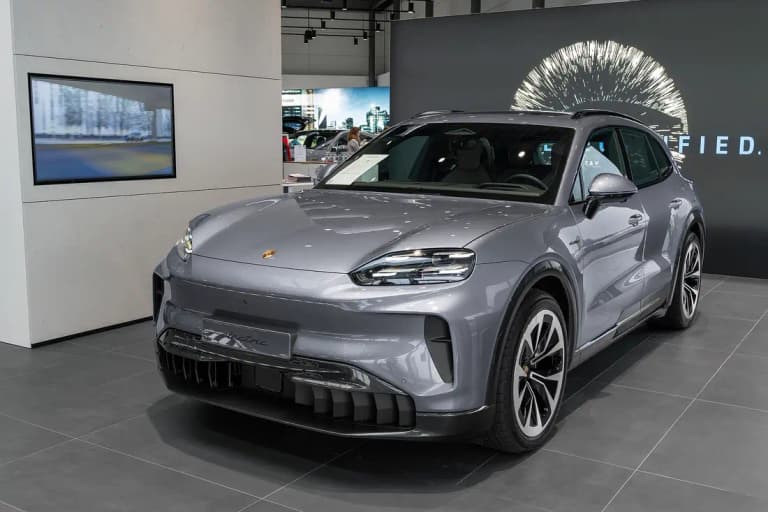
The Porsche Cayenne Electric is the first all-electric Cayenne, built on the 800-volt PPE platform it shares with the Macan EV. It launches as a base Cayenne Electric and a Cayenne Turbo Electric that makes up to 1,139 hp, Porsche’s most powerful production car ever. It runs alongside the gas Cayenne rather than replacing it.
In this article, we’ll explain the new Porsche Cayenne Electric and its full model lineup. We’ll cover its battery and range, charging, performance, and pricing.
Contents
- 1 Quick Summary
- 2 What the Cayenne Electric Is
- 3 The Cayenne Electric Lineup
- 4 Electric Motors and All-Wheel Drive
- 5 Battery, Range, and Charging
- 6 Chassis: Active Ride, Air Suspension, and Steering
- 7 Off-Road Ability and Towing
- 8 Interior and Technology
- 9 Cayenne Electric vs Macan EV
- 10 The Electric Cayenne Runs Alongside the Gas One
- 11 Pricing and On-Sale Date
- 12 Buying a Cayenne Electric in Thailand
- 13 Frequently Asked Questions
Quick Summary
- Platform: Built on the 800-volt PPE (Premium Platform Electric) architecture shared with the Macan EV.
- Base Cayenne Electric: 402 hp (up to 435 hp with Launch Control), 0-60 mph in 4.5 seconds, from $109,000.
- Cayenne S Electric: 544 PS (up to 666 PS with Launch Control), 0-100 km/h in 3.8 seconds, from $126,300.
- Cayenne Turbo Electric: Up to 1,139 hp with Launch Control, 0-60 mph in 2.4 seconds, from $163,000 and Porsche’s most powerful production car ever.
- Battery: 113 kWh lithium-ion pack with double-sided cooling on an 800-volt system.
- Charging: Up to 400 kW DC fast charging (10-80 percent in under 16 minutes) plus an optional 11 kW wireless inductive charging pad.
- Range: Up to 642 km WLTP for the base car and up to 623 km for the Turbo; US EPA figures are not yet published.
- On Sale: Premiered November 2025, with US deliveries expected around the end of summer 2026.
What the Cayenne Electric Is
The Porsche Cayenne Electric is the first fully electric version of Porsche’s largest SUV. It celebrated its world premiere in mid-November 2025. Porsche built it on the PPE, or Premium Platform Electric, the same 800-volt architecture that underpins the Macan EV.
This is not a facelift of the gas car. It is a separate electric Cayenne that shares its name and little else. Porsche adapted the Macan’s PPE for the bigger body and called the result PPE 41 C, per its official launch material. The platform is co-developed with Audi and also sits under the Audi Q6 e-tron.
The key thing to understand is that the electric car does not kill off the combustion one. Both are sold side by side. Porsche even builds them on the same line in Bratislava, Slovakia.
If you want the petrol version, read our full Porsche Cayenne guide. This article covers the all-electric model only.
The Cayenne Electric Lineup
Each version of the electric Cayenne has its own job. The gap between the base car and the Turbo is enormous, both in power and in price. Here is what you get at each step.
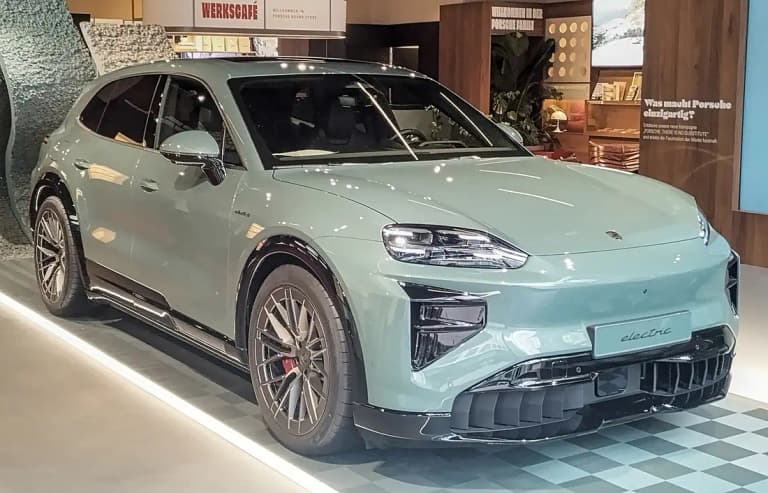
Cayenne Electric (Base Model)
The base Cayenne Electric is far from slow. It makes 300 kW (402 hp) in normal use, rising to 325 kW (435 hp) and 615 lb-ft with Launch Control. That is enough for 0-60 mph in 4.5 seconds and a 143 mph top track speed.
This is the value pick of the range. It carries the full 113 kWh battery, so it also posts the longest range of any electric Cayenne. It starts at $109,000 in the US.
Cayenne S Electric
The Cayenne S Electric is the middle step. Porsche rates it at 400 kW (544 PS), climbing to 490 kW (666 PS) with Launch Control. It reaches 100 km/h in 3.8 seconds and tops out at 250 km/h.
The S gives you a big jump in shove over the standard Cayenne Electric without the Turbo’s price. Porsche added it as the range grew through 2026. Porsche has since priced the Cayenne S Electric at $126,300 in the US, before the $2,350 delivery fee.
Cayenne Turbo Electric
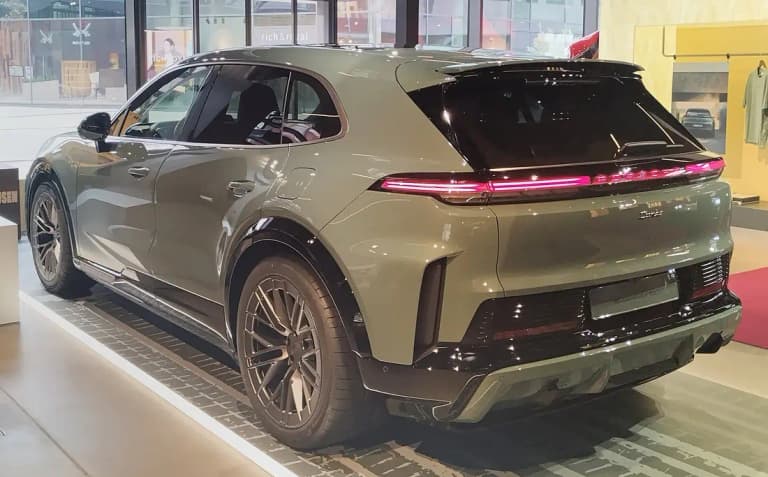
The Cayenne Turbo Electric is the flagship, and the headline act. There is no turbocharger, of course. Porsche keeps the Turbo name to mark the top of the range. It produces 630 kW (844 hp) in normal driving and up to 850 kW (1,139 hp) with Launch Control.
That makes it the most powerful production Porsche ever built. Torque peaks at up to 1,106 lb-ft, and 60 mph arrives in 2.4 seconds. Top track speed is 162 mph. It starts at $163,000, which is a large step up from the standard model.
For a sense of how far this jumps over the combustion flagship, compare it with our Porsche Cayenne Turbo guide. The electric Turbo model nearly doubles the gas Turbo on peak power.
The Cayenne Coupé Electric Body
Porsche also offers a Cayenne Coupé Electric, a sleeker body style with a lower roofline. It is 24 mm lower than the SUV, at 1,650 mm versus 1,674 mm, while keeping the same length and width. The roofline borrows the “flyline” idea from the 911.
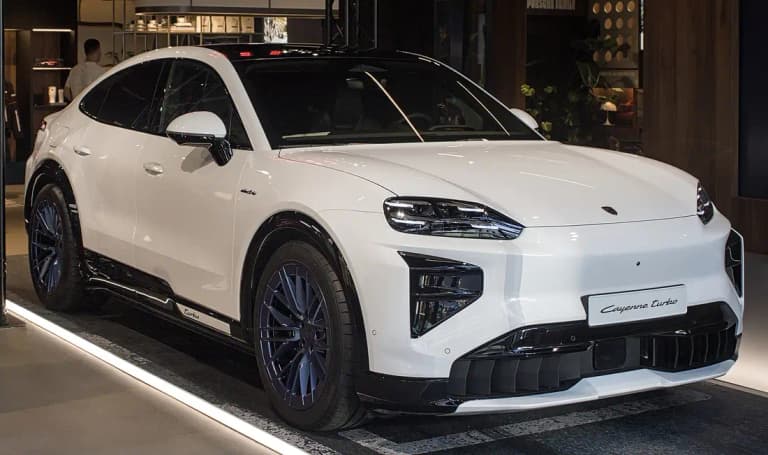
The Coupé launches in three flavors. There is a 300 kW Coupé Electric, a 400 kW S Coupé Electric, and the Cayenne Turbo Coupé Electric with up to 850 kW. Porsche revealed it at Auto China 2026 in Beijing. An optional Lightweight Sport package with a carbon roof trims up to 17.6 kg.
Electric Motors and All-Wheel Drive
Every electric Cayenne uses two motors, one per axle, for all-wheel drive. Porsche manages the torque split with its electronic traction system, ePTM. The rear motor is the bigger one, with direct oil cooling to handle repeated hard launches.
Dual-Motor Power and Launch Control
Both motors work together, but the split matters. The rear electric motor does most of the work, and the front motor adds traction and extra output when needed. Launch Control unlocks the peak figures quoted for each trim.
The spread across the range is wide. The base car peaks at 325 kW, while the Turbo hits 850 kW. That is a big gap for two cars that share the same battery and platform.
Push-to-Pass Overboost
The Cayenne Electric borrows a trick from the Taycan. A Push-to-Pass button on the steering wheel releases an extra 130 kW (176 PS) for 10 seconds. It is handy for a quick overtake without digging into a drive mode menu.
For more on how Porsche tunes its electric drivetrains, see our Porsche Taycan guide. The Taycan pioneered much of this hardware before it reached the SUVs.
Battery, Range, and Charging
The battery is the heart of the car, and charging is where the 800-volt system pays off. Porsche put real engineering into keeping the pack cool, which protects both fast-charge speed and long-term health.
The 113 kWh Battery and 800-Volt System
Every electric Cayenne carries a 113 kWh lithium-ion battery. It uses double-sided cooling, which means coolant reaches the cells from two sides for better thermal control. The pack runs on an 800-volt system, so it charges faster and runs thinner cabling than a 400-volt car.
Mounting the pack flat in the floor keeps the weight low. That helps a tall, heavy SUV feel more planted through corners than its size suggests.
Fast Charging and Wireless Inductive Charging
On a DC fast charger the Cayenne pulls up to 400 kW under ideal conditions. That takes the battery from 10 to 80 percent in less than 16 minutes. It is among the quickest charging curves on any production EV.
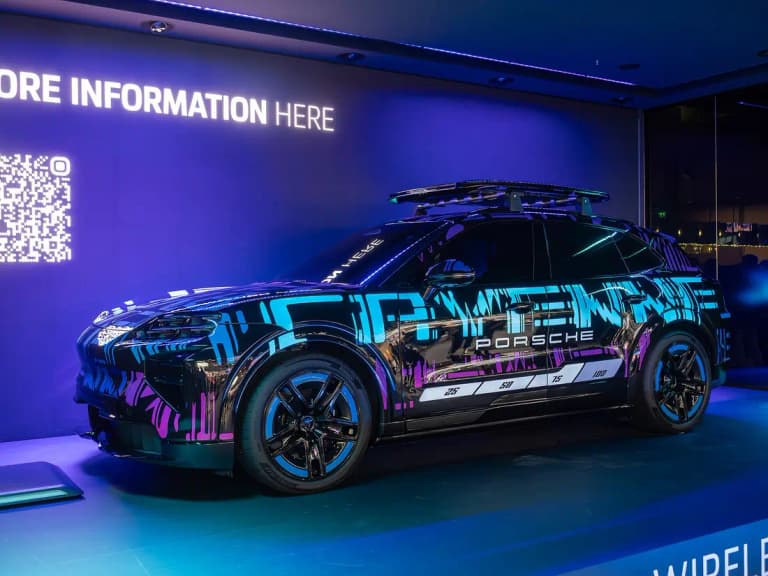
The bigger news is inductive charging. Porsche offers a floor pad you park over, and it transmits up to 11 kW with over 90 percent efficiency. No cable, no plug. You just leave the car on the pad and it tops up overnight.
WLTP Range and the Missing EPA Numbers
Porsche quotes up to 642 km of combined WLTP range for the base car and up to 623 km for the Turbo. In rough US terms that is close to 399 miles on the base model, though WLTP reads optimistic next to the EPA test.
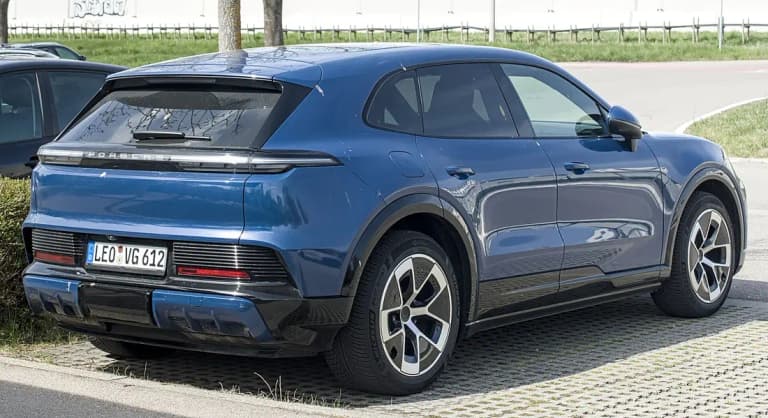
The honest caveat: Porsche had not published the EPA range for the US when this guide went live. Expect the real-world US number to land below the WLTP figure. We will update this once the official EPA rating is out.
Chassis: Active Ride, Air Suspension, and Steering
Porsche threw its full chassis toolkit at the electric Cayenne. The goal is to hide the weight and make a two-and-a-half-ton SUV drive like something smaller. Two systems do the heavy lifting.
Porsche Active Ride
Porsche Active Ride is the standout. It is an active suspension that keeps the body flat under braking, acceleration, and cornering. Each wheel is controlled on its own, so the car does not dive or squat. Porsche offers Active Ride on the flagship for the first time here.
The system can even raise the body slightly to help you get in and out. It builds on the same technology Porsche introduced on the electric Taycan.
Air Suspension and Rear-Axle Steering
Adaptive air suspension with Porsche Active Suspension Management is standard across the range. It adjusts damping constantly and lets the car change ride height for the road ahead. This is the baseline setup on cars that do not get the pricier Active Ride.
The Cayenne Electric also offers rear-axle steering. It turns the rear wheels by up to five degrees. At low speed that shrinks the turning circle for parking, and at high speed it adds stability. It is a big help in a vehicle this large.
Off-Road Ability and Towing
The electric Cayenne is not just a straight-line weapon. It keeps the model’s practical streak. With the air suspension raised, it can pick its way through off-road terrain like muddy ruts and rough tracks. The instant low-speed control that electric motors give helps here too.
Towing is a real strength. Properly equipped, the Cayenne Electric can pull up to 3.5 tonnes, or about 7,716 lbs. That matches many combustion SUVs and beats most electric rivals. Cargo space runs to 1,588 liters with the rear seats down, plus a 90-liter front trunk for the charging cables.
Interior and Technology
Inside, the Cayenne Electric moves the cabin on from the gas car. The dashboard is built around a curved driver display and a central touchscreen, with a separate passenger screen available. It feels like a Taycan and a gas Cayenne blended together.
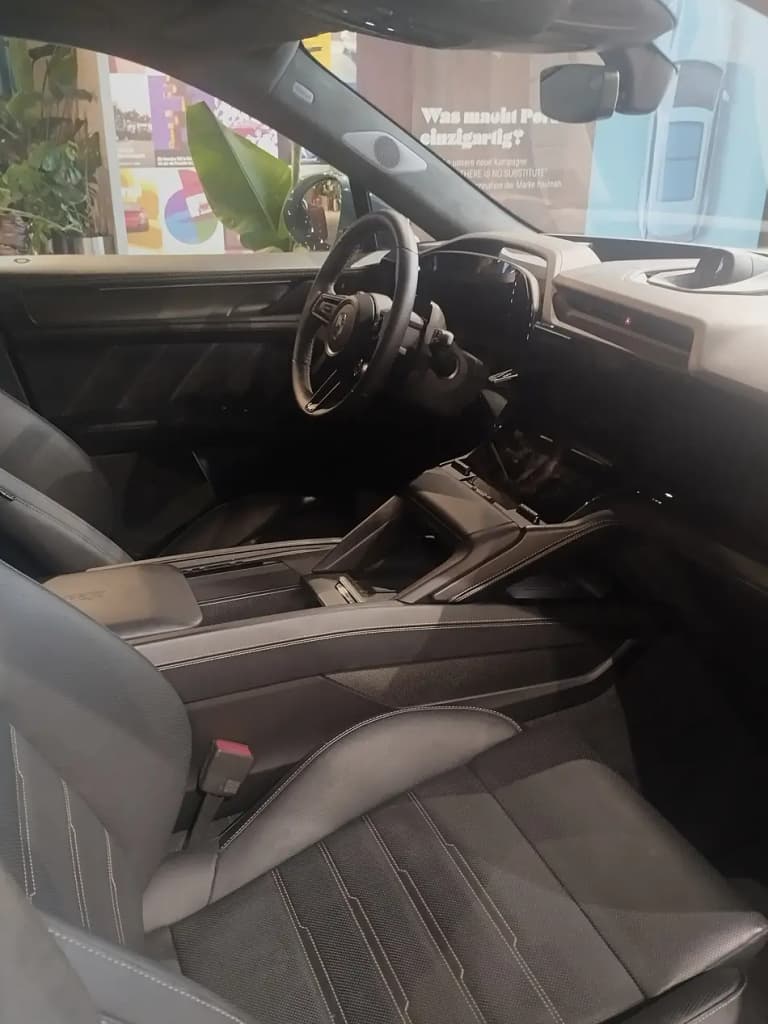
Material quality is where the price shows. The seats, the console, and the switchgear all feel a class above the Macan EV. There is proper rear-seat room too, since this is the larger of Porsche’s two electric SUVs.
The Augmented-Reality Head-Up Display
The standout tech is the head-up display with augmented reality. Porsche says it projects an image that fills the equivalent of an 87-inch screen in your view. Navigation arrows appear to sit on the road itself, floating ahead of the car.
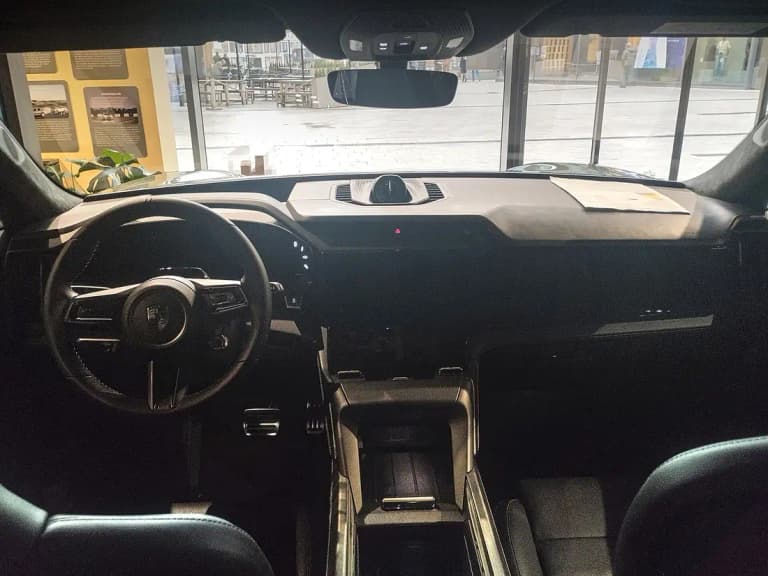
It is a genuine step up from a normal head-up display, which only shows speed and basic prompts. Here the directions blend into what you actually see through the windscreen.
Cayenne Electric vs Macan EV
The Porsche Macan EV is the Cayenne Electric’s closest relative. They share the PPE platform and the same 800-volt thinking. The Cayenne is the bigger, more powerful, more expensive car. Here is how the two electric SUVs line up.
| Spec | Cayenne Electric | Macan EV |
|---|---|---|
| Battery | 113 kWh | 100 kWh |
| Peak DC charge | 400 kW | 270 kW |
| Top power | 1,139 hp | 630 hp |
| From (US) | $109,000 | $80,300 |
The Macan EV is the sharper, cheaper pick for a driver who wants a compact SUV. The Cayenne Electric is for buyers who need the extra size, the longer range, and the halo Turbo power. For the smaller electric car, our Porsche electric lineup guide puts the whole EV range in context.
The Electric Cayenne Runs Alongside the Gas One
This is the part people get wrong. The Cayenne Electric does not replace the combustion Cayenne. Porsche sells the electric, hybrid, and petrol Cayenne at the same time, from the same factory. You choose the drivetrain you want.
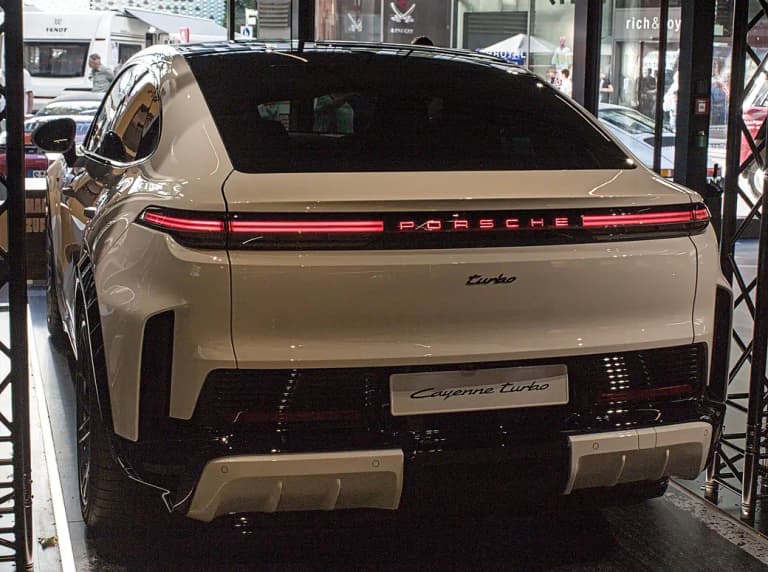
That is a different plan from the Macan, where the gas version was dropped in Europe. Porsche is keeping the combustion Cayenne on sale for years yet. For a size and practicality face-off inside the family, read our Cayenne vs Macan comparison.
Pricing and On-Sale Date
US pricing for the 2026 Porsche Cayenne Electric starts at $109,000 for the base car and $163,000 for the Turbo, with the S Electric between them at $126,300. All three figures exclude a $2,350 delivery fee and any options.
The car premiered in November 2025 and order books are open. US deliveries are expected around the end of summer 2026. As always with a brand-new Porsche, early build slots fill quickly and options add up fast.
Buying a Cayenne Electric in Thailand
Thailand has pushed hard on electric vehicles, and a premium EV like this fits the market’s direction. Import duty and excise tax still drive the on-the-road price far above the US sticker. That gap is the main thing to plan around.
If you are weighing an import or a local purchase, our guide on importing a Porsche to Thailand breaks down the duty and tax math. The charging story is simpler here than for a gas car, since home charging avoids the fuel run entirely.
Frequently Asked Questions
Is the Porsche Cayenne Electric replacing the gas Cayenne?
No. The Cayenne Electric is a new model line that runs alongside the combustion and hybrid Cayenne. Porsche builds both on the same line in Bratislava, so you can still buy a gas Cayenne.
How much does the Porsche Cayenne Electric cost?
US pricing starts at $109,000 for the base Cayenne Electric and $163,000 for the Cayenne Turbo Electric. Both exclude options and a $2,350 delivery fee.
How far can the Porsche Cayenne Electric go on a charge?
Porsche quotes up to 642 km of WLTP range for the base car and up to 623 km for the Turbo. The official EPA range for the US has not been published yet.
How fast is the Cayenne Turbo Electric?
The Cayenne Turbo Electric makes up to 1,139 hp with Launch Control and hits 60 mph in 2.4 seconds. Porsche calls it the most powerful production model it has ever built.
Does the Cayenne Electric have wireless charging?
Yes. Porsche offers an inductive charging pad that transmits up to 11 kW with over 90 percent efficiency. You park over the pad and the car charges without a cable.
When does the Porsche Cayenne Electric go on sale?
It premiered in November 2025 and order books are open. US deliveries are expected around the end of summer 2026.
Images: Porsche Cayenne Electric by Alexander Migl, CC BY-SA 4.0. Porsche Cayenne Electric by Alexandre Prevot from Nancy, France, CC BY-SA 4.0. Porsche Cayenne Electric Turbo by Alexander Migl, CC BY-SA 4.0. Porsche Cayenne Electric Turbo by Alexander Migl, CC BY-SA 4.0. Porsche Cayenne Coupé Electric Turbo by Alexander Migl, CC BY-SA 4.0. Porsche Cayenne Cayenne Electric Prototype, IAA Summit 2025, Munich by Matti Blume, CC BY-SA 4.0. Porsche Cayenne Electric by Alexander Migl, CC BY-SA 4.0. Porsche Cayenne Electric Turbo by Alexander Migl, CC BY-SA 4.0. Porsche Cayenne Electric Turbo by Alexander Migl, CC BY-SA 4.0. Porsche Cayenne Coupé Electric Turbo by Alexander Migl, CC BY-SA 4.0. Via Wikimedia Commons.