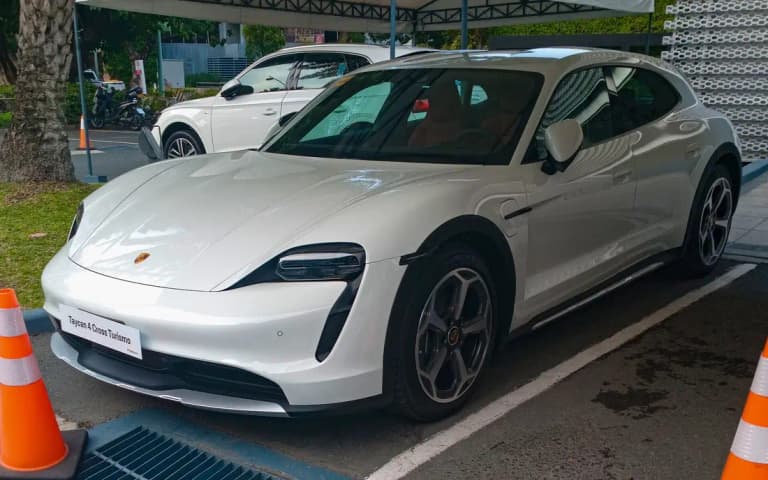
The Porsche Taycan Cross Turismo is the raised, cladded wagon version of Porsche’s electric sport car. It launched in 2021 with a 20 millimeter higher ride height, standard air suspension, and a Gravel Mode for light off-road use. Every Cross Turismo is all-wheel drive, and it comes in 4, 4S, GTS, Turbo, and Turbo S trims. It trades the sedan’s low stance for more rear headroom, more cargo space, and mild rough-road ability.
In this article, we’ll explain the Porsche Taycan Cross Turismo, the raised wagon version of the Taycan. We’ll cover its ride height, Gravel Mode, trims, and cargo space.
Contents
- 1 Quick Summary
- 2 What the Taycan Cross Turismo Is
- 3 Cross Turismo vs Sport Turismo: Two Different Wagons
- 4 Ride Height, Air Suspension, and the Off-Road Design Package
- 5 Gravel Mode and Light Off-Road Ability
- 6 Cross Turismo Trims and Model Years
- 7 All-Wheel Drive and the Chassis
- 8 Practicality: Cargo, Rear Space, and Cabin
- 9 Range and Charging on the Cross Turismo
- 10 Cross Turismo Pricing and Buying
- 11 Frequently Asked Questions
Quick Summary
- Ride height: sits about 20 millimeters higher than the sedan, with standard adaptive air suspension.
- Drivetrain: every Cross Turismo is all-wheel drive; there is no rear-wheel-drive version.
- Trims: 4, 4S, GTS, Turbo, and Turbo S, ranging from 469 hp up to 751 hp at launch.
- Cargo space: 446 liters behind the rear seats, up to 1,212 liters with them folded, plus an 84-liter frunk.
- Gravel Mode: raises the body a further 10mm and retunes traction for loose surfaces, but there is no low-range gearbox or locking differential.
- Range: the updated 2025 Taycan 4 Cross Turismo is EPA rated at about 277 miles with the Performance Battery Plus.
- Charging: 800-volt system peaking around 320 kW, a 10 to 80 percent charge in roughly 18 minutes.
- New price: a Taycan 4 or 4S Cross Turismo starts around $110,000 to $120,000, with the Turbo S past $190,000.
What the Taycan Cross Turismo Is
The Porsche Taycan Cross Turismo is the rugged wagon version of the Taycan. It takes the electric sport car’s low body and raises it, adds plastic cladding, and gives it light off-road ability. Porsche revealed it in March 2021 as the first electric cross-utility car in its range, per the Porsche Newsroom launch release.
Think of it as the same car as the sedan underneath, with a taller, more useful body on top. It keeps the Taycan’s driving feel, its charging tech, and its cabin. What changes is the roofline, the ride height, and the amount of gear you can carry.
The Wagon Taycan Built for Rougher Roads
The Cross Turismo sits about 20 millimeters higher than the standard Taycan. It wears black wheel-arch and sill cladding, like a Porsche Macan or a Subaru Outback. This is the Taycan for buyers who want space and a little ground clearance, not just a low four-door.
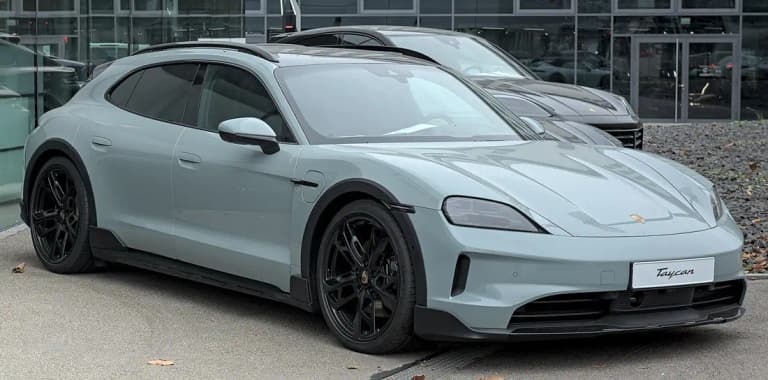
The body was Porsche’s answer to buyers who liked the Taycan but wanted more practicality. It arrived before the low Sport Turismo wagon, so for a while it was the only estate-shaped Taycan you could buy. It gave the range a genuine all-rounder.
Cross Turismo vs the Regular Taycan
The core hardware is shared with the sedan. Same platform, same 800-volt system, same motors and batteries by trim. You can read the whole lineup in our Porsche Taycan buyer’s guide. This article stays on the Cross Turismo body and what makes it different.
The differences are all about the body. The Cross Turismo is taller, has a longer roofline, and carries more. It also loses a little range to the sedan, since it is heavier and less slippery through the air. For many buyers that trade is worth it.
Cross Turismo vs Sport Turismo: Two Different Wagons
Porsche sells two wagon Taycans, and people mix them up constantly. Both share the same long roofline and rear hatch. The gap between them is ride height and rough-road intent, not shape.
The Raised Cross Turismo Body
The Cross Turismo is the raised, cladded one. It gets the higher ride height, the wheel-arch trim, standard air suspension, and Gravel Mode. It is also all-wheel drive only. This is the wagon aimed at gravel driveways, ski trips, and rough back roads.
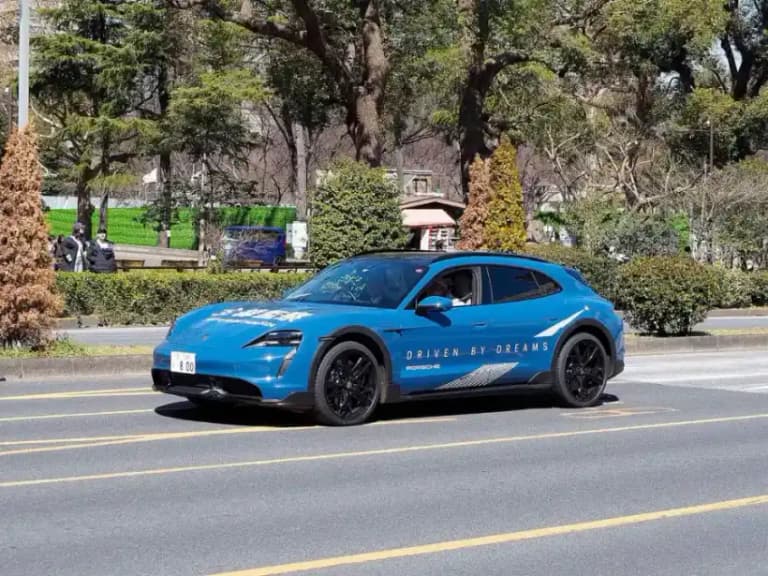
The extended roof runs almost flat to a rear spoiler above the hatch. From the side it reads as a shooting brake, not an SUV. The cladding and the raised stance are what mark it out as the Cross Turismo and not the low wagon.
The Low-Riding Sport Turismo
The Sport Turismo arrived later, in 2022, as the second wagon body. It shares the Cross Turismo’s roofline and cargo space. It drops the raised ride height and the cladding, sitting as low as the sedan.
The Sport Turismo also offers a rear-wheel-drive base model, which the Cross Turismo never does. Pick the Sport Turismo if you want wagon practicality with the sedan’s low, sleek look. Pick the Cross Turismo if you want the extra height and the rough-road hardware. Both drive much the same on tarmac.
Ride Height, Air Suspension, and the Off-Road Design Package
The Cross Turismo’s party trick is its suspension. It comes standard with an adaptive air setup that the base sedan makes optional. That air suspension is what lets it raise and lower on demand.
Standard Adaptive Air Suspension
Every Cross Turismo runs adaptive air suspension with Porsche Active Suspension Management as standard. The system firms up or softens to match the drive mode. It can also lift the body for a rough surface or lower it for stability at speed.
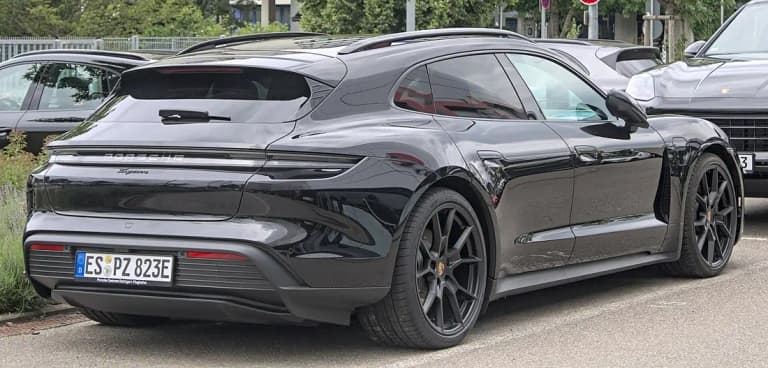
On the sedan, air suspension is an extra-cost option on the cheaper trims. On the Cross Turismo it is fitted to every car. That air system is the reason the body can carry a Gravel Mode and a raised ride height at all.
The Off-Road Design Package and Body Cladding
The standard Cross Turismo already wears black cladding around the arches and sills. The optional Off-Road Design package adds more cladding. It also raises the default ride height by a further 10 millimeters, per the Porsche launch specifications. That takes it to roughly 30 millimeters above the sedan.
Some owners like the extra ruggedness the package brings, and some prefer the cleaner standard look. Porsche also lets you delete the contrast cladding for a body-colored finish if you want a subtler car. The cladding is practical too, since it shrugs off stone chips and trail scrapes.
Gravel Mode and Light Off-Road Ability
The Cross Turismo is the only Taycan with a dedicated loose-surface drive mode. It will never be a Cayenne on a trail. It is built for the kind of rough road a fast wagon actually meets.
What Gravel Mode Does
Gravel Mode is a drive setting unique to the Cross Turismo. It raises the body by a further 10 millimeters and retunes the traction and stability control for loose ground. It also adjusts how power is sent between the axles to keep grip on gravel, grass, mud, and sand.
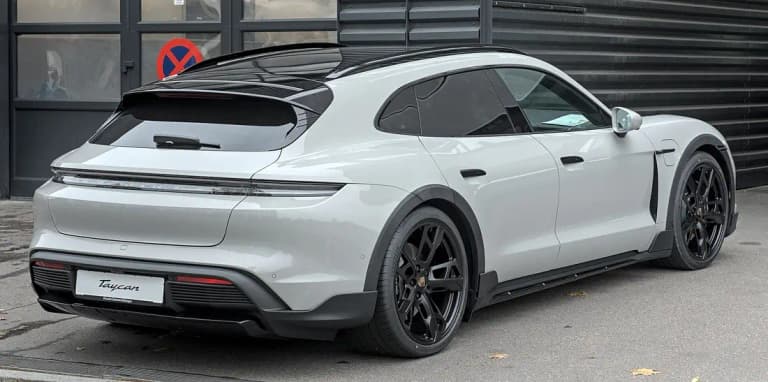
Combined with the standard air suspension, Gravel Mode gives the car noticeably more clearance than any sedan Taycan. It is designed to get you up a rough track to a trailhead or across a muddy field at an event. Porsche describes it as light off-road capability, not hardcore terrain.
What the Cross Turismo Can and Cannot Do
The honest picture is simple. The Cross Turismo handles gravel, grass, snow, and broken pavement with ease. Its all-wheel drive and raised body make bad-weather driving and rough car-park approaches a non-event.
What it cannot do is serious off-roading. There is no low-range gearbox, no locking differential, and only modest clearance. Deep ruts, big rocks, and steep loose climbs are out. Treat the extra ability as insurance for bad roads, not a reason to leave the tarmac for long.
Cross Turismo Trims and Model Years
The Cross Turismo launched in four trims and gained a fifth soon after. The body choice does not change the mechanical trim, so a 4S Cross Turismo has the same powertrain as a 4S sedan. The figures below are the launch outputs in overboost with launch control, drawn from the Porsche Taycan specification record.
| Trim | Power | 0-60 mph |
|---|---|---|
| Taycan 4 CT | 469 hp | 4.8 sec |
| Taycan 4S CT | 563 hp | 3.9 sec |
| Taycan Turbo CT | 671 hp | 3.1 sec |
| Taycan Turbo S CT | 751 hp | 2.7 sec |
Taycan 4 and Taycan 4S Cross Turismo
The Taycan 4 Cross Turismo is the entry point and the value pick. At launch it made up to 469 horsepower and hit 60 mph in about 4.8 seconds. It is quick, efficient, and cheaper than the rest, which makes it the sweet spot for many buyers.
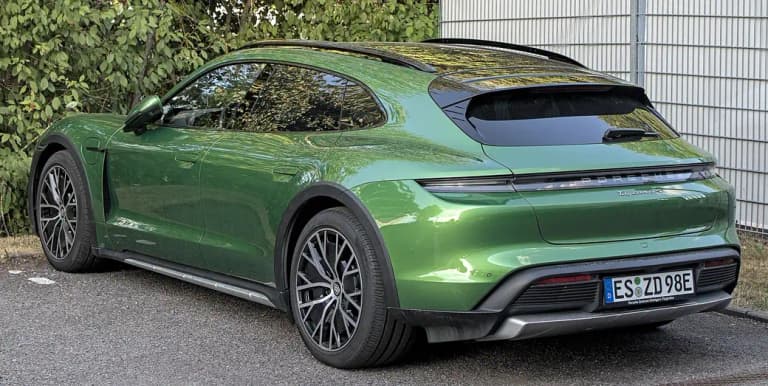
The Taycan 4S Cross Turismo steps up to as much as 563 horsepower and a 3.9-second 0-60 time. It adds bigger brakes and a sharper edge without a huge price jump. If you want more pace but not Turbo money, the 4S is the natural choice. Our full Taycan 4S guide digs into that powertrain in detail.
Taycan GTS Cross Turismo
The Taycan GTS Cross Turismo joined the range in November 2021. It slots between the 4S and the Turbo, with up to 590 horsepower and GTS-specific chassis tuning. The GTS is the enthusiast’s pick, blending real pace with the practicality of the wagon body.
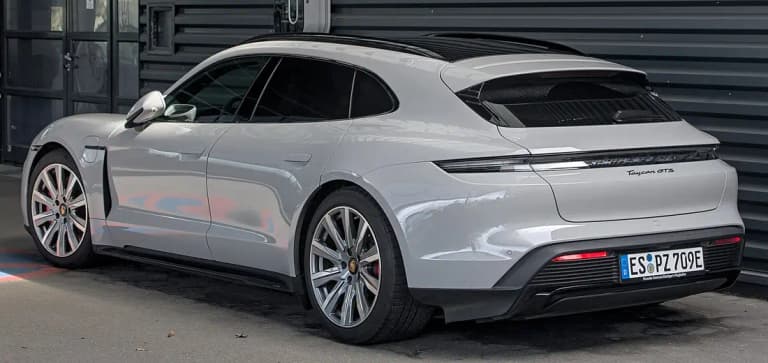
GTS models get darker exterior trim, sport styling, and a firmer, more focused setup. On the Cross Turismo body, that means a fast, sharp wagon that still swallows luggage. For a lot of buyers it is the most complete version of the car.
Taycan Turbo and Turbo S Cross Turismo
The Taycan Turbo Cross Turismo and Turbo S Cross Turismo sit at the top. The Turbo launched with up to 671 horsepower, and the Turbo S with up to 751 horsepower and a 2.7-second 0-60 time. These are family wagons that accelerate like supercars.
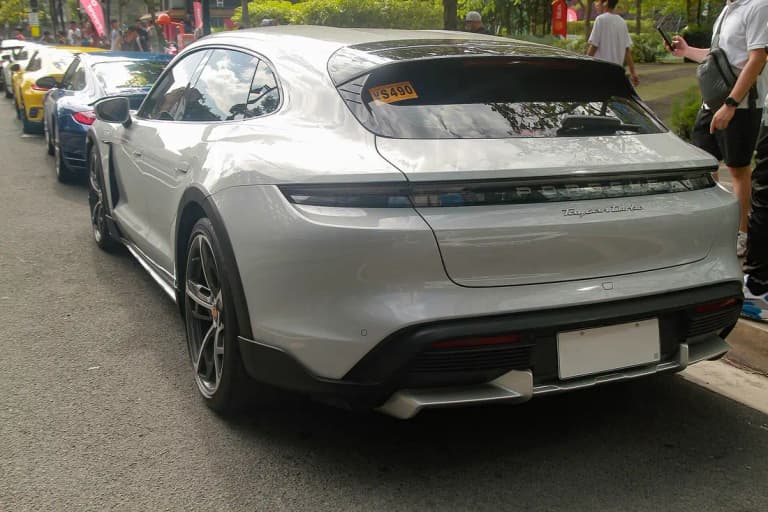
They add standard rear-axle steering, bigger brakes, and the fullest kit list. The trade-offs are price and a slight hit to range from the extra power. On the road the gap to the 4S is smaller than the numbers suggest. Our Taycan Turbo S guide covers the flagship in full.
The 2024 Update and Later Model Years
Porsche gave the whole Taycan range a major update for the 2024 model year, and the Cross Turismo shared in it. The revised cars gained new motors, a bigger battery, more power, and faster charging. The changes are mechanical, so the Cross Turismo body carried them over unchanged.
For the 2025 model year, the Performance Battery Plus became standard across the Cross Turismo lineup, according to the 2025 Taycan EPA figures. That single change lifted range and charging speed noticeably over the launch cars. If you shop used, knowing whether a car is pre- or post-update matters a lot.
All-Wheel Drive and the Chassis
Every Cross Turismo is all-wheel drive, which is a key part of its rough-road character. The powertrain itself is shared with the equivalent sedan, so we keep this short and point you to the trim guides for the deep dive.
Dual-Motor All-Wheel Drive
The Cross Turismo uses two electric motors, one on the front axle and one on the rear. That gives it permanent all-wheel drive and strong traction off the line. There is no rear-drive Cross Turismo, unlike the sedan and the Sport Turismo.
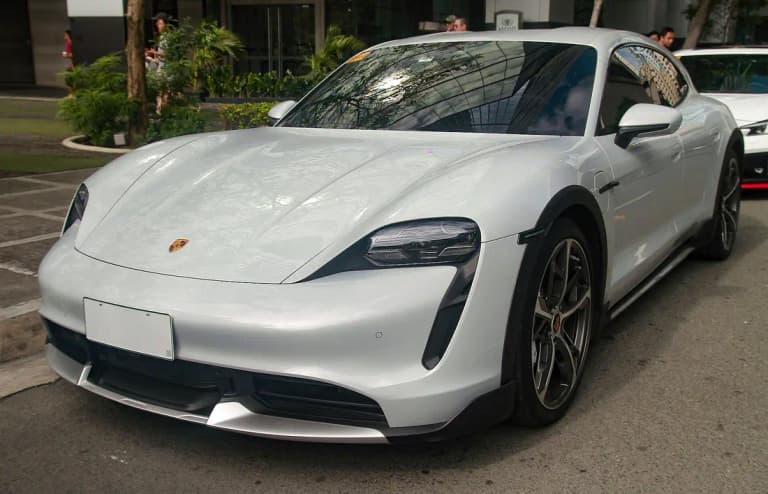
Like every Taycan, it also has a two-speed gearbox on the rear axle. The short first gear helps standing-start pace, and the taller second gear keeps the motor efficient at speed. The all-wheel-drive layout is exactly what makes the body work in mud, snow, and gravel.
Rear-Axle Steering and Handling
Despite the raised body, the Cross Turismo still handles like a Porsche. The battery sits low in the floor, so the center of gravity stays low even with the extra height. It changes direction far better than its wagon shape suggests.
Optional rear-axle steering is standard on the Turbo and Turbo S and available lower down. It turns the rear wheels a few degrees to sharpen low-speed agility and steady the car at high speed. Combined with the air suspension, it keeps this tall wagon feeling tied down and precise.
Practicality: Cargo, Rear Space, and Cabin
Practicality is the whole reason the Cross Turismo exists. The wagon roof and raised body add usable space the sedan cannot match. This is where the body earns its keep.
Luggage and Cargo Volume
The Taycan 4 and 4S Cross Turismo carry about 446 liters behind the rear seats. That is up from 407 liters in the sedan, according to Wikipedia’s Taycan data. The Turbo and Turbo S give up a little of that to their hardware. Fold the rear seats and space rises to as much as 1,212 liters.
That makes the Cross Turismo a genuine load-carrier. A big rear hatch, a square opening, and a low load lip all help. It swallows a dog, a bike with the wheel off, or a full airport run for four in a way the fastback sedan cannot.
Rear Headroom and the Wagon Roofline
The extended roofline is the other big win. Porsche quotes noticeably more rear headroom than the sedan, since the roof no longer drops away over the back seats. Tall adults fit in the rear without ducking, which is a real problem in the low sedan.
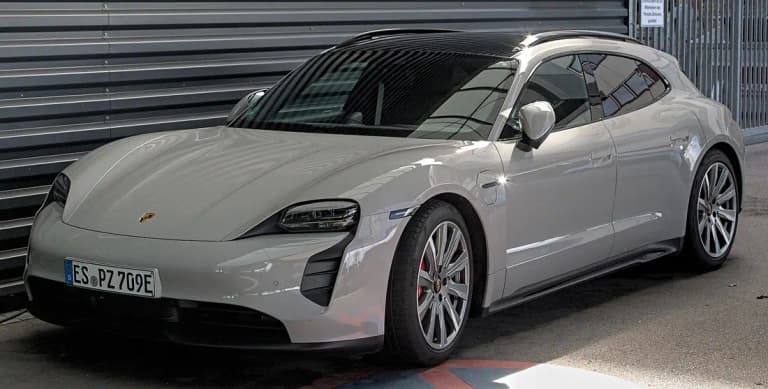
The flatter roof also makes the cabin feel airier, especially with the standard panoramic glass. For anyone who carries rear passengers often, this alone can justify the Cross Turismo over the sedan. It is the family-friendly Taycan.
Frunk, Roof Rails, and the Cabin
Up front, an 84-liter frunk under the hood holds charging cables and small bags, per the Porsche launch data. Optional roof rails let you fit a roof box or a bike or ski carrier, which turns the car into a proper weekend hauler. Few fast electric cars offer that.
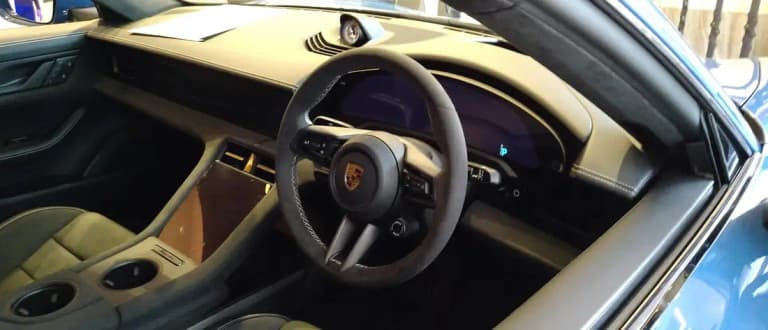
Inside, the cabin is pure Taycan and none the worse for it. You get the low, screen-led dashboard, the curved driver display, and Porsche’s clean infotainment. Build quality is excellent, and the wagon body costs you nothing in cabin feel. It is the same premium interior as the priciest Taycan.
Range and Charging on the Cross Turismo
Range is the one area where the Cross Turismo trails the sedan. The extra weight and the taller, less slippery body cost a few miles. Charging, on the other hand, is just as fast as any Taycan.
Performance Battery and Real Range
The Cross Turismo uses the same Performance Battery and Performance Battery Plus packs as the sedan. Early cars were modest on paper. The launch Taycan 4 Cross Turismo was EPA rated at roughly 215 miles, per the Taycan specification record.
The 2024 and 2025 updates changed that a lot. With the Performance Battery Plus now standard, the 2025 Taycan 4 Cross Turismo is EPA rated at about 277 miles, according to GreenCarReports. Real-world range depends on speed, wheels, and weather. Big wheels and cold days cut it; steady driving beats the rating.
800-Volt Fast Charging
Like every Taycan, the Cross Turismo runs an 800-volt electrical system, double the 400 volts most electric cars use. Higher voltage means the car holds a high charging rate for longer without overheating. That is the Taycan’s headline strength.
On the updated cars, peak fast charging reaches around 320 kilowatts on a compatible DC charger. A 10 to 80 percent top-up then takes roughly 18 minutes in good conditions. At home, an 11-kilowatt wallbox fills the battery overnight. That charging speed makes the modest range far less of an issue than it looks on paper.
Cross Turismo Pricing and Buying
The Cross Turismo costs a little more than the equivalent sedan, and it holds value in much the same way. Here is how to think about buying one, new or used.
New Prices
New, a Taycan 4 or 4S Cross Turismo starts in the range of roughly $110,000 to $120,000 in the US before options. The GTS sits above that, and the Turbo S climbs well past $190,000. Options add up fast, so a loaded 4S can reach GTS money.
The Cross Turismo carries a small premium over the same sedan trim for its extra body and standard air suspension. For buyers who want the space and the raised stance, that premium is easy to justify. Spec the Performance Battery Plus if you buy an older car new.
Used Values and What to Check
Electric cars depreciate hard, and the Taycan is no exception. The 2024 update also made pre-2024 cars look dated on range and charging, which pushed their used prices down further. That is a gift to a used buyer willing to accept the older range figures.
Buy with your eyes open. Check the high-voltage battery’s State of Health with a diagnostic read. Confirm which battery is fitted, since the Performance Battery Plus is worth more. Make sure all software updates and recalls have been done, and buy from a Porsche-approved source with warranty where you can.
Buying One in Thailand
Porsche sells the Taycan officially in Thailand, and electric cars have carried government incentives in recent years. Bringing in a used Cross Turismo privately is a different matter. Import duty and excise tax on a car like this are steep, and the paperwork is heavy.
If you are weighing a private import, read our guides on importing a Porsche to Thailand and the Thailand car tax rules first. To see where the Cross Turismo fits among Porsche’s other electric models, our Porsche electric cars overview is a good next read.
Frequently Asked Questions
What is the difference between the Taycan Cross Turismo and the Taycan sedan?
The Cross Turismo is the raised wagon version of the Taycan. It sits about 20 millimeters higher, adds rugged body cladding, and comes with standard air suspension and a Gravel Mode. It also has a longer roofline, more rear headroom, and a bigger cargo area than the low sedan.
Is the Porsche Taycan Cross Turismo all-wheel drive?
Yes. Every Taycan Cross Turismo is all-wheel drive, with one electric motor on each axle. There is no rear-wheel-drive Cross Turismo, unlike the sedan and the lower Sport Turismo, which both offer a base rear-drive car.
Can the Taycan Cross Turismo go off road?
It can handle light off-road use like gravel tracks, grass, and rough trails, not serious rock crawling. Gravel Mode raises the body and retunes the traction systems for loose surfaces. The extra ride height and cladding help, but this is a road car first.
What is the difference between the Cross Turismo and the Sport Turismo?
Both are wagon versions of the Taycan with the same long roofline. The Cross Turismo is raised and cladded for light off-road use and is all-wheel drive only. The Sport Turismo keeps the low sedan ride height and offers a rear-wheel-drive base model.
How much cargo space does the Taycan Cross Turismo have?
The Taycan 4 and 4S Cross Turismo hold about 446 liters behind the rear seats, versus 407 liters in the sedan. Folding the seats opens up to 1,212 liters. There is also an 84-liter front trunk for charging cables.
How much is a Porsche Taycan Cross Turismo?
New prices start around $110,000 to $120,000 for a Taycan 4 or 4S Cross Turismo before options, and climb well past $190,000 for the Turbo S. Used pre-2024 cars can sit far lower, since electric cars depreciate hard.
Image Credits
Images: Taycan 4 Cross Turismo (hero, white) and Turbo Cross Turismo (grey, front) by Ethan Llamas, CC BY-SA 4.0. Cross Turismo (grey, front) and Cross Turismo (grey, rear) by Alexander Migl, CC BY-SA 4.0. Cross Turismo (black, rear), 4S Cross Turismo (green), GTS Cross Turismo (grey, rear), and GTS Cross Turismo (grey, front) by Alexander-93, CC BY-SA 4.0. Turbo Cross Turismo (grey, rear) by Ethan Llamas, CC BY-SA 4.0. 4S Cross Turismo (blue, side) by Comyu, CC0. Taycan interior by Aos.1905, CC BY 4.0. Via Wikimedia Commons.