Quick Answer: Gemballa is a German Porsche tuner known for wild-looking, low-volume conversions. The early Avalanche turned a Porsche 930 into an exaggerated 1980s supercar. The Mirage GT did the same thing to the Carrera GT. Modern Gemballa builds still start with a Porsche, then add bodywork, interior changes, chassis work, and often more power.
In this article, we’ll explain Gemballa Porsche cars, from the early Avalanche to the Mirage GT. We’ll cover what Gemballa changes, the signature models, and how to judge one today.
Contents
Quick Summary
- Founded: Gemballa began in Leonberg, Germany, in 1981.
- Identity: Gemballa has manufacturer registration, yet many famous cars are Porsche-based conversions. The VIN and paperwork tell you which one you are viewing.
- Signature name: Avalanche is Gemballa’s long-running 911 conversion.
- Biggest visual statement: the Mirage GT turned the Porsche Carrera GT into something much more aggressive.
- Modern flagship: Gemballa lists a 991 Turbo-based Avalanche with up to 825 hp.
- Buying rule: verify the base Porsche, conversion records, and parts support before paying for the badge.
What Gemballa Is
Gemballa is a German company known for Porsche-based cars. Many builds start with an existing Porsche, then receive exterior, interior, suspension, wheel, exhaust, brake, and engine changes. Gemballa has held automobile-manufacturer registration since 1985, with its own HSN and WMI.
That distinction helps when you shop. A Porsche-based Gemballa conversion should keep the base car’s Porsche identity in its paperwork. Gemballa’s manufacturer registration is a separate point. Check the VIN, build records, and registration documents for the exact car rather than assuming every Gemballa follows one pattern.
For a useful contrast, read our RUF Porsche guide. RUF is also a recognized manufacturer and builds complete cars with its own RUF VIN. Gemballa’s best-known models include both its manufacturer history and Porsche-based conversions.
The cars are not subtle. Big intakes, deep bumpers, fixed wings, bright interiors, and wide wheels are part of the point. Some buyers love that. Others want a stock Porsche. Neither camp is wrong, but they are shopping for very different cars.
From Uwe Gemballa to the Modern Company
Uwe Gemballa started the company in 1981 in Leonberg, near Stuttgart. Gemballa’s company history says Porsche became central to its early work. The firm also handled other premium brands by special request.
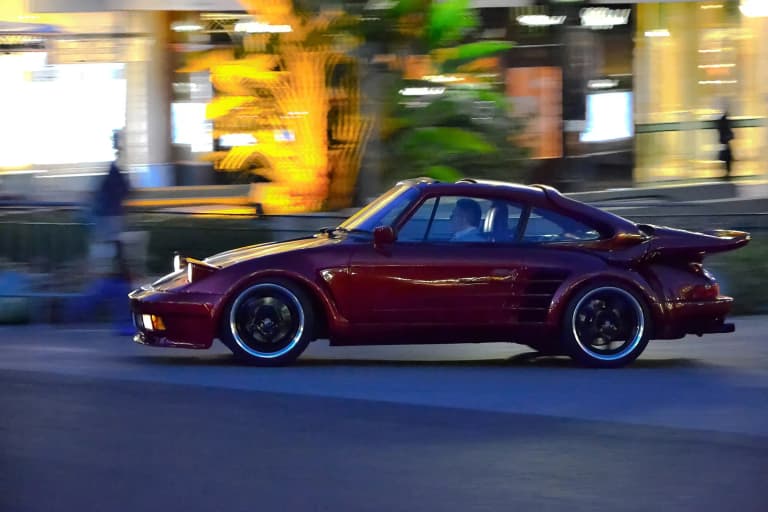
The Porsche 911 Turbo was already a forceful-looking car. Gemballa pushed it further with wide fenders, extra vents, altered noses, and loud cabin trim. The Avalanche and open-top Cyrrus followed in 1984 and 1985.
Uwe Gemballa died in 2010. Steffen Korbach took over that year and has led the company as CEO since 2016. It continues the old model names alongside customization, limited series, and restoration work.
The Gemballa Avalanche
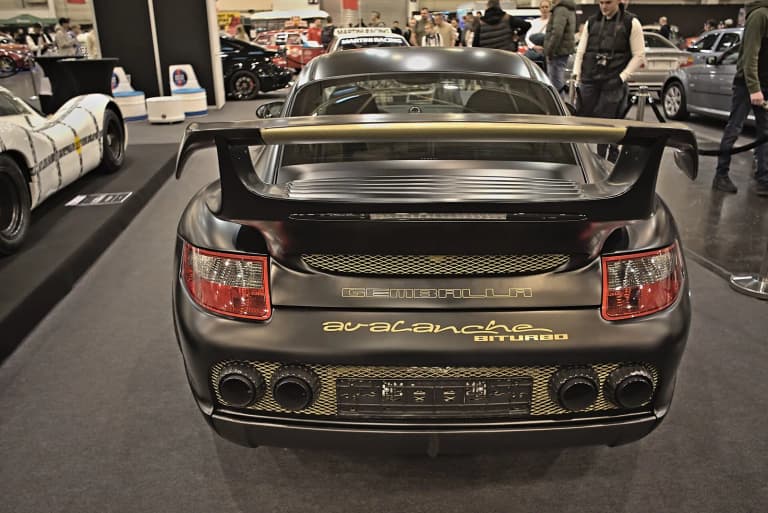
The Avalanche is the name most closely tied to Gemballa. The original was based on the Porsche 930, and its wedge-shaped body kit became a calling card for 1980s tuning. It was much more than a wheel-and-spoiler package. Buyers could order a transformed exterior and interior, with performance work to match.
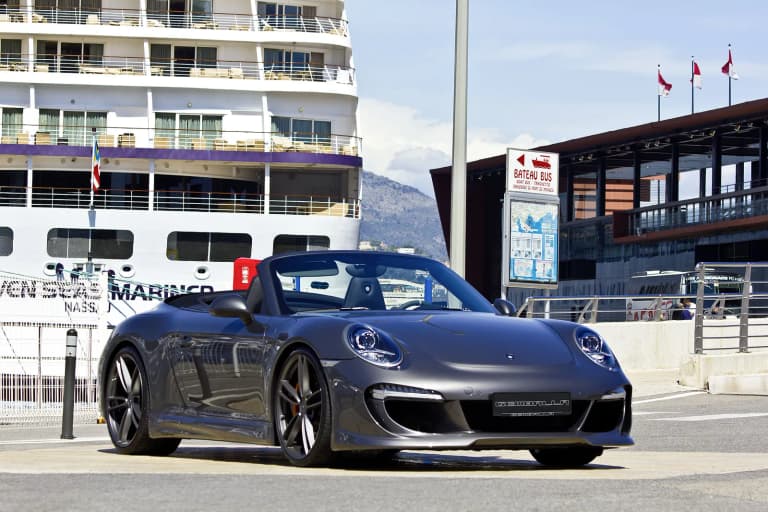
The current Avalanche uses a 991 Turbo or Turbo S base. GTR tune brings 825 hp and 1,098 Nm. It uses a seven-speed PDK and has a claimed 0 to 62 mph time of 2.6 seconds.
Those are Gemballa figures for its GTR tune, not factory Porsche numbers. The wide front bumper, enlarged side intakes, and large rear wing make it clear that this is not a standard 911 Turbo. That is the appeal, and also why originality and fit quality deserve a close look.
Mirage GT and Other Signature Cars
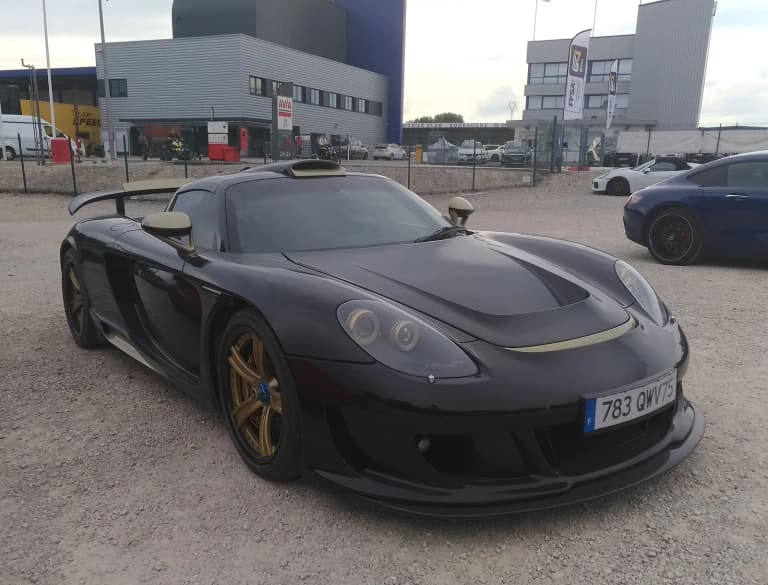
The Mirage GT is Gemballa’s Carrera GT conversion. It used a Porsche Carrera GT as its base, then added distinct bodywork, wheels, exhaust, interior work, and other changes. It is easy to spot because the Carrera GT’s clean shape gains a much sharper front end, larger vents, and a more dramatic rear treatment.
Gemballa has also used names such as Tornado, Mistrale, Aero, and GT. The Tornado is associated with the Cayenne, while the Mistrale was built from the Panamera. Model names alone are not enough to identify every car. The same name can cover different generations and specifications.
Ask which Porsche was used, when the work was completed, and what the conversion included. A documented Gemballa car has a much clearer story than a Porsche with aftermarket parts and a Gemballa badge added later.
Porsche Conversions and Manufacturer Status
Gemballa has manufacturer registration. It also builds Porsche-based conversions, including many Avalanche, Mirage GT, Tornado, and Mistrale cars. Check the paperwork to establish the exact vehicle configuration.
That has practical consequences. Start any inspection with the base car. On a 911, check the engine, gearbox, suspension, body structure, and electronics as you would on a standard Porsche. Then inspect the conversion separately, including panel fit, paint match, trim, wheels, and any engine work.
For Porsche basics, our Porsche VIN decoder guide explains what the VIN can tell you. It will not prove every Gemballa part is original, but it confirms the platform you are looking at.
What to Check Before Buying a Gemballa Porsche
Prove the conversion
Ask for invoices, build sheets, correspondence, and photos from the work. A seller should be able to explain which Gemballa parts are fitted and when the car received them. A period conversion with a paper trail is a different proposition from a later replica.
Inspect the base Porsche first
Book a pre-purchase inspection with a Porsche specialist. The Gemballa bodywork should not distract from routine Porsche checks. Scan the control modules, inspect for accident repairs, and check whether the performance work is properly documented.
Think about parts and resale
Specific body panels, trim, and wheels can be hard to replace. A modified car also has a narrower buyer pool than a standard Porsche. Buy the car because you like the conversion and its history, not because you expect every Gemballa badge to raise its value.
Frequently Asked Questions
What is Gemballa Porsche?
Gemballa is a German company that modifies Porsche cars. Its best-known Porsche builds include the Avalanche 911, Mirage GT based on the Carrera GT, Tornado Cayenne, and Mistrale Panamera.
Is Gemballa a Porsche manufacturer?
Yes, Gemballa is a registered automobile manufacturer. It has had its own HSN and WMI since 1985. Many famous Gemballas are Porsche-based conversions, so check the VIN and paperwork for the exact car.
What is the Gemballa Avalanche?
The Gemballa Avalanche is the company’s signature 911 conversion. The first, built in 1984, was based on the Porsche 930. Later versions used the 997 and 991 Turbo platforms.
What is a Gemballa Mirage GT?
The Gemballa Mirage GT is a heavily modified Porsche Carrera GT. It has unique bodywork, interior trim, wheels, exhaust, and mechanical changes depending on the version.
Who owns Gemballa now?
Steffen Korbach took over Gemballa after founder Uwe Gemballa died in 2010. Korbach has led the company as CEO since 2016.
Images: Gemballa Mirage GT, Porsche Carrera GT-based by Guillaume Vachey from Chalon sur Saone, France, CC0. Porsche 930 Gemballa Avalanche by Alexandre Prévot from Nancy, France, CC BY-SA 2.0. Porsche Gemballa Avalanche BiTurbo by Thomas Vogt from Paderborn, Deutschland, CC BY 2.0. Gemballa GT Cabriolet, Porsche 991-based by GEMBALLA GmbH, CC BY-SA 3.0. Via Wikimedia Commons.