Quick Answer: The Porsche 356 Speedster was Porsche’s stripped-down open 356, built mainly for American buyers from 1954 to 1958. Its low windshield, simple top, and light interior made it cheaper than a Cabriolet when new. Those same details give it a look no other 356 body shares.
In this article, we’ll explain the Porsche 356 Speedster, the open car that helped Porsche win America. We’ll cover where it came from, how it differs from a Cabriolet, and what to check before buying.
Contents
Quick Summary
- What it is: a low, open two-seat Porsche 356 with simple weather equipment.
- Why it exists: US importer Max Hoffman wanted an affordable Porsche for America.
- Built: the first production Speedster arrived in autumn 1954, and production ended in 1958.
- Key details: raked low windshield, bucket seats, side curtains, and a basic rain top.
- Special version: the 1957 Carrera GT Speedster made 110 PS and passed 200 km/h.
- Buying tip: verify the chassis, engine, body repairs, and paperwork before looking at paint.
Why Porsche Built the Speedster
The Speedster was an American idea. Porsche importer Max Hoffman saw demand for a lighter, less expensive open Porsche. He wanted a car that could sell for under $3,000 in the United States.
Porsche had already made the 356 America Roadster. It had an aluminum body, light bucket seats, and a folding cover. It was also expensive, and Porsche built only 16. The factory’s own Speedster history calls it the direct forefather of the production car.
The 356 1500 Speedster appeared in autumn 1954. It used the steel body of the Cabriolet but cut cost and weight with reduced trim, a raked windshield, and a rain top. Porsche priced it at $2,995 in the US, according to its historical account.
What Makes a Speedster Different
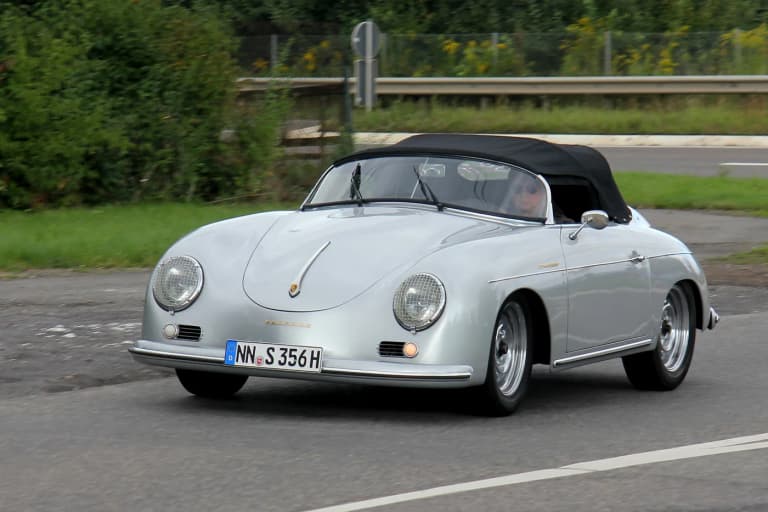
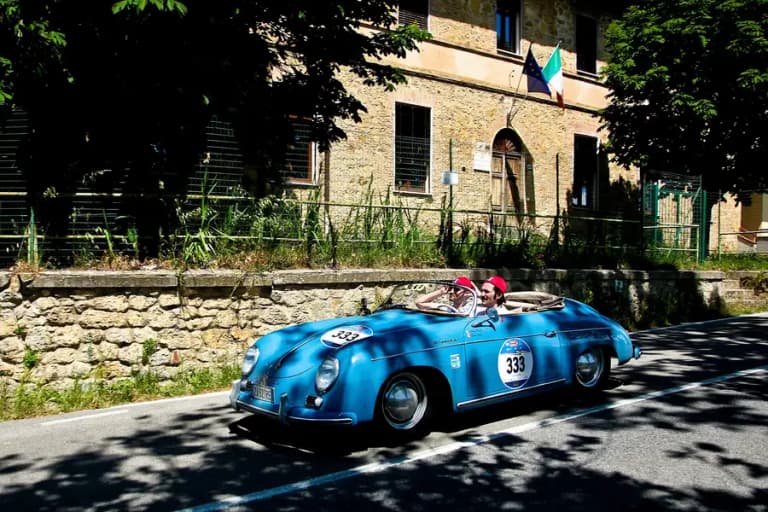
The windshield is the giveaway. It is lower and more steeply raked than a 356 Cabriolet’s screen. It changes the whole shape of the car, especially with the top down.
Inside, the Speedster was leaner than the Cabriolet. It had lightweight bucket seats and reduced trim. Its side windows were removable curtains rather than winding glass. The small folding top was emergency weather gear, not something you would want to raise every afternoon.
That sounds crude now, but it was the point. The Speedster was for sunny roads, club racing, and drivers who wanted less between them and the car. For the broader story of the coupe, Cabriolet, and later models, see our Porsche 356 guide.
Speedster Years and Versions
The early Speedster belongs to the 356 pre-A and 356 A period. Porsche changed details as the regular 356 developed, but the basic idea stayed intact until 1958. The later Convertible D and Roadster were more civilized replacements, with taller windshields and better weather protection.
The wild card is the 1957 356 A 1500 GS Carrera GT Speedster. Porsche fitted it with a vertical-shaft Fuhrmann engine making 110 PS. The company says it was its first production model to break the 200 km/h barrier. That is serious pace for a tiny open car from the 1950s.
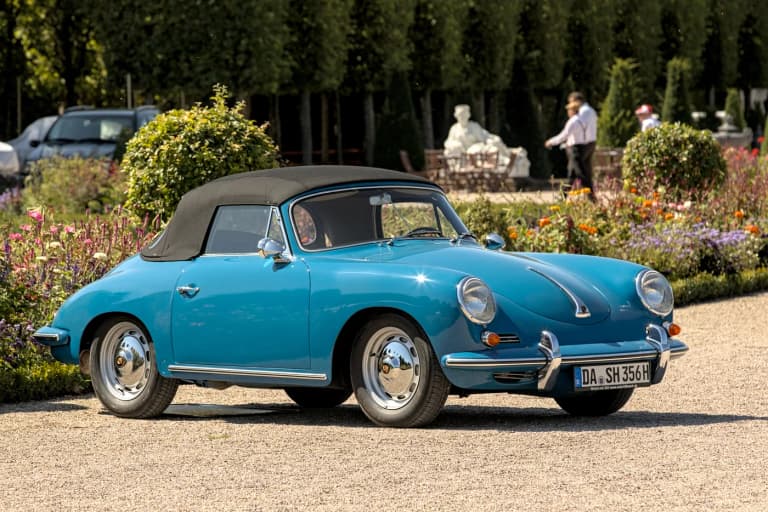
Do not confuse a Speedster with every open 356. A Cabriolet is a proper convertible. The later Roadster has a similar open-air mission, but it is not a Speedster. The windshield, top, and original specification decide the identity, not a badge or a seller’s description.
What It Feels Like to Drive
A 356 Speedster feels small, light, and exposed. The upright driving position, thin pillars, and low screen put you close to the road. It is a different kind of fun from a modern fast Porsche.
The air-cooled flat-four is behind the rear axle, so traction is strong and the steering stays light. You work the gears and carry momentum rather than relying on straight-line power. A well-sorted car feels alive at normal road speeds.
Brakes and safety are from another era. Early cars use drum brakes, and they need a driver who leaves room and looks ahead. If you want an open Porsche with modern power and brakes, compare it with a 718 Spyder or a later 911 Speedster.
Buying a 356 Speedster
Start with identity
Check the chassis number, engine number, body number, and Porsche Certificate of Authenticity or factory documentation. A car’s history can be more important than shiny paint. Originality and a documented restoration carry far more weight than a fresh cosmetic job.
Inspect rust before everything else
Rust repairs can swallow a budget fast. Have a 356 specialist inspect the floors, longitudinals, battery box, front suspension mounts, and lower body. Poor repairs can look good from a few feet away, so use a lift and a magnet only as starting points.
Check the Speedster parts
The windshield frame, top frame, side curtains, seats, instruments, and trim are all part of what makes a real Speedster valuable. Missing or incorrect pieces can be replaced, but that affects cost and originality. Ask for photos from before restoration, invoices, and a list of replacement panels.
A pre-purchase inspection should include a cold start, compression or leak-down test, gearbox check, and a brake inspection. The pushrod flat-four is simple by Porsche standards, but decades of repairs can leave surprises behind.
Choosing an Original or Replica
A real Porsche 356 Speedster is a collector car first. That does not mean a replica is a bad choice. A good replica can give you the low-screen, open-air experience without putting a rare original at risk every time you park it.
Just be honest about the job. A replica is not an investment-grade original, and build quality varies wildly. Inspect its chassis design, brakes, wiring, engine installation, registration, and parts support. Buy the best-built example you can find, then drive it.
Frequently Asked Questions
What is a Porsche 356 Speedster?
A Porsche 356 Speedster is a low-windscreen, open two-seat version of the 356 built from 1954 to 1958. It used a simpler interior, removable side curtains, and a basic folding top to keep price and weight down.
Why is the Porsche 356 Speedster so valuable?
The Porsche 356 Speedster is valuable for its low-windscreen design and its place in Porsche’s early American story. Verify the chassis, engine, and body history before buying any example.
How fast is a Porsche 356 Speedster?
A Porsche 356 Speedster is not fast by modern standards. Porsche’s 1957 356 A 1500 GS Carrera GT Speedster made 110 PS and was Porsche’s first production model to exceed 200 km/h.
What is the difference between a 356 Speedster and a 356 Cabriolet?
A 356 Speedster has a lower raked windshield, simpler trim, side curtains, and a light emergency top. A 356 Cabriolet has a taller windshield, a more substantial lined top, and more weather protection.
Should I buy a Porsche 356 Speedster replica?
Buy a Porsche 356 Speedster replica if you want the open-air experience for less money. It is not a substitute for an original Porsche, so inspect its chassis, brakes, and build quality carefully.
Images: 356 A Speedster by Lothar Spurzem, CC BY-SA 2.0 DE. 356 Speedster by Franco Vannini, CC BY 2.0. 356 B Cabriolet by Alexander Migl, CC BY-SA 4.0. Via Wikimedia Commons.