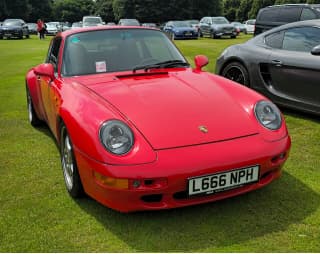
Quick answer: The Porsche 718 Boxster is the open-top version of the 982-generation 718. The 300 hp base car is enough for road use, the 350 hp S adds torque and speed, and the GTS 4.0 brings back a naturally aspirated six-cylinder engine. On any used car, inspect the roof, drains and cabin for water before getting distracted by engine choice or options.
In this article, we’ll walk through the Porsche 718 Boxster range and what to check before buying one used. We’ll cover its model lineup, roof types, water checks, and buying checklist.
Contents
Quick Summary
- Best Starting Point: a well-kept base or S with complete records and a dry cabin
- Best Six-Cylinder Road Car: GTS 4.0
- Most Important Inspection: one complete roof cycle, followed by drain and moisture checks
- Regular Roof: powered fabric top on the base, S, T, GTS and Style Edition
- Different Roof Hardware: manual tops on the Spyder and Spyder RS
- Production Scope: the combustion-engined 982 line introduced during 2016 and produced until October 2025
This guide focuses on what is unique to the roadster. The Porsche Boxster guide covers every generation, while our 718 Cayman guide covers the fixed-roof alternative.
Porsche 718 Boxster Models and Engines
| Version | Engine and Porsche-listed output | What the buyer should know |
|---|---|---|
| Base | 2.0-liter turbo flat-four, 300 hp | The value choice. Put condition, roof operation and records ahead of options. |
| S | 2.5-liter turbo flat-four, 350 hp | More power and torque, but it still needs the same roof and water checks. |
| T | 2.0-liter turbo flat-four, 300 hp | Uses the base engine with Sport Chrono and chassis equipment bundled around it. |
| GTS 2.5 | 2.5-liter turbo flat-four, 365 hp | The quickest regular turbo version in Porsche’s cited launch figures. |
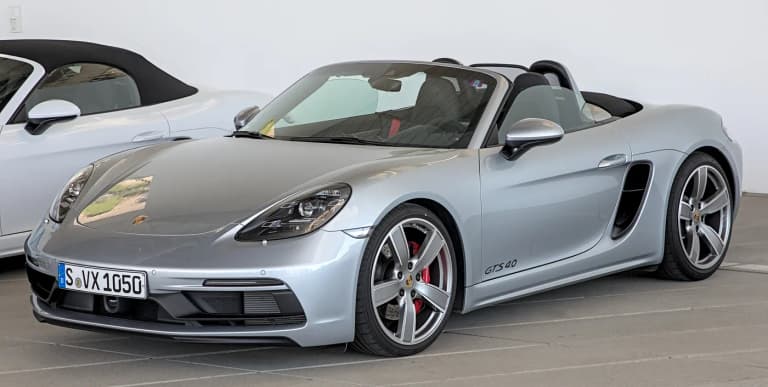
| GTS 4.0 | 4.0-liter naturally aspirated flat-six, 394 hp for the cited 2021 U.S. model | The road-focused six-cylinder choice. Compare cars by condition before paying for the badge. |
| Style Edition | 2.0-liter turbo flat-four, 300 hp | An appearance package based on the regular 300 hp car. |
| 718 Spyder | 4.0-liter naturally aspirated flat-six, 414 hp | Manual lightweight roof and GT chassis make it a different ownership proposition. |
| Spyder RS | 4.0-liter naturally aspirated flat-six, 493 hp | PDK only, two-part removable top and the most specialized inspection needs. |
Porsche lists 300 hp for the base model, 350 hp for the S and 394 hp for the GTS 4.0 in its 2021 U.S. specifications. The earlier 2.5-liter GTS makes 365 hp, so the S is not the quickest regular turbo Boxster.
Porsche’s U.S. releases list 300 hp for the Boxster T, 414 hp for the 718 Spyder, and 493 hp for the Spyder RS. The Style Edition keeps the base model’s 300 hp engine.
Choosing the Right 718 Boxster
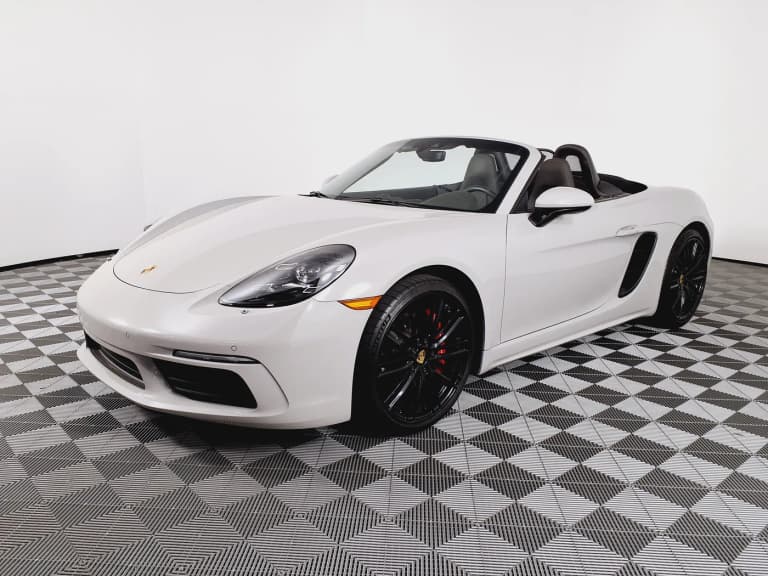
Start with the base car if the budget leaves room for a strong service history, good tires and a specialist inspection. Move to the S when its extra torque matters on the roads you actually drive. The T makes sense when you want its bundled chassis equipment without moving to a larger engine.
The GTS 4.0 is the clear route to a six-cylinder road car with the regular powered roof. The Spyder and Spyder RS are more specialized. They reward buyers who want the engine and chassis enough to accept extra roof setup and less everyday convenience.
Powered Boxster Roof vs Spyder Roofs
Regular 718 Boxster powered roof
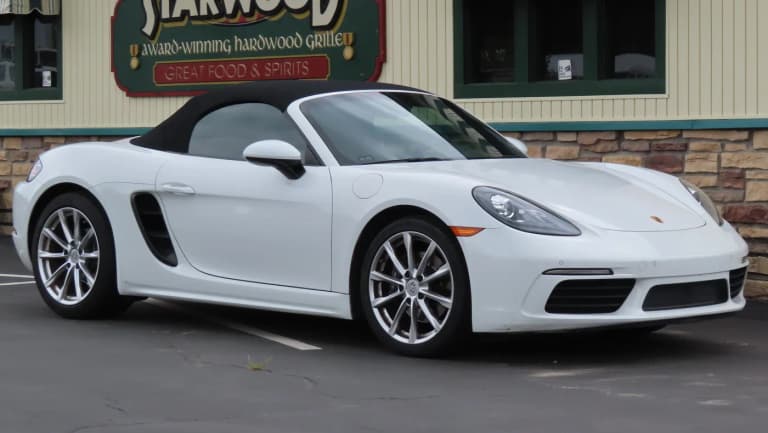
The base, S, T, GTS and Style Edition use a powered fabric roof. Ask the seller to begin with it fully closed, then watch one uninterrupted opening and closing cycle. Look for smooth, even movement and correct seating against the windshield frame and side windows.
Check the fabric at its folds and edges, inspect the rear window, and look closely at the header and side-window seals. Uneven tension, rubbing, damage or a roof that will not complete its cycle needs diagnosis before you agree on a price.
718 Spyder manual roof
The 718 Spyder uses a manually operated lightweight fabric top. A buyer should confirm that the roof, fasteners and storage pieces are present, then have the mechanism demonstrated. The rear deck and its streamliners also deserve a close look for fit and previous repair.
Spyder RS two-part roof
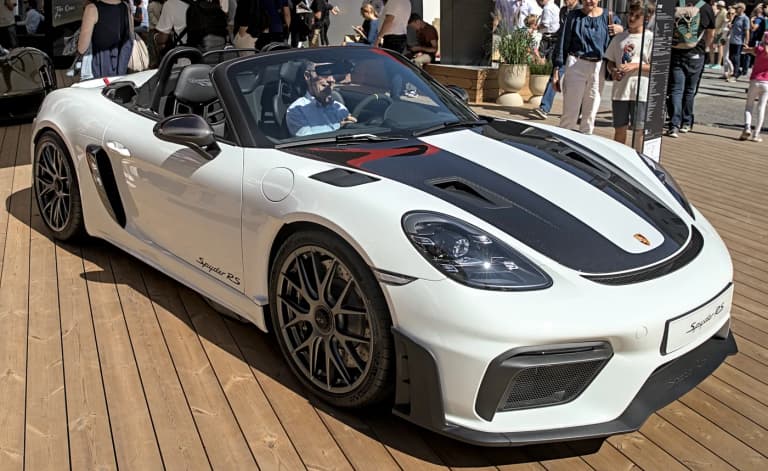
Porsche describes the Spyder RS roof as two removable parts: a sunshield and a weather protector. Confirm that both sections, their fasteners and storage equipment come with the car. Our 718 Spyder guide goes deeper into the GT models.
Roof, Drain and Water-Ingress Checks
- Inspect the car while dry. Check the headliner, seat backs, footwells, lower trim and both luggage areas before moving the roof.
- Run the complete roof cycle. Watch for hesitation, uneven movement, rubbing or unusual noise.
- Check the closed fit. The roof should seat evenly at the windshield and around both side windows.
- Inspect fabric and seals. Look for abrasion, cuts, loose stitching, discoloration and repairs.
- Inspect visible drains. Look for leaves and debris around the inlets and channels.
- Look for water evidence. Damp carpet, staining, corrosion, fogged lamps or a musty smell all need follow-up.
- Repeat after the road test. Close the roof and listen for a localized air leak around the header and windows.
Dry weather does not prove the car has stayed dry. Ask where it was stored and whether the roof or drains have been serviced. Do not force wire or high-pressure air into a drain path without the correct service information. If drainage is uncertain, have a Porsche specialist inspect it.
If the seller cannot demonstrate the roof because of a weak battery, storage position or another excuse, treat the system as undiagnosed. A proper inspection can separate a simple adjustment from a sensor, linkage, electrical or fabric problem.
Cabin, Wind Management and Storage
Confirm that the wind blocker and its mounting pieces are present if they are included in the listing. Drive with the roof down at the speeds you use most, then repeat part of the route with the roof closed. Check buffeting, rattles, visibility and whether the exact seats fit you comfortably.
Open both luggage compartments and check their hinges, latches, releases, lights, seals and carpets. Bring the bags you plan to carry. A real packing test tells you more than a cargo figure when the luggage has an awkward shape.
Operate the windows, mirrors, climate control, seats and infotainment. A convertible still spends plenty of time with the roof raised, so the closed-cabin experience matters.
Used Porsche 718 Boxster Buying Checklist
- Verify the car. Match the VIN, market, model, engine, gearbox and factory equipment to the records.
- Check history. Review maintenance, brake-fluid service, tires, repairs and option claims through invoices.
- Inspect cold and dry. Look for leaks, water evidence, previous paintwork, tire age, wheel damage and cooling-intake debris.
- Test the roof before driving. Complete the roof, seal and drain checks while there is time to stop.
- Drive roof down and up. Check the gearbox, brakes, steering, warning messages, wind control, rattles and sealing noise.
- Get a specialist inspection. Ask for diagnostic scans, an underbody inspection and written roof or water-ingress findings.
- Check recalls by VIN. For a U.S. car, use the NHTSA recall lookup and match completed work to the records.
There is no useful generation-wide reliability label that replaces these checks. Condition, maintenance, roof operation, water evidence, tires, brakes and diagnostic results describe the car in front of you.
718 Boxster Production Years
Porsche announced in December 2015 that the Boxster and Cayman would become the 718 model series and use turbocharged four-cylinder flat engines, with introduction during 2016.
Porsche’s 2025 delivery report says production of the 718 model line ended in October 2025. That closes the combustion-engined 982 range covered here. It does not prove that the Boxster name is permanently retired.
Frequently Asked Questions
What years does this Porsche 718 Boxster guide cover?
It covers the combustion-engined 982-generation 718 Boxster. Porsche introduced the 718 Boxster during 2016 and reported that production of the 718 model line ended in October 2025.
Which Porsche 718 Boxster has a six-cylinder engine?
The GTS 4.0, 718 Spyder and Spyder RS use naturally aspirated 4.0-liter flat-six engines. The base, S, T and earlier 2.5-liter GTS use turbocharged flat-four engines.
What roof checks should a used 718 Boxster pass?
Run the powered roof through a complete opening and closing cycle. Check its alignment, fabric, seals and rear window, then look for dampness or staining in the cabin and storage areas.
How should a buyer check the roof drains?
Inspect visible drain inlets and surrounding channels for debris, then check carpets and lower trim for dampness, staining or a musty smell. Use a Porsche specialist if drainage is uncertain.
How are the 718 Spyder roofs different?
The 718 Spyder uses a manually operated lightweight fabric top. The Spyder RS uses separate removable sunshield and weather-protector sections. Neither works like the regular Boxster’s powered roof.
Images: 718 Boxster GTS 4.0 hero by Alexander Migl, CC BY-SA 4.0, resized and converted to WebP. 718 Boxster S by HJUdall, CC0. 718 Boxster by MercurySable99, CC BY-SA 4.0. 718 Spyder RS by Alexander Migl, CC BY-SA 4.0.