
The Porsche Cayenne Diesel is a 3.0 liter V6 TDI SUV. Porsche sold it in Europe starting around 2009, and it also reached the United States from 2013 to 2016. That contradicts a common assumption that the Cayenne Diesel never reached the US market. Porsche Cars North America issued a voluntary stop sale in November 2015 after an EPA emissions violation notice. Those model years were later named in the federal Volkswagen Group Clean Air Act settlement.
A used Cayenne Diesel is worth buying if the VIN clears its recall and settlement check and a specialist inspection of the timing chain and injectors turns up nothing alarming. Skip it if either check fails.
In this article, we’ll explain the Porsche Cayenne Diesel’s recall history and what to check before buying one. We’ll cover its dieselgate recalls, mechanical risks, ownership costs, and inspection checklist.

Contents
- 1 Quick Summary
- 2 What Is the Porsche Cayenne Diesel
- 3 The Cayenne Diesel and Dieselgate in the US
- 4 European Emissions Recalls
- 5 Mechanical Weak Points on the 3.0 TDI
- 6 Cayenne Diesel vs. Cayenne Turbo, Hybrid, and the Volkswagen Touareg
- 7 Ownership Costs: Wear Items, Towing, and Fuel Economy
- 8 Why Porsche Dropped Diesel and What It Means for Parts
- 9 Buyer Inspection and Verification Checklist
- 10 Evidence Limits: What We Could Not Confirm
- 11 Frequently Asked Questions
Quick Summary
- VIN Check First: Confirm recall and settlement status. US 2013 to 2016 cars need the federal Clean Air Act settlement repair completed; European V6 or V8 diesels need proof of their 2017 or 2018 KBA-ordered software update
- Mechanical Weak Points: Have a specialist check the timing chain tensioner, lower timing cover, injectors, and EGR/DPF system; these are field-reported forum patterns, not certified defect rates
- Wear Items: Budget for brakes, tires, wheels, and air suspension if equipped, typical of a heavy SUV
- Parts Support: Confirm local parts and specialist service support before buying, especially outside Europe and North America, since Porsche has not built a new diesel model since 2018
- US Engine: 3.0 liter V6 TDI making 240 hp and 406 lb-ft, sold in the US for model years 2013 through 2016
- Verdict: A completed recall repair plus a clean specialist inspection make a Cayenne Diesel a reasonable buy; an incomplete recall or a bad inspection result are reasons to walk away
What Is the Porsche Cayenne Diesel
The Porsche Cayenne Diesel is a diesel powered version of the Porsche Cayenne SUV, built around a 3.0 liter V6 TDI engine. TDI is Volkswagen Group’s own term for “Turbocharged Direct Injection,” according to trade press explainers of the badge. Porsche first offered a diesel Cayenne in Europe with the 957 facelift and carried the engine into the 92A generation. In its most common form, the V6 TDI made 240 horsepower and 406 lb-ft (550 N·m) of torque.
The Cayenne Diesel was never a single, simple product. Porsche sold different diesel engines in different markets over roughly a decade, and the recall and legal history attached to each one is different too. Sorting out exactly which engine and which market applies to a specific used car is the first step before worrying about anything else.
US Market Cayenne Diesel, 2013 to 2016
Porsche’s own 2013 technical specification sheet confirms Porsche Cars North America sold the 3.0 liter V6 TDI Cayenne Diesel in the US for model years 2013 through 2016. This corrects a common online claim that the Cayenne Diesel never reached the US. It did, for four model years, before the whole US diesel program collapsed.
The US spec car made 240 hp at 3,500 to 4,000 rpm and 406 lb-ft of torque at 1,750 to 2,500 rpm, per that same spec sheet. It ran through an eight speed Tiptronic S automatic with permanent all wheel drive, reached 60 mph in 7.2 seconds, and topped out at 135 mph.
Curb weight was 4,795 lbs, and it could tow up to 7,716 lbs. A separate Porsche Newsroom spec sheet comparing the diesel to the gas V6 also lists a 26.4 gallon fuel tank and a common rail fuel injection system.
European Cayenne Diesel Variants
Europe got a wider range of diesel Cayennes than the US ever did. Alongside the base 3.0 liter V6, Porsche sold a Cayenne S Diesel with a 4.1 to 4.2 liter V8 TDI. That engine was never offered in the US market. The S Diesel is the version that set a Guinness World Record for towing, and it carries its own separate recall history covered below.
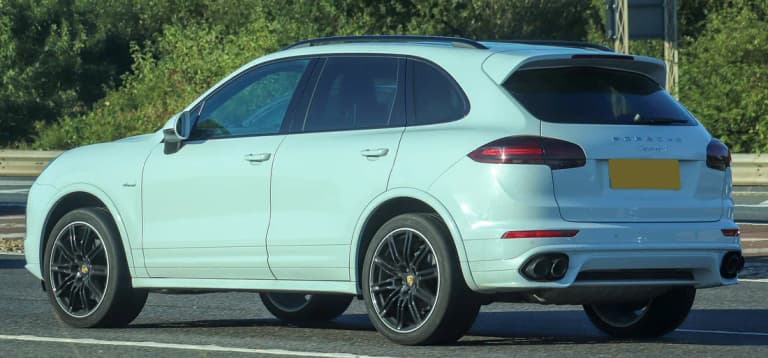
Porsche Newsroom reports that on 5 January 2017, a stock Cayenne S Diesel (385 hp) towed an Air France Airbus A380. The aircraft weighed 285 tonnes, and the Cayenne pulled it 42 meters at Paris Charles de Gaulle Airport.
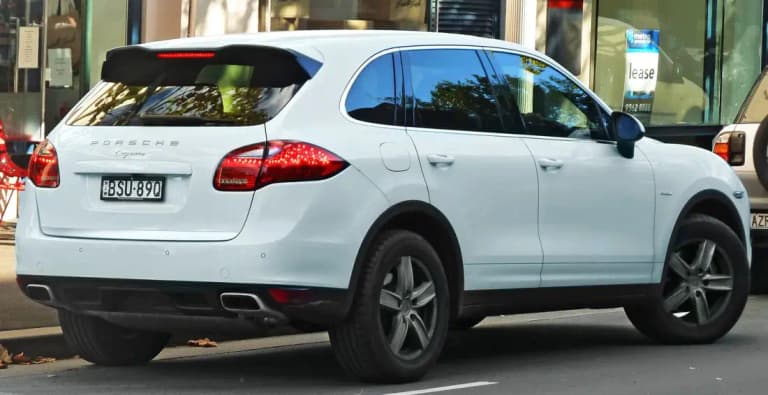
Porsche ended the diesel Cayenne entirely when the current 9Y0 generation launched in 2018 without a diesel option. That decision, and what it means for parts and service today, is covered later in this guide.
The Cayenne Diesel and Dieselgate in the US
The Cayenne Diesel’s biggest buyer risk story is not a European recall. It is the US stop sale and the federal Clean Air Act settlement that followed, and both named the Cayenne directly.
The November 2015 Stop Sale
Porsche Cars North America’s own official statement confirms it voluntarily halted US sales of model year 2014 to 2016 Cayenne Diesel vehicles on 3 November 2015. The stop sale came one day after PCNA received an unexpected EPA notice of violation, issued 2 November 2015. That notice covered roughly 10,000 Volkswagen Group 3.0 liter diesel vehicles across Audi and Porsche models.
The EPA Settlement and Compensation
A federal court in California approved the US EPA’s Clean Air Act civil settlement on 17 May 2017. The EPA’s own settlement overview and its list of affected 3.0 liter vehicles cover this case. They name “Model year 2013 to 2016 Porsche Cayenne” as a Generation 2 3.0 liter diesel vehicle covered by the case.
Reported terms of the settlement describe an EPA and CARB approved Emissions Compliant Repair, plus cash compensation for Generation 2 owners. A Department of Justice announcement on the case put that compensation at $7,039 to $16,114 per Generation 2 vehicle.
Lead settlement counsel Keller Rohrback’s case summary names 2013 to 2016 Porsche Cayenne 3.0 liter TDI vehicles specifically. It places them as part of the Generation 2 group covered by that range. The figure does apply to the Cayenne, in other words, and not just to the combined Volkswagen and Audi models.
Checking Your Cayenne Diesel’s Compliance Status
Owners and buyers can check whether a Generation 2 vehicle, including a Cayenne, completed its Emissions Compliant Repair and claimed compensation. The official court settlement administrator site handles this by VIN lookup at porschediesellookup.com. Do this before buying any US market Cayenne Diesel from model years 2013 to 2016. A seller who cannot explain the settlement history on a car from these years is a reason to slow down.
European Emissions Recalls
Outside the US, Porsche’s own FAQ lists five European regulatory recalls tied to diesel emissions control software since November 2015, according to Porsche Newsroom.
- The Cayenne 3.0 liter V6 diesel (Euro 6).
- The Macan 3.0 liter V6 diesel (Euro 6).
- The Cayenne 4.2 liter V8 diesel (Euro 5).
- The Cayenne 4.2 liter V8 diesel (Euro 6).
- The Panamera 4.0 liter V8 diesel (Euro 6).
Two of those five apply directly to the Cayenne.
The 2017 Cayenne 3.0 V6 Recall
Porsche Newsroom reports that on 28 July 2017, Porsche recalled about 21,500 Cayenne 3.0 liter V6 diesel Euro 6 vehicles in Europe, covering model years 2014 to 2017. Of those, 6,000 were in Germany. Porsche said its own internal investigation found irregularities in the engine control software and reported them to the German KBA regulator before issuing the recall.
The 2018 KBA Order on the V8 Diesel
Germany’s KBA regulator ordered Porsche to recall 6,750 Cayenne 4.2 liter V8 diesel vehicles on 21 May 2018, according to Autocar. The same order covered 53,000 Macan 3.0 liter V6 diesel vehicles, after the KBA said it found what it described as a test cheat device. Both engines were built by Audi and shared across several Volkswagen Group SUVs.
If you are buying a European market Cayenne S Diesel or any Euro 5 or Euro 6 diesel Cayenne, ask the seller for proof. It needs to show the relevant software update was completed. A workshop stamp or invoice tied to the VIN is the only real evidence, and a verbal assurance is not.
Mechanical Weak Points on the 3.0 TDI
Beyond the emissions recalls, the 3.0 liter V6 TDI has a handful of mechanical weak points that come up repeatedly in owner and specialist discussion. None of these are manufacturer confirmed defect rates. They are field reported patterns worth checking before you buy, not certified failure statistics.
Timing Chain and Oil Leaks
Owners on forums such as Rennlist and the German PFF forum report timing chain tensioner wear on the 3.0 TDI, often linked to skipped or overdue oil changes. A worn tensioner lets the chain rattle, and in a bad case it can jump time. The same engine is also known for oil leaks from the lower timing cover.
This issue tracks maintenance rather than raw mileage, so do not assume a low mileage car is automatically low risk. Ask for proof of regular oil changes at or under the manufacturer’s recommended interval, not just a low odometer reading. A neglected oil change schedule on a low mileage car can do as much damage as heavy use on a well maintained one.
Injectors and Emissions Hardware
The 3.0 liter TDI controls NOx emissions with a selective catalytic reduction (SCR) system. It doses exhaust with AdBlue urea solution from a heated tank in the spare wheel well. Porsche’s own UK press materials describe this location as “the AdBlue tank for the SCR system in the spare wheel recess”.
That tank needs periodic refilling on top of normal service. It is also exactly the kind of emissions hardware a defeat device can manipulate, one reason this system carries recall and settlement history.
The engine’s Bosch common rail fuel system uses piezo-controlled injectors, the same architecture used across the wider Volkswagen Group 3.0 liter V6 TDI family. That family is shared with the Audi Q7 and Volkswagen Touareg. Specialist diesel parts catalogs and engine-specification references that track this engine by its factory index document that shared design.
Fuel injector failures and EGR or DPF fouling show up most on cars that spend most of their miles on short, low-speed trips. On those trips the diesel particulate filter never gets hot enough to regenerate properly. These are common diesel ownership issues rather than something unique to Porsche, but they matter more on a car that already carries emissions software history.
Ask for service records showing regular highway driving or forced regenerations. Ask when the AdBlue tank was last topped up, and have a specialist scan for stored fault codes before you buy.
Fuel Filter, DEF System, and Routine Maintenance
Beyond the failure points above, treat a used Cayenne Diesel like any modern common rail diesel when it comes to routine service. Ask when the fuel filter was last changed, since a clogged fuel filter can starve the injectors and mimic more serious problems.
Many diesels of this era, including this one, use a urea based DEF (AdBlue) system for emissions control. Confirm the DEF system is not throwing a warning light and that the tank has been kept topped up between services. None of this replaces a specialist pre-purchase inspection. A seller who can produce fuel filter and oil change receipts alongside the recall paperwork is a much safer bet. One who can only offer a verbal history is not.
Cayenne Diesel Reliability: 3.0 V6 Field Reports vs. the Rarer 4.2 V8
The 3.0 liter V6 TDI has a well documented reliability picture built from years of owner and specialist reports. The pattern is consistent: timing chain tensioner wear, lower timing cover oil leaks, injector failures, and EGR or DPF fouling on cars driven mostly on short trips.
These are owner and specialist forum patterns rather than a certified failure rate. A specialist inspection and a full service history are still the way to judge reliability on a specific car, not the model name alone.
The 4.2 liter V8 in the Cayenne S Diesel raises a different question. It was never sold in the US, so there is far less English-language owner reporting to draw on. Porsche’s own recall history for the V8 covers the 2018 KBA order on 6,750 vehicles. The KBA described it as a test cheat device rather than a mechanical failure pattern.
That engine was Audi built and shared across other Volkswagen Group SUVs, the same family linked to the weak points reported on the 3.0 V6. That shared architecture is a reason for caution, not confirmation. No verified independent source for this guide documents V8 specific failure rates separate from the emissions software issue.
Cayenne Diesel vs. Cayenne Turbo, Hybrid, and the Volkswagen Touareg
A Cayenne Diesel does not exist in isolation. Buyers weighing one usually cross shop it against Porsche’s current turbocharged and hybrid Cayenne models, or against its closest platform relative, the Volkswagen Touareg. Both comparisons matter for different reasons. One is about what you would drive instead, and the other is about what settlement and recall history actually applies to the car in front of you.
The Cayenne Turbo and E-Hybrid Successors
Porsche’s current Cayenne lineup, from the base gas model through the Cayenne Turbo and the plug-in hybrid Cayenne E-Hybrid, is entirely turbocharged. Our full Porsche Cayenne generations guide covers the 9Y0 generation that launched in 2018 and dropped diesel entirely in favor of turbocharged gas and hybrid power. That shift was part of the same broader electrification push that later produced the fully electric Taycan.
The character is different from the diesel’s, too. A Cayenne Turbo builds power higher in the rev range, while the diesel’s appeal was low-rpm torque, 406 lb-ft available from just 1,750 rpm. That torque delivery is why it towed and cruised the way it did rather than how it revved.
The Volkswagen Touareg TDI, the Cayenne’s Platform Mate
The Cayenne’s closest relative in the Volkswagen Group’s diesel story is the Volkswagen Touareg. The two SUVs share platform architecture and, in some model years, the same Volkswagen Group 3.0 liter V6 TDI engine family. They were not swept into the same settlement group, though.
The official court settlement administrator site puts the Touareg’s earlier 2009 to 2012 diesel under the Generation 1 group alongside the Audi Q7. The Cayenne only enters the picture with Generation 2, model years 2013 to 2016. If you are cross shopping a used diesel Touareg against a Cayenne Diesel, do not assume the same VIN lookup or repair timeline applies to both. Check each vehicle against its own settlement generation before you buy either one.
Ownership Costs: Wear Items, Towing, and Fuel Economy
Recall history and engine reliability are not the only things that affect what a Cayenne Diesel costs to own. A heavy, torque-rich SUV wears certain parts faster than a lighter crossover, and the diesel’s original selling points, towing and fuel economy, come with their own buyer homework.
Brakes, Tires, Wheels, and Air Suspension
A Cayenne Diesel is a heavy SUV at 4,795 lbs curb weight, per Porsche’s own spec sheet. That weight shows up first in the wear items a pre-purchase inspection should cover. Brakes and tires on any Cayenne of this era work harder than on a lighter crossover. Check rotor thickness, pad life, and even tire wear before you buy, and budget for replacement if the seller cannot show recent service.
Curb rash or mismatched wheels can point to curb strikes or corner cutting on suspension work. Inspect all four wheels closely and confirm they are the factory fitted size. Check the seats too, especially the driver’s seat bolster, for wear that does not match a low mileage claim.
If the specific car you are looking at is equipped with self leveling air suspension, have it inspected as part of the same visit. Check for leaks, compressor noise, and ride height faults. Air suspension repairs are one of the more expensive items to defer on an aging SUV.
Towing, Trailers, and Loaded Weight
Torque, not horsepower, made the diesel Cayenne appealing as a tow vehicle. Porsche’s 2013 spec sheet rates the US spec car’s towing capacity at 7,716 lbs, drawing on 406 lb-ft available from 1,750 to 2,500 rpm. That is well above what most gas V6 SUVs of the era could pull.
If you plan to pull a trailer anywhere close to that limit, a weight distributing hitch is worth the cost. It spreads the trailer’s tongue weight back across both axles instead of loading the rear suspension alone.
Before towing, check the loaded weight of the whole rig against the vehicle’s GVWR and hitch rating on the door jamb sticker. Do not rely on just the advertised towing capacity number. That loaded weight means the Cayenne’s curb weight plus passengers, cargo, and tongue weight combined.
Porsche’s own 2013 spec sheet lists a separate 1,331 lb payload rating. That is the maximum combined weight of passengers and cargo the vehicle itself can carry, before you even hook up a trailer. A fully loaded interior eats into that GVWR margin before the hitch does. A Cayenne Diesel bought specifically to tow is also more likely to have logged real trailer miles. Ask for maintenance records covering the transmission and cooling system, not just the engine.
Fuel Economy, Warranty Status, and Price
Fuel economy and range were part of the diesel Cayenne’s original pitch against the V8 gas model. Both the government’s own fueleconomy.gov listing and Porsche’s own technical specification sheet confirm the rating for the US spec 2013 Cayenne Diesel with the Tiptronic automatic. It is EPA rated at 20 mpg city, 29 mpg highway, and 23 mpg combined.
Paired with the 26.4 gallon fuel tank noted above, that combined rating works out to roughly 600 miles of combined-cycle range between fill-ups. On the 29 mpg highway figure alone, the same tank stretches to just under 770 miles of steady highway driving. Your own mileage will vary with driving style and trailer load.
On warranty, there is a real factory backed program worth checking, and it is easy to get wrong. Porsche Cars North America’s own Technical Information Service bulletin 151/17 is archived by the US National Highway Traffic Safety Administration. It confirms an “Extended Emissions Warranty” for model year 2013 to 2016 Cayenne Diesel vehicles that have completed the Emissions Recall AG01 repair.
Coverage runs for whichever period is longer: 10 years or 120,000 miles from the original delivery date, or 4 years or 48,000 miles from the date of the recall repair. It covers both the emissions control system and core engine long block components, including the crankshaft, cylinder heads, and camshafts. It also transfers to later owners.
This is a separate program from the federal settlement’s Emissions Compliant Repair and cash compensation covered earlier. A car that has not completed the AG01 recall repair has not unlocked this warranty either. That is one more reason to confirm recall completion by VIN before buying.
Any original new vehicle warranty unrelated to emissions has otherwise long since expired on a car this old. A seller may offer a third party warranty on top of the factory coverage, so read the exclusions closely. Diesel specific components like injectors are exactly the kind of expensive repair some aftermarket policies carve out.
On price, a Cayenne Diesel now trades as a used SUV well past its original $55,750 launch MSRP. That figure is corroborated by pricing guides including KBB in addition to Porsche’s own spec sheet. The recall and settlement history is a legitimate reason to negotiate on price. It is not automatically a reason to walk away, provided the VIN checks clear and a specialist inspection turns up nothing alarming.
Factor the cost of that inspection, plus any deferred maintenance it finds, into your offer before you commit. A clean inspection and confirmed recall completion do more for a Cayenne Diesel’s long term reliability and resale value than any single spec number.
Why Porsche Dropped Diesel and What It Means for Parts
The Global Exit Decision
Porsche stopped offering any diesel model in its lineup from February 2018 and made the exit official on 23 September 2018, according to Porsche Newsroom. Diesel had fallen to about 12 percent of Porsche’s global sales in 2017. Porsche’s own FAQ describes the exit as a business and demand decision rather than a direct reaction to the emissions software allegations. That framing comes from the same Porsche Newsroom Q&A.
Treat that framing as Porsche’s own characterization rather than an independent verdict, since the timing follows several years of recalls and regulatory pressure.
Parts and Service Support Today
Porsche has not built a new diesel model since the 9Y0 Cayenne launched in 2018. A used Cayenne Diesel is now several years into a program the factory no longer supports with new production. Genuine parts and specialist knowledge still exist through Porsche Centers and independent VAG diesel specialists.
A buyer should still confirm local parts and service support before relying on a diesel Cayenne as a daily driver. That matters especially in a market where the model was never officially sold and every car arrived through a private or gray import channel.
Buyer Inspection and Verification Checklist
Use this checklist before committing to a used Cayenne Diesel. It follows directly from the recall and mechanical risks covered above.
| Situation | What to check | Walk away if |
|---|---|---|
| European V6 or V8 diesel | KBA recall proof on VIN | No update evidence |
| US 2013 to 2016 diesel | VIN lookup at settlement site | Repair incomplete |
| Any diesel Cayenne | Timing chain, injectors, EGR/DPF | Rattle, leaks, codes |
| Import or gray market car | Local parts, specialist support | No support confirmed |
| Any diesel Cayenne | Brakes, tires, wheels, air suspension if equipped | Neglected wear items |
| Used for towing | Loaded weight vs. GVWR, transmission and cooling service records | No trailer-related maintenance history |
Evidence Limits: What We Could Not Confirm
A few figures in this story are not fully settled, and a buyer should treat them as open questions rather than certain facts.
The precise count of US market Cayenne Diesel vehicles sold was not found in a source we could verify. That figure is separate from the combined Volkswagen Group total of roughly 83,000 vehicles across Generation 1 and Generation 2.
It is also unconfirmed whether Porsche’s official dealer network in every current market, including Thailand, ever sold the Cayenne Diesel through an authorized channel. That is separate from a gray market or parallel import. Do not assume a local Porsche Center sold this exact configuration new. Confirm directly with the dealer before buying an imported example.
Frequently Asked Questions
Was the Porsche Cayenne Diesel sold in the US?
Yes. Porsche Cars North America sold the 3.0 liter V6 TDI Cayenne Diesel for model years 2013 through 2016. That corrects a common assumption that the Cayenne Diesel never reached the US market.
What was the Cayenne Diesel dieselgate recall?
In the US, Porsche voluntarily halted sales in November 2015 after an EPA violation notice. Model years 2013 to 2016 were later named in the federal Clean Air Act settlement. In Europe, Porsche issued separate recalls in 2017 and 2018 covering the 3.0 liter V6 and 4.2 liter V8 diesel engines after KBA regulatory action.
How do I check if my Cayenne Diesel’s recall was completed?
For a US 2013 to 2016 car, look up the VIN at porschediesellookup.com. For a European car, ask the seller for a workshop stamp or invoice showing the software update tied to the VIN.
Is the Porsche 3.0 diesel engine reliable?
The 3.0 liter V6 TDI has field reported weak points. They include timing chain tensioner wear, lower timing cover oil leaks, injector failures, and EGR or DPF fouling on cars used mostly for short trips. These are owner and specialist forum patterns, not manufacturer confirmed defect rates, so a specialist inspection is still the way to check a specific car.
Is the Porsche Cayenne diesel reliable?
The 3.0 liter V6 has a well documented reliability picture from years of owner and specialist reports, summarized above. The 4.2 liter V8 in the Cayenne S Diesel is different. It was never sold in the US, so there is far less independent owner reporting. Its 2018 KBA recall addressed a test cheat device, not a documented mechanical failure pattern. Judge either engine on inspection and service history, not on the model name alone.
Why did Porsche stop making the diesel Cayenne?
Porsche ended its entire diesel lineup starting in February 2018, with the exit made official on 23 September 2018. Diesel had fallen to about 12 percent of Porsche’s global sales in 2017. Porsche’s own newsroom FAQ calls it a business and demand decision, not a direct reaction to the emissions software allegations. Treat that framing as Porsche’s own characterization, since the timing follows years of recalls and regulatory pressure.
Is parts support still available since Porsche dropped diesel in 2018?
Genuine parts and specialist service are still available through Porsche Centres and independent VAG diesel specialists. Porsche has not built a new diesel model since ending the program in September 2018. Confirm local parts and service support before buying, especially outside Europe and North America.
How does the Cayenne Diesel compare to a Cayenne Turbo or hybrid model?
Porsche’s current Cayenne lineup is entirely turbocharged, from the base gas model through the Cayenne Turbo and the plug-in hybrid Cayenne E-Hybrid. The 9Y0 generation dropped diesel entirely in 2018. The diesel’s appeal was low-rpm torque, 406 lb-ft at 1,750 to 2,500 rpm, rather than the higher-revving power delivery of a turbocharged gas or hybrid Cayenne.
How does the Cayenne Diesel compare to a Volkswagen Touareg TDI?
The Cayenne and Touareg share a platform and, in some years, the same Volkswagen Group 3.0 liter V6 TDI, but they fall under different dieselgate settlement groups. The Touareg’s 2009 to 2012 diesel is part of Generation 1, while the Cayenne only enters the settlement with Generation 2 (2013 to 2016). Check each vehicle’s VIN against its own settlement generation rather than assuming they match.
Images: Hero by Ethan Llamas, CC BY-SA 4.0. Rear wagon view by OSX, public domain. Cayenne S Diesel V8 by Vauxford, CC BY-SA 4.0. Via Wikimedia Commons.