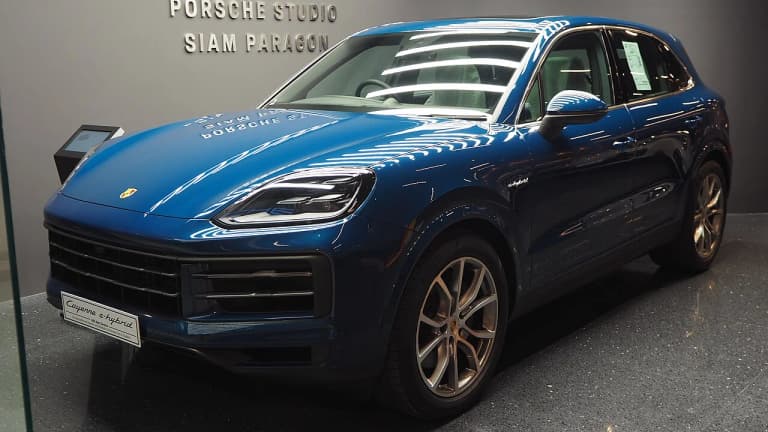
The Porsche Cayenne E-Hybrid is the plug-in hybrid version of Porsche’s large SUV. It pairs a turbocharged engine with an electric motor and a wall-charged battery. The range has three models. Power runs from 463 hp in the Cayenne E-Hybrid to 729 hp in the Turbo E-Hybrid. Each can cover short trips on electricity alone.
In this article, we’ll compare every Porsche Cayenne E-Hybrid model so you can choose between them. We’ll cover their electric range, charging, performance, and pricing.
Contents
- 1 Quick Summary
- 2 What Is the Porsche Cayenne E-Hybrid
- 3 The Current Cayenne E-Hybrid Lineup
- 4 Battery, Charging, and Real Electric Range
- 5 Performance and How the Hybrid Drives
- 6 Cayenne Hybrid History: From Concept to Plug-In
- 7 SUV vs Coupe: Which Body to Pick
- 8 E-Hybrid vs the V6 and V8 Cayennes
- 9 Hybrid vs the Electric Cayenne
- 10 Ownership: Battery Life, Servicing, and Value
- 11 Pricing: New and Used
- 12 Buying a Cayenne E-Hybrid in Thailand
- 13 Frequently Asked Questions
Quick Summary
- Lineup: Three plug-in Cayennes are sold, the E-Hybrid at 463 hp, the S E-Hybrid at 512 hp, and the Turbo E-Hybrid at 729 hp.
- Electric range: EPA rates the E-Hybrid at 29 miles, the S E-Hybrid at 27 miles, and the Turbo E-Hybrid at 24 miles for model year 2025.
- Battery: All three share a 25.9 kWh battery under the load floor.
- Charging: An 11 kW onboard AC charger fills the battery in about two hours and 40 minutes on a wallbox; DC fast charging is not supported.
- Best pick: The base E-Hybrid suits most buyers, since it shares the same electric range as the pricier models and costs the least.
- Pricing: The 2024 S E-Hybrid started at $99,100 for the SUV in the US, and the Turbo E-Hybrid starts around $164,500.
- Used buying: Check battery health, remaining warranty, charging equipment, and service history before buying used.
What Is the Porsche Cayenne E-Hybrid
The Porsche Cayenne E-Hybrid is the plug-in hybrid member of the Cayenne family. It combines a turbocharged engine with an electric motor and a battery you charge from an outlet or wallbox, then drive short trips on electric power alone.
That plug is what separates it from the rest of the range. The V6 and V8 Cayennes burn fuel only, and the new electric Cayenne has no engine at all. The E-Hybrid sits in the middle, with both an engine and a plug.
Porsche sells three plug-in Cayennes, from the standard E-Hybrid, through the S E-Hybrid, up to the Turbo E-Hybrid. All three share the same 25.9 kWh battery but differ sharply in power and price.
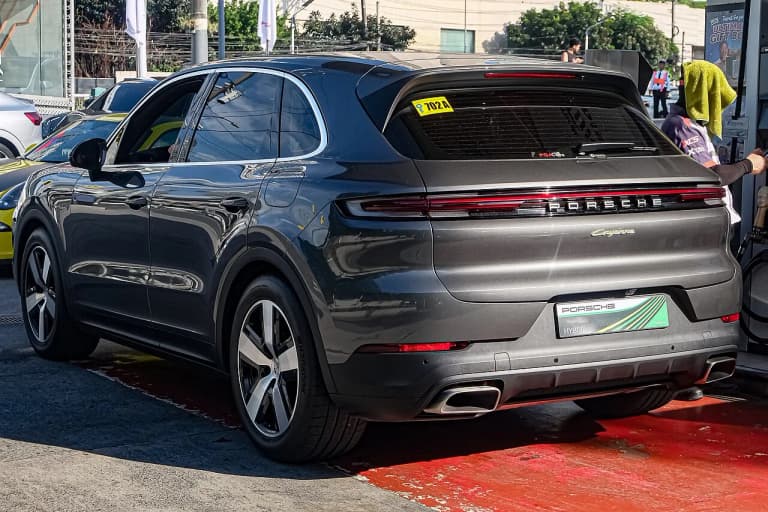
Within the wider Porsche Cayenne lineup, the plug-in models are the efficiency-focused choice. They keep the space, towing ability, and pace the Cayenne is known for, and add quiet electric running for the daily commute.
The Current Cayenne E-Hybrid Lineup
The three plug-in Cayennes target three buyers. The base car is the value pick, the S E-Hybrid adds performance, and the Turbo E-Hybrid is the flagship of the whole Cayenne range.
| Model | Engine | System Power | Official sprint |
|---|---|---|---|
| Cayenne E-Hybrid | V6 plus motor | 463 hp | 4.9 sec |
| S E-Hybrid | V6 plus motor | 512 hp | 4.4 sec |
| Turbo E-Hybrid | V8 plus motor | 729 hp | 3.5 sec |
The base E-Hybrid figure is Porsche’s 0 to 100 km/h time. The S E-Hybrid and Turbo E-Hybrid figures are 0 to 60 mph.
Cayenne E-Hybrid
The base Cayenne E-Hybrid is the entry point to the plug-in range. Its 3.0-liter turbo V6 makes 304 PS, while the electric motor adds 176 PS. Porsche’s Cayenne E-Performance press kit lists a combined 463 hp (346 kW) and 650 Nm of torque.
That is good for a 0 to 100 km/h sprint in 4.9 seconds and a top speed of 254 km/h, strong numbers for the most efficient Cayenne. The electric motor sits inside the eight-speed automatic gearbox, which keeps packaging tidy.
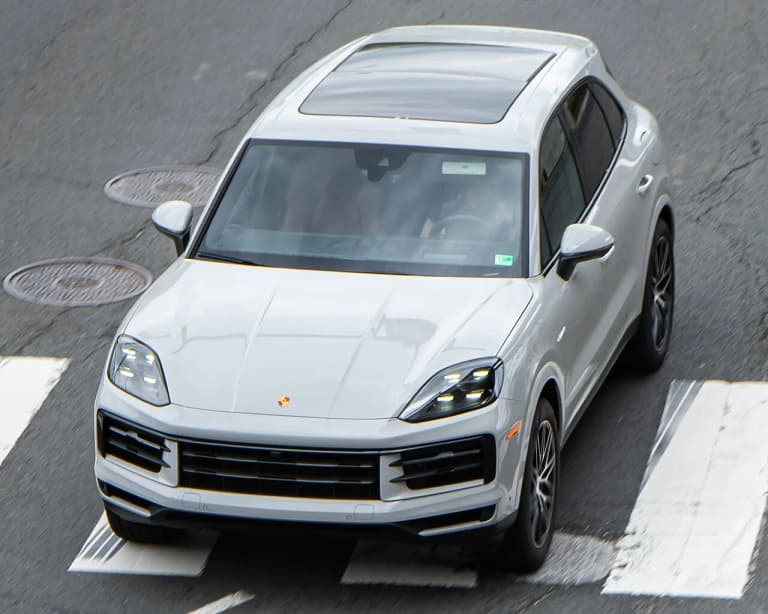
This is where most buyers should start. It carries the full battery, so it posts the same electric range as the pricier models, and it costs the least of the three.
Cayenne S E-Hybrid
The Cayenne S E-Hybrid is the middle plug-in, added to the 2024 range. Its 3.0-liter turbo V6 makes 348 hp, while the electric motor adds 174 hp. Porsche Newsroom lists a combined 512 hp and 553 lb-ft.
It reaches 60 mph in 4.4 seconds, matching the non-hybrid Cayenne S and its V8. Porsche says it runs the quarter mile in 13.0 seconds, a tenth quicker than that V8 twin, and it comes with adaptive air suspension as standard.
The S E-Hybrid is for buyers who want more shove than the base car without the Turbo E-Hybrid’s price. It gives up the V8 sound but adds plug-in efficiency, a trade that suits drivers who charge at home and still want real pace.
Cayenne Turbo E-Hybrid
The Cayenne Turbo E-Hybrid is the flagship of the entire Cayenne family. Its twin-turbo V8 and electric motor produce a combined 729 hp. The Porsche USA Cayenne Turbo E-Hybrid page lists a 3.5-second run to 60 mph and a 183 mph top speed as viewed in mid-2026.
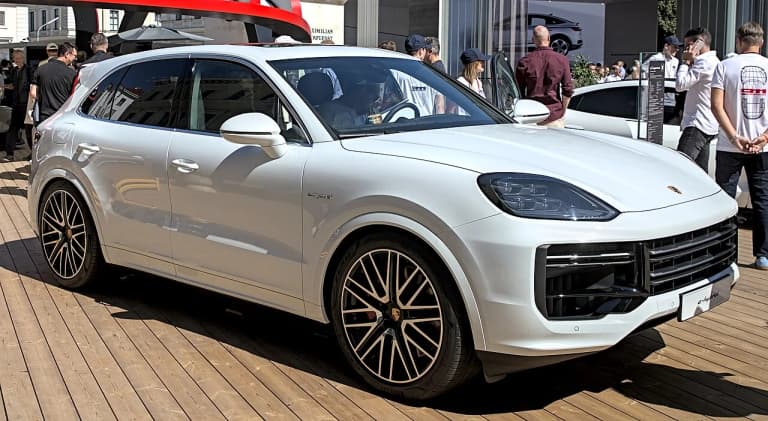
That makes it the most powerful Cayenne Porsche has ever sold with an engine on board. It out-muscles the Cayenne Turbo, yet still carries the same 25.9 kWh battery and drives on electricity in town.
Only the track-focused Cayenne Turbo GT, which is not a hybrid, sits near it on outright pace. The Turbo E-Hybrid is the halo model, for buyers who want the full Cayenne performance story plus a plug.
Battery, Charging, and Real Electric Range
The battery and charging setup are shared across all three plug-in models. Porsche grew the pack for the current generation, which lifted both electric range and everyday flexibility.
The 25.9 kWh Battery and 11 kW Charging
Every current Cayenne E-Hybrid carries a 25.9 kWh gross battery under the load floor, up from 17.9 kWh on the previous car, per the E-Performance press kit. That larger pack is the main reason electric range improved.
Charging runs through an 11 kW onboard AC charger, up from 7.2 kW before. On a suitable wallbox the battery fills in about two hours and 40 minutes. Porsche quotes roughly two and a half hours for the S E-Hybrid on a Level 2 240-volt circuit in the US.
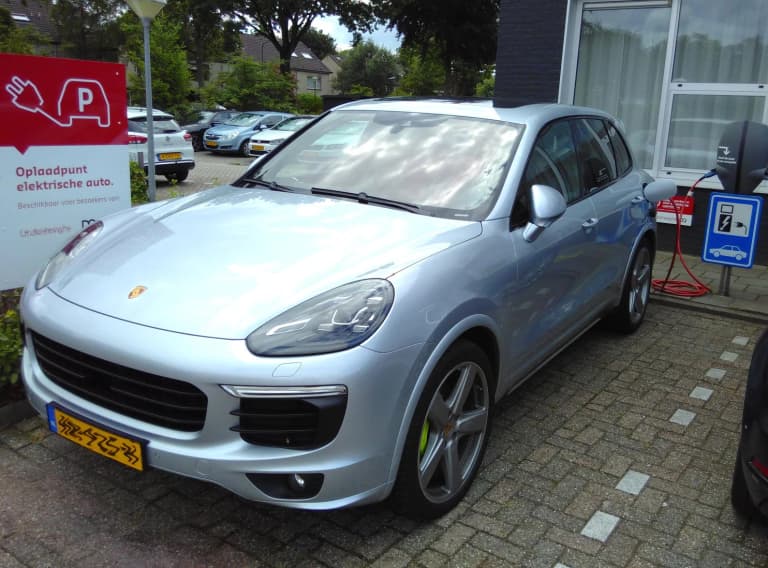
Previous-generation Cayenne S E-Hybrid shown charging; current models use a larger battery and faster onboard charger.
One thing to plan around is DC fast charging, because the Cayenne E-Hybrid does not support it. Charging is a home or destination task, not a highway stop. You plug in overnight and start the day with a full battery for local trips.
Electric Range: WLTP vs EPA
Porsche quotes up to 90 km of electric range for the base Cayenne E-Hybrid, about 56 miles, on the WLTP EAER City cycle. That is a best-case European city figure and reads higher than the US number, so treat it only as a rough comparison.
The US EPA rating is lower and more useful for American buyers. For model year 2025, fueleconomy.gov rates the base Cayenne E-Hybrid at 29 miles. The S E-Hybrid is rated at 27 miles, while the Turbo E-Hybrid is rated at 24 miles. Cold weather and highway speed cut those figures further.
Recuperation helps stretch the range. The current car recovers up to 88 kW of braking energy and slows electrically down to 2 km/h. The old model stopped recovering at 14 km/h.
Performance and How the Hybrid Drives
The electric motor changes how a Cayenne feels, not just how efficient it is. It fills in torque low down, before the turbos are fully awake, for instant response from a standstill.
Acceleration and Top Speed
Each plug-in model has its own performance level. The base E-Hybrid reaches 100 km/h in 4.9 seconds. The S E-Hybrid hits 60 mph in 4.4 seconds, while the Turbo E-Hybrid needs 3.5 seconds.
All three respond the instant you press the pedal, since the electric motor delivers its torque with no wait. With charge in the battery, the hybrid system layers electric shove on top of the engine for the headline sprint times.
Fuel Use in the Real World
A plug-in Cayenne can be very efficient or very thirsty, and the difference is you. Drivers who plug in nightly and keep trips short run mostly on electricity around town, and their fuel use drops sharply.
Drivers who never charge see the opposite. With an empty battery, the engine must haul the extra hybrid hardware. Fuel use then lands close to, or worse than, the equivalent non-hybrid. The plug-in only pays off if you plug it in.
Cayenne Hybrid History: From Concept to Plug-In
The Cayenne has carried some form of hybrid power for well over a decade. The technology moved from a show concept, to a mild hybrid, to the plug-in models sold today.
The 2007 Concept and First Hybrid
Porsche first showed a Cayenne S Hybrid concept in the late 2000s. It previewed a full hybrid that could run on electric power at low speed, and proved a large SUV could use hybrid tech without losing its Porsche character.
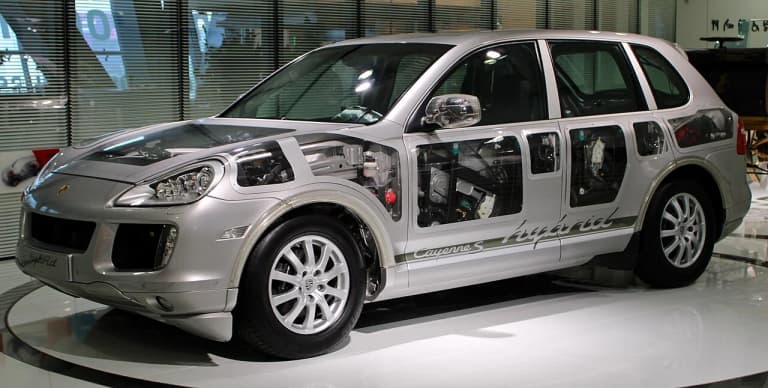
The production Cayenne S Hybrid followed on the second-generation car. It was a parallel full hybrid rather than a plug-in, so it could not charge from a socket. The system set the stage for the plug-in models that followed.
The First Plug-In Cayenne S E-Hybrid
The plug-in era began with the Cayenne S E-Hybrid on the second-generation car around 2014. It was Porsche’s first plug-in hybrid, with a battery you could charge from the wall, so a Cayenne could finally cover short trips on electricity alone.
Those early cars used a small battery by today’s standards, so electric range was short. The recipe stuck anyway. Every plug-in Cayenne since has used the same layout of engine, gearbox-mounted motor, and floor-mounted battery.
The 9Y0 E-Hybrid Arrives
The third-generation Cayenne, code 9Y0, launched in 2018 and kept the plug-in idea front and center. The E-Hybrid returned with a bigger battery and more electric range than before, in both SUV and Coupe bodies.
This generation broadened the plug-in range over time. Porsche used the E-Hybrid badge to mark efficiency at the bottom of the lineup and outright power at the top, a split that still defines the range today.
The Turbo S E-Hybrid Flagship
Before the current Turbo E-Hybrid, the plug-in flagship was the Cayenne Turbo S E-Hybrid. It paired a twin-turbo V8 with an electric motor for a combined 671 hp, the most powerful Cayenne of its day until the non-hybrid Turbo GT arrived.
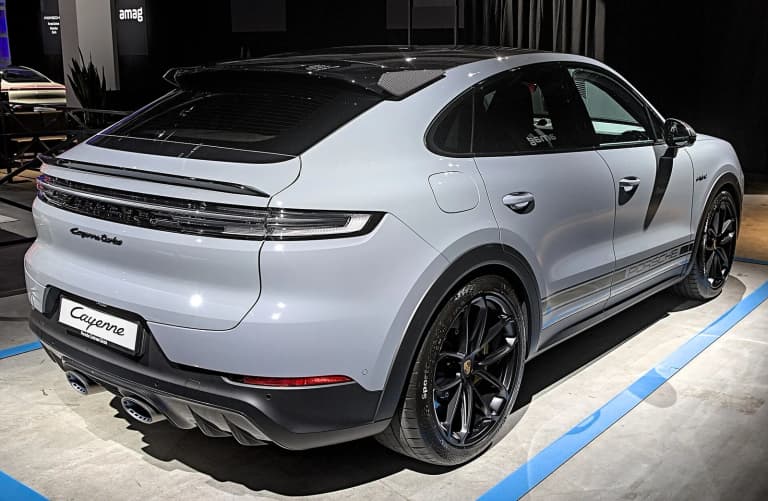
This earlier Turbo S E-Hybrid is a different car from today’s 729 hp Turbo E-Hybrid, so it is worth not confusing the two. The Turbo S E-Hybrid was the pre-2024 range-topper, and the current Turbo E-Hybrid replaced it with a simpler name and more power.
The 2024 Facelift and Today’s Lineup
The 2024 facelift reworked the whole plug-in range. Porsche grew the battery to 25.9 kWh and fitted the faster 11 kW charger. It also added the S E-Hybrid between the base car and the flagship.
At the same time, the Turbo E-Hybrid took over as the plug-in flagship at 729 hp. The result is the three-model lineup on sale now, the deepest plug-in Cayenne range Porsche has offered.
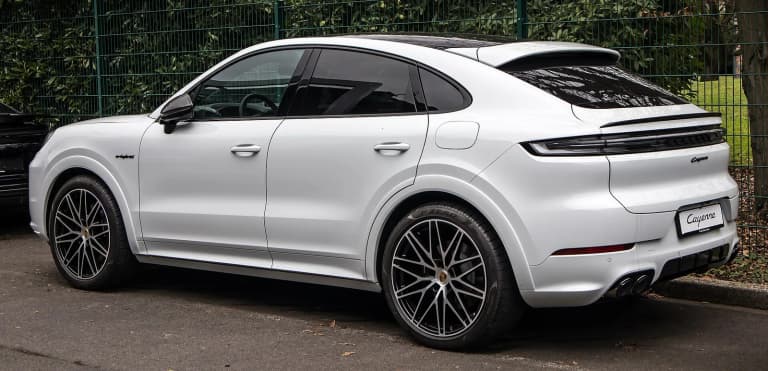
The 2024 facelift brought a reworked rear light bar to the E-Hybrid Coupe.
SUV vs Coupe: Which Body to Pick
Every Cayenne E-Hybrid comes in two shapes. One is the tall five-seat SUV. The other is the Cayenne Coupe, with a lower fastback roofline and the same running gear.
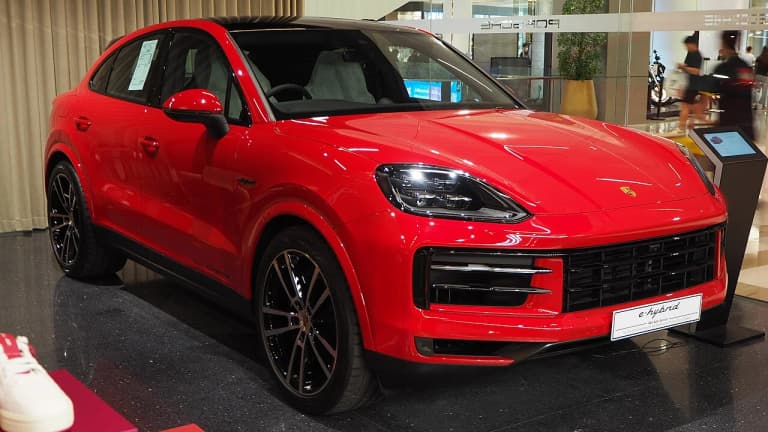
The Coupe trades a little rear headroom and cargo height for its sleeker profile. Both bodies use the same hybrid hardware and battery, and neither is faster than the other, so the choice comes down to looks and practicality.
Pick the SUV for maximum space and rear headroom. Pick the Coupe for the sportier silhouette if you rarely carry tall rear passengers. The E-Hybrid badge is available on both, so you do not have to choose between efficiency and the shape you want.
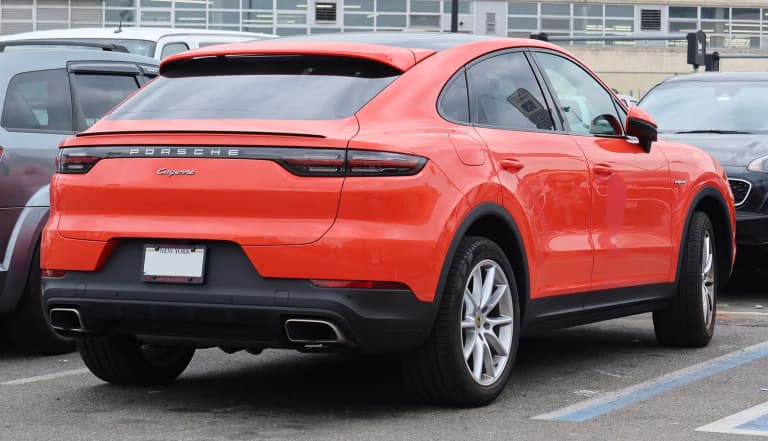
The Coupe’s fastback roofline is clear from the rear three-quarter angle.
E-Hybrid vs the V6 and V8 Cayennes
The plug-in Cayenne answers a different question than the pure combustion models. It is built for buyers who can charge and want lower fuel use on the daily run, while the non-hybrid cars are simpler and lighter.
The base V6 Cayenne is the cheaper, lighter start if you never plan to plug in. The Cayenne GTS and the V8 Cayenne S trade efficiency for engine sound and a more traditional feel, with no battery weight and no charging.
The E-Hybrid earns its place when your trips are short and local and a plug is within reach, since it then runs on cheap home electricity most days. If you cannot charge, a V6 or V8 Cayenne is the more honest choice.
Hybrid vs the Electric Cayenne
Porsche now sells a fully electric Cayenne alongside the plug-in hybrids. It shares the name but not the hardware, with no engine, a much larger battery, and DC fast charging.
The plug-in E-Hybrid is the bridge between old and new. It offers electric running for short trips, then falls back on the engine for long drives with no charging stops, which suits drivers who are not ready to go fully electric.
The electric Cayenne suits drivers who can charge and rarely need to refuel. For a wider look at Porsche’s battery cars, our Porsche electric lineup guide puts the whole EV range in context. The plug-in and electric Cayennes are sold side by side, so buyers pick the drivetrain that fits their life.
Ownership: Battery Life, Servicing, and Value
A plug-in Cayenne carries the running costs of a Porsche V6 or V8, plus a high-voltage battery to look after. Both sides need budgeting before you buy, especially on a used car.
Battery Warranty and Longevity
Porsche covers the high-voltage battery under a separate warranty from the rest of the car. The exact term varies by market and model year, so confirm the coverage for the specific car. Gentle charging and avoiding constant full-to-empty cycles help long-term battery health.
Battery health is the single biggest check on a used plug-in Cayenne. A tired pack means less electric range and, eventually, an expensive replacement. Ask for the remaining warranty and, where possible, a health readout before buying.
Servicing and Running Costs
The engine side services like any Porsche SUV. Tires, brakes, and routine work all cost more than a mainstream vehicle, and the air suspension fitted to many cars can be costly to repair as they age.
The hybrid side can actually reduce some wear. Regenerative braking eases the load on the brake pads, so they can last longer than on a pure combustion Cayenne. Fuel savings depend entirely on how often you charge and how short your trips are.
Pricing: New and Used
The plug-in Cayennes span a wide price range, from near the base car to flagship money. At launch, Porsche set the 2024 US price of the S E-Hybrid at $99,100 for the SUV and $104,000 for the Coupe, before a $1,650 delivery fee, per Porsche Newsroom.
At the top, the Cayenne Turbo E-Hybrid starts around $164,500 in the US, per the Porsche USA model page as viewed in mid-2026. Options move any Porsche price quickly, so a loaded car climbs well above sticker. For a broader view, see our guide on how much a Porsche costs.
The used market is where earlier plug-in Cayennes become reachable. Second-generation and early 9Y0 E-Hybrids sell for a fraction of their original price. Just remember that a cheap plug-in with a worn battery can hide a large repair, so buy on condition and battery health, not price alone.
Buying a Cayenne E-Hybrid in Thailand
Thailand has pushed hard on electrified vehicles, and a plug-in Porsche fits that direction. A Cayenne E-Hybrid can charge at home and run local Bangkok trips on electricity, which avoids the fuel run for a big share of city driving.
Import duty and excise tax still push the on-the-road price far above the US sticker, and that gap is the main thing to plan around before buying. Our guide on importing a Porsche to Thailand breaks down the duty and tax math in detail.
Charging access is the other practical point. A home wallbox or reliable parking with a charger is close to essential. With that in place, a Cayenne E-Hybrid can be an efficient daily Porsche in Thai traffic.
Frequently Asked Questions
How far can a Cayenne E-Hybrid drive on electric power?
The base Cayenne E-Hybrid is EPA-rated at 29 miles of electric range for model year 2025, per fueleconomy.gov. The Cayenne S E-Hybrid is rated at 27 miles and the Turbo E-Hybrid at 24 miles. Porsche’s WLTP EAER City figure of up to 90 km, about 56 miles, is a European best-case number that reads higher than the EPA rating.
Is the Porsche Cayenne hybrid worth it?
The Cayenne E-Hybrid suits drivers who can charge at home and do most trips on short local runs. Those trips can be electric, which cuts fuel use in town. Buyers who rarely plug in or who want engine sound tend to prefer the V6 or V8 Cayenne instead.
What is the difference between the S E-Hybrid and the Turbo E-Hybrid?
The Cayenne S E-Hybrid pairs a V6 with an electric motor for 512 hp. The Cayenne Turbo E-Hybrid uses a V8 with an electric motor for 729 hp, making it the most powerful Cayenne Porsche has sold with an engine. The Turbo E-Hybrid is far quicker and far more expensive.
How long do Cayenne hybrid batteries last?
Porsche covers the high-voltage battery under a separate warranty from the rest of the car. The exact term varies by market and model year, so confirm the coverage with Porsche for the specific car. Replacement outside warranty is expensive, so battery health and remaining coverage are key checks on any used plug-in Cayenne.
How long does it take to charge a Cayenne E-Hybrid?
The current Cayenne E-Hybrid carries an 11 kW onboard AC charger. On a suitable wallbox it fully charges the 25.9 kWh battery in about two hours and 40 minutes. The Cayenne does not support DC fast charging, so charging is a home or destination task, not a highway stop.
Is the Cayenne E-Hybrid a plug-in hybrid?
Yes. Every current Cayenne E-Hybrid is a plug-in hybrid with a battery you charge from an outlet or wallbox. This is different from the electric Cayenne, which has no engine, and from a mild hybrid, which cannot drive on electricity alone.
Images: Hero and E-Hybrid Coupe by Chanokchon, CC BY-SA 4.0. E-Hybrid facelift by Ethan Llamas, CC BY-SA 4.0. 9YA E-Hybrid by OWS Photography, CC BY 4.0. Turbo E-Hybrid and Turbo S E-Hybrid by Alexander-93, CC BY-SA 4.0. S E-Hybrid charging by Biontologist, CC BY-SA 4.0. Hybrid concept by Alexander Migl, CC BY-SA 4.0. Facelift rear by © M 93, CC BY-SA 3.0 DE. Coupe rear by Kevauto, CC BY-SA 4.0. Via Wikimedia Commons.