Quick Answer: Porsche Panameras are generally reliable when maintained, but older 970 cars and poorly serviced examples are riskier. Air suspension, cooling, electronics, and PDK behavior need attention. Book a Porsche-specialist inspection and demand invoices before you buy.
In this article, we’ll explain Porsche Panamera common problems, the checks that catch expensive surprises before you buy. We’ll cover the 970, the 971, and the current 972.
Contents
Quick Summary
- Start with records: a stamped book alone is not enough. Ask for invoices.
- Scan it: a Porsche-capable diagnostic scan can find stored faults before they become dashboard lights.
- Check the suspension: the car should rise evenly and sit level after an overnight stop.
- Drive it cold: listen, watch temperatures, and feel every PDK shift before the car is warmed up.
- Test every button: screens, cameras, seat functions, climate control, and the rear spoiler are all worth checking.
- Do not skip inspection: a specialist pre-purchase inspection is cheaper than a surprise repair bill.
The Panamera Ownership Reality
The Panamera is a fast, heavy, technical four-door Porsche. That is the appeal. It is also why a neglected example can burn through a repair budget quickly.
Porsche introduced the first Panamera in 2009, then launched the second generation for 2017. The current third generation arrived for 2024. You can see the full family tree in our Porsche Panamera guide.
Do not shop by mileage alone. A higher-mile car with invoices and regular fluid changes can be safer than a low-mile car that has sat unused. A known Porsche specialist is a strong plus.
Also separate a worn part from a bad model. Brakes, tires, batteries, and suspension components wear out. The job is to establish what has been done, what is due next, and whether the seller’s price leaves room for it.
Checks Before Any Test Drive
Read the paperwork first
Ask for the VIN, service invoices, and recall history before you travel to see the car. In the United States, use the NHTSA recall lookup. A Porsche dealer can also confirm open campaigns from the VIN.
Look for dates, mileage, and the name of the shop. Vague notes such as “serviced” do not tell you which fluids, plugs, filters, or parts were replaced. A long gap in history deserves an explanation.
Start the car cold
Tell the seller not to warm it up first. Watch for warning lights that stay on. Listen for an uneven idle, unusual mechanical noise, or smoke. Then let the car reach temperature while you check the screens, cameras, climate control, seat adjustment, and every window.
A low battery can create a parade of strange electronic messages on a modern Porsche. Treat those warnings as a reason to test the battery and scan the car. Do not clear codes and hope for the best.
Drive it like a buyer, not a hero
On the road, let the PDK shift gently at low speed, then use firmer throttle after the oil is warm. See our Porsche PDK guide for a plain-English rundown of the gearbox. It should not bang, hesitate, or throw a warning. Find a rough patch of road and listen for suspension noise.
Brake from normal road speed with your hands light on the wheel. A pull, vibration, or a warning light needs an answer before money changes hands. Check the tire dates and wear pattern too. Uneven wear can point to alignment or suspension work.
970 Panamera Checks
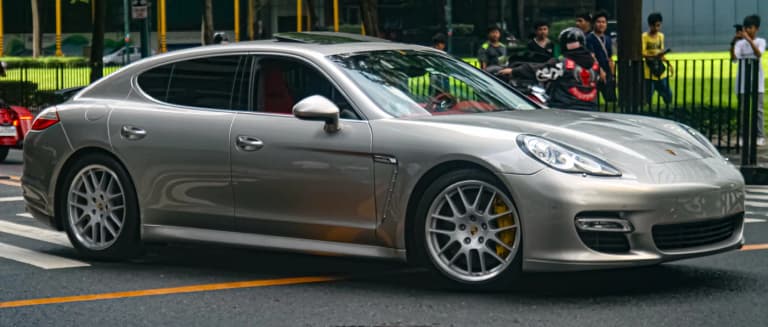
The 970 is the first Panamera, sold from 2010 through 2016 in the US. Porsche introduced the Panamera in 2009. It is now old enough that condition and maintenance history are the whole game. A cheap Turbo or GTS can become expensive fast if cooling, suspension, and transmission service have been ignored.
Check the car after it has been parked. It should sit level at all four corners. If it is low on one corner, or the compressor runs too often, have the air-suspension system checked before you negotiate.
Look under the hood and beneath the car for dried coolant residue or fresh fluid. A specialist should pressure-test the cooling system if there is any doubt. On V8 cars, ask about spark-plug and ignition-coil service rather than assuming it was done.
The first-generation cabin has a lot of buttons and modules. Work through them. Test the PCM screen, navigation, parking sensors, electric hatch, spoiler, seat motors, and climate control. A feature that “just needs a reset” is a feature that needs diagnosis.
971 Panamera Checks
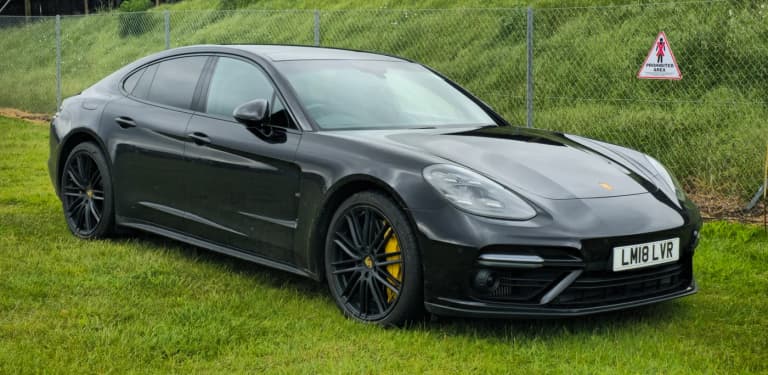
Porsche launched the 971 for 2017 with new engines, an eight-speed PDK, and a much more digital cabin. Porsche’s US launch material explains the new platform and powertrain range.
The 971 feels newer inside, but the inspection list does not get shorter. Check the center screen, instrument display, cameras, driver-assistance functions, and charging ports. Make sure the seller demonstrates each key and the electronic tailgate.
On any 971, a diagnostic scan is non-negotiable. It can show stored faults that have not lit the dashboard. Ask the inspecting shop to check for software updates, recall completion, battery condition, and fault history instead of looking only for active warnings.
The Sport Turismo adds a useful wagon-shaped rear body. It also adds another powered hatch to test. See our Panamera Sport Turismo guide if that body style is on your list.
972 Panamera and E-Hybrid Checks
The current Panamera, known as the 972, arrived for the 2024 model year. Porsche added a new active-suspension option and expanded the plug-in hybrid lineup. Its 2024 launch announcement gives the basic hardware details.
For a 972 E-Hybrid, test both sides of the car. Confirm the charge port opens and closes correctly, then charge the car if possible. Check that it enters electric drive normally and that no hybrid or high-voltage warnings appear.
Ask a Porsche specialist for the car’s diagnostic report and battery-condition information. Do not judge a plug-in hybrid from one displayed range number. Temperature, route, and recent driving all affect it.
Air suspension is standard on several current trims, while Porsche Active Ride is available on others. Test every suspension mode during the drive. A warning message, uneven ride height, or a car that will not change modes should be resolved before purchase.
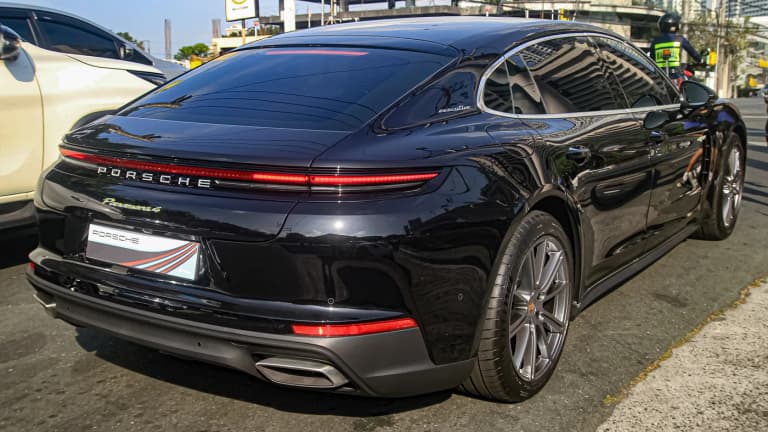
What a Specialist Should Inspect
Book a pre-purchase inspection with an independent Porsche specialist. A general inspection is better than nothing. A shop that sees these cars knows where to look and has the right diagnostic tools.
- Diagnostic scan: The shop should check stored faults, battery condition, module communication, and campaign status.
- Suspension: The inspection should cover ride height, leaks, compressor behavior, control arms, and tire wear.
- Powertrain: The shop should assess cooling-system condition, fluid leaks, cold start, and PDK operation.
- Brakes and tires: The shop should record remaining life, rotor condition, tire age, and matching tires across each axle.
- Body and water leaks: The inspection should include paint readings, hatch operation, drain paths, and signs of moisture in the cabin.
Use the report to walk away from a bad car or price the repairs into the deal. Do not use it to turn a rough car into a bargain in your head. There will be another Panamera.
Frequently Asked Questions
Are Porsche Panameras reliable?
Yes, Porsche Panameras are reliable when they have a complete service record and a clean inspection. It is still a complex luxury car, so neglected suspension, electronics, cooling, and transmission work can cost real money.
What is the biggest problem with a Porsche Panamera?
The biggest problem with a Porsche Panamera is buying a cheap car with missing history. The Panamera has expensive systems, so an inspection and service records are more useful than a low asking price.
Which Porsche Panamera is the most reliable?
The most reliable Porsche Panamera is the one with documented maintenance, no warning lights, and a clean specialist inspection. A newer 971 or 972 has newer hardware, but condition beats the badge on any used Panamera.
Is a used Porsche Panamera expensive to maintain?
Yes, a used Porsche Panamera is expensive to maintain. Tires, brakes, air-suspension parts, cooling repairs, and electronic diagnosis cost more than they do on an ordinary sedan.
Should I buy a Porsche Panamera with air suspension?
Yes, a Porsche Panamera with air suspension is a sensible buy if it rises evenly, holds its height overnight, and has service history. Have a Porsche specialist inspect the system before you commit.
Images: Black Porsche Panamera Turbo by OWS Photography, CC BY 4.0. 2018 Porsche Panamera 971 by Calreyn88, CC BY-SA 4.0. Porsche Panamera 972 rear by Tokumeigakarinoaoshima, CC0. Via Wikimedia Commons.