Quick Answer: Porsche history begins with the 356 No. 1 in 1948, then moves through the 911, racing prototypes, front-engine experiments, SUVs, and electric cars. The thread running through it is simple: Porsche keeps changing the formula without dropping the driver-first feel.
In this article, we’ll explain Porsche history, from a small postwar workshop to a global car maker. We’ll cover the early road cars, the racing years, and the changes that kept Porsche moving.
Contents
Quick Summary
- 1948: the 356 No. 1 roadster becomes the first Porsche-badged car.
- 1950s: the 356 turns Porsche into a real production-car company.
- 1963: Porsche unveils the 911, its long-running core sports car.
- 1950s to 1970s: 550, 718, 917, and 936 race cars make Porsche an endurance-racing force.
- 1970s to 1990s: transaxle models broaden the lineup while the 911 stays alive.
- 2002 onward: the Cayenne, Panamera, Macan, Taycan, and modern hybrids expand what a Porsche can be.
Before the Sports Cars
The Porsche name existed before there was a Porsche sports car. Ferdinand Porsche ran an engineering office that worked on vehicle projects for other companies. That history includes the Volkswagen project, but it also includes a dark record that should not be brushed aside. Ferdinand Porsche was a Nazi Party and SS member, and Volkswagenwerk used forced labor during the war. Our Ferdinand Porsche guide explains that record in more detail.
After the war, Ferry Porsche and a small team worked from Gmünd, Austria. Their answer was not a warmed-over Volkswagen. It was a light sports car with its own chassis, body, and purpose.
The 356 Starts the Brand
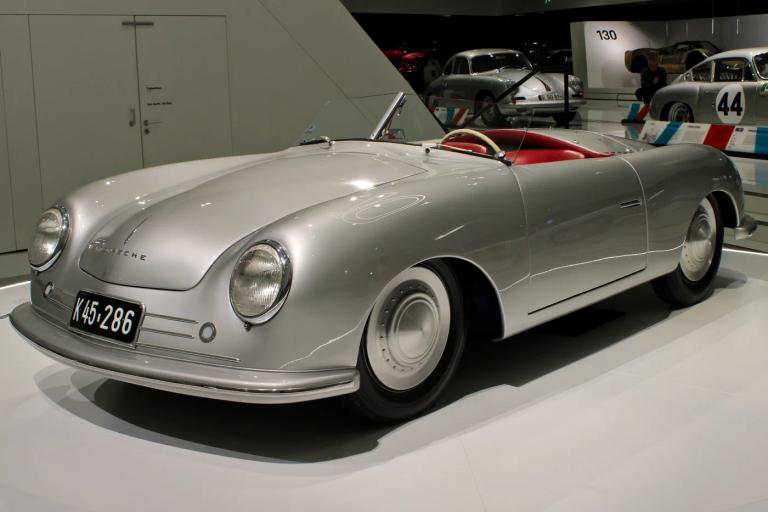
The Porsche Museum traces the first Porsche-badged car to the 356 No. 1 roadster, completed in 1948. It used a mid-engine layout, with an air-cooled flat-four ahead of the rear axle. Later production 356s put the engine behind the rear axle, a layout that became Porsche’s signature.
The 356 was not a single frozen design. It developed through pre-A, A, B, and C versions, with coupes, Cabriolets, Speedsters, and four-cam Carrera models. It gave Porsche a customer base, a dealer network, and a reputation for small cars that felt alive on a narrow road. For the full model breakdown, start with our Porsche 356 guide.
Racing Becomes the Test Lab
From club racing to the 550
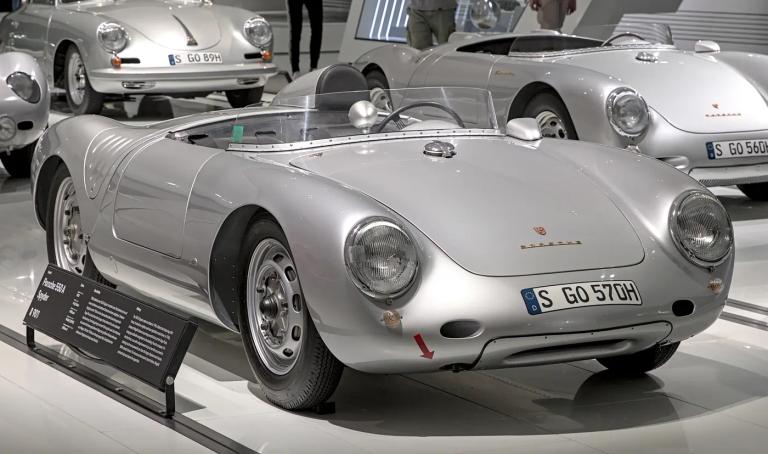
Porsche raced early, and the 550 Spyder arrived in the 1950s as a purpose-built competition car. The later 718 carried the same idea into hill climbs, sports-car racing, and single-seaters.
The 917 changes the scale
By the late 1960s, Porsche had moved into a different league. The 917 was built for outright endurance-racing speed. It delivered Porsche’s first overall Le Mans wins in 1970 and 1971, a story we cover in our Porsche 917 guide.
That pattern kept going. Porsche won Le Mans again with the 936, 956, 962, and 919 Hybrid. The 919 program won the 24 Hours of Le Mans in 2015, 2016, and 2017, according to Porsche’s technical history of the 919 Hybrid Evo. Racing gave Porsche more than trophies. It pushed engines, brakes, aero, and hybrid systems hard before those ideas reached road cars.
The 911 Takes Over
Porsche unveiled the 911 at the 1963 Frankfurt Motor Show. Production began in 1964. It was larger and more powerful than the 356, but it kept the rear-engine formula and an air-cooled flat-six. That decision gave Porsche a car it could improve for decades rather than replace every few years.
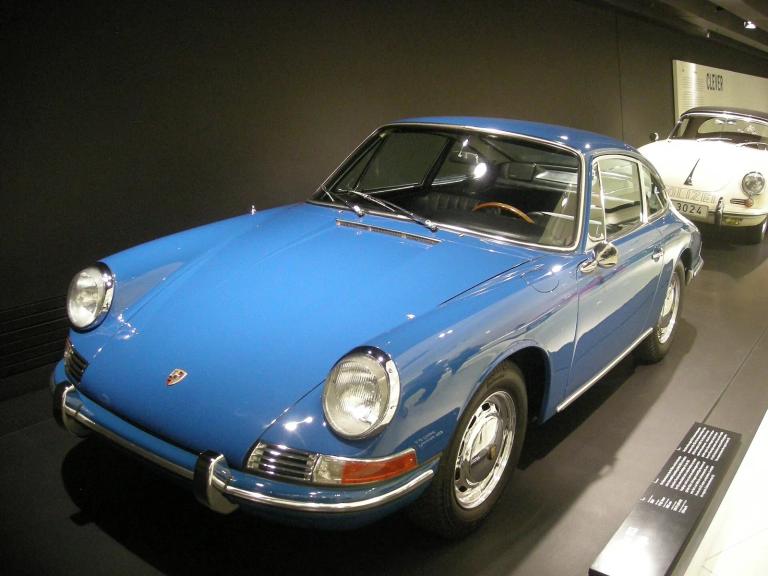
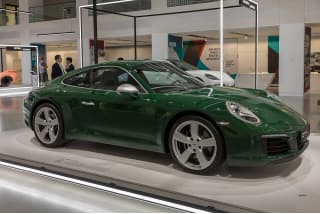
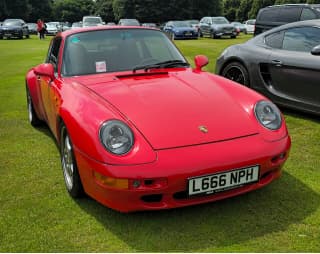
The 911 changed through the 2.0-liter original, the impact-bumper G-series, the 964, 993, 996, 997, 991, 992, and now the current 992.2 range. Air cooling ended with the 993 in 1998, but the proportions and driving position still read as 911. Porsche marked a major production milestone in 2017, when the one-millionth 911 left the line.
The 911 did not make every other Porsche unnecessary. It gave the company a durable center while engineers tried other answers around it.
Porsche Tries Different Layouts
The 914 put an affordable mid-engine car into the lineup. The 924, 944, 968, and 928 used front engines and rear transaxles. Some were shared-project cars, some were clean-sheet Porsche ideas, and none replaced the 911. They did prove that Porsche could tune balance and steering feel around more than one layout.
The 959 took another route. It used a 911-based shape, advanced all-wheel drive, twin turbos, and serious off-road capability. Its technology was expensive, but it showed where Porsche wanted performance cars to go. The Boxster then brought a mid-engine roadster back to the range in the 1990s, followed by the Cayman coupe.
The Cayenne Changes the Business
The Cayenne arrived in 2002 and made plenty of enthusiasts nervous. A Porsche SUV sounded like a bad joke until people drove it. It gave the company a practical four-door model and brought in volume that sports cars alone could not match.
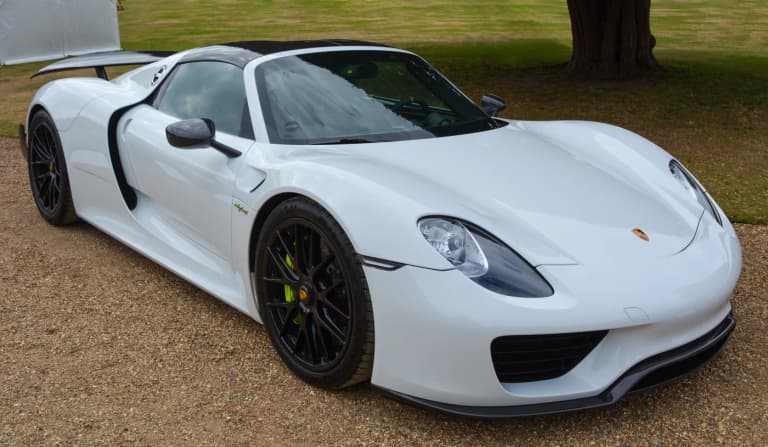
The move worked, and Porsche followed it with the Panamera, Macan, Taycan, and more hybrid models. The Taycan became Porsche’s first all-electric production car. The 918 Spyder had already shown that electric motors could add speed and response instead of just weight and complexity.
Porsche Today
Porsche now sells SUVs, sedans, EVs, hybrids, and several kinds of sports cars. The range is far broader than the 356 era, but the useful test is still simple. Does the car feel clear through the wheel, pedals, and seat? That is why a 356, a 911, a Cayman, and a Taycan can still feel related.
For a newcomer, the cleanest path into the history is the road-car line: 356, 911, transaxle cars, Boxster and Cayman, Cayenne, Panamera, then Taycan. For the race-car side, start with the 550 Spyder, 917, and 919 Hybrid Evo. That is the family tree without turning it into homework.
Frequently Asked Questions
When did Porsche start?
Porsche started building cars under its own name in 1948, when the mid-engine 356 No. 1 roadster was completed in Gmünd, Austria.
What was Porsche’s first car?
Porsche’s first car was the 356 No. 1 roadster. It was completed in 1948 and used a mid-engine layout, unlike the rear-engine 356 production cars that followed.
When did the Porsche 911 come out?
The Porsche 911 was unveiled at the 1963 Frankfurt Motor Show and entered production in 1964. It replaced the 356 as Porsche’s core sports car.
Why did Porsche build the Cayenne?
Porsche built the Cayenne to add a practical four-door model and broaden its business beyond sports cars. It arrived in 2002 and became a major part of Porsche’s sales mix.
Does Porsche still race?
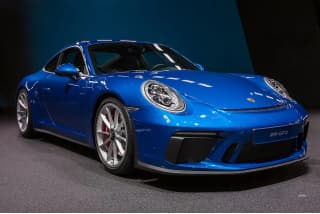
Yes, Porsche races in Formula E, and customer teams race 911 GT3 cars around the world. Porsche’s Formula E team won the drivers’ championship in 2024.
Images: 356 No. 1 roadster by Alexander Migl, CC BY-SA 4.0. 550 A in the Porsche Museum by Alexander Migl, CC BY-SA 4.0. 1965 Porsche 911, Porsche Museum by Michael Barera, CC BY-SA 4.0. Porsche 918 Spyder by Chelsea Jay, CC BY-SA 4.0. Via Wikimedia Commons.