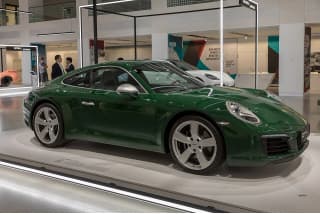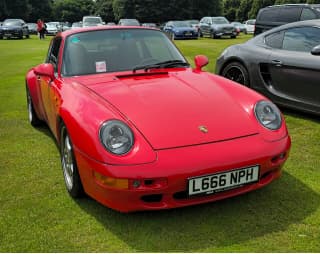
The Porsche M96 engine is the water-cooled flat-six used in 1997-2004 986 Boxsters, naturally aspirated 1999-2004 996 Carreras, and 2005-2006 987.1 Boxsters. It is not the Mezger engine in 996 Turbo, GT2, or GT3 models. An M96 car is not an automatic no-buy. Confirm the engine code and records, then watch a cold start and get a specialist inspection before agreeing on a price.
In this article, we’ll explain which Porsche models use the M96 and how to judge one as a buyer. We’ll cover M96 applications, engine differences, and buyer checks.

Contents
Buy an M96 Porsche on its condition and records, not its reputation alone. First confirm that the car actually has an M96, because nearby 996 and 987 variants use different engine families.
The M96 powered the first water-cooled 911 and the original Boxster. Online discussions often mix those cars with M97 and Mezger models that need different checks.
Quick Summary
- What It Is: A water-cooled, naturally aspirated flat-six with chain-driven camshafts run off an intermediate shaft. Porsche built this engine family for both the 911 and Boxster.
- Core Applications: Every 1997-2004 986 Boxster and Boxster S, plus the naturally aspirated 1999-2004 996 Carrera family.
- Late Application: The 2005-2006 987.1 Boxster used M96.25 in the 2.7-liter base car and M96.26 in the 3.2-liter S before the platform moved to the M97.
- Not M96: The 996 Turbo, GT2, and GT3 use the separate Mezger engine. The 987.1 Cayman, later 987.1 Boxster years, and every 997.1 Carrera use the M97.
- Buyer Risks: IMS bearing condition, cylinder bore condition, and cooling or oil evidence deserve a look. None rules out a purchase by itself.
- Buyer Action: Confirm the engine code, collect service records, and book a Porsche specialist PPI. Add an oil filter check and borescope where the evidence calls for them.
The Porsche M96 Engine
The M96 is Porsche’s internal code for an engine family, not a trim name or a nickname for every water-cooled flat-six. It is a naturally aspirated, horizontally opposed six-cylinder with double overhead cams and four valves per cylinder. Coolant runs through the block instead of air flowing over finned cylinders.
The camshafts are driven by timing chains, and those chains run off an intermediate shaft rather than directly off the crankshaft. That intermediate shaft spins on a bearing sealed into the back of the engine case, as explained in this Porsche-focused technical guide. It is a different setup from the gear-driven intermediate shaft used in Porsche’s separate Mezger engine family.
Porsche describes the M96 as using an integrated dry-sump oiling system. Its oiling hardware sits within the engine rather than using the remote tank found on some other Porsche engines. That is an architectural distinction, not a verdict on any individual engine.
Each bank carries three cylinders with four valves per cylinder. The crankshaft ties both banks together inside the same engine case that houses the intermediate shaft and its sealed IMS bearing. Because everything shares that case, a specialist inspects the whole engine instead of treating the IMS bearing as an isolated checkbox.
Oil reaches the crankshaft, cylinder walls, valve gear, and intermediate shaft through the same integrated system. Oil condition and filter debris can therefore point toward more than one area. The cooling system carries heat away from the cylinders and cylinder heads. Coolant loss or an inconsistent temperature reading can start at a hose, water pump, or head gasket, not only the components most often discussed online.
Porsche Models That Use the M96
The table below covers the US model-year windows used in this guide. It combines Porsche’s 996 model history with a specialist M96 and M97 engine-code reference. Treat it as a starting point. Build date, market, and the actual engine code stamped on the car outrank a seller’s calendar-year shorthand, and a replacement engine can differ from the car’s original fitment.
| Porsche model | US model years | M96 status | Notes |
|---|---|---|---|
| 986 Boxster and Boxster S | 1997-2004 | M96 throughout | Base displacement grew from 2.5 to 2.7 liters; the S introduced a 3.2-liter version for model year 2000. See the Porsche 986 Boxster guide for the full timeline. |
| 911 996 Carrera, Carrera 4, Carrera 4S, Targa, Cabriolet | 1999-2004 | M96, naturally aspirated Carrera applications | Don’t assume every 996 is an M96. Verify the exact variant against the Porsche 996 guide. |
| 911 996 Turbo, GT2, GT3 | 2001-2005, variant dependent | Not M96 | Mezger-based. See the Porsche Mezger engine guide before assuming any shared risk profile. |
| 987.1 Boxster (base) | 2005-2006 | M96.25, 2.7-liter | Confirm the individual engine number before relying on the badge. |
| 987.1 Boxster S | 2005-2006 | M96.26, 3.2-liter | The 987.1 changed engine family after these years; don’t sweep 2007-2008 cars into M96. |
| 987 Cayman, later 987.1 Boxster | 2006-2008, model dependent | M97, not M96 | The Porsche 987 guide covers the exact 987.1/987.2 split. |
| 997.1 Carrera | 2005-2008 | M97, not M96 | Keep this outside M96 ownership even though the IMS conversation overlaps. |
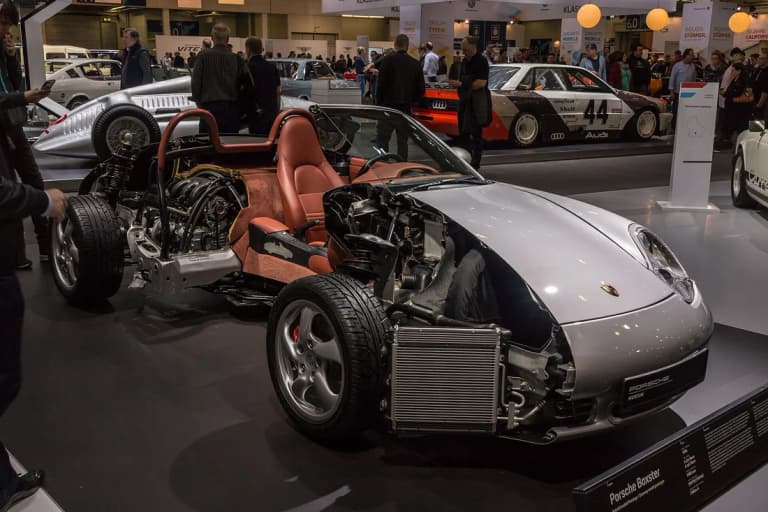
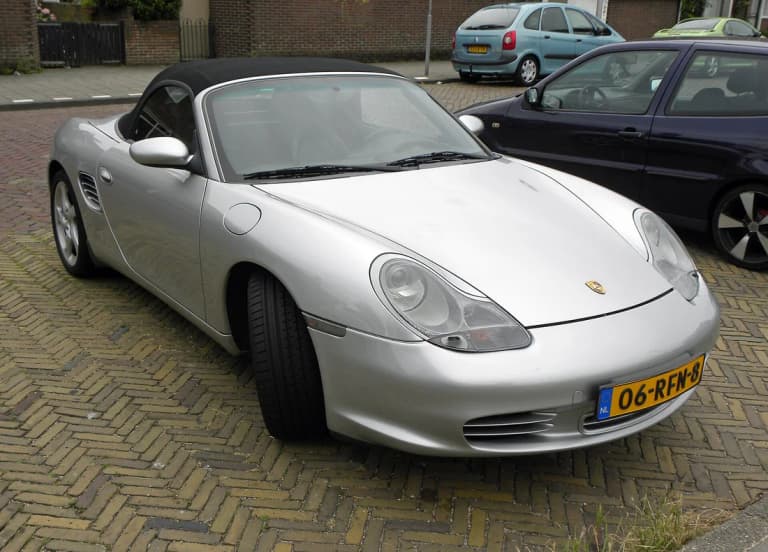
The 986 Boxster is the cleanest M96 case. Every model year of that generation carries an M96, so the model itself already narrows things down. The Porsche 986 Boxster guide goes deeper on how the base and S engines changed across the run.
The 996 is where mix-ups happen most. It was Porsche’s first water-cooled 911, but “996” describes a body generation, not one engine. A naturally aspirated Carrera has the M96. A Turbo, GT2, or GT3 does not, even though they share a chassis code and rolled off the same production lines in the same years.

The 996 Carrera and 986 Boxster show how the same engine family served two different layouts. The engine code, not the body style alone, confirms the application.
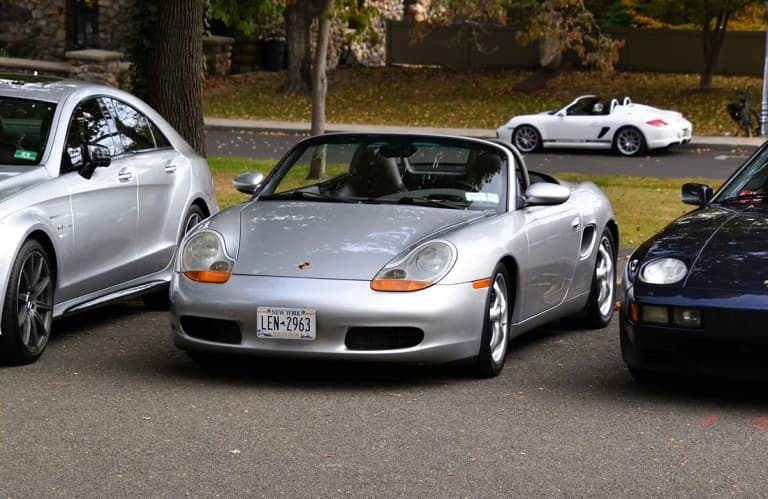
The 987.1 Boxster is the tail end of the M96 story. Porsche cataloged the base 2005-2006 987.1 engine as M96.25 and the S as M96.26, right before the platform moved on to the M97 for later years. If you’re looking at a 987.1 Boxster, confirm the exact engine number. A car from the same generation just one or two model years later can already be a different engine family.
Getting the engine code right is not a trivia exercise. It tells a specialist which service history, bearing configuration, and inspection points apply to the car in front of them. The same body style can carry more than one engine across a few production years.
Two Porsche models that look identical outside may need different checks under the deck lid. Confirm the engine first. The specialist can then compare the car’s records and condition against the right baseline instead of a general reputation attached to the wrong engine.
M96, M97, and Mezger: Don’t Group Them Together
Use the engine code before applying any M96 risk advice: M97 and Mezger cars need their own research.
The M97 is a later evolution of the M96, not a different name for the same engine. A specialist M96 versus M97 comparison documents the family distinction. It applies to the 2006-2008 987.1 Cayman, 2007-2008 987.1 Boxster, and 2005-2008 997.1 Carrera discussed here. If you’re shopping one of those cars, you are in M97 territory and should not borrow M96 assumptions.
The Mezger is a completely separate engine family, and it’s the one under the 996 Turbo, GT2, and GT3. It uses a gear-driven intermediate shaft instead of the M96’s chain-and-sealed-bearing setup, which is a real mechanical difference, not just a marketing distinction. That doesn’t make the Mezger bulletproof. It means the M96’s sealed-IMS-bearing discussion simply doesn’t apply to it, and a seller shouldn’t get to borrow one engine’s reputation to sell the other.
The practical takeaway: a 996 badge alone does not identify an M96. Confirm the exact engine code before applying the risk checks below.
Real M96 Buyer Risks, Without the Forum Folklore
The M96 has a genuine reputation, and some of it is deserved. No verified, published dataset supports one failure rate or repair outcome for every M96 still on the road. Treat the following as items to inspect, not faults to assume. The recurring checks are the IMS-bearing configuration, cylinder-bore condition, and oil or cooling evidence, but none proves a problem without inspection.
IMS bearing
The intermediate shaft that drives the camshaft chains spins on a bearing sealed into the back of the engine case. Bearing configuration changed more than once across the M96’s production run, so use configuration-specific guidance before drawing a conclusion.
Some cars have had the bearing replaced or upgraded already; some have not. A seller saying it is “already done” without an invoice and shop name is not evidence. Our Porsche IMS bearing guide covers the mechanism and configuration questions in more depth.
Cylinder bore condition
Bore scoring is a documented concern on M96/M97-family engines, and a Porsche engine specialist notes that it can be misdiagnosed from symptoms alone. Rising oil consumption, exhaust smoke, or unusual noise are reasons to look closer, not proof of damage on their own. A specialist with a borescope and the right diagnostic process can give you a useful answer. A road test or a guess based on mileage cannot.
Cooling and oil evidence
Coolant loss, oil residue around seals, or inconsistent temperature behavior are worth flagging to a specialist during a lift inspection. They can point to a simple seal replacement or something that needs a longer look. Either way, evidence beats speculation, and a clean-looking engine bay after a recent detail isn’t the same as a documented clean inspection.
Ordinary age-related wear
These are 20-plus-year-old cars in the oldest cases. Seals, hoses, sensors, and ancillary parts wear out the same way they would on any car of that age. Don’t let a genuine M96-specific question get lost in a pile of normal maintenance items, and don’t let normal maintenance items get blamed on the M96 label either.
The 996 Turbo, GT2, and GT3 sit outside this whole discussion because they run the Mezger, not the M96. Those cars have their own separate cooling-fitting issue that NHTSA has documented for the Mezger-powered population. It’s unrelated to anything above and shouldn’t be read as proof about a specific car either. See the Porsche 911 reliability guide for how that fits into the wider 911 picture, and the Porsche 911 common problems guide if you want the cross-generation view.
How a Specialist Reads the Evidence
A Porsche specialist does not judge reliability from one test. Service records show what has been done and narrow down what still needs attention. Cutting open the oil filter can reveal metal debris that clean-looking oil alone would miss.
A DME scan reads stored fault codes and adaptation data from the engine control unit. It can surface a misfire history, sensor issue, or past warning light that a cold start would not reveal. The specialist can then choose the right targeted test, such as a borescope, compression test, or cooling-system pressure check. Each result narrows the picture, but no single clean result answers every question about the engine.
Pre-Purchase Inspection Checklist for an M96 Porsche
None of the risks above are reasons to walk away on their own. They’re reasons to get a proper inspection before you commit. Here’s what that inspection should include.
- Match the VIN and engine code. Confirm the car actually has an M96, an M97, a Mezger, or a replacement engine before you discuss any of the risks above. Don’t take a model year as a substitute.
- Collect full service records. Ask specifically for any IMS-related invoice, including part numbers and shop details. “Done” with no paperwork is unverified.
- Watch a genuine cold start. The engine should be cold to the touch, not pre-warmed before you arrive. Listen for knock, rattle, or persistent smoke, and check for warning lights.
- Put the car on a lift with a Porsche specialist. Have them check for oil and coolant evidence around seals and fittings, and cut open the oil filter if a fresh service is happening as part of the sale.
- Ask which targeted tests fit the evidence. A correctly oriented borescope inspection, compression and leak-down testing, a cooling-system pressure test, and a DME scan may be warranted by this car’s records or symptoms. Let the specialist decide rather than requesting a fixed checklist regardless of findings.
- Run the exact VIN through NHTSA’s recall lookup. Do this before you negotiate, not after.
A written inspection report that separates confirmed defects, upcoming maintenance, and unresolved questions gives you something real to negotiate against. A clean road test or a quiet cold start is a good sign, not a clearance of everything above.
M96 Buying Verdict
The M96 Can Be a Good Engine
Yes, a well-documented M96 can be a good buy. Let the records, a genuine cold start, and a Porsche-specialist inspection decide. Slow down or walk away if the seller refuses an independent PPI or cannot explain the findings.
Price any unresolved evidence as risk, not as a bargain. If a seller won’t allow an independent PPI, or the inspection turns up findings they can’t explain, that’s your answer regardless of how good the car looks in photos.
Frequently Asked Questions
Which Porsche models use the M96 engine?
Every 1997-2004 986 Boxster and Boxster S, the naturally aspirated 1999-2004 996 Carrera family, and the 2005-2006 987.1 Boxster (M96.25 and M96.26). Always confirm the exact engine code and US model year against the individual car rather than assuming from the badge.
Is the Porsche M96 engine the same as a Mezger engine?
No. The 996 Turbo, GT2, and GT3 use the separate Mezger engine family, not the standard M96 Carrera engine. Mezger is a different architecture with its own gear-driven intermediate shaft. That does not make it bulletproof, and it does not mean an M96 car is automatically worse.
What are the common Porsche M96 engine problems?
The main buyer checks are IMS bearing history, cylinder bore condition, oil or coolant evidence, and ordinary age-related wear. These are inspection points, not proof that every M96 has a problem. Judge the car by its configuration, records, test results, and current condition rather than the engine label alone.
Is the Porsche M96 a good engine?
It can be. A well-documented M96 with a clean specialist inspection can be a good buy. An undocumented car with vague maintenance answers is a risk regardless of engine code. Judge the individual car by its records, cold start, inspection, and any targeted tests the evidence supports.
Images: Porsche 996 Carrera coupe by Mark Harkin, CC BY 2.0. Porsche 911 Carrera (996) by Alexandre Prévot, CC BY-SA 2.0. Porsche 986 museum cutaway by Matti Blume, CC BY-SA 4.0. 1999 Porsche Boxster by Charles, CC0. 2003 Porsche 986 Boxster S by Free Photos and Art, CC BY 2.0. Via Wikimedia Commons. Local copies resized and converted to WebP.