Quick Answer: Porsche’s current range centers on five active production lines: 911, Cayenne, Macan, Panamera, and Taycan. The 718 is a recently discontinued two-seat sports-car family, but it is still a serious used-car option and remains in some market materials.
In this article, we’ll explain every current Porsche model line and where each one fits. We’ll cover sports cars, SUVs and four-door cars, and how to choose without buying the wrong tool for your life.
Contents
Quick Summary
- Sports car first: start with the 718 or 911.
- Small SUV: the Macan is the compact daily-driver choice.
- Big SUV: the Cayenne brings the most family and cargo room.
- Four doors: choose Panamera for gas or hybrid power, Taycan for electric power.
- Charging: an electric Porsche is easy when you can charge at home or work.
- Used-car rule: service history and a pre-purchase inspection beat a tempting spec.
The Porsche Range at a Glance
Porsche’s official model materials still show six familiar names. The active production range is 911, Cayenne, Macan, Panamera, and Taycan. The 718 now belongs in the recently discontinued column for new-car shoppers.
The clean way to narrow it down is to start with the job. A weekend road car, a daily commuter, a family hauler, and an electric long-distance car ask for different things. Do that before you get lost in horsepower figures and option codes.
| Model line | What it is | Best starting point |
|---|---|---|
| 718 | Recently discontinued mid-engine two-seat sports car | Used buyer who wants a compact sports car |
| 911 | Rear-engine sports car | Buyer who wants the classic Porsche experience |
| Macan | Compact SUV | Daily driving, city use, and smaller families |
| Cayenne | Midsize SUV | Space, towing, and long trips |
| Panamera | Four-door grand tourer | Fast road trips with four seats |
| Taycan | Electric sports sedan | Home charging and sharp electric performance |
Porsche Sports Cars: 718 and 911
The 718: compact and mid-engine
The 718 is a recently discontinued two-seat sports-car family, but it remains a strong used choice. It has a mid-engine layout, so the weight sits near the middle of the car. That gives it a balanced, eager feel on a tight road.
The lineup includes the Cayman coupe and Boxster roadster. The 718 fits drivers who want a Porsche for the drive itself, not rear seats or luggage-room heroics. Our 718 Cayman guide and 718 Boxster guide get into the differences.
The 911: the classic answer
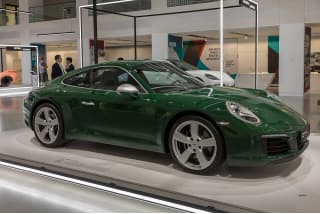
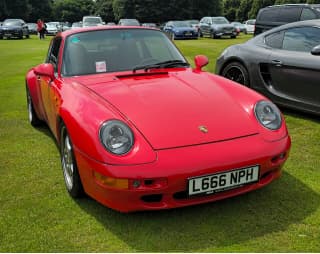
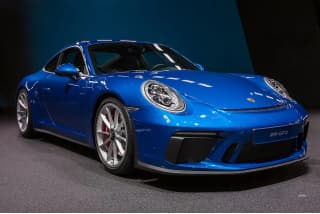
The 911 is the Porsche people picture first. It keeps its rear-engine layout, and it spans a huge range of jobs. A Carrera can handle real road trips. A GTS turns up the edge. GT and Turbo models go much further.
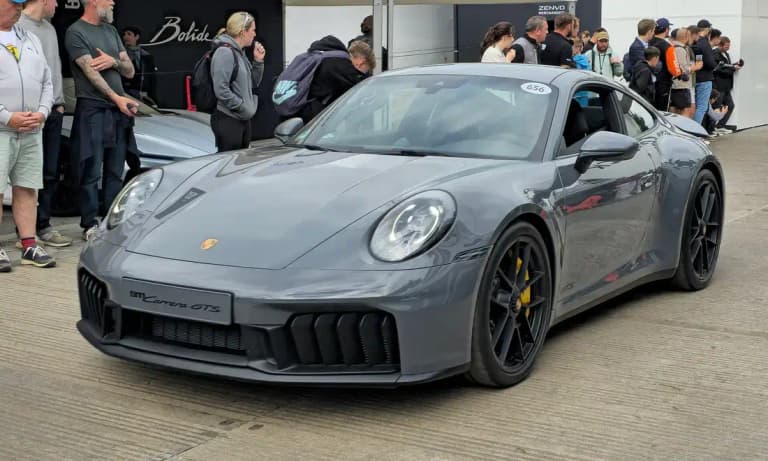
The current 911 family includes coupe, Cabriolet, and Targa body styles, plus rear-wheel-drive and all-wheel-drive versions. Porsche introduced the first electrified 911 powertrain in the current Carrera GTS, as the company explained at the 2024 911 launch.
If your dream is a manual 911, check the exact year and trim before you shop. Porsche does not offer a manual on every 911. Start with our 911 buyer’s guide instead of assuming a badge tells the whole story.
Porsche SUVs: Macan and Cayenne
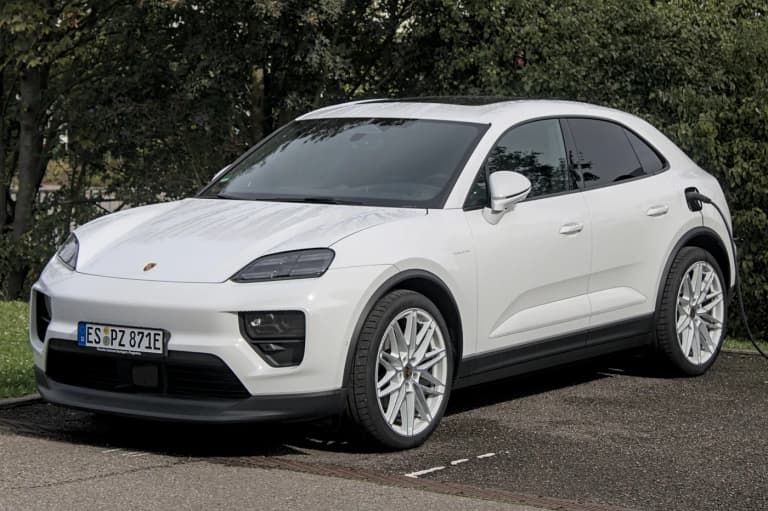
The Macan: the smaller daily driver
The Macan is Porsche’s compact SUV. It is easier to place on a narrow street than a Cayenne, but still gives you four doors and a useful hatch. It is the sensible answer for someone who needs one car to do almost everything.
The newer Macan Electric sits alongside gas-powered Macans in some markets. Porsche calls the electric Macan a new generation, with an 800-volt electrical system and all-wheel drive across its launch range. See our Porsche Macan guide for the gas and electric split.
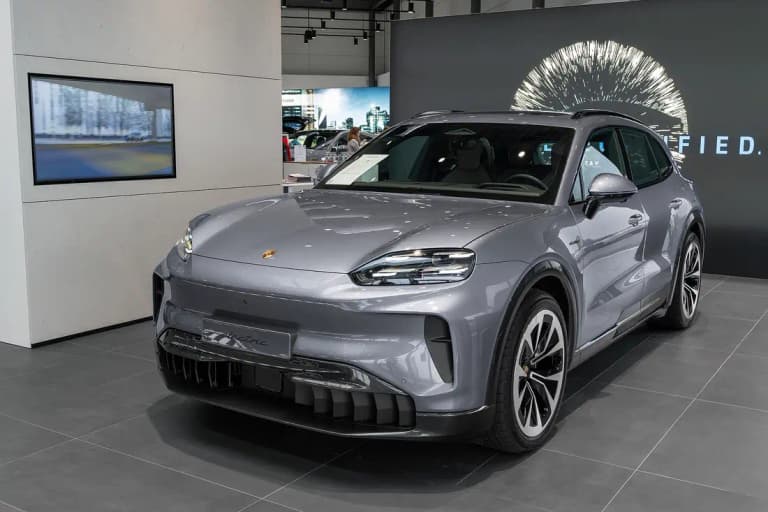
The Cayenne: the big all-rounder
The Cayenne is the larger SUV. It has more room for adults, luggage, and longer family trips than the Macan. It also comes as a regular SUV or lower-roofed Coupe.
There are gas, plug-in hybrid, and electric Cayenne versions depending on market and model year. That gives the Cayenne the broadest job description in the range. It can be a comfortable road-trip car, a quick daily driver, or a tow vehicle. Our Cayenne guide explains the generations and trims.
Panamera and Taycan
The Panamera: the long-distance four-door
The Panamera is Porsche’s four-door grand tourer. It sits lower than either SUV and feels more like a fast hatchback from behind the wheel. It works for buyers who want rear seats and a usable cargo area without giving up a performance-car driving position.
Current Panamera versions include gas and plug-in hybrid models. The hybrid makes sense if you can charge regularly. If you cannot, the extra battery weight gives you less in return. Read the Porsche Panamera guide before choosing a trim.
The Taycan: the electric performance car
The Taycan is Porsche’s electric sedan. It has a low seating position, quick response, and a different ownership routine from a gas car. Home charging changes the experience. Public charging alone can make it feel like work.
Porsche updated the Taycan for 2025 with more power, faster charging, and revised battery hardware. The company says the 2027 update adds new software and a native NACS port in North America. Our Taycan guide covers the model families.
Gas, Hybrid, and Electric Choices
There is no clever universal answer here. Gas still works best for drivers who cover long distances without reliable charging. A plug-in hybrid works when you can charge it and still need a gas engine for longer runs.
Electric power suits a predictable routine. If you can plug in at home or work, a Taycan or Macan Electric starts each day charged. If your parking situation makes that difficult, do not talk yourself into an EV just because the acceleration is wild.
Porsche has also continued to evolve the range. Its 2026 delivery report notes the end of combustion 718 production. It also records combustion Macan sales outside the EU through July 2026. Check the exact market before treating any online lineup as final.
How to Choose Your Porsche
Buy a 718 if you want the smallest, most focused sports car. It is for the driver who values balance and does not need rear seats.
Buy a 911 if you want the classic Porsche shape and the broadest sports-car range. It costs more, but it can play commuter, road-trip car, and weekend toy better than most sports cars.
Buy a Macan if this is your only car and you need SUV practicality without a huge footprint. Buy a Cayenne if your family, luggage, or towing plans are larger.
Buy a Panamera if you want four doors and still want a low driving position. Buy a Taycan if you have charging sorted and want an electric car that still feels like a Porsche.
For any used Porsche, inspect the service records before the paint color or wheel design gets your attention. Then pay for a pre-purchase inspection from an independent Porsche specialist. The boring paperwork is what keeps a fun car from turning into a money pit.
Frequently Asked Questions
What Porsche models are available now?
Porsche’s active production range centers on the 911, Cayenne, Macan, Panamera, and Taycan. The recently discontinued 718 remains relevant to used buyers.
Which Porsche is best for a first-time buyer?
The Porsche Macan is the best first Porsche for most buyers because it is easy to use every day. Pick a 718 or 911 instead if a sports car is the point of the purchase.
Which Porsche has the most space?
The Porsche Cayenne has the most passenger and cargo space in the current range. The Cayenne Coupe trades some rear headroom and cargo height for its lower roofline.
Does Porsche still make gas cars?
Yes, Porsche does still sell gas and hybrid models alongside its electric cars. The exact mix depends on the model line and market.
Which Porsche models are electric?
The Taycan is Porsche’s electric sports sedan, and the Macan Electric is its electric compact SUV. Cayenne Electric availability varies by market.
Images: Porsche 911 Carrera GTS by Calreyn88, CC BY-SA 4.0. Porsche Macan Electric by Alexander-93, CC BY-SA 4.0. Porsche Cayenne Electric by Alexandre Prevot, CC BY-SA 4.0. Via Wikimedia Commons.